

Heritage Materials and Lower-Carbon Architecture
Heritage Materials Are Back—And They’re Not Here to Behave
Brick, earth, cork, timber, and wood-based structures have returned to architecture with the force of a manifesto. Not as quaint nods to the past, and not as nostalgic “natural” finishes, but as serious propositions for a carbon-constrained discipline that is running out of patience with its own petrochemical vanity. In projects from rural schoolhouses to urban housing blocks, these materials are being recast as tools of climate realism: they store carbon, reduce transport, rely on local know-how, and often ask less of industrial systems than concrete and steel do. That much is true. But the more aggressively architects embrace the language of vernacular materiality, the more the profession must ask whether it is building a lower-carbon future—or merely dressing one up in a comforting palette of authenticity.
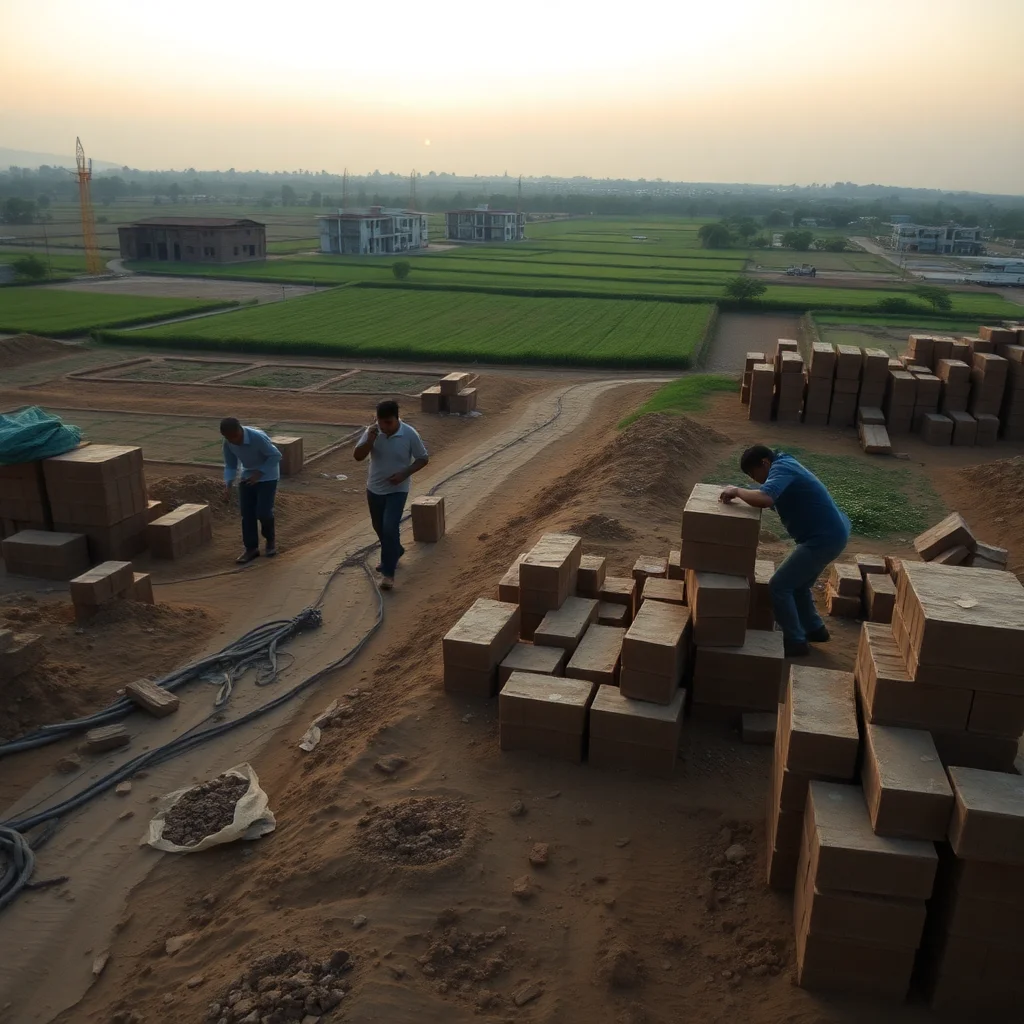
The source context is telling: a square site in Mao Khe town, adjacent to a new urban area and bordered by long-established agricultural fields held by multiple local households. This is not an abstract site. It is a friction zone between development and continuity, where construction cannot pretend to be culturally neutral. In settings like this, material choice becomes political: the argument is whether architecture should arrive as a sealed technological import or as an extension of local building intelligence. Heritage materials thrive in that argument because they promise exactly what contemporary architecture often lacks—legibility, tactility, and a direct line between place and form.
PRO: Material Honesty Is Becoming a Climate Strategy
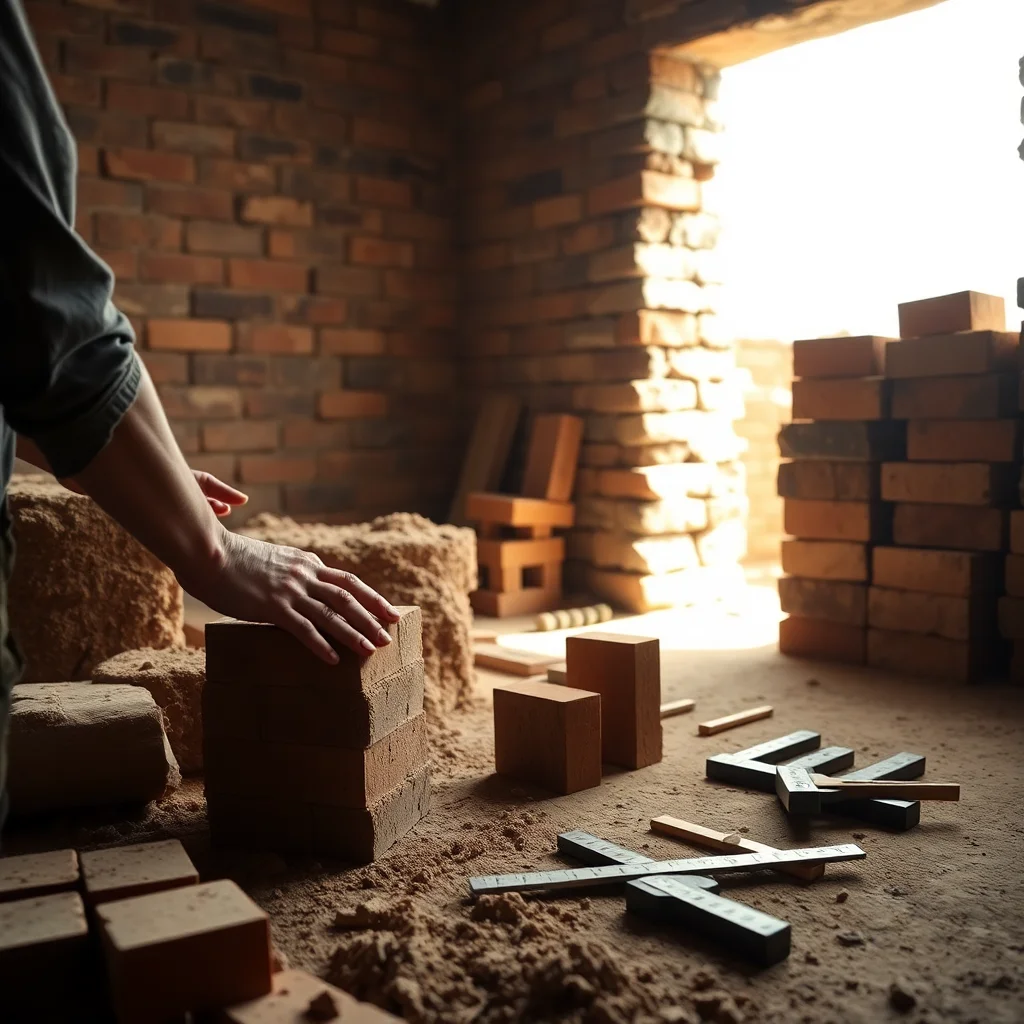
There is a reason brick and earth look newly radical now. They are not “innovations” in the Silicon Valley sense; they are refinements of old logics, and those logics are suddenly valuable again. Brick, when locally produced and structurally legible, can reduce dependence on high-emission cladding systems. Rammed earth and compressed earth blocks can dramatically lower embodied carbon when sourced and stabilized intelligently. Cork insulation and timber frames are not just natural-looking alternatives; they are part of a broader shift toward assemblies that do less, better. The climate argument is not sentimental. It is about shrinking the amount of energy hidden in every wall, slab, and roof.
Look at the recent resurgence of earth construction in contemporary practice. In France, Lacaton & Vassal have long argued that architecture should do more with less, and that ethos extends beyond renovation to a broader respect for material economy. In India, earth and brick have remained potent in practices such as Studio Mumbai, where building is treated as a craft ecology rather than an industrial script. In China, the revival of rural materials in schools, cultural centers, and rural housing reflects both necessity and agency. These works are persuasive because they make austerity look like intelligence. They resist the fantasy that sustainability must be packaged as a gleaming machine.
Wood-based structures push the case further. Mass timber, glulam, and CLT have reoriented the debate around tall buildings and long spans, proving that structural lightness can also mean environmental restraint. Projects by teams such as MVRDV, Henning Larsen, and Kengo Kuma have helped normalize timber as more than a lifestyle cue; it is now an infrastructural material with real structural ambition. The point is not that timber is always superior, but that it forces design teams to confront what is truly necessary. That alone is a climate act. For a deeper look at that tension, see Mass Timber Theatre: Landmark or Carbon Claim?
PRO: Local Construction Knowledge Is Not a Side Note
What makes heritage materials compelling is not only their lower embodied carbon, but their social intelligence. A brick wall or earth mass is rarely just a wall; it is a repository of regional labor habits, climate adaptations, and maintenance cultures. In Mao Khe, where the site sits between agricultural land and a new urban area, the use of brick and earth speaks directly to the fact that construction does not begin from zero. The surrounding households, the histories of repair, the logic of seasonal weather, the availability of labor—these are not “contextual considerations” tacked on after the fact. They are the conditions under which architecture either belongs or doesn’t.
That is why projects using earthen blocks, exposed masonry, and timber joinery often read as more than aesthetic exercises. They are attempts to keep value circulating locally rather than siphoning it into imported systems and proprietary finishes. In contemporary Vietnam, where rapid urbanization can flatten local identity into generic concrete expansion, a building that remembers how to breathe, shade, and age is not a decorative gesture. It is an act of resistance. The same applies across much of Southeast Asia, where vernacular materials have always been less about rustic charm than about environmental competence. The idea that everyday housing can become a wider spatial argument is explored in When the Home Becomes a Master Plan.
Designers such as Anna Heringer have made this explicit: build with what is near, and you produce not only low-carbon architecture but a repairable one. Repairability matters. A building that can be understood by local workers, patched without specialist teams, and adapted over time has a longer ethical life than a sealed, high-performance object that becomes obsolete the moment a system fails. Heritage materials can therefore extend the life cycle argument beyond operational energy. They ask architecture to be maintainable, not just marketable.
CONTRA: The Vernacular Can Become an Eco-Style
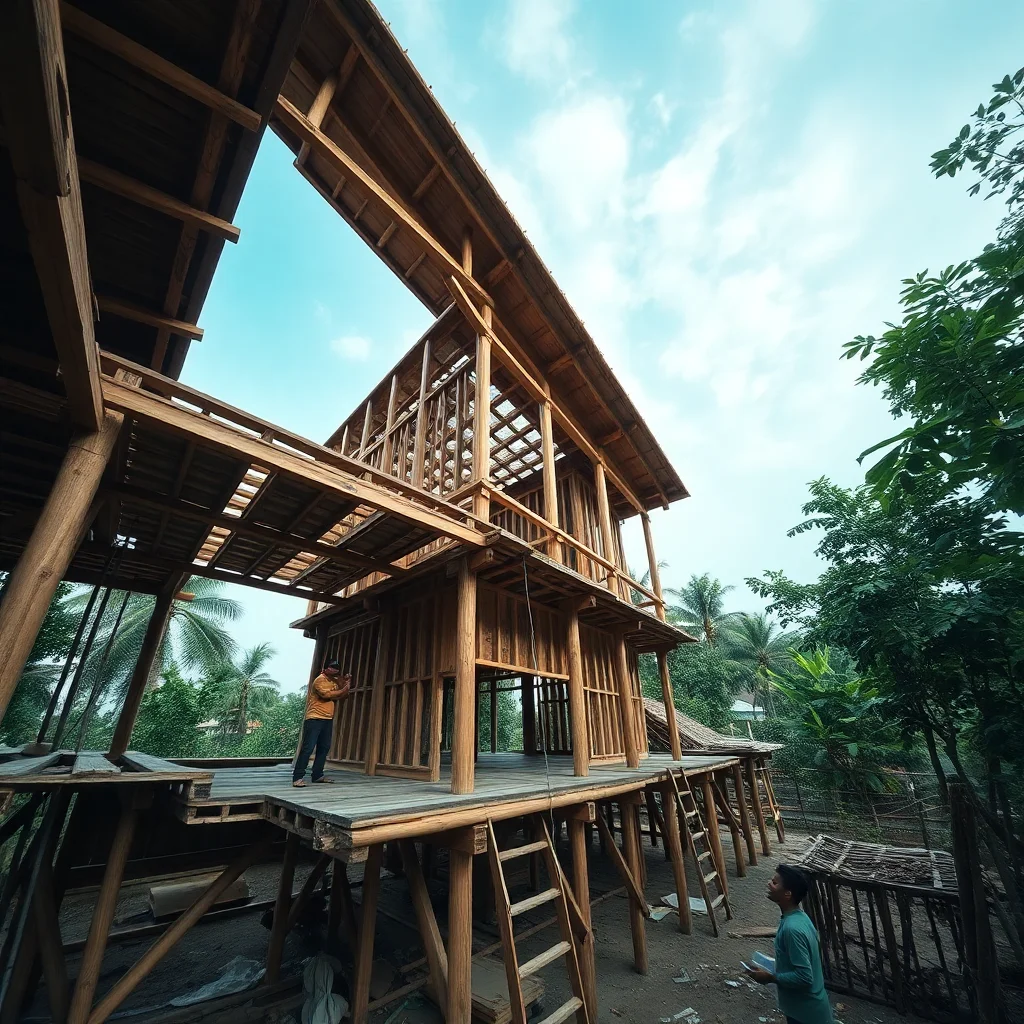
And yet the backlash is justified. The current fetish for brick, cork, and “earthy” palettes has generated a soft-focus aesthetic that can be dangerously self-satisfied. Exposed masonry and warm timber interiors now decorate luxury hotels, cultural venues, and private houses that have little interest in actual carbon reduction. The result is an architecture of climate imagery: all the signs of responsibility, none of the disciplinary discipline. If a project uses a “natural” material but imports it from far away, over-specifies it with carbon-heavy detailing, or wraps it in high-tech mechanical systems that dwarf the material savings, then the sustainability claim begins to look like branding.
Performance is the first pressure point. Earth walls need careful detailing, moisture strategy, and a realistic understanding of local climate. Brick can be durable, but it can also be carbon-intensive if fired in inefficient kilns or shipped long distances. Timber is renewable in theory, but only if forestry practices, certification, and fire strategy are properly managed. Cork is exceptional as insulation, but it is not a free moral pass; availability, cost, and supply chains still constrain it. In other words, heritage materials do not suspend contemporary technical reality. They intensify it. They demand more discipline, not less.
The cost argument is equally unforgiving. Labor-intensive materials can become boutique luxuries when economies of scale are absent. What reads as “honest” in an architectural magazine may become unaffordable in public housing, schools, or small-town civic buildings. This is the central hypocrisy: architects praise vernacular materiality while producing one-off objects that communities cannot replicate. A building in earth or timber means little if it cannot meet code, budget, and delivery schedules outside an experimental client brief. Romanticism is cheap; systems change is expensive. A related question of how housing can carry larger civic ambition is raised in Can Vernacular House Types Become Climate Tech?
CONTRA: Climate Symbolism Can Hide a New Form of Elitism
There is also a cultural problem. Heritage materials can become a refined aesthetic for educated elites who have the privilege to value roughness, patina, and “authentic” imperfection. That means the same brick, bamboo, or wood that once served as practical infrastructure can be rebranded as tasteful scarcity. The architecture industry has always been adept at converting necessity into style, and the new material honesty risks becoming another round of that old trick. When “vernacular” is reduced to a mood board, the people who actually built with these materials—the masons, carpenters, earth workers, and local suppliers—are pushed out of the frame.
Even the best-intentioned projects can fall into this trap. A sculptural timber hall or earthen museum may appear progressive, but if its primary effect is to signal ethical refinement to a global audience, then the carbon narrative has been absorbed by the aesthetic economy. This is especially visible in urban developments that borrow rural cues without inheriting rural obligations. A brick facade on a speculative block is not the same as a local brick culture. A timber ceiling in a high-end interior does not equal timber urbanism. Without shared labor structures and maintenance cultures, heritage materials become a language of atmosphere, not a strategy.
That is why the Mao Khe context matters. The site’s edge condition—urban expansion against agricultural continuity—exposes the difference between genuine local adaptation and imported rusticity. A meaningful project there would need to work with the material memory of the place, not just its visual codes. The debate is not whether vernacular materials are beautiful. They are. The debate is whether beauty is being used to cover a lack of systemic ambition. Too often, it is.
The Hard Truth: A Lower-Carbon Future Needs Both Craft and Accounting
The most credible future for heritage materials is not purist. It is hybrid, exacting, and unsentimental. Brick, earth, cork, timber, and wood-based structures should be chosen not because they look morally correct, but because they can be justified by carbon accounting, climate response, local supply, and construction culture. The moment they are treated as universal solutions, they become vulnerable to the very critique they were meant to escape.
What architecture needs now is not a return to the past, but a sharper standard for when the past still works. In some places, earth will be structurally and climatically wise. In others, timber will be the better path. In dense urban contexts, hybrid systems may offer the only realistic compromise. The challenge is to stop pretending that high-performance means high-tech and to stop pretending that vernacular means low-impact by default. Both can be lies.
The real opportunity lies in reuniting design with local construction knowledge while refusing to romanticize either scarcity or tradition. That is where lower-carbon architecture becomes more than a style: it becomes a discipline of specificity. And specificity, not sentiment, is what will decide whether heritage materials help architecture change—or merely help it look like it has.
FAQ
Are heritage materials always lower-carbon than concrete and steel? No. They can be significantly lower-carbon, but only when sourced locally, produced efficiently, and detailed for longevity. A poorly sourced timber system or energy-intensive brick can undercut the environmental gains.
Why are brick and earth returning in contemporary architecture? Because they offer embodied-carbon savings, local supply potential, thermal performance, and a material language that feels grounded in place. They also align with a wider cultural desire for honesty after decades of glossy, globalized sameness.
What is the biggest risk in using vernacular materials today? Turning them into an aesthetic brand rather than a construction strategy. If the project is expensive, imported, or impossible to maintain locally, the material story becomes mostly image-making.
Can timber really solve the carbon problem in buildings? Not alone. Timber helps, especially in structural systems with strong forestry and certification standards, but it must be paired with smart design, fire safety, and low-carbon operations. It is a tool, not a miracle.
Why does local construction knowledge matter so much? Because low-carbon architecture is not just about materials; it is about labor, repair, adaptation, and long-term stewardship. Buildings rooted in local expertise are more likely to last, be maintained, and remain useful over time.
Is vernacular architecture just nostalgic now? Only when it is used superficially. When it is tied to climate, labor, and local economies, vernacular thinking becomes a forward-looking strategy rather than a backward glance.
Can hybrid systems still count as heritage-informed? Absolutely. In many contexts, the smartest answer is a hybrid of traditional materials and contemporary performance layers. Purity is overrated; effectiveness is not.
How should architects avoid greenwashing with natural materials? By documenting supply chains, measuring embodied carbon, designing for repair, and resisting the temptation to sell material texture as environmental proof. Accountability is the antidote to branding.
What is the central lesson from projects in places like Mao Khe? That architecture must work with the grain of a place—its climate, labor, and building memory—rather than imposing a universal aesthetic of sustainability from above.
So are heritage materials a real climate strategy? Yes, but only when they are treated as part of a rigorous system of design, sourcing, and maintenance. Otherwise, they are just a very expensive way to look conscientious.
What happens when a building ages badly? If it is made with repairable materials and local knowledge, aging becomes character and adaptation. If it is a brittle, high-cost spectacle, aging becomes failure.
Are heritage materials compatible with contemporary codes? Often yes, but not automatically. They require informed detailing, testing, and a willingness to negotiate regulations rather than ignore them.
Why do designers keep returning to brick, earth, cork, and timber? Because these materials offer something the industry has been missing: a visible connection between environment, labor, and form. That connection is politically valuable—and aesthetically powerful.
Get the Mainifesto weekly — curated design debates, speculative ideas and the week's best articles every Saturday.



David Lim May 17, 2026
Heritage materials can be more than nostalgia if we actually measure them properly: embodied carbon, transport distances, maintenance cycles, and end-of-life reuse all matter. The real question for me is whether we’re using brick, timber, and earth as tokens of authenticity, or as part of a deeper shift in how we design structural systems and assemblies.
Marcus Reed May 18, 2026
I’m skeptical of the romance around this. If a material is slower to build, harder to source, or more expensive to maintain, it’s not a sustainability strategy for most clients — it’s branding with a greener palette. Show me performance, durability, and a clear ROI, otherwise this is just old ideas dressed up for premium markets.
Karim Haddad May 18, 2026
Heritage materials are only meaningful if they’re tied to local supply chains, labor, and climate realities. Otherwise we get a globalized version of vernacular — cork imported for a mood board, timber shipped halfway around the world, and a lot of carbon hidden behind the word “authentic.”
Tom Brightwell May 18, 2026
I like materials that age well and make commercial sense, and some of these do both. But heritage shouldn’t become an excuse for higher costs and lower flexibility; if brick or timber helps us reduce carbon without compromising buildability, maintenance, or lettability, then fine, let’s use them.