
Monumental Hospitality and Heritage Luxury
When Heritage Becomes a Ticketed Experience
Something unsettling is happening to the world’s grandest interiors. Historic palaces, former stations, and endangered mansions are no longer being preserved only as museums, archives, or civic shells. Increasingly, they are being converted into high-end hotels, sleeper trains, clubhouses, and ultra-exclusive retreats. The new logic is seductive: if a building cannot survive on public subsidy or traditional conservation alone, let hospitality animate it, monetize it, and give it a second life. In theory, this is rescue. In practice, it can become a velvet rope around history.
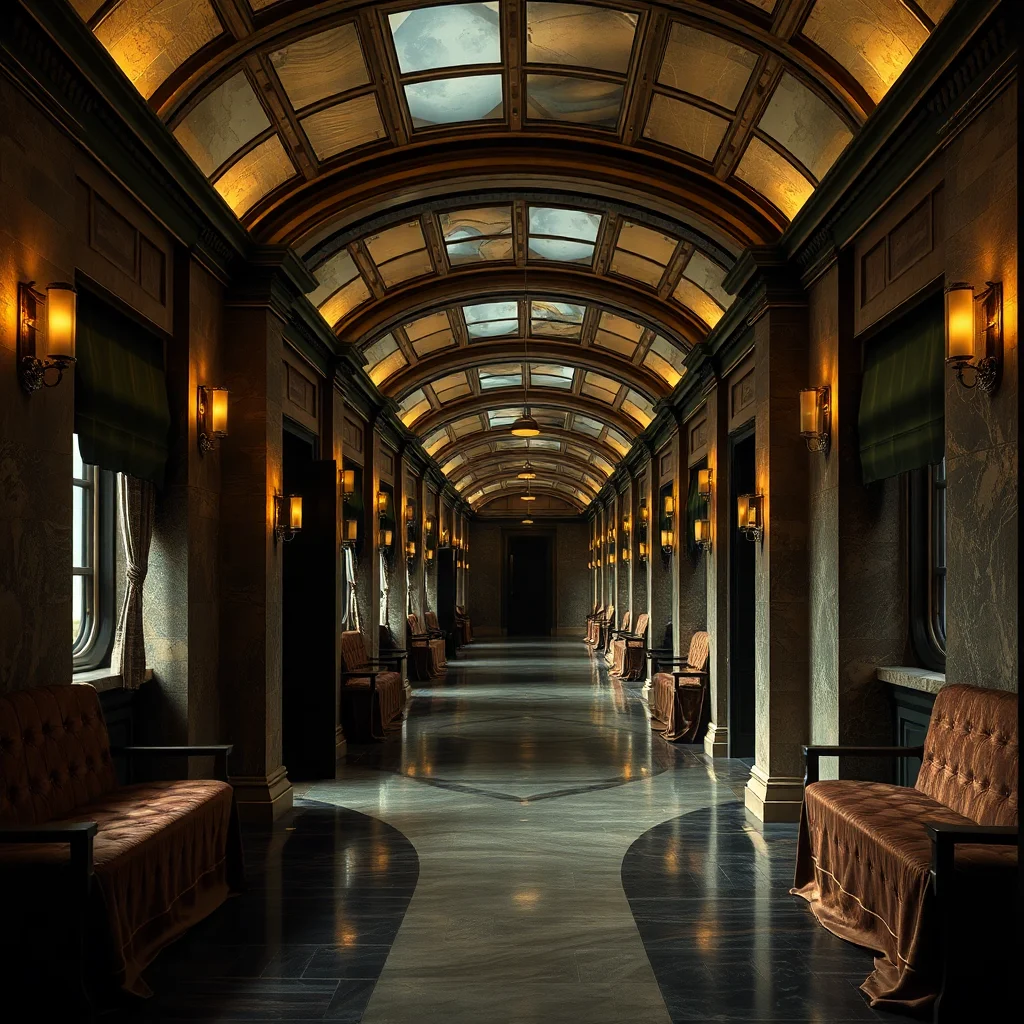
The Orient Express Venezia is the clearest emblem of this shift. It packages nostalgia, craftsmanship, and continental glamour into a luxury transit experience that is as much about atmosphere as transport. The traveler does not merely pass through history; they are invited to inhabit a curated fiction of it. That formula now extends far beyond rail. From Aman Venice in the Palazzo Papadopoli to Six Senses Rome in the former Palazzo Salviati Cesi Mellini, and from Château de Bagnols in France to Heritage Hotels across India, hospitality is increasingly being framed as the most viable preservation strategy for monumental buildings. But viability is not innocence.
The crucial question is not whether these projects are beautiful. They are, often meticulously so. The question is what kind of public they produce. Do they rescue architectural history by restoring fabric, funding conservation, and returning buildings to active use? Or do they convert collective memory into an exclusive lifestyle product accessible only to those who can afford the room rate, the menu, the suite, the narrative?
Monumental hospitality is no longer a niche. It is becoming a dominant preservation model, one that quietly rewrites the social contract of heritage itself.
The Case for Rescue: Capital as Conservation
The pro argument is brutally pragmatic: endangered buildings need money, expertise, and a use. Empty monuments decay faster than occupied ones. Roofs fail, plaster cracks, climate systems collapse, and monumental scale makes ordinary maintenance prohibitively expensive. Hospitality provides a revenue stream large enough to support structural repair, artisanal restoration, and long-term operations. Without that stream, too many palaces become frozen ruins, open only for sporadic tours or ceremonial events, preserved in name but neglected in reality.
Look at the best high-end restorations and the pattern is clear. At Aman Venice, the palazzo’s frescoed ceilings, water-facing salons, and historic detailing were not flattened into generic luxury; instead, the hotel used restraint as a design strategy, allowing the building’s original grandeur to remain legible. In Rome, Six Senses adopted a softer, wellness-led hospitality language while retaining the gravity of the palazzo envelope. Elsewhere, projects such as Rosewood Castiglion del Bosco in Tuscany and Il Sereno near Lake Como have shown how contemporary hospitality can be inserted into historic estates with a degree of sensitivity that pure private ownership often fails to muster.
This is not accidental. Hospitality requires a level of maintenance, choreography, and spatial coherence that can force owners to invest seriously in a building. Conservation becomes part of the brand promise. The polished bronze, hand-finished plaster, restored parquet, and revived gardens are not decorative extras; they are part of the operating model. In some cases, hospitality has done what governments could not: keep a fragile structure standing, employed, and metabolically alive.
Architecturally, there is also an argument for adaptive reuse as a form of honesty. Buildings are not sacred only when they remain static. Palaces were historically designed to host people, display power, and stage social ritual. Turning them into hotels is, in one sense, a continuation of their original social function: architecture as hospitality machine. The grand staircase, the reception hall, the enfilade of rooms, the loggia, the garden court — these are spaces of arrival, circulation, and performance. The luxury hotel simply replaces one elite social order with another.
That continuity is exactly what makes the model compelling. It keeps architecture useful, not embalmed.
The Case Against: Heritage as a Velvet Rope
And yet usefulness is not the same as public value. The contradiction at the heart of monumental hospitality is that it often preserves buildings by restricting access to them. A palace saved as a hotel may be physically intact, but culturally narrowed. The lobby becomes a threshold of financial exclusion. The ballroom is no longer civic theatre but a backdrop for private consumption. The building remains on the map, yet the public is relegated to the sidewalk or the occasional afternoon tea.
This is where the aesthetic language of restoration becomes politically dangerous. Luxury hospitality excels at producing the illusion of shared heritage: everyone can admire the photos, consume the brand story, and dream of entry. But the actual experience is stratified by price. The building’s history is transformed into atmosphere, and atmosphere can be sold. The result is a subtle privatization of memory. What was once a site of collective culture becomes a premium interior, its significance filtered through the expectations of a guest paying for exclusivity, discretion, and exceptional service.
The issue is not just access; it is interpretation. These projects often sanitize the violence embedded in palatial histories. Many palaces were built on hierarchy, colonial extraction, aristocratic wealth, or labor systems that modern luxury marketing prefers not to mention. When such buildings are repackaged as serene retreats, their social meaning is softened into heritage chic. The restoration may be rigorous, but the storytelling often is not. We are invited to admire craftsmanship while forgetting the class structures that produced it.
There is also an architectural risk in the standardization of luxury. Even when each project claims to be site-specific, the hospitality industry has a powerful tendency to smooth difference into a recognizable grammar of understated wealth: beige, brass, linen, tactility, silence. Historic buildings are then made legible through a contemporary luxury code that can erase more than it reveals. The palace survives, but its eccentricities are domesticated. Its rough edges are curated away. Its complexity is made photogenic.
In that sense, monumental hospitality can become a polite form of erasure. It saves the shell while disciplining the story.
From Palace to Product: The Architecture of Exclusivity

The most troubling aspect of this trend is that it arrives wrapped in the language of cultural stewardship. Hospitality operators and investors speak of preservation, revitalization, and local benefit. Sometimes those claims are real. Skilled artisans are employed, historic materials are repaired, and regional supply chains may gain work. But the economic core remains unmistakable: heritage is becoming a high-margin asset class. The building’s aura is not a byproduct; it is the product.
Consider how brands like Aman, Six Senses, Belmond, and other ultra-luxury operators work. They do not merely restore buildings. They orchestrate a total environment in which architecture, service, scent, sound, and narrative are fused into one controlled experience. This is not public preservation in the broad civic sense. It is heritage as total design. The building becomes a stage for a highly managed encounter in which the guest is both consumer and protagonist. The city, meanwhile, is often externalized: seen through private terraces, chauffeured arrivals, and curated excursions.
This model mirrors a wider cultural shift. Museums are increasingly experiential. Cities are increasingly branded. Real estate is increasingly sold not as square footage but as meaning. Hospitality is simply the most advanced version of that logic because it can transform time itself into luxury. The guest does not buy a room; they buy historical immersion by the night. The palazzo is not just occupied; it is consumed in segments.
Architects and designers are deeply implicated here. The best of them know how to hold tension between preservation and adaptation. But they are also working inside a market that rewards photogenic authenticity over democratic access. Restoration becomes a performance of care. The challenge is whether that care extends beyond the paying visitor to the building’s broader social role. If a restored palace hosts only affluent foreigners, it may be alive, but it is not necessarily public.
That tension is not unique to heritage hotels; it echoes broader questions about multisensory architecture, where atmosphere can shape emotion, memory, and desire with remarkable precision. In the luxury context, those same sensory cues can become tools of seduction, making exclusivity feel like culture rather than commerce.
What a Better Model Would Demand
If hospitality is going to justify its place in heritage conservation, it must do more than restore interiors for private pleasure. It must produce visible public value. That could mean opening ground-floor galleries, hosting free cultural programs, restoring gardens for neighborhood access, or financing local apprenticeships in stone, timber, and decorative arts. It could mean designing circulation so that public and private realms coexist without the former being reduced to tokenism. It could mean transparency about the building’s history, including the uncomfortable parts.
Some projects already point in this direction. In India, several palace hotels have supported local craft ecosystems by employing traditional techniques in masonry, joinery, embroidery, and metalwork. In Europe, some restorations linked to hospitality have helped revive dormant estates and stabilize rural economies that were otherwise losing both people and maintenance capacity. The point is not to dismiss these gains. The point is to insist they are insufficient if the end result is a sealed world of luxury disconnected from civic life.
The next generation of monumental hospitality should be judged by a harder standard: not only how beautifully it restores, but how generously it shares. Can a palace hotel become a cultural infrastructure rather than a private fantasy? Can a luxury train like the Orient Express Venezia be more than a moving set piece — can it support craft, regional memory, and a broader public imagination of travel as architecture in motion? Can heritage finance itself without becoming hostage to elite consumption?
The future of endangered monuments may depend on answering yes. But that yes should not be easy. It should be conditional, accountable, and public-facing.
Because if heritage survives only as luxury, then what exactly has been saved?
There is also a quieter architectural possibility: if buildings can be maintained through continuous use, perhaps they should be designed to age on purpose, allowing patina, repair, and adaptation to become part of their value rather than symptoms of decline. That mindset would place preservation on a longer timeline, where maintenance is not a cosmetic afterthought but the core of the building’s life.
- Adaptive reuse is necessary, not virtuous by default. Buildings need active programs and funding, but the social consequences of those programs matter as much as the structural repairs.
- Luxury can conserve, but it can also narrow access. A restored palace is not automatically a shared cultural asset if entry is priced beyond public reach.
- Design must resist generic opulence. The most responsible restorations preserve local character, historical complexity, and material specificity instead of smoothing everything into a universal luxury language.
- Public benefit should be measurable. Free access, educational programming, artisan employment, and neighborhood engagement should be part of the brief, not optional philanthropy.
- Heritage needs narrative honesty. The history of power, labor, and inequality embedded in these buildings should be interpreted, not airbrushed.
FAQ
What is monumental hospitality? It is the use of historic palaces, estates, trains, or landmark buildings as luxury hospitality venues, often as a way to fund preservation and adaptive reuse.
Why is this model growing now? Heritage buildings are expensive to maintain, while luxury hospitality can generate strong revenue and attract investors willing to pay for atmosphere, exclusivity, and cultural cachet.
Does hospitality really help preserve architecture? Often yes, because it funds repairs, maintenance, and ongoing use. But it can also privatize access and flatten the building’s broader public meaning if not carefully managed.
What would make this model more ethical? Public access, transparency about history, support for local craft and labor, and genuine community benefit — not just elite consumption disguised as preservation.
So the real issue is not whether a palace can become a hotel, train, or retreat. It is whether architecture can be activated by hospitality without being reduced to a collectible experience for the few. Can monumental hospitality ever be truly public, or is exclusivity built into the model itself?
Watch the Mainifesto Short
Get the Mainifesto weekly — curated design debates, speculative ideas and the week's best articles every Saturday.
Editorial Perspectives
Questions and counterpoints developed by the Mainifesto editorial desk to extend the discussion.
Perspective 1
There’s a temptation to treat these projects as rescue missions, but the numbers usually decide whether a building survives or just gets rebranded. If the hotel model is the only thing willing to pay for restoration, then fine—but let’s not pretend the result is public heritage in any meaningful sense. Access matters, and once you put the best parts behind a room key, you’ve already narrowed the audience.
Perspective 2
The article gets at the real tension: adaptive reuse can save fabric, but it doesn’t automatically create civic value. Monumental hospitality can be public only if the non-guest spaces are genuinely open, programmed, and useful to the city; otherwise it’s heritage as an amenity for paying users. The model isn’t doomed, but without clear access rules and public obligations, exclusivity tends to win.
Perspective 3
From a guest-experience point of view, heritage properties work because they feel singular, and singular usually means controlled access. That doesn’t make them anti-public; it just means the public value has to be built into the operating model through tours, events, restaurants, and ground-floor spaces people actually use. If the building only survives because it became a hotel, I’d rather see that than a closed ruin.