Timber’s Second Life in Japanese Interiors
Timber Is No Longer a Finish. It Is a System.
Japanese interiors are teaching the design world a hard lesson: timber should not be treated as a sentimental surface applied at the end of a project to soften an otherwise indifferent room. In the most compelling domestic spaces in Japan, wood operates as an organizing intelligence—structural, tactile, climatic, and cultural all at once. It frames thresholds, absorbs light, modulates acoustics, and allows a home to feel both contemporary and anchored in a lineage of making. This is not nostalgia dressed as minimalism. It is a practical and aesthetic argument that timber can still carry domestic life without becoming costume.
The stakes are larger than material preference. In an era of over-insulated interiors, slick composites, and algorithmic sameness, Japanese timber interiors insist on friction: grain, shadow, joinery, and aging are not flaws to be hidden but evidence of life. The best examples do not quote a past vernacular; they update it. They show that warmth does not need to be decorative, and tradition does not need to be frozen to remain legible.
1. Wood as Climate, Not Ornament
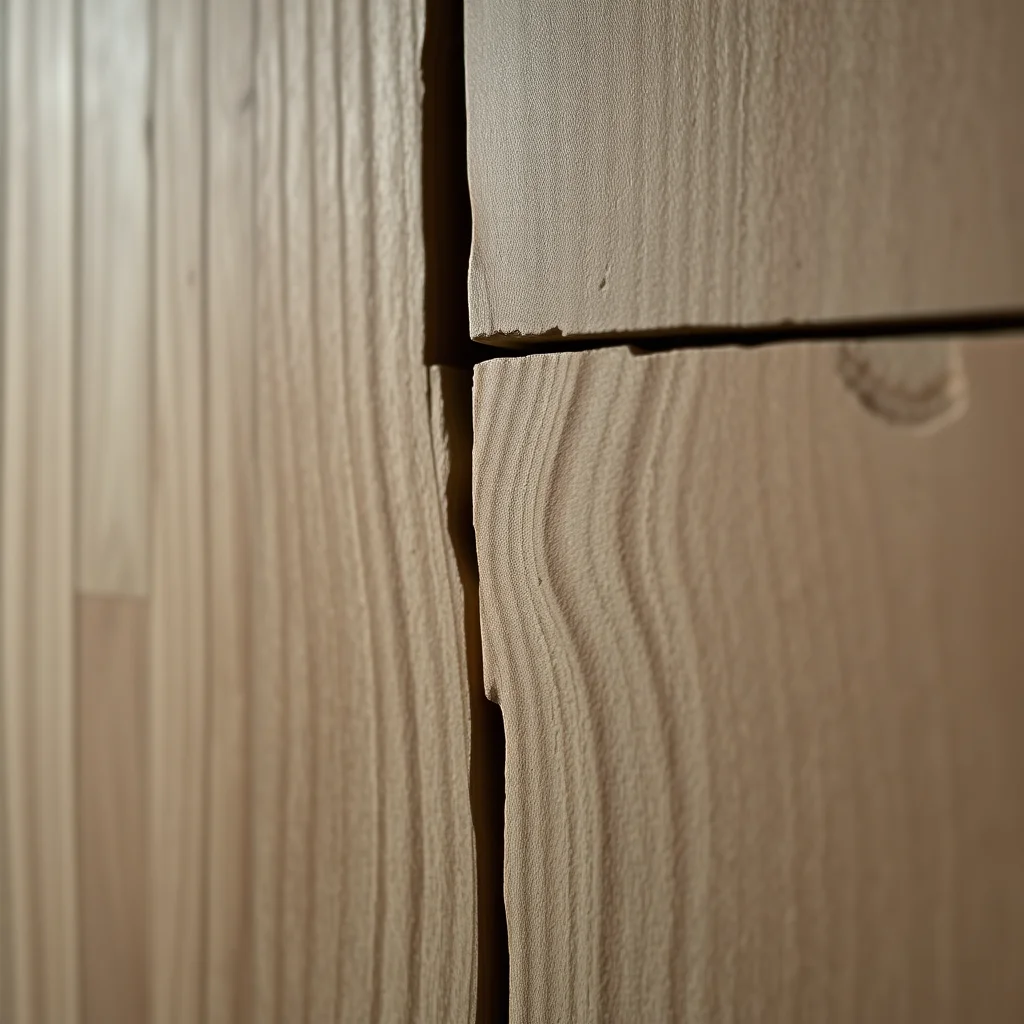
In houses by Kengo Kuma, timber is rarely just visual atmosphere; it is a spatial filter that mediates air, light, and movement. Kuma’s work repeatedly treats wood as a membrane rather than a veneer, from layered screens to finely spaced slats that break scale and temper daylight. In domestic interiors, this approach makes a room feel breathable rather than sealed shut, which matters in Japan’s humid, variable climate and in a global moment obsessed with airtight perfection.
The deeper point is that timber performs like a building system before it behaves like a decor choice. It helps define temperature and touch, but it also creates a human tempo: the eye slows down when it meets rhythmical grain, and the body reads space differently when surfaces are not uniform. That is why these interiors feel modern without being cold. They are technologically literate, but they refuse the myth that comfort must be synthetic.
That same emphasis on embodied experience is why haptic interiors have become such a useful framework for understanding timber-heavy rooms: wood is never only seen, but felt in the pace of a hand, the softness of a threshold, and the way a surface responds over time.
2. The New Minka Is Not a Replica
Contemporary Japanese homes often borrow the spatial intelligence of the minka without reproducing its image. Architects such as Ryue Nishizawa, Sou Fujimoto, and Junya Ishigami have each, in different ways, rethought continuity between interior and structure, often using timber to loosen the boundary between furniture, frame, and room. The result is not a rustic reenactment. It is a domestic logic in which wood can be beam, partition, surface, and storage in a single gesture.
Take the lesson of traditional carpentry and remove the museum label. In projects like Terunobu Fujimori’s Tea Houses or small-scale residential work by atelier-based practices across Japan, exposed timber and careful joinery do not signal “heritage” so much as intelligence: how little material can do so much work when it is designed with restraint. The danger is obvious—when this language is copied without rigor, it turns into lifestyle branding. But at its best, it demonstrates that old spatial principles can be more radical than glossy novelty.
3. The Luxury of Imperfection
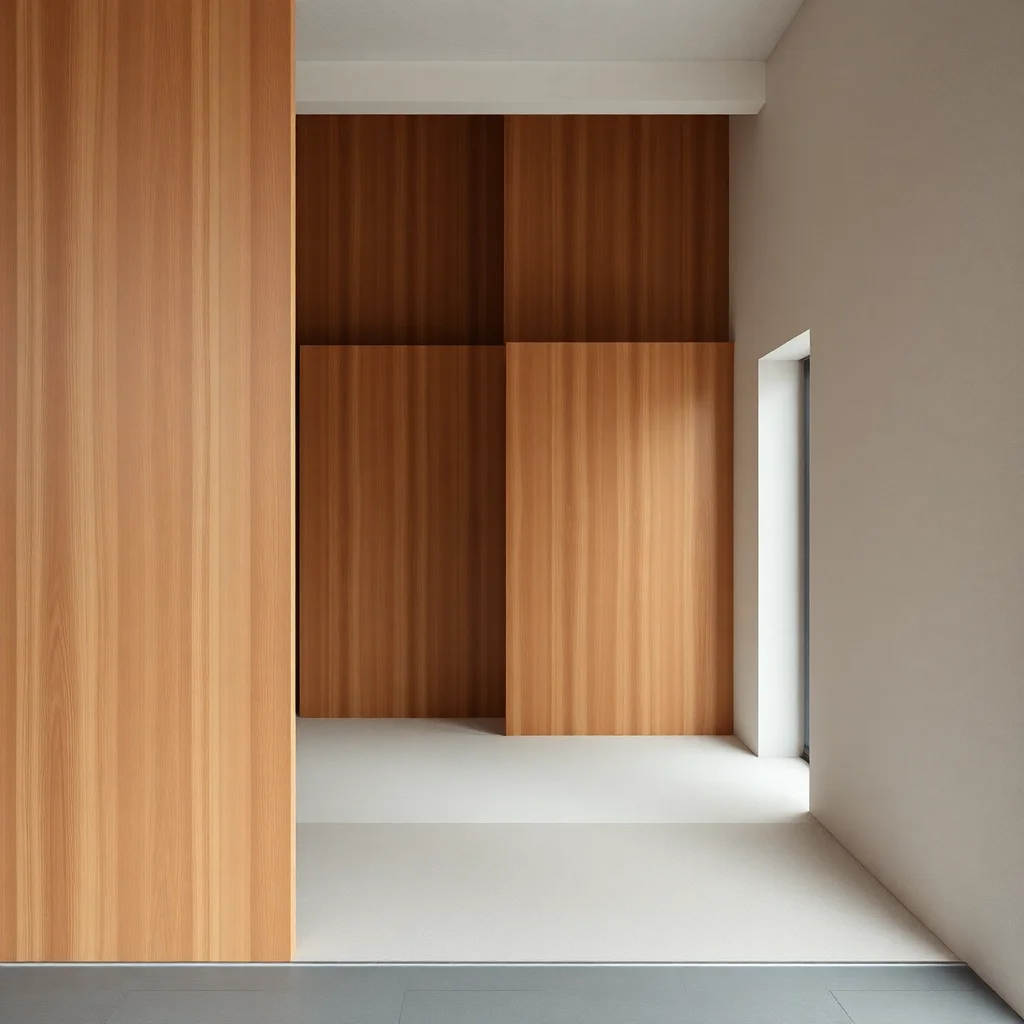
Japanese timber interiors challenge the global luxury market’s obsession with flawless, inert surfaces. Where European or North American high-end interiors often rely on polished stone, lacquered cabinetry, and concealed joints, Japanese wood rooms frequently allow variability: knots, tones, weathering, and visible connections remain part of the composition. This is not a lower standard. It is a different definition of refinement—one that values discernment over gloss.
Architect Tadao Ando’s work, though often associated with concrete, proves the point by contrast. When timber appears in his interiors, it is made to speak against silence: a warm counterpoint to monolithic surfaces rather than an accessory. The same principle appears in countless domestic renovations across Tokyo and Kyoto, where designers preserve beams, rework cedar floors, or introduce hinoki elements to create a dialogue between hardness and softness. Imperfection here is not aesthetic laxity; it is an ethics of presence.
In that sense, the rejection of slick perfection overlaps with the broader critique found in the return of kitsch in interior design: both point to a growing impatience with generic taste and an appetite for rooms that feel inhabited rather than over-edited.
4. Craft Is the Real Anti-Pastiche
The difference between meaningful tradition and decorative imitation is craft. Japanese timber interiors succeed when joinery, proportion, and detailing are so disciplined that the room no longer feels “styled”; it feels inevitable. This is why the work of firms and makers connected to carpentry traditions—whether in bespoke domestic commissions or in wider collaborations with furniture designers—continues to matter. Craft keeps wood from becoming theme-park authenticity.
Designers like Oki Sato of Nendo have made a career out of pushing material intelligence into quiet, precise forms. In Japan, the most persuasive timber interiors often operate in that register: a shelf that extends wall logic, a sliding panel that also works as acoustic softening, a stair that becomes a storage spine. The design language is contemporary because it solves present needs. It is Japanese because it preserves a respect for making that resists excess explanation.
5. Warmth Without Sentimentality
Wood gives Japanese interiors a warmth that is neither pastoral nor retro. This matters because the international image of timber too often collapses into chalet nostalgia or wellness-industry cliché. In Japanese domestic design, warmth is not a mood board effect; it is a spatial condition produced by scale, texture, and restraint. Even in small apartments, timber can make a room feel relational rather than merely efficient.
Consider the renovation culture in dense cities like Tokyo, where compact homes demand maximum flexibility. Timber cabinetry can define zones without locking them into rigid function, and wooden ceilings or wall systems can make tight spaces feel layered rather than cramped. That adaptability is exactly why Japanese wood interiors are becoming a model: they acknowledge that contemporary domestic life is messy, multi-use, and constantly changing, yet still deserving of dignity.
6. A Global Template, If We Stop Copying the Surface
The exportable lesson of Japanese timber interiors is not a style, but a method. Around the world, architects are confronting the same pressures: smaller homes, aging populations, climate anxiety, and a backlash against sterile minimalism. Japanese design offers an answer by showing that timber can be both low-tech and sophisticated, both culturally rooted and fully contemporary. But it only works if other contexts learn the logic, not the look.
That means refusing the lazy import of slatted walls and pale oak as instant “Japandi” shorthand. The real lesson is more demanding: use wood where it carries spatial meaning, detail it honestly, let it age, and let it participate in daily life. In that sense, Japanese interiors are not simply preserving a tradition. They are upgrading it into a flexible domestic language for the 21st century—one that other design cultures will either study seriously or reduce to another empty aesthetic trend.
Timber’s second life is not about return. It is about usefulness sharpened by memory. Japanese interiors prove that tradition can survive only when it is made to work harder than nostalgia.
- FAQ
FAQ
What makes Japanese timber interiors different from generic “natural” interiors?
They treat wood as structure, atmosphere, and spatial logic—not as a decorative layer. The result is more precise, more durable, and less dependent on trend-driven styling.
Why does timber keep appearing in contemporary Japanese domestic design?
Because it solves multiple problems at once: warmth, flexibility, acoustics, and human scale. It also connects modern living to long-standing carpentry traditions without requiring literal historical imitation.
Is this just the “Japandi” trend in another form?
No. Japandi often reduces Japanese influence to a visual formula. The interiors discussed here are stronger than that: they use timber as a working system, not a mood.
Can this approach be applied outside Japan?
Yes, but only if architects and designers adapt the logic to local climate, craft traditions, and domestic patterns. Copying the surface is the fastest way to destroy the idea.
Get the Mainifesto weekly — curated design debates, speculative ideas and the week's best articles every Saturday.
Editorial Perspectives
Questions and counterpoints developed by the Mainifesto editorial desk to extend the discussion.
Perspective 1
What lands for me is the idea of timber as an operating system, not a mood board. If it improves wayfinding, acoustics, and the feel of a space while also aging well, that’s not nostalgia—that’s better UX, and I’d happily drop the fetish for novelty when it stops serving the guest.
Perspective 2
I’m interested in timber when it behaves like a system we can specify, maintain, and cost properly—not as a decorative indulgence. Newness is overrated if it means disposable fit-outs; a material that repairs well and holds value over time is a much smarter proposition.
Perspective 3
The article points in the right direction, but I’d be careful with the anti-newness rhetoric. Timber as a structural interior logic can be compelling, yet it only matters if the sourcing, durability, and lifecycle data support it; otherwise it’s just another aesthetic dressed up as ethics.