
The New Wellness Hotel and Biohacking Interiors
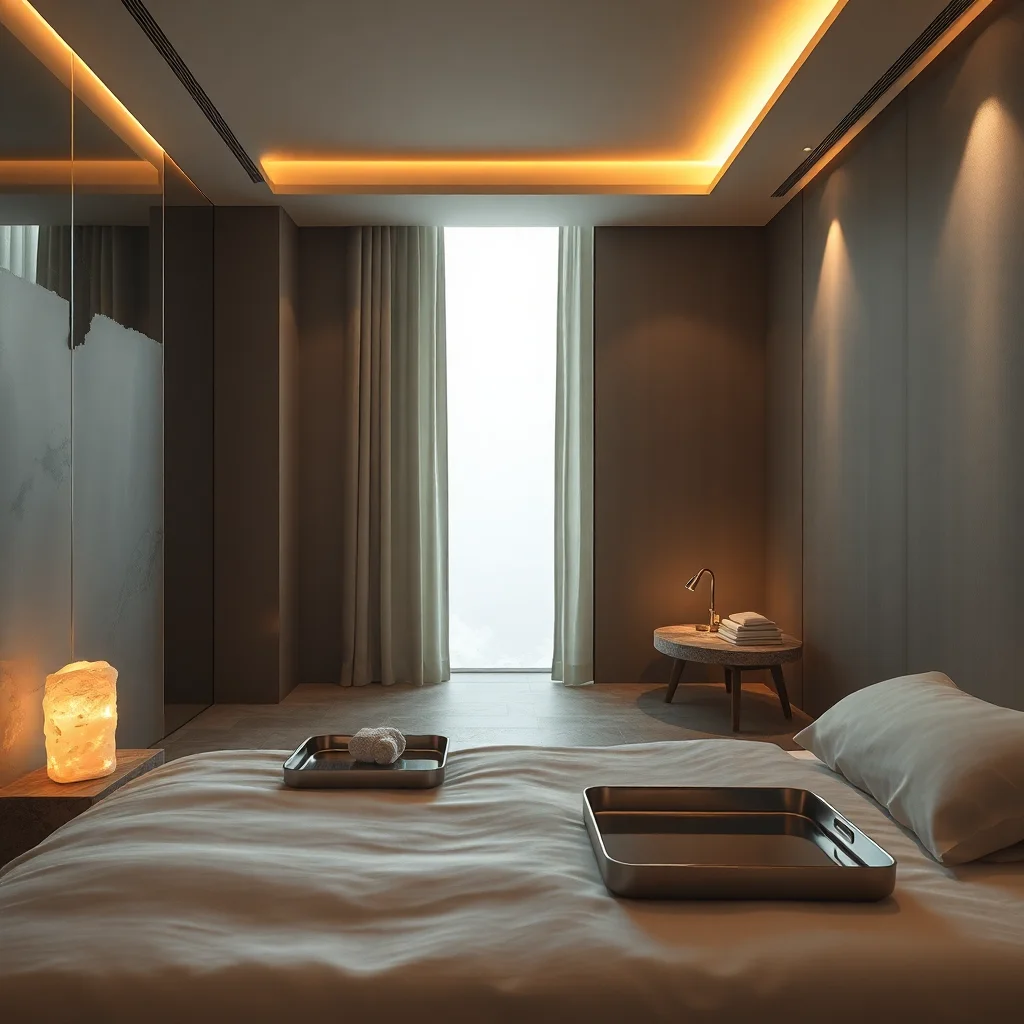
The Hotel Room as a Performance Device
The wellness hotel is no longer selling calm. It is selling compliance disguised as care. In the new hospitality script, a room does not simply house a guest; it measures, nudges, monitors, and optimizes them. The arrival of biohacking lounges, fermentation labs, circadian lighting systems, sleep coaching menus, and air-quality dashboards marks a deeper shift in interiors: the hotel becomes an instrument for behavioral engineering. Six Senses London, with its biohacking language and fermentation-led programming, sits squarely inside this transformation. It signals that the most desirable luxury is no longer plushness or privacy, but performance framed as self-improvement.
This matters because wellness interiors now borrow their authority from science, while often delivering a mood. The guest is invited to believe that light temperature, mattress firmness, mineral water, and guided breathing can recalibrate the body in measurable ways. Sometimes they can. But the real aesthetic victory is subtler: the room is redesigned so that productivity, discipline, and recovery collapse into the same polished environment. The result is seductive and unsettling. The room becomes a mirror for our obsession with optimization, and hospitality becomes a behavioral system with soft edges.
Design history helps explain why this shift is so effective. Modern interiors have long been implicated in reform, from the hygienic rationalism of early modernism to the domestic control fantasies of the corporate office. Today’s wellness hotel updates that lineage with better lighting, more sensual materials, and a vocabulary of care. Yet the logic is similar: regulate the body through space. The difference is that the language has changed from efficiency to vitality, from discipline to restoration. It is a rebrand of control that feels less authoritarian because it is wrapped in linen, stone, and biomimetic calm.
Why Wellness Became Hospitality’s Most Powerful Aesthetic

Wellness design is persuasive because it promises what architecture has always promised at its most ambitious: a better version of the self. In the hospitality sector, that promise has become commercially irresistible. Guests are no longer satisfied by spa clichés or generic serenity. They want measurable outcomes, or at least the feeling of measurable outcomes. That is why so many new hotels now adopt the visual language of laboratories, clinics, and sanctuaries at once. Stainless steel meets oak slats; soft drapery meets data-driven lighting; herbal cocktails meet microbiome language.
We can see the runway for this trend in projects beyond London. At Aman New York, wellness is not an amenity but a spatial framework, with vast bathing environments and an almost monastic control of acoustics and material transitions. In the Six Senses portfolio, from Ibiza to Crans-Montana, the interiors consistently fuse tactility with tech-assisted healing narratives. Equinox Hotel New York pushed the logic further, making sleep itself the brand’s central claim, supported by blackout systems, temperature control, and a high-performance aesthetic that treats rest like athletic training. These places do not merely host wellness; they curate an identity around it.
The design references are not accidental. You can trace the softness of these interiors to Ilse Crawford’s human-centered calm, the sensory layering of Joseph Dirand, or the mineral restraint associated with Axel Vervoordt. But the new wellness hotel borrows selectively, stripping away ambiguity and replacing it with operational certainty. Every cushion, scent, and lumen has a job. The room is rendered as an ecosystem, but one whose purpose is not ecological complexity; it is self-regulation. This is why wellness-led interiors feel so contemporary: they flatter the user’s desire to become a project.
That same obsession with atmosphere also shows up in more tactile domestic settings, where surface and feeling do much of the work. A room that leans on haptic interiors and touch-sensitive design understands that comfort is often registered through skin before it is processed as style. In wellness hotels, that sensory calibration can be deeply effective—but it can also become a persuasive technique, using softness to make control feel like care.
From Restorative Space to Behavioral Engineering
The trouble begins when “wellbeing” becomes indistinguishable from compliance. The wellness hotel offers a curated ideal body: rested, hydrated, balanced, bright, and awake at the correct times. That ideal is then encoded into space. Lighting adapts to circadian rhythms. Screens disappear. Friction is removed. The minibar is replaced by adaptogens, kombucha, and electrolyte sachets. Even the bath becomes a protocol. The guest is not asked to obey rules in the old-fashioned sense; instead, they are encouraged to internalize a lifestyle regimen that the interior quietly enforces.
Six Senses London is interesting precisely because it brings this logic into a city hotel context, where the pressure to perform is already embedded in the urban guest’s psyche. A biohacking lounge is not just a lounge; it is a promise that downtime can be quantified and upgraded. A fermentation lab is not just a playful culinary concept; it is a signal that the hotel understands the current fetish for gut health, longevity, and microbiome literacy. These rooms do not simply serve drinks and snacks. They translate wellness culture into spatial experience, giving architecture a role in the management of the self.
This is where the aesthetic becomes political. Behavioral design has a long corporate lineage, from workplace productivity systems to app-based habit tracking. In the wellness hotel, that logic is softened enough to be desirable. The surveillance is ambient, not overt. The discipline is self-selected, even celebrated. Guests pay to have their routines optimized. They inhabit an interior that tells them how to sleep, eat, breathe, and recover, while preserving the illusion that they are freely choosing transformation. The authoritarian part is masked by the spa towel.
It is no accident that these spaces often borrow from the visual language of other controlled environments, including the office. The appeal of a cocoon-like office with quiet zones for deep focus lies in the same promise: remove distraction, intensify concentration, and turn the room into a tool for better output. In hotels, that same mindset is rebranded as restoration, but the underlying ambition is strikingly similar.
The Case for Wellness-Led Interiors
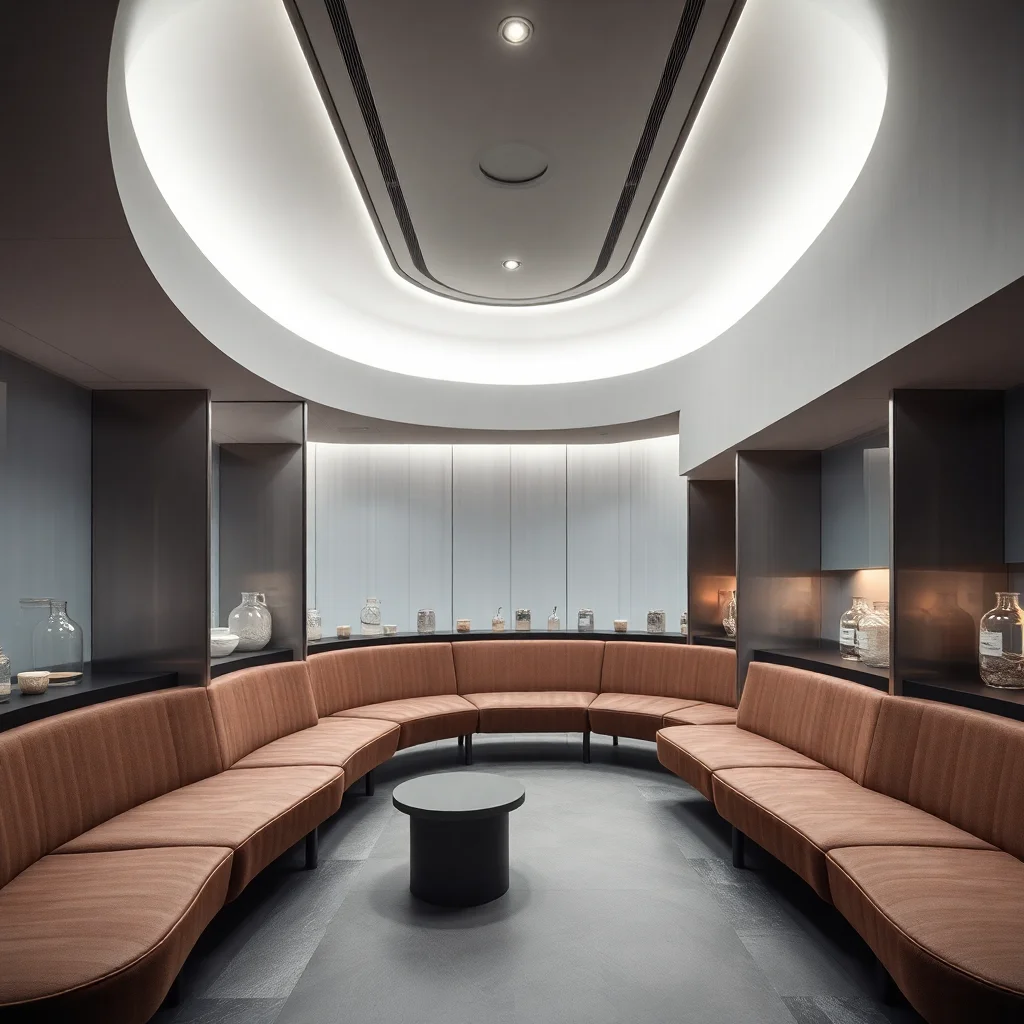
To dismiss wellness interiors as mere gimmick would be lazy. At their best, they respond to genuine fatigue: urban overstimulation, poor sleep, chronic stress, and the collapse of clear boundaries between work and rest. A carefully designed hotel can offer real relief. Materials matter. Acoustic softness matters. Access to daylight matters. So does the emotional intelligence of a room that does not overstate itself. The best wellness-led spaces, like those shaped by Studioilse or designed with the restraint of André Fu, understand that calm is not a theme park effect; it is a consequence of proportion, tactility, and pacing.
There is also an argument for hospitality as an educational environment. If a hotel introduces better sleep rituals, healthier food systems, or more thoughtful forms of restoration, it may help guests leave with habits that outlast the stay. In this sense, the wellness hotel can be seen as a prototype for better domestic design. It demonstrates how interiors might support bodies more intelligently. The problem is not the presence of care-oriented design; it is the tendency to overclaim its powers and monetize its aura.
Some designers have treated wellbeing with admirable seriousness rather than cliché. Neri&Hu often designs with a layered sensitivity to atmosphere, memory, and bodily movement, allowing space to feel restorative without becoming didactic. Similarly, projects influenced by Piero Lissoni or Vincent Van Duysen often achieve a quiet coherence that reads as healthful without shouting about it. These interiors do not brand themselves as solutions. They allow the body to settle. That distinction matters. There is a world of difference between designing for comfort and designing for optimization.
Materials can help make that distinction visible. The appeal of linen as a luxury bathroom status symbol is not just its softness but the way it signals a slower, more breathable mode of living—one that feels restorative without needing to announce itself as therapy.
The Case Against It: Calm as a Luxury Discipline
But the darker reading is impossible to ignore. Wellness interiors often operate as class-coded systems of self-surveillance. They teach guests to treat their own bodies like startups: track input, improve output, eliminate waste, and upgrade continuously. In this model, rest is not rest unless it can be justified as recovery. Pleasure is permitted if it can be metabolized into performance. Even softness becomes instrumental. The room does not shelter you from the outside world; it prepares you to re-enter it more efficiently.
That is why the visual culture of wellness can feel so unnerving. The palette is usually muted, the materials are “natural,” the gestures are minimal. Yet these same codes also signify purity, exclusion, and access. The price point of the wellness hotel ensures that optimization remains aspirational, not universal. The guest is invited to experience the benefits of a regulated environment while remaining oblivious to how much infrastructure is required to maintain it. Hidden systems, invisible labor, and constant monitoring are part of the package. The serenity is manufactured, and the manufacture is expensive.
There is also a philosophical problem. When every space is optimized for wellbeing, friction disappears from design vocabulary. But friction is not always bad. Sometimes discomfort, ambiguity, and sensory irregularity are what make a place memorable, human, or democratic. If every hotel room becomes a calibrated wellness chamber, interiors risk becoming morally homogenized. The guest is no longer challenged by the room; they are affirmed by it. And when affirmation becomes the main design output, the interior ceases to be spatial intelligence and becomes a lifestyle filter.
That search for purity can also erase color, unpredictability, and decorative excess. By contrast, the ongoing appeal of the return of kitsch in interior design suggests that some rooms still resist total optimization by embracing personality, irony, and the occasional productive clash.
What Comes Next for the Wellness Hotel
The future of hospitality will likely be split between two models. One will continue down the path of biohacked luxury: wearable integration, biometric feedback, personalized sleep environments, and nutrition as spatial programming. The other will push back with a more skeptical, tactile, and less programmable form of comfort. That counter-model may draw from historic houses, low-tech sanctuaries, or even imperfect, slightly unruly interiors that allow guests to slow down without being optimized.
The challenge for designers is not whether wellness belongs in hotels. Of course it does. The question is whether wellness is treated as a genuine spatial ethic or as a branding language for disciplined living. The best future interiors will not confuse the two. They will preserve the dignity of rest without converting it into a metrics-driven performance. They will understand that healing is not the same as optimization, and that a good room should not behave like a coach.
Six Senses London is therefore more than a new hotel story. It is a symptom of a broader cultural condition in which the self has become the primary design client. Interiors are now asked to do what therapists, apps, supplements, and wearables also claim to do: improve us. That is a spectacularly profitable ambition. It is also a deeply revealing one. When a hotel room becomes a tool for self-improvement, we should ask who is improving whom, and on whose terms.
FAQ
What makes a wellness hotel different from a traditional luxury hotel? A traditional luxury hotel emphasizes service, comfort, and prestige. A wellness hotel goes further by embedding health narratives into the interior itself, using lighting, materials, food, acoustics, and rituals to influence how guests feel and behave.
Is biohacking in hotels actually effective? Some features can be genuinely helpful, especially sleep-oriented design, acoustic control, and light regulation. But many biohacking claims are more persuasive as branding than as proven transformation, especially when they are bundled into a premium lifestyle experience.
Why are designers drawn to mineral tones, soft textures, and natural materials? These cues visually signal calm, purity, and recovery. They also help interiors feel less aggressive than conventional luxury, making the space appear restorative even when it is highly managed and technologically intensive.
Can wellness-led interiors avoid becoming overly controlling? Yes, if they focus on comfort rather than behavioral correction. The best spaces support the body without prescribing a lifestyle, allowing rest, privacy, and ambiguity instead of turning every guest into a self-improvement project.
Further Reading in the Room
The new wellness hotel is not a fad; it is the architectural expression of a cultural obsession with self-optimization. Its interiors are seductive because they appear to care. They soothe, they glow, they whisper. But they also nudge, track, and instruct. That tension is the point. The wellness hotel is not just where we stay anymore. It is where design attempts to improve the human being, one disciplined breath at a time.
So is the wellness hotel a genuine architecture of care, or merely the most elegant form of self-surveillance we have yet invented?
Get the Mainifesto weekly — curated design debates, speculative ideas and the week's best articles every Saturday.
Editorial Perspectives
Questions and counterpoints developed by the Mainifesto editorial desk to extend the discussion.
Perspective 1
If a room needs to coach, monitor, and optimize me just to justify its rate, we’ve already lost the plot. Wellness should be felt in frictionless check-in, sleep quality, and a layout that quietly helps guests recover—not in turning the room into a dashboard.
Perspective 2
The line between care and control is crossed the moment the environment starts collecting behavior data without a clear benefit to the guest. I’m not against healthier rooms, but the claims need evidence, and the systems need to be optional, legible, and minimal.
Perspective 3
You can make a room restorative with materials, light, acoustics, and touch—without wiring it into a nervous system of sensors. Once every surface is “smart,” the space stops being hospitable and starts feeling like it’s watching you.