
Linen Is the New Luxury Bathroom Status Symbol
Marble Was the Old Flex. Linen Is the New One.
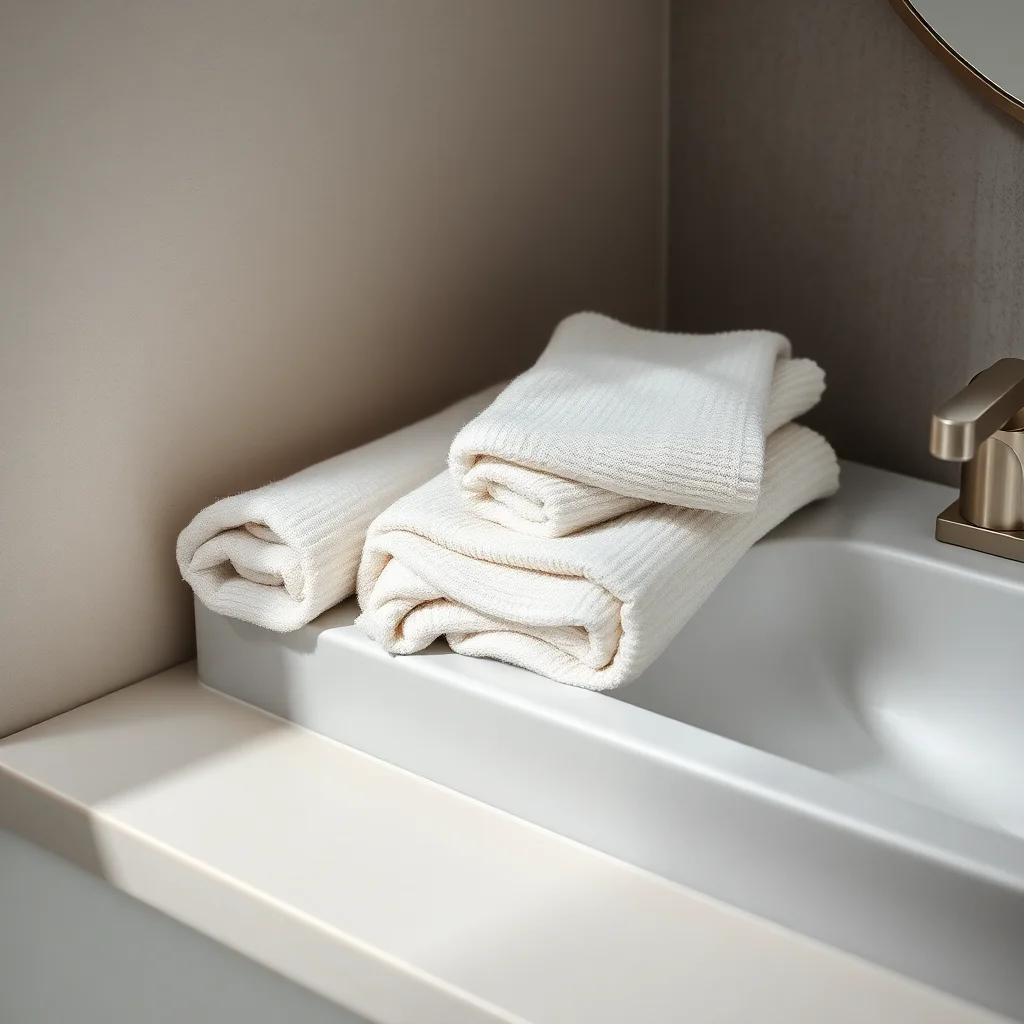
For two decades, the luxury bathroom was an exercise in permanence. Bookmatched marble, monolithic stone sinks, oversized slabs, and gleaming brass fixtures declared that taste could be measured in weight, cost, and scarcity. The message was simple: if you could quarry it, cut it, and install it in one almost unbroken gesture, you had arrived. But interiors do not stay loyal to the same theater forever. Today, the status signal is shifting from the hard and permanent to the soft and replaceable. Linen—especially in hand towels, bath sheets, robe layers, and bedroom pillows—has become the new badge of discernment.
This is not a retreat from luxury. It is luxury becoming more literate. A marble vanity tells you that the owner spent money; a linen towel tells you that the owner knows how to stage touch, absorbency, drying time, laundering, and ritual. In other words, the new prestige is not merely aesthetic. It is operational. The wealthiest interiors no longer just look expensive; they perform care.
Designers have been moving in this direction for years. Axel Vervoordt’s softened Belgian minimalism, Vincent Van Duysen’s warm austerity, and Ilse Crawford’s human-centered interiors all reject the cold authority of decorative excess in favor of tactility, proportion, and domestic ease. The same shift now appears in bathrooms, where the smallest textile changes can eclipse a heroic slab of stone. A folded linen hand towel, a robe hung with intention, a bath tray dressed like a still life: these are not accessories. They are declarations.
Marble still matters, of course. But it is no longer enough to impress on its own. In a world saturated with visual sameness on social media and in high-end developments, texture has become the true currency. Linen signals that the owner understands the choreography of daily life, not just the render of it.
The Bathroom Has Become a Stage for Care
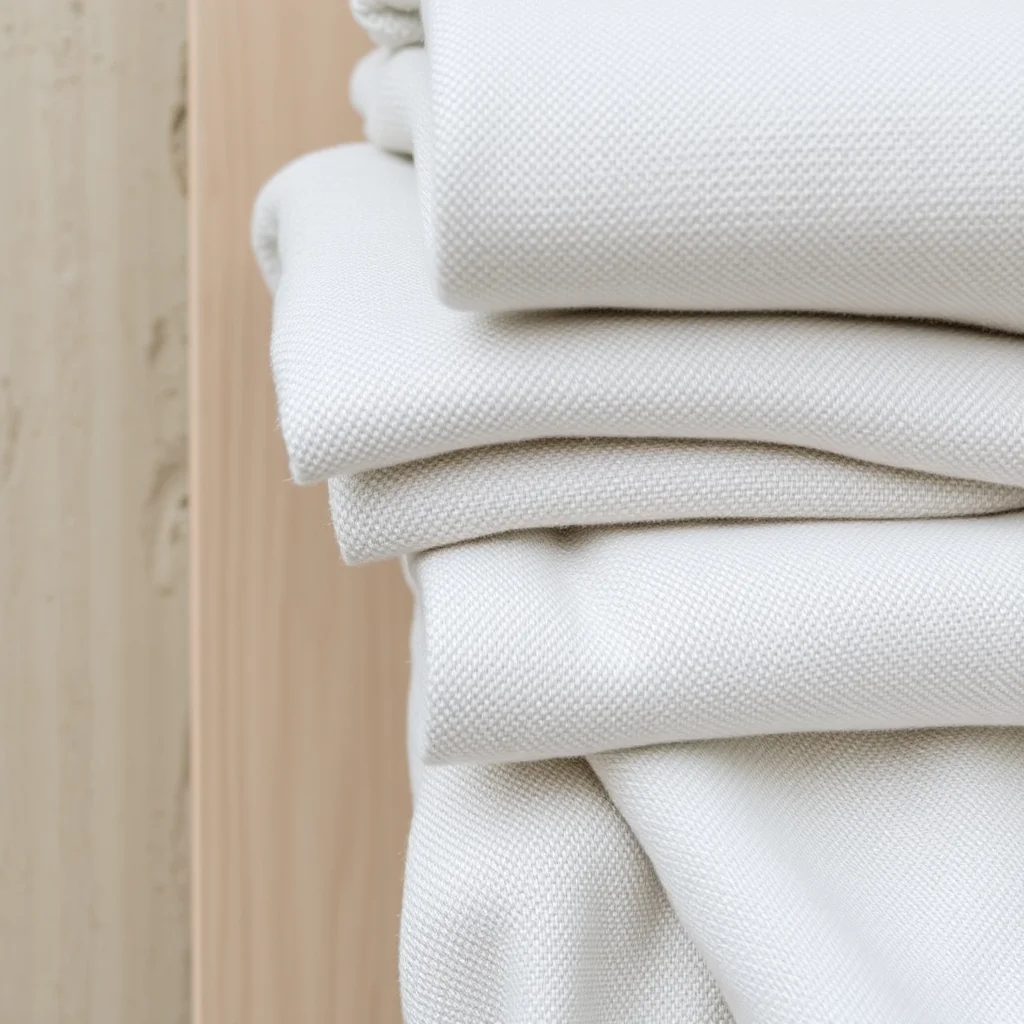
The luxury bathroom used to advertise transformation: large baths, gleaming surfaces, spa references, a promise that you could exit the world and become a better version of yourself. Yet the pandemic, the wellness economy, and the rise of hospitality-inspired residential design changed the script. Bathrooms are now expected to do more than impress guests. They must support routines, rituals, and a believable sense of calm. This is where linen enters as a quiet power move.
Consider the difference between a bathroom that is all shell and a bathroom that feels inhabited. The former may be visually complete, but the latter has texture density: a stack of washed towels, a slim tray holding soap and cream, a robe hung within reach, a slightly rumpled pillow on a daybed in an adjacent dressing room. These details make a home look lived in without looking careless. They suggest there is a system behind the beauty—someone is paying attention.
That attention is now socially legible. Luxury buyers and design clients increasingly want interiors that signal not just money, but intelligence and restraint. Linen fits this perfectly because it is simultaneously humble and exacting. It wrinkles, yes, but that wrinkle is part of its authority. It reads as cultivated nonchalance, the same way old money supposedly does. In reality, it is a highly managed softness.
Hospitality brands understood this early. The quiet power of places like Casa Brera in Milan or the restrained tactile world of Edition hotels lies in their textiles as much as their architecture. The room may be severe, but the towels are generous, the sheets are crisp, and every surface near the body is choreographed for comfort. Residential interiors have absorbed that lesson with enthusiasm.
For designers interested in this shift, the conversation is no longer only about materials but also about sensation. The best rooms now borrow from haptic interiors, where touch, temperature, and texture are treated as core design elements rather than finishing touches. That approach helps explain why a well-made towel or robe can feel more luxurious than a decorative object that never meets the body.
Why Linen Feels More Expensive Than Stone
Stone is immutable. Linen is alive. That distinction matters. In a prestige economy increasingly suspicious of overt display, objects that age, crease, soften, and improve with use carry a more sophisticated kind of value. Linen does not announce itself with glare. It whispers through hand-feel, drape, and breathability. It suggests time: the time to choose it, the time to wash it properly, the time to replace it when it wears out. That temporal richness is part of the luxury.
Designers such as John Pawson have long championed the power of reduction, but the current mood is less about emptiness and more about tactile calibration. Linen supports this shift because it sits between austerity and comfort. It can make a stark bathroom feel human, and it can make a richly detailed one feel less theatrical. Paired with pale plaster, oak cabinetry, or veined stone, it introduces frictionless softness. Paired with lacquer or polished chrome, it interrupts the cold with something almost sensory enough to be emotional.
There is also a political dimension. The old luxury bathroom often spoke the language of extraction: rare stone, difficult logistics, visible consumption. Linen, by contrast, carries a different kind of prestige—one tied to domestic intelligence, ecological awareness, and the ethics of reuse. High-quality linen can last for years, improving with laundering and patience. It is less about imposing permanence on a space and more about participating in it.
This is why the most persuasive interiors today rarely rely on one monumental gesture. They succeed through accumulation: a towel that has the right weight, a bath tray in timber rather than marble, pillows in washed linen instead of glossy sateen, a robe with enough structure to hang beautifully. These are the materials of contemporary distinction.
In nearby rooms, the same sensitivity can appear in glazing and partition choices. Projects that use ink-injected glass partitions prove that even hard architectural elements can be made atmospheric, allowing privacy and softness to coexist without sacrificing clarity.
PRO: Textile Upgrades Signal the New Literacy of Luxury
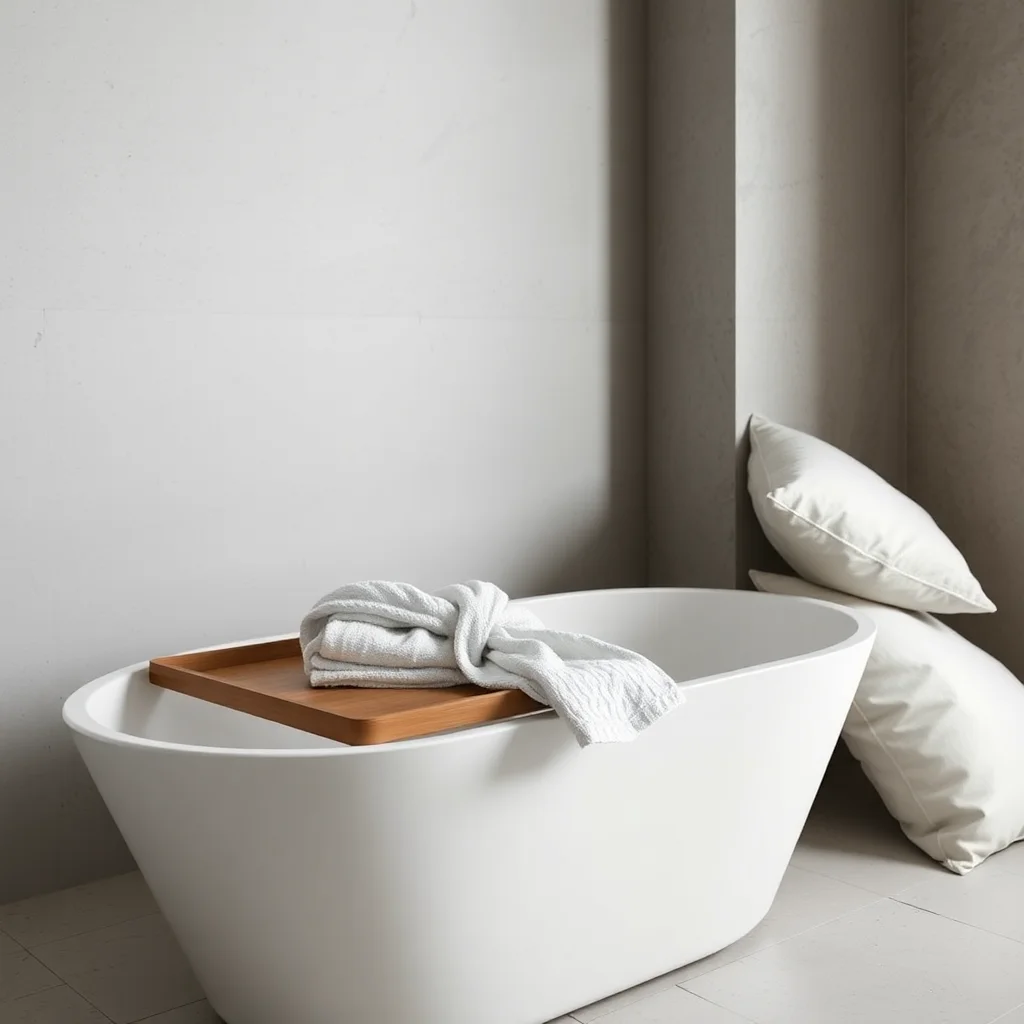
Proponents of the linen turn are correct: textiles are the clearest sign that luxury has matured beyond surface branding. A guest can be dazzled by marble once. A guest remembers how a towel felt against damp skin every morning. That is not a minor detail; it is the whole argument. In this model, the most impressive interior is the one that anticipates the body.
Take the bath tray, once a generic spa prop and now a design object in its own right. When specified in oak, walnut, or brushed aluminum and styled with a folded linen cloth, it becomes a miniature domestic theater. The same goes for a bedroom pillow layered in washed linen behind a more formal cushion. These are signals of comfort arranged with almost curatorial precision. They suggest the owner understands hierarchy: what is seen first, touched second, and used last.
Designers like Rose Uniacke and Studio Ashby have normalized this kind of softness at the top end of the market. Their rooms rarely scream for attention, but they are exacting in the way fabrics are toned, layered, and aged. The result is a kind of understated prestige that feels more contemporary than any slab of imported marble. It is not less luxurious; it is more socially intelligent.
In an era of constant documentation, linen also photographs better than many hard finishes. It records shadow, movement, and the evidence of use. That means it carries a narrative. A perfectly polished bathroom can seem sterile; a linen-dressed one can seem curated, inhabited, and emotionally available. That is why textile upgrades have become the new markers of taste: they imply not just expense, but sensitivity.
The same logic extends beyond the bathroom into the wider home. Wellness-minded layouts that include quiet corners and restorative pauses often pair linen with softer planning, much like the ideas explored in holistic home hubs, where atmosphere and daily restoration are designed as part of the architecture of living well.
CONTRA: Hard Surfaces Still Own the Architecture of Power
And yet the cult of linen has limits. If marble was overused, linen risks becoming the new universal signifier of approved taste—an easy shorthand for softness, wellness, and understated wealth. Once every aspirational interior adopts the same oatmeal palette, the same relaxed towels, the same staged robe hook, the effect can become as formulaic as the marble bathrooms it replaced.
There is also a real danger of mistaking comfort for design seriousness. Linen can soften a room, but it cannot hold a plan together by itself. Architecture still depends on structure, proportion, and material clarity. A bathroom without good stone, tile, or spatial discipline is not redeemed by an expensive towel. Likewise, a bedroom pillow in Belgian linen cannot compensate for poor lighting or weak joinery. Textile luxury works best when it is the final layer, not the entire concept.
Moreover, hard surfaces still perform a symbolic role that textiles cannot fully replace. Marble, terrazzo, and honed stone carry durability, gravity, and a sense of civic confidence. In certain contexts—monumental bathhouses, formal residences, or projects that intentionally court grandeur—these materials remain indispensable. The new status symbol is not a rejection of architecture. It is a recalibration of what comes after architecture.
The smartest interiors understand this balance. They do not replace stone with linen; they place linen against stone to create tension. The prestige lives in the contrast. A bathroom that pairs tactile textiles with rigorous surfaces reads as composed. A bathroom that relies on one or the other risks becoming either coldly performative or vaguely pastoral.
The Real Luxury Is Choreography
What linen really reveals is that domestic prestige has moved from objects to behaviors. A beautiful towel matters less as a single item than as part of a sequence: folded, stacked, changed, laundered, replenished, and used at the right moment. The same is true of pillows, bath trays, and robes. Their power lies in choreography. They tell you that someone has anticipated the guest, the morning routine, the post-shower pause, the bedtime reset.
This is where the design conversation becomes more interesting than a simple material swap. We are watching the rise of comfort as a designed experience rather than an incidental condition. The best interiors now resemble good hospitality: everything arrives in the right place, with the right texture, at the right time. That is why linen has become so potent. It is not just beautiful. It is administratively beautiful.
For architects and designers, the challenge is to avoid the obvious version of this trend. Do not merely add linen for the look of it. Use it to sharpen transitions: between wet and dry zones, public and private areas, sleeping and bathing, formal and informal. Let textiles mediate the architecture rather than decorate it after the fact. When done well, the result is not softness for its own sake, but a richer experience of domestic order.
The new status symbol in bathrooms is linen because linen understands the present moment better than marble does. It is less about owning permanence than mastering everyday life. In a culture that increasingly equates taste with emotional intelligence, that may be the most luxurious statement of all.
FAQ
Is linen replacing marble in luxury bathrooms?
Not entirely. Marble still signals permanence and status, but linen now signals a more contemporary luxury: tactility, care, and lived-in refinement. The strongest interiors often use both, letting linen soften the authority of stone.
Why do textiles feel more prestigious now?
Because they reveal behavior, not just budget. High-quality towels, bath trays, and pillows imply ritual, maintenance, and an understanding of how a home functions day to day.
What kinds of linen upgrades matter most?
Hand towels with proper weight, bath sheets with good drape, robes that hang beautifully, and pillows in washed linen are the most persuasive. They are visible, tactile, and immediately tied to comfort.
How do designers use linen without making a room feel generic?
By treating it as part of a wider material conversation. Linen works best against stone, timber, plaster, or metal, where its softness creates contrast instead of cliché.
What Happens When Comfort Becomes the New Architecture of Status?
Watch the Mainifesto Short
Get the Mainifesto weekly — curated design debates, speculative ideas and the week's best articles every Saturday.
Editorial Perspectives
Questions and counterpoints developed by the Mainifesto editorial desk to extend the discussion.
Perspective 1
Marble has always been a bit of a flex, but linen feels like a quieter one that actually works in daily life. If the room is easier to use, easier to maintain, and still feels considered, then I’d call that smarter luxury rather than just a softer status signal.
Perspective 2
Linen makes sense to me because it carries the mark of use and care, not just expense. The luxury is in how it feels, how it ages, and the way it changes the room’s rhythm every day. That’s not just conspicuous consumption; it’s craftsmanship becoming part of domestic ritual.
Perspective 3
In hospitality, the best luxury is the one guests feel without having to decode it, and linen does that better than another slab of stone ever could. The open question is whether it improves the experience or just gives people a new thing to photograph—if it’s only the latter, it’s still conspicuous consumption, just with better taste.
Perspective 4
I’m skeptical of any trend that claims to be more intelligent just because it’s softer. If linen becomes a code for discernment, it’s still a code, and codes are how status works. The real question is whether these rituals improve daily life enough to matter once the styling gets stripped away.
Perspective 5
I can see the appeal, but most of this is still status by another name. Linen towels and a better bathroom routine are nicer to live with than a slab of marble, sure, but if the point is to signal taste, it’s still signalling. The difference is that it looks more relaxed and costs less to show off about.