
Can Earth Buildings Scale Beyond Romance?
Earth Is No Longer a Nostalgic Material. It Is a Test.
For decades, mud construction was treated like architectural folklore: admirable, poetic, and safely marginal. It belonged to eco-retreats, self-build cabins, and the occasional virtue-signaling villa where tactility mattered more than code, cost, or speed. That era is ending. As climate pressure intensifies, earth buildings are reappearing not as rustic leftovers but as serious thermal systems—thick, breathable, low-carbon envelopes that can cool, buffer, and age with dignity. The question is no longer whether mud can be beautiful. The question is whether it can be scaled without being turned into a lifestyle accessory for the wealthy.
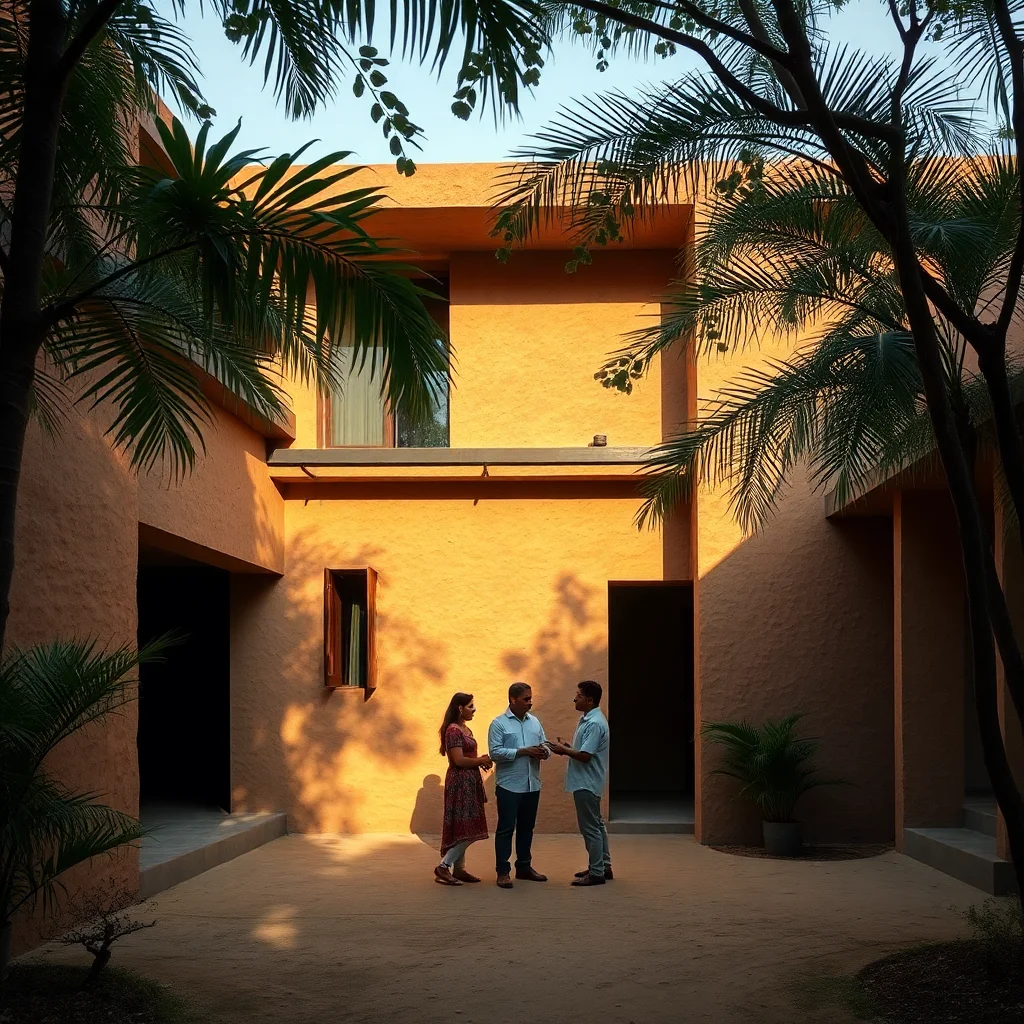
The recent mud house in Hosur by Aagaram Architects makes that argument with unusual clarity. Its value is not that it “looks natural,” but that it reorders the relationship between structure, material, and climate. The house suggests a discipline that has been missing from much contemporary green architecture: instead of adding sustainability as an overlay, it lets earth become the architecture itself. That is a much more radical proposition than cladding a standard frame in recycled materials and calling it responsible. If mud construction is to matter, it must stop behaving like an exception and start acting like a system.
And that shift is politically charged. Earth buildings are often praised for their low embodied carbon, local sourcing, and thermal mass, but those virtues only become transformative when they are repeatable. Otherwise, they remain boutique ethics: good intentions wrapped in artisanal scarcity. The mainstream market has room for a material that can lower cooling loads, reduce transport, and support regional labor. What it does not yet have is a convincing industrial pathway that preserves the rough intelligence of earth without sanding it into an aesthetic trend.
What Hosur Proves: Thermal Intelligence Can Be Tangible
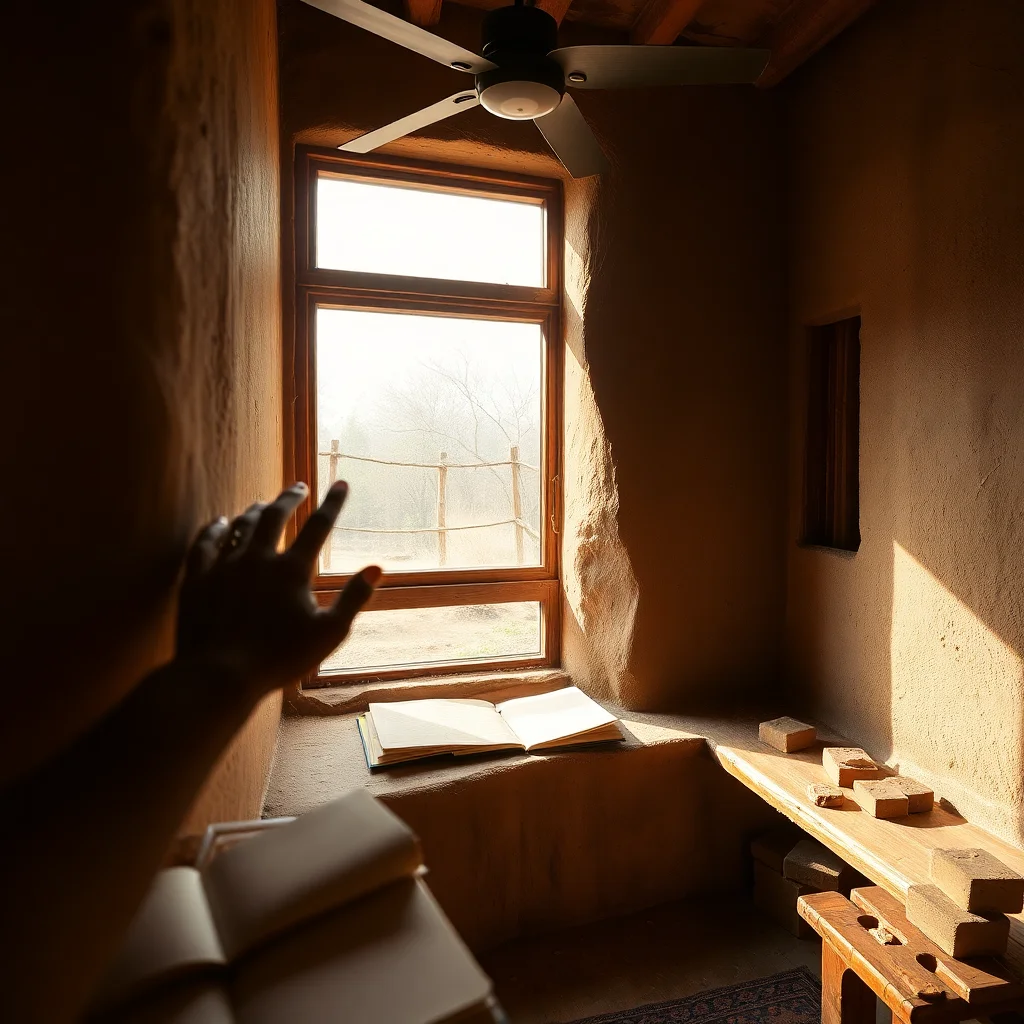
The Hosur residence matters because it treats climate response as spatial form, not technical add-on. In hot Indian conditions, thick earthen walls can moderate temperature swings, and shaded openings can reduce glare while maintaining airflow. This is not nostalgia; it is environmental logic that many glass-and-concrete homes still ignore at great cost. The architecture gains performance through mass, shade, and porosity—qualities modern construction often tries to engineer away in favor of thinness and speed.
That logic has precedents, but few are as persuasive when contemporary life is the benchmark. Hassan Fathy’s work in Egypt showed how earth could serve both dignity and climate in vernacular housing. Martin Rauch, especially through the Granat House and later rammed-earth projects in Europe, helped demonstrate that earth can be precise, architectural, and not merely “handmade.” Anna Heringer’s METI School in Bangladesh and her later work continued the argument that local materials can generate civic pride instead of developmental shame. Each of these projects resists the fantasy that advanced architecture must arrive as imported technology.
Yet the crucial point is not that earth buildings are old. It is that they are compatible with present-day demands for comfort and clarity when design is disciplined. The Hosur house does not need to shout its greenness. It performs it through mass, texture, and climate literacy. That is precisely why earth deserves attention now: because a low-carbon future will fail if it depends only on efficiency gadgets and invisible systems. We need buildings that think with their bodies.
That is also why projects like When Architecture Stops Hiding Its Ecology feel so relevant here: they point to a broader shift in which environmental performance is no longer concealed behind neutral finishes, but made part of the architectural expression itself.
The Main Objection: Mud Is Still Too Slow, Too Fragile, Too Romantic
Every argument for earth construction collides with the same skeptical triad: time, durability, and perception. Mud is assumed to be labor-intensive and weather-sensitive, and in many markets it still is. If a house takes too long, costs too much, or scares buyers who expect a “permanent” building to resemble concrete, the material loses before the debate begins. The mainstream construction economy is not set up to reward patience or regional specificity. It rewards standardization, subcontracting, and bank-friendly predictability.
That is why earth buildings so often end up as one-offs. They are commissioned by clients willing to tolerate experimentation and by architects willing to absorb complexity. The result is that mud becomes a sign of cultural capital. It reads as refined precisely because it is rare. But rarity is a trap. If a material’s prestige depends on artisanal exception, it cannot solve housing at scale, and it cannot be called a mainstream climate response. It remains a curated rebellion.
There is also a deeper aesthetic risk: once earth is absorbed into luxury architecture, it can become a luxury effect. Thick walls, hand-finished surfaces, and earthy tones can be packaged as atmosphere, detached from their ecological purpose. The industry already knows how to sell “natural” as premium. The challenge is to protect mud construction from becoming just another wellness aesthetic for expensive homes with good lighting.
Scale Will Come From Systems, Not Slogans
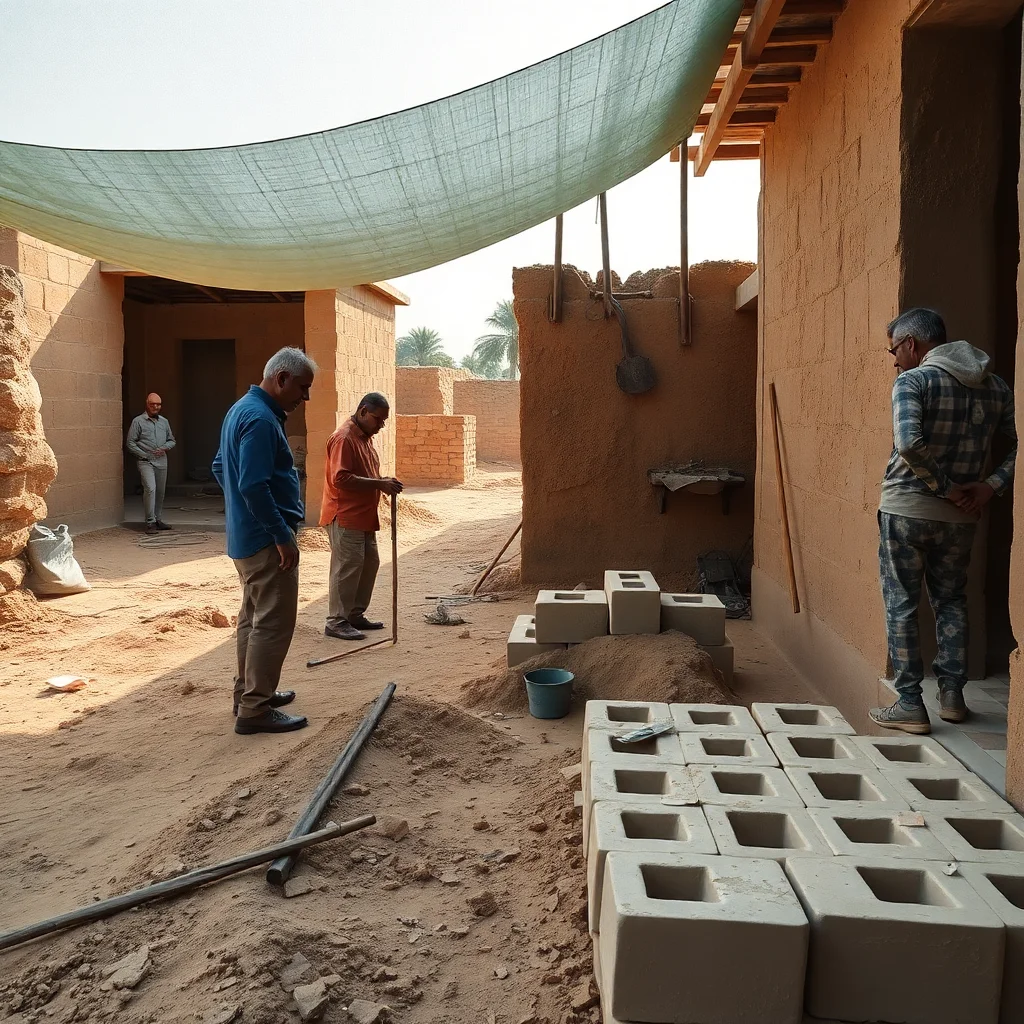
If earth buildings are going to scale, the path will not be through heroic individual commissions alone. It will come through hybrids, prefabrication strategies, repeatable wall sections, stabilized earth techniques, and a stronger ecosystem of training and building codes. The most promising models do not fetishize purity. They mix earth with structural intelligence, moisture control, and carefully chosen reinforcements. In other words, the future of mud may depend on its willingness to be less romantic and more technical.
There are already hints of this shift. Rammed earth has become more legible to contemporary architects because it produces crisp geometries and reliable finishes. Adobe and compressed earth blocks offer more modularity than monolithic walling. Research groups and practitioners have been exploring how to standardize details around foundations, roofs, and plinths to extend lifespan without losing material honesty. The point is not to industrialize earth into anonymity. The point is to make it less dependent on artisanal improvisation.
This is where policy matters. A material does not scale because it deserves to; it scales because finance, regulation, and labor systems make it possible. Earth buildings need code pathways that recognize performance beyond conventional assumptions. They need insurers who understand that good detailing matters more than material prejudice. They need contractors trained to work with local soils, not just imported specifications. Until then, every successful mud building will be celebrated as evidence of possibility while still being treated as an outlier.
For a related discussion of how design culture translates performance into something people can actually perceive, Why Daylight Is Architecture’s Next Performance Metric offers a useful parallel: measurable qualities matter most when they become legible in everyday experience.
Why Designers Keep Returning to Earth Anyway
Designers return to earth because it refuses the emptiness of generic modernity. Concrete is ubiquitous, steel is legible, glass is seductive, but earth carries a different ethical charge: it makes architecture accountable to place. It is local in the deepest sense, not as branding but as geology. That is why earth resonates in a period shaped by climate anxiety and material fatigue. It offers not just lower carbon, but an architectural language that feels grounded because it literally is.
Contemporary practice is increasingly interested in that groundedness. Think of Francis Kéré’s work, where compressed earth and climate-responsive planning are inseparable from dignity and public life. Think of earlier earth experiments by architects who understood that sustainability is not a garnish. In the right hands, earthen construction can produce spaces that are quiet, thick, and emotionally legible—spaces that do not need the theatrical precision of digital fabrication to feel contemporary. Their modernity lies in restraint.
But restraint is not enough. The material has to compete with the default house of the market, and that means refusing two lazy positions at once: the technocratic claim that only fully industrialized systems are viable, and the romantic claim that earth should remain rough and rare. If the future is serious, it will need mud that is engineered enough to be bankable and expressive enough to be desired.
This tension between usefulness and meaning is part of a larger architectural conversation about domestic life, one explored in Do We Still Need a Universal Home?, where the house is treated less as a fixed typology and more as a question about how life, climate, and culture should fit together.
What a Mainstream Earth Building Agenda Would Require
To move beyond the romantic one-off, earth architecture must become a coordinated practice rather than a stylistic niche. That means more than good intentions and a few award-winning projects. It means supply chains that shorten travel distances, prototypes that can be replicated across climates, and educational programs that treat soil as a design material rather than an anecdote. It also means accepting that the most sustainable building may not be the one with the most visible “green” identity.
A plausible mainstream agenda would include:
- Code-friendly details: standard wall sections, moisture protection, and roof interfaces that can be adopted by regular contractors rather than specialist teams.
- Hybrid construction: combinations of earth with timber, stone, or low-carbon concrete where necessary, instead of purity tests that slow adoption.
- Regional material chains: local soil analysis, local labor, and local maintenance knowledge so the building economy stays closer to the site.
- Performance evidence: measured thermal comfort data, lifecycle assessments, and long-term maintenance records that make earth legible to lenders and public agencies.
- Contemporary aesthetics: not rustic clichés, but spatial clarity, disciplined proportions, and light-filled interiors that make mud desirable beyond sustainability circles.
This is the real battleground. If earth buildings are confined to the visual language of retreat, they will remain a niche morality. If they can be designed as normal architecture—clear, adaptable, and materially intelligent—they might become a serious answer to the carbon crisis. Hosur is valuable because it points in that direction without pretending the road is easy.
The architectural establishment loves a comeback story. But earth is not returning to save us through charm. It is returning because the standard model is too carbon-heavy, too thermally stupid, and too detached from place. The material’s future depends on whether architects are willing to trade a little spectacle for a lot of systemic thinking. That is a hard bargain in a culture addicted to image. It may also be the only one that matters.
FAQ
What makes earth buildings climate-responsive?
Earth walls have high thermal mass, which helps stabilize indoor temperatures by absorbing heat during the day and releasing it later. When paired with shade, ventilation, and good roof detailing, they can significantly reduce cooling demand.
Are mud houses durable enough for contemporary use?
Yes, when they are properly detailed and protected from persistent moisture. Modern earthen construction often uses stabilized mixes, raised plinths, and robust roof overhangs to extend lifespan far beyond the stereotype of fragile mud walls.
Why are earth buildings still rare if they work?
Because the construction industry rewards speed, standardization, and financial predictability. Earth buildings often require local knowledge, careful detailing, and client patience—conditions that mainstream housing systems rarely encourage.
Can earth construction ever become affordable at scale?
Potentially, but only if codes, training, and supply chains adapt. Earth can be affordable when it uses local material and labor efficiently; the barrier is less the material itself than the lack of systems built around it.
What this debate really asks: should architecture keep treating mud as a charming exception, or is it finally time to design for a future where earth is ordinary?
Get the Mainifesto weekly — curated design debates, speculative ideas and the week's best articles every Saturday.
Editorial Perspectives
Questions and counterpoints developed by the Mainifesto editorial desk to extend the discussion.
Perspective 1
Earth construction doesn’t need to stay in the category of “special” architecture, but it does need standards, supply chains, and boring repeatability. If we want it to scale, the real question is not whether mud is charming; it’s whether permitting, durability, and labor models can be made as ordinary as concrete.
Perspective 2
There is always a temptation to dress necessity in rustic virtue, as if mud were a moral correction to modernity. The risk is that earth becomes another curated aesthetic for the well-intentioned, while the real issue—housing at scale—remains politely unaddressed.
Perspective 3
Earth has never been an exception in much of the world; it was the default, until industrial prestige rewrote the story. What worries me is when the revival gets packaged as lifestyle architecture and detached from local labor, maintenance knowledge, and affordability.
Perspective 4
Yes, but only if we stop treating earth as a handcrafted object and start treating it as a design system. I want to know how digital tools, material testing, and modular detailing can make earthen housing faster without flattening the regional intelligence that makes it valuable.
Perspective 5
Earth can scale, but not as a boutique climate story for wealthy clients with a taste for texture. If governments, codes, and contractors don’t align around local material economies, then “earth buildings” stay a niche while cement keeps winning by default.