
Architecture That Lets Weather Author the Plan
Architecture Should Stop Pretending It Can Outrule the Climate
For decades, architecture has behaved as if the plan were sovereign: a fixed script imposed on site, weather, and use. Studio i/thee’s recent body of work refuses that fantasy. Their projects, grounded in mud, algae, wood, touch, and seasonal change, suggest that buildings do not have to be fully resolved before they are made public. Instead, architecture can be partially authored by the very forces modern design has spent centuries trying to suppress.
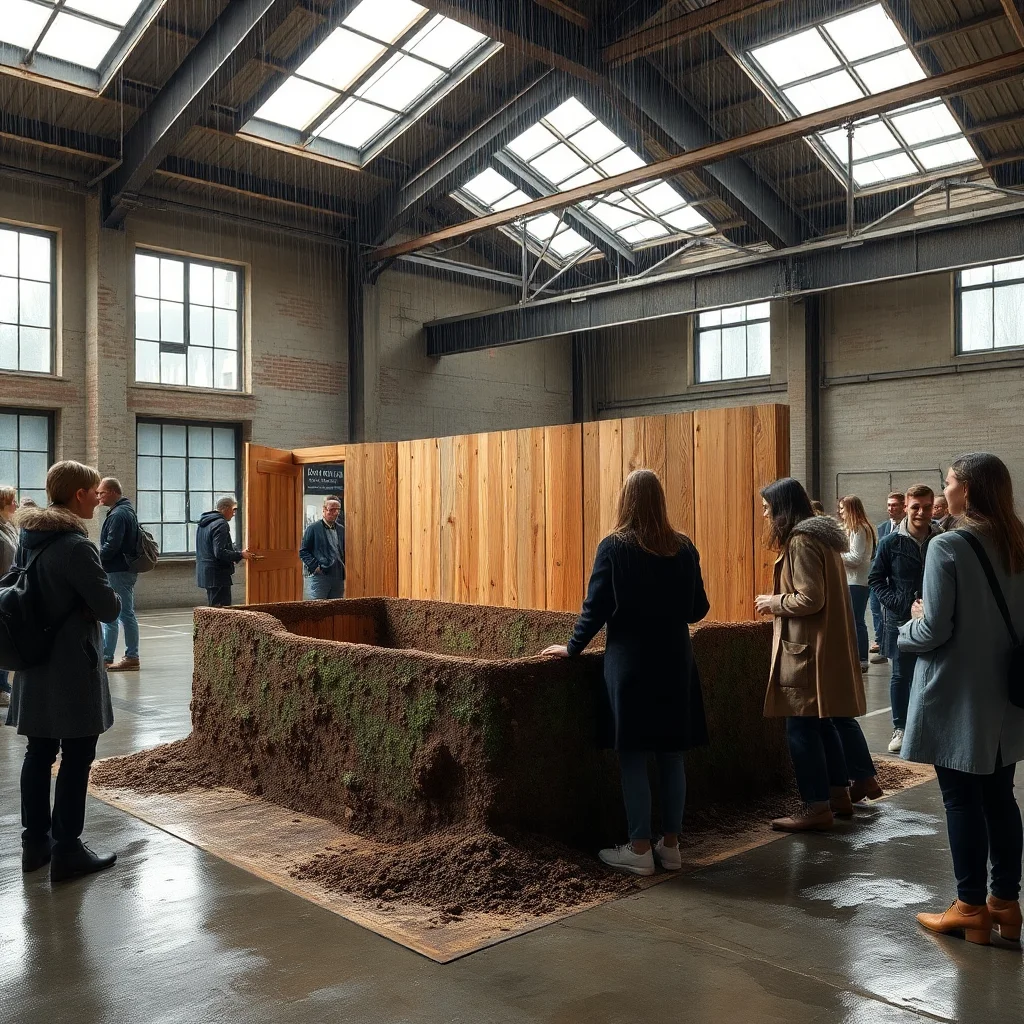
This is not a retreat into vague naturalism. It is a disciplinary challenge. If the atmosphere is already shaping temperature, decay, surface, and occupation, then why shouldn’t it shape form and behavior too? In the studio’s hands, ecological experimentation becomes a civic proposition: a design method that invites contingency rather than resisting it. The result is architecture that is less like a finished object and more like a negotiated field—one where mud stains, algae grows, wind dries, rain softens, and visitors complete the work through use.
Studio i/thee’s significance lies in how generously it treats unpredictability. Their work, highlighted in the designboom feature, frames public space as something porous and responsive rather than sealed and authoritarian. That position lands hard in a profession still addicted to control. The provocative claim here is simple: the next architectural ethic may not be measured by stability of form, but by the intelligence with which a project absorbs weather as part of its identity.
From Finished Objects to Living Agreements
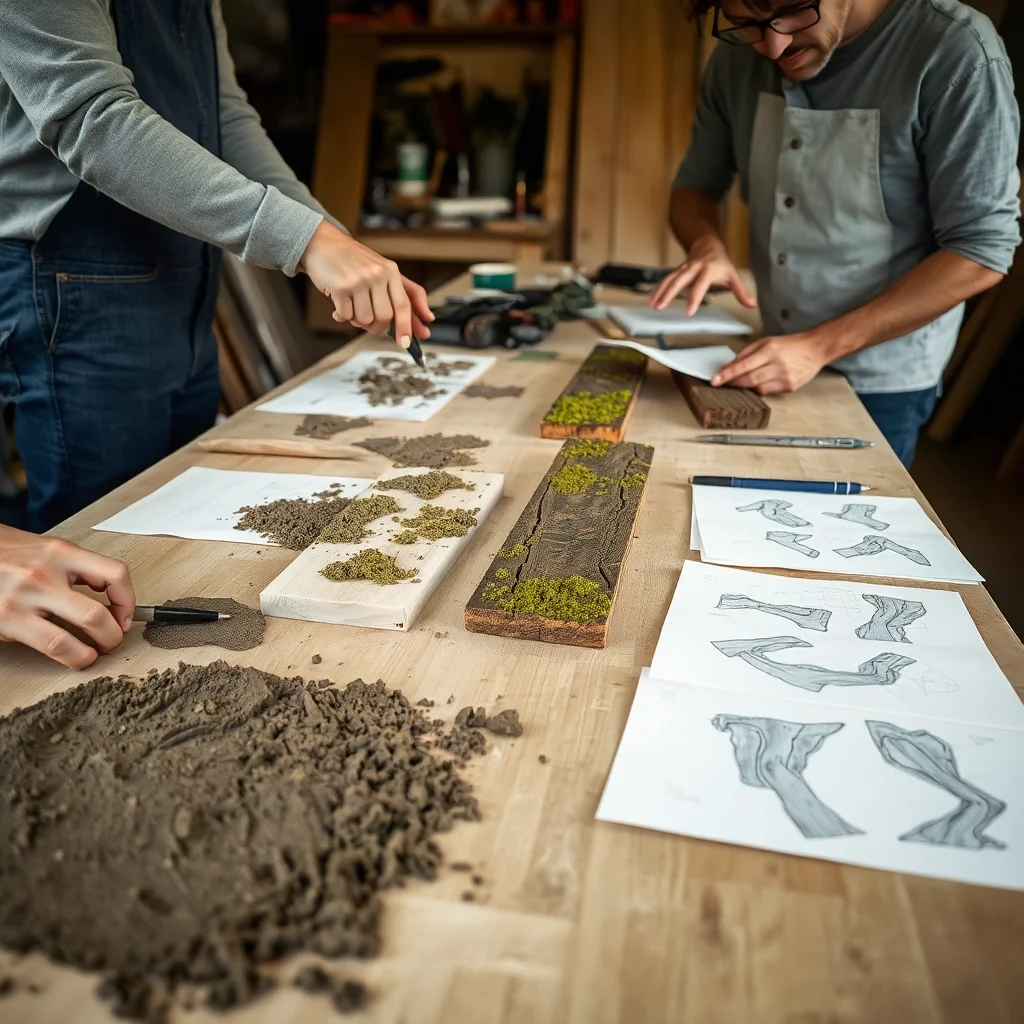
The shift demanded by this approach is philosophical before it is technical. Traditional architecture equates success with completion: the design is done, the details are resolved, the envelope is watertight, and the user is invited to comply. Yet projects shaped by mud, algae, and weather propose a different contract. They ask what happens when the building remains open to alteration by climate and collective occupation after the opening photograph is taken.
This idea has deep precedents. Neri Oxman’s material ecology research, though often speculative, argues for design systems that blur the line between form and growth. Fernando Higueras’s “organic” structural thinking and Frei Otto’s tensile experiments also treated shape as a negotiation with force rather than a decree. More recently, architects working with bio-receptive surfaces, such as those using lime-rich facades designed to host moss and microorganisms, have pushed toward a living envelope. Studio i/thee’s contribution is less about high-tech futurism than about tactility and public life: they make weather legible and socially useful.
That matters because most climate-adaptive architecture still treats environmental fluctuation as a risk to be managed by sensors, automation, and concealed systems. The smarter proposition is far more radical: let the environment remain visible. Let rain leave a trace. Let seasonal dampness alter color. Let algae not merely be tolerated but anticipated as a collaborator in the building’s slow transformation. In this view, change is not damage. Change is a record of life.
That same sensibility helps explain why when architecture stops hiding its ecology matters now: the most credible climate design is increasingly the one that exposes its environmental dependencies instead of concealing them.
Mud, Algae, and Wood as Co-Designers
What makes Studio i/thee’s work compelling is not simply the choice of materials, but the choice to let those materials act. Mud carries memory of place. Algae signals humidity, shade, and time. Wood weathers, warps, and darkens with exposure. These are not passive finishes; they are active agents in a temporal composition. The project becomes less about freezing a singular image and more about choreographing a range of states that can coexist across weeks, months, and seasons.
There is an architectural ethics embedded here. Materials are not merely selected for performance metrics or aesthetic consistency. They are chosen because they can tolerate uncertainty and reveal it productively. In public space, that is a profound shift. A wall that changes with rain or a surface that invites touch is not weak; it is democratic. It acknowledges that people, animals, moisture, and weather all have claims on the space.
Architectural history is full of attempts to deny this reality. The modern sealed building imagines the exterior as threat and the interior as purity. By contrast, Studio i/thee’s work aligns more closely with traditions of vernacular adaptation: earthen construction, timber structures that age visibly, and regional techniques that assume maintenance as part of design, not an afterthought. The novelty is not the use of humble substances. The novelty is the refusal to make them behave as if they were inert.
Seen through that lens, the return of soft architecture becomes less a style trend than a shift in values: pliability, weathering, and maintenance are no longer signs of compromise but of intelligence.
Public Space After the Monument
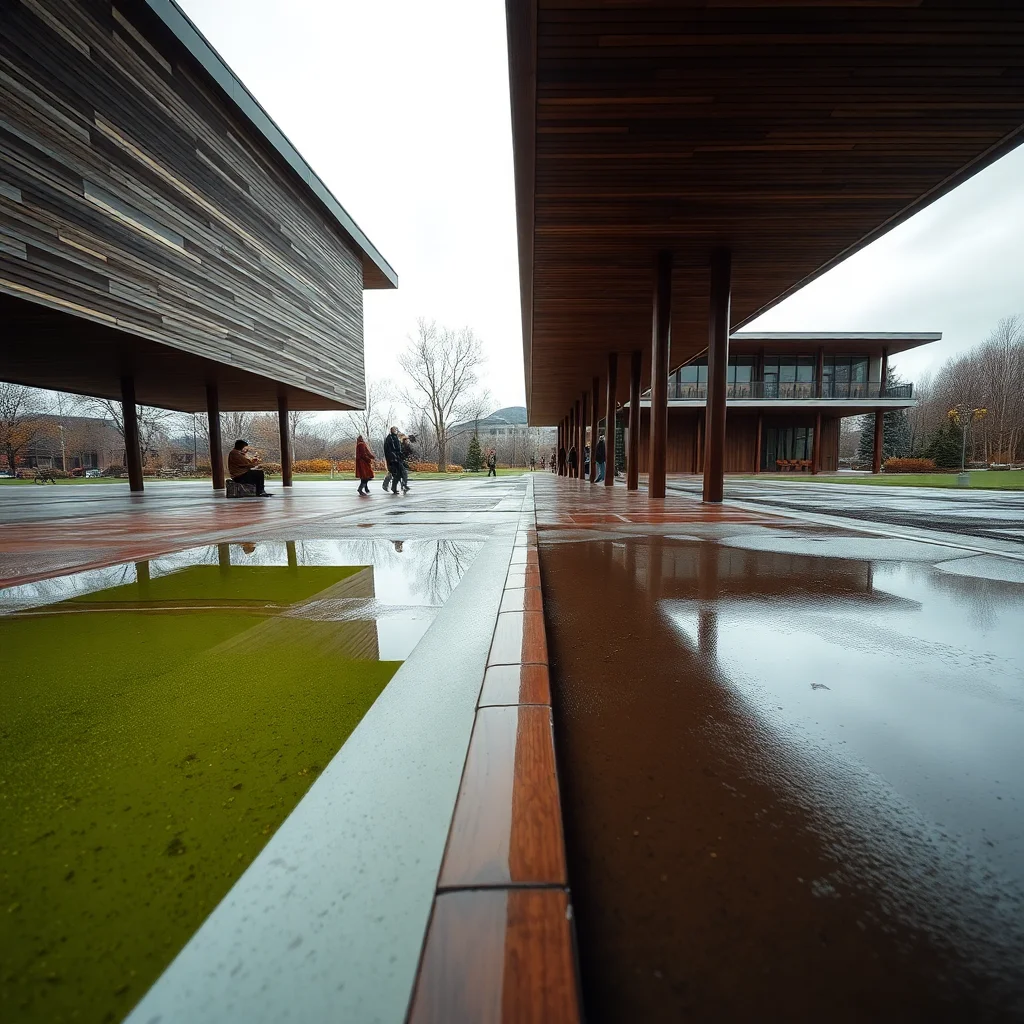
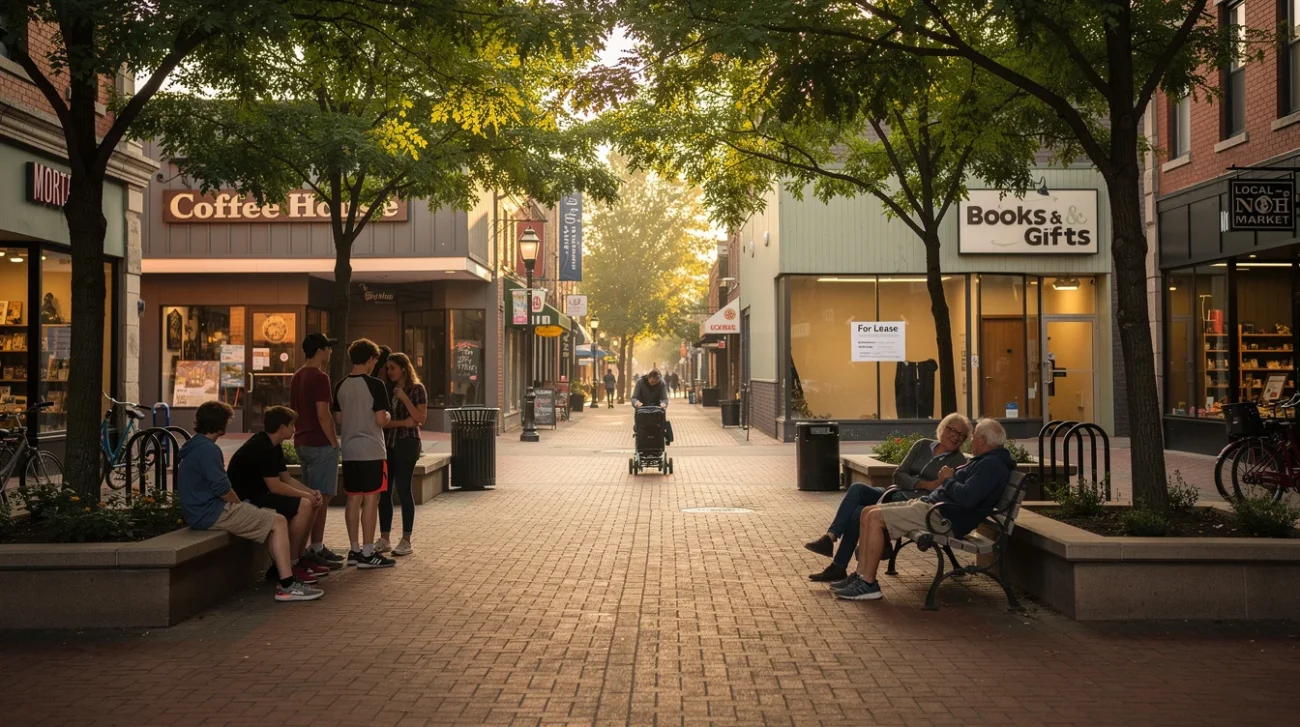
The political force of this work is easy to miss if you only look for formal innovation. But public space designed for touch, chance, and weather is public space that rejects monopoly over meaning. It does not insist on a single reading from afar. It becomes legible through use, encounter, and alteration. That is why these projects feel less like monuments and more like invitations.
Designboom’s framing of Studio i/thee underscores this generosity: ecological experimentation is not kept in the laboratory, but translated into spaces where people can gather, sit, run their hands over surfaces, or simply witness change. This is where the work becomes culturally sharp. Instead of manufacturing pristine icons for social media, it builds environments that ask to be inhabited slowly. The architecture gains value not by resisting erosion, but by becoming more eloquent as erosion accumulates.
Comparable thinking appears in the work of Francis Kéré, whose buildings harness local materials and climatic intelligence to produce civic dignity rather than spectacle, and in the performative landscapes of artists and architects who understand that public form is always partly made by use. Yet Studio i/thee advances the argument by making unpredictability itself a design material. Their spaces do not merely accommodate weather; they stage a conversation with it.
What Performance Means When Form Is No Longer Fixed
If weather can author part of the plan, then performance must be redefined. The industry still privileges efficiency, durability, and code compliance, often reduced to an engineering checklist. But a weather-authored project demands additional criteria: how well does the architecture accept change without losing coherence? How legibly does it expose its environmental relations? How much agency does it return to users and site?
This is where the debate becomes uncomfortable. Many architects will hear “unpredictability” and think “loss of control.” That instinct is understandable, but outdated. Control is an expensive illusion in an era of climate instability, rising maintenance costs, and shifting public expectations. A more intelligent project is not one that pretends to solve weather once and for all; it is one that can continue to perform as conditions shift. In other words, resilience is not the same as hardness. Resilience is adaptability made visible.
By that measure, Studio i/thee’s work is not romantic at all. It is pragmatic, even ruthless in its refusal of false permanence. It suggests that the most advanced architecture may be the kind that plans for incompletion, authorship-sharing, and temporal drift. The building is no longer the end of design. It is the beginning of negotiation.
Weather as a Design Partner, Not a Design Problem
To accept weather as a partner is to abandon a long-standing architectural prejudice: that the best building is one that neutralizes its context. Instead, the building becomes a filter, a receiver, and sometimes a witness. Mud may define texture. Algae may mark shade. Wind may determine porosity. Seasonal change may calibrate use. This is not chaos. It is a more honest form of order.
That honesty can also reshape how architects think about beauty. Beauty need not mean pristine surfaces and permanent symmetry. It can also mean a project that becomes more specific over time, more local, more legible in its aging. The Japanese appreciation for patina, the wabi-sabi tolerance of imperfection, and the ecological realism of vernacular construction all point toward a culture in which change is not a flaw to be corrected but a condition to be composed.
Studio i/thee’s work is important because it makes that philosophy feel contemporary rather than nostalgic. Their architecture does not imitate nature. It sets up the conditions for natural processes to be readable within civic life. That is a crucial distinction. The goal is not to disappear into the landscape, but to let the landscape write back.
A New Architectural Ethic Is Emerging
The real lesson here is not that every building should become muddy, wet, or biologically active in a literal sense. The lesson is that architecture must begin treating unpredictability as a design resource rather than a liability. Some projects will do this through materials, others through maintenance plans, others through spatial openness and seasonal programming. The common thread is a willingness to design for change without fetishizing control.
That may define a new architectural ethic: one that measures quality by the intelligence of a project’s negotiations with time. In this ethic, a successful building is not the one that looks the same forever. It is the one that can absorb weather, public use, and ecological variation without collapsing into confusion. It remains coherent precisely because it is not rigid.
Studio i/thee’s work points toward this future with unusual clarity. By allowing mud, algae, wood, and weather to participate in the making of space, the studio reframes architecture as an open system with civic consequences. That is more than a material strategy. It is a challenge to the profession’s deepest habits. The question is no longer whether we can design against change. The question is whether we are brave enough to let change help design the world.
Get the Mainifesto weekly — curated design debates, speculative ideas and the week's best articles every Saturday.
Editorial Perspectives
Questions and counterpoints developed by the Mainifesto editorial desk to extend the discussion.
Perspective 1
Letting weather co-author a building is interesting, but permanence is not just an aesthetic fetish — in a lot of places, it’s a question of social trust and basic infrastructure. The real test is whether these systems can be maintained, adapted, and governed in messy climates and unstable political economies, not whether they look poetic in a rendering.
Perspective 2
I like the ambition, but if a building gets better only because it keeps changing, you’ve got to ask who’s paying for that upkeep and what happens when the novelty wears off. Permanence still matters when tenants, lenders, and insurers are on the hook — weather can inform performance, but it can’t be an excuse for making buildings unpredictable.
Perspective 3
This pushes architecture toward a feedback system rather than a finished object, which feels more honest about how buildings actually live. I wouldn’t abandon permanence entirely, though — the real question is whether we can design for stable frameworks with variable, weather-driven layers that evolve without losing structural or cultural coherence.