
The Next Luxury Is Slowness in Architecture
The Status Shift No One Can Ignore
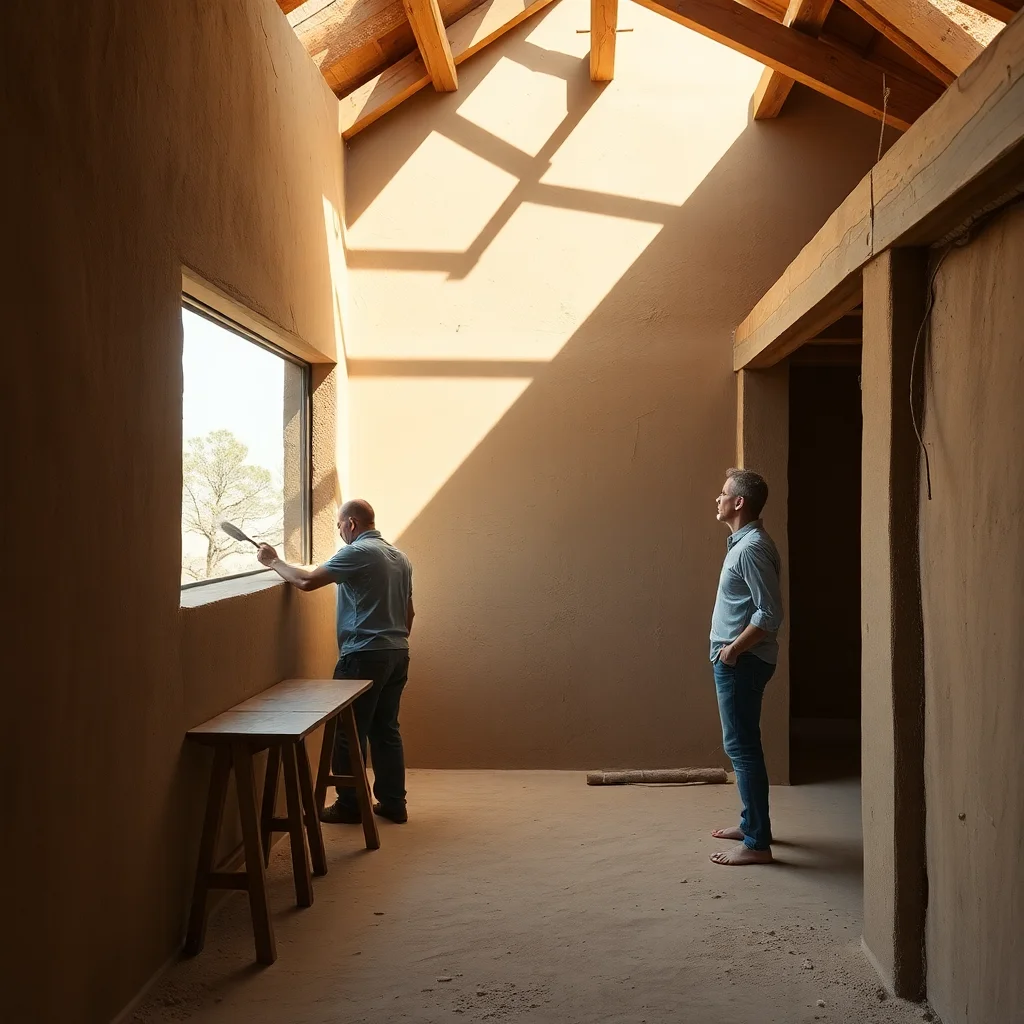
For decades, luxury architecture sold speed in disguise: faster construction, smoother finishes, smarter systems, more square meters, more control. The new prestige is the inverse. A growing number of houses, retreats, and rural compounds now present themselves as deliberate acts of refusal—less mechanical complexity, fewer materials, tighter thermal logic, more time spent with the hand, the climate, and the site. In this frame, the most expensive gesture is not addition but restraint. A wall of clay, a timber frame left legible, a house that breathes rather than performs: these read as cultural markers of discernment.
Casa Barro, developed by Norenaarquitectos, crystallizes this shift with unusual clarity. Its premise is not nostalgia for vernacular building as picturesque heritage, but an argument that traditional methods still contain a future: artisanal processes, slower development, and a more respectful understanding of creation times. That is exactly why the project matters. It suggests that luxury may no longer be a matter of accumulation, but of attention—attention to matter, labor, climate, and duration. The roomiest home in the future may be the one that refuses to waste resources, attention, and meaning.
This is not a fringe position anymore. Across Europe and beyond, architects are building with rammed earth, lime, timber, cork, straw, and superinsulated envelopes not merely because they are ecological, but because they signify a revised hierarchy of value. The aesthetic language of restraint is quickly becoming legible: matte surfaces, deep reveals, exposed structure, low-tech tactility, silent comfort. The question is whether this is an ethical pivot or just the latest premium skin.
From Vernacular to Voguish
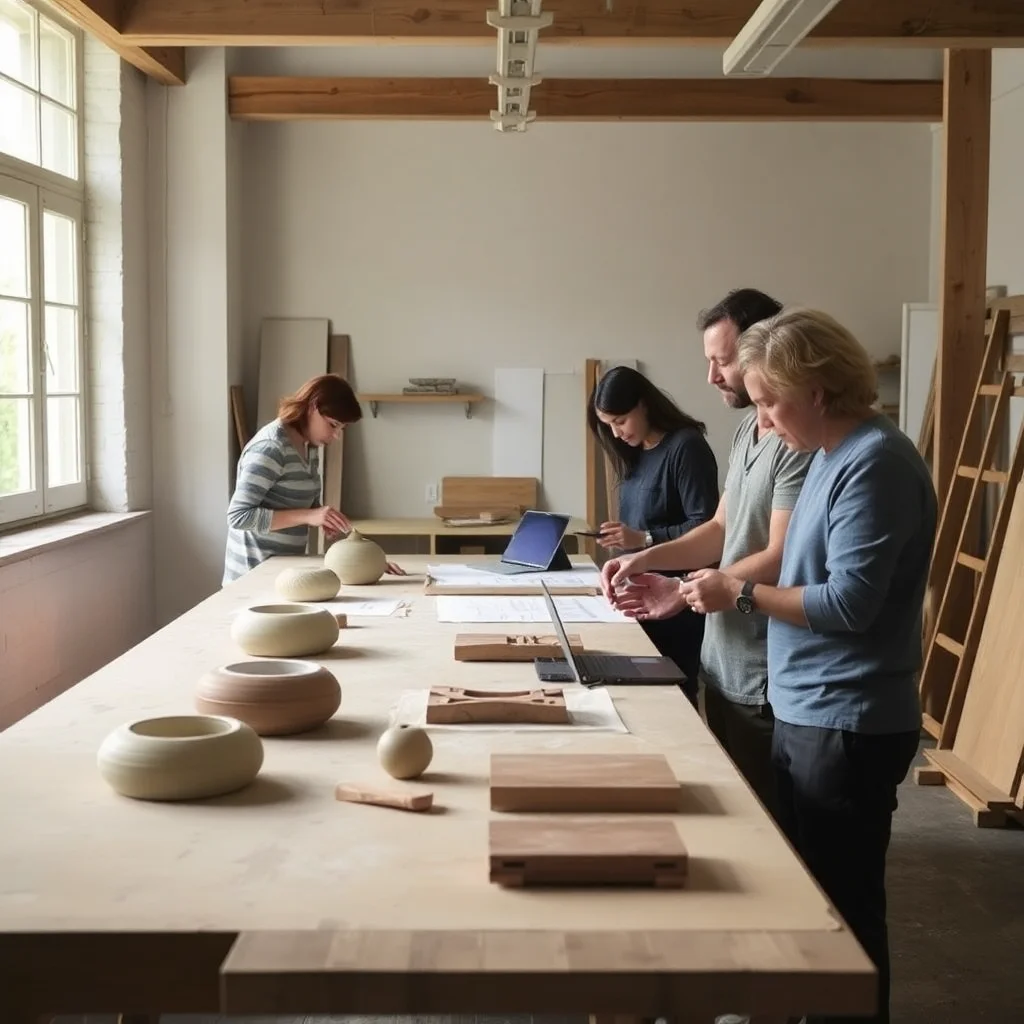
The shift began where modern architecture often finds its moral authority: in materials that have been around longer than the profession’s self-image. Clay walls, earthen plasters, hand-finished joinery, and thick envelopes are not innovations in the tech sector sense. Yet projects like Maison Fibre by Atelier Luma in Arles, or the growing field of compact timber houses in Scandinavia, show how inherited building cultures can be translated into contemporary forms without becoming costume. The appeal is obvious: these buildings feel grounded in place, warm to the hand, and legible to the eye.
But the appeal is also social. In a market saturated with glass towers and algorithmic interiors, a home built from earth or wood suggests the owner has escaped the mainstream aspiration cycle. It signals taste, yes, but also a moral upgrade. The building becomes evidence that its inhabitants have made a wise choice against excess, against the disposable, against the hyper-mechanical life of the city. Slowness becomes a badge, and craftsmanship becomes a form of cultural capital.
That is where things get slippery. Once restraint is recognized as desirable, it can be packaged, priced, and staged. The “simple” home can become the most curated object of all—an architecture of renunciation that is only possible because it is underwritten by wealth. A clay wall is no less architectural because it is beautiful; the problem is when beauty itself becomes the alibi for exclusivity.
Material choices also overlap with a broader shift toward comfort that is less visual and more environmental. In that sense, the conversation is no longer just about surfaces, but about the conditions that make a room feel alive across the day. Why Daylight Is Architecture’s Next Performance Metric explores that change in detail, showing how brightness, orientation, and shadow are becoming central to value in contemporary design.
The Architectural Politics of Refusal
At its best, essential-only architecture is not ascetic theater. It is a direct response to the ecological and psychological costs of overbuilding. Peter Zumthor’s early work, from the Therme Vals to the Bruder Klaus Field Chapel, taught a generation that atmosphere can be produced through precision and restraint, not spectacle. More recently, projects by studios working with mass timber, earth construction, and passive strategies have extended this lesson into domestic architecture: fewer systems, better orientation, thicker insulation, more patience during construction, less dependence on mechanical correction after completion.
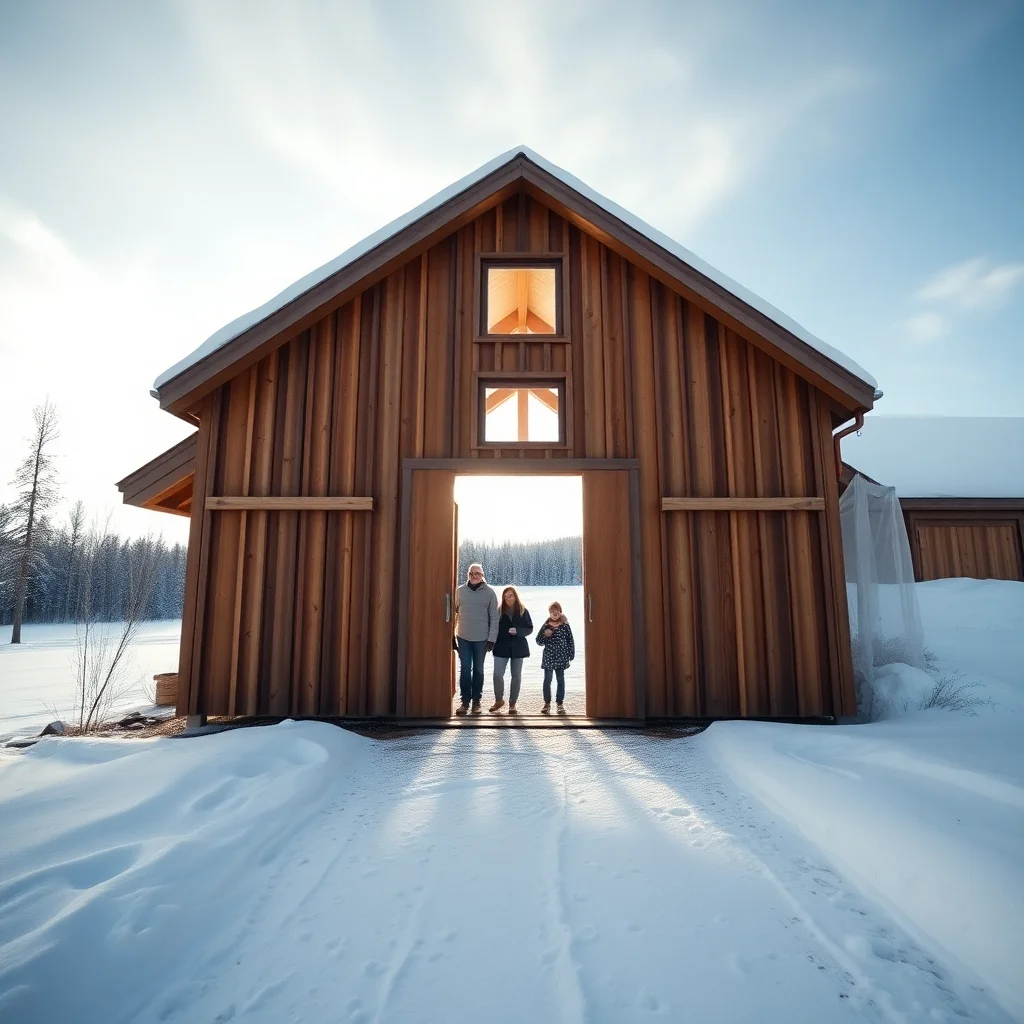
This matters because architecture has spent too much time acting as though complexity is synonymous with progress. In reality, many of today’s most intelligent houses are quietly radical because they do less. They rely on thermal mass, cross-ventilation, daylight, and robust envelopes rather than on expensive equipment layered over weak design. Superinsulated timber barns and low-energy rural dwellings do not merely look honest; they behave differently across seasons, and that behavioral intelligence is becoming a new luxury. Comfort is no longer the result of orchestration alone, but of a building’s capacity to anticipate climate with almost no drama.
Yet refusal can also become rhetoric. A building that claims purity while outsourcing its labor conditions, its supply chain, or its land ethics is just a cleaner-looking form of consumption. The politics of slowness only matter if the slowness is real: in how materials are sourced, how workers are paid, how much time the project allows for drying, curing, and revision. Otherwise, “simple” becomes another lifestyle image for the well-positioned.
This is especially true when timber is cast as a moral material without scrutiny. The question is not only whether wood looks warm, but what its extraction and storage mean at scale. Carbon Storage or Forest Burial? examines the tension between timber’s climate promise and the ecological accounting behind it, which makes it useful reading for anyone treating material restraint as a serious design strategy.
When Essential Becomes Exclusive
There is an obvious trap here. The more architecture celebrates the essential, the more the essential can be aestheticized and sold back as premium scarcity. Minimalism already taught us this lesson: what began as a critique of excess became an elite visual language of white walls, hidden storage, and seamless surfaces. The current turn toward earthiness risks repeating the pattern with a more virtuous vocabulary. A home can be “natural,” “slow,” and “healthy” while still excluding most people from access to land, skilled labor, and time.
This is especially visible in the wellness residential market, where low-VOC finishes, biophilic materials, and calm interiors often serve as price multipliers rather than public values. The language sounds restorative, even democratic. The reality is often a gated ecology of scarcity branding. In that context, clay walls can become the new marble.
That does not mean the movement is false. It means it is unstable. Essential-only architecture can be transformative if it democratizes environmental intelligence instead of privatizing it. The real challenge is not to make restraint glamorous, but to make it ordinary. Projects like Earthships in New Mexico, while imperfect and sometimes ideologically brittle, have long pointed to this possibility: buildings that foreground self-sufficiency, thermal logic, and resource humility. The lesson is not that everyone should live in a handmade hut. It is that the basic standards of comfort should stop requiring excessive extraction.
Can Slowness Resist Branding?
The speculative question is whether slowness can survive once it becomes a style. Architecture is especially vulnerable here because every ethical position can be rendered as an image, and every image can be monetized. The very qualities that make essential buildings compelling—material honesty, visible structure, local craft, seasonal adaptability—also make them highly photographable. The risk is that the discipline will confuse the appearance of care with care itself.
And yet there is a reason this aesthetic keeps spreading: it answers a deeper hunger. People are exhausted by systems that hide their own costs. A house that admits how it is made, how it holds heat, how it ages, and how it connects to the ground offers a rare kind of trust. In this sense, slowness is not just a formal preference. It is an epistemology. It asks inhabitants to know where they are, what surrounds them, and what their comfort depends upon.
That is why the future may belong to architecture that refuses spectacle in favor of durability, maintenance, and emotional steadiness. The highest form of luxury may turn out to be a place that gets better with use, not worse; a home that can be repaired, not replaced; a structure that feels inevitable rather than engineered for applause. But the discipline will have to decide whether it is building a new canon or a new conscience. Those are not the same thing.
There is also a social dimension to this recalibration. As more households age in place and more neighborhoods have to accommodate changing needs over longer lifespans, the value of adaptable domestic space becomes harder to ignore. The Future of Aging at Neighborhood Scale makes the case that durability is not only material, but civic—about how homes, blocks, and services can support life over time.
What Comes After the Fast House
If the 20th century glorified the machine house and the 2010s glorified the digital house, the 2020s may be introducing the slow house: materially humble, thermally intelligent, labor-intensive, and culturally self-aware. This is not a retreat from ambition. It is a different ambition altogether, one that measures success by how much architecture can omit without losing meaning. A wall that stores heat, a roof that shades, a frame that can be repaired, a plan that lets seasons enter the room—these are not regressions. They are proofs of maturity.
The danger is that architecture will settle for the image of maturity instead of the discipline of it. If essential-only design becomes merely another premium aesthetic, then restraint will have been aestheticized into irrelevance. If, however, it can remain tethered to local labor, ecological limits, and genuine social access, then slowness may become more than a style. It may become architecture’s first credible answer to a culture that has finally recognized the cost of moving too fast.
For now, the most provocative buildings are not the loudest. They are the ones that ask whether a home should be judged by what it contains—or by what it has the discipline to leave out.
FAQ
What does “essential-only architecture” mean?
It refers to buildings designed around only the most necessary elements: climate response, structure, comfort, and durability. Instead of layering on decorative excess or overly complex systems, these projects prioritize restraint, material honesty, and long-term use.
Why are clay and timber so prominent in this discussion?
Clay and timber embody both ecological logic and tactile warmth. They are low-energy materials with strong cultural associations, and in contemporary projects they often signal a return to slower, more grounded construction methods.
Is slowness really a form of luxury?
Yes, but only in a specific sense. Slowness becomes luxurious when time is used to create better comfort, deeper craft, and more durable architecture. The danger is when slowness is sold as exclusivity rather than shared value.
Can this trend remain accessible to ordinary homeowners?
It can, but only if the industry stops treating low-tech intelligence as a premium add-on. Accessibility depends on local materials, skilled labor systems, and policies that make restrained, high-performance buildings feasible beyond the wealthy market.
Does restraint automatically make a building sustainable?
No. A restrained aesthetic can still hide extractive sourcing, high cost, or luxury branding. Sustainability depends on the full chain of production, operation, repairability, and social access—not just the look of simplicity.
Get the Mainifesto weekly — curated design debates, speculative ideas and the week's best articles every Saturday.
Editorial Perspectives
Questions and counterpoints developed by the Mainifesto editorial desk to extend the discussion.
Perspective 1
Slowness only matters if it improves the stay, the brand, or the bottom line. If “less” just becomes a new premium look, we’re not talking ethics anymore—we’re talking packaging. Design teams need to show me how restraint performs in comfort, longevity, and maintenance, not just in mood boards.
Perspective 2
The answer is boring but necessary: measure it. If restraint means lower embodied carbon, easier repair, and better thermal performance, then it’s a method, not a style. The moment it’s sold through finishes, scarcity, and Instagram-ready austerity, it stops being ethical and starts being branding.
Perspective 3
This is the familiar trap of modern virtue becoming taste. What begins as an honest refusal of excess is quickly absorbed by the market, which gives it a cleaner name and a higher price. Architecture has done this before, and it will do it again unless we distinguish necessity from pose.
Perspective 4
Restraint is only credible when it grows out of place, repair, and use—not when it’s imported as a chic vocabulary for new development. In restoration, complexity is often the ethical position because it keeps labor, memory, and maintenance visible. If “slowness” becomes a luxury finish, it will just help accelerate displacement.
Perspective 5
I think the real test is whether restraint can be made accountable through data and access, not just aesthetics. If an essential-only building is cheaper to maintain, easier to adapt, and available beyond elite clients, then it resists becoming a fashion object. Otherwise we’re just optimizing minimalism for a narrow market and calling it ethics.