
When Architecture Becomes Atmosphere
Architecture is no longer content to stand still
A new generation of projects is replacing the old fantasy of the building as a fixed, dignified object with something far more unstable: atmosphere. Inflatable membranes, rising and falling structures, vapor, responsive lighting, and drifting skins are not decorative tricks. They are the signs of a deeper shift, in which architecture is asked to perform like weather—changing mood, producing suspense, and making public space feel less like a container and more like an event.
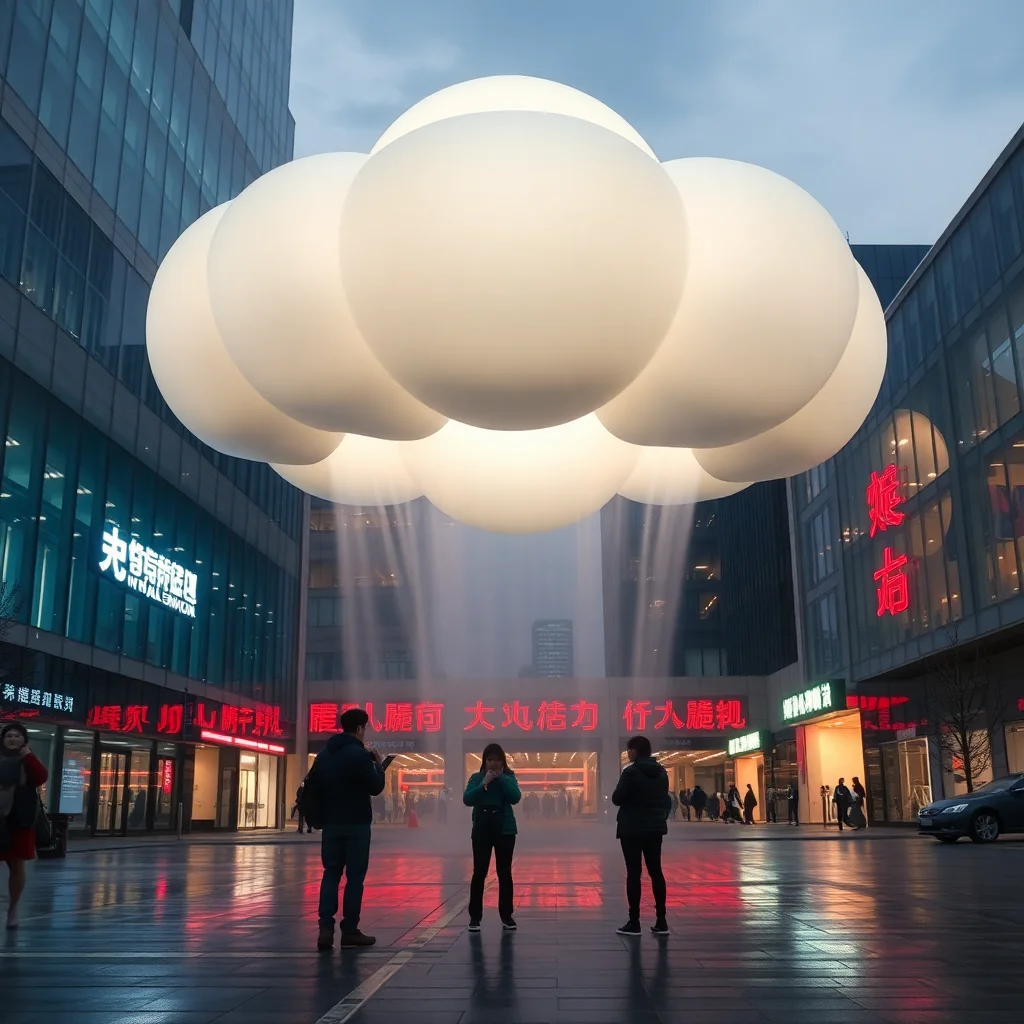
The source case, PILLS, does not simply hang a cloud above a commercial development in China. It stages a temporal sequence: the soft form ascends, descends, and releases mist through the day, turning a development zone into an immersive narrative environment. That matters. Because once buildings start behaving like systems of sensation, architecture is no longer judged only by form, function, or durability. It is judged by whether it can choreograph feeling.
This is the rise of kinetic, mist-laden environments: architecture that is less about monument and more about atmosphere management. The question is not whether this is impressive. It is whether this is the beginning of a more democratic public realm—or a costly, fragile entertainment economy dressed up as spatial innovation.
From object-making to experience choreography
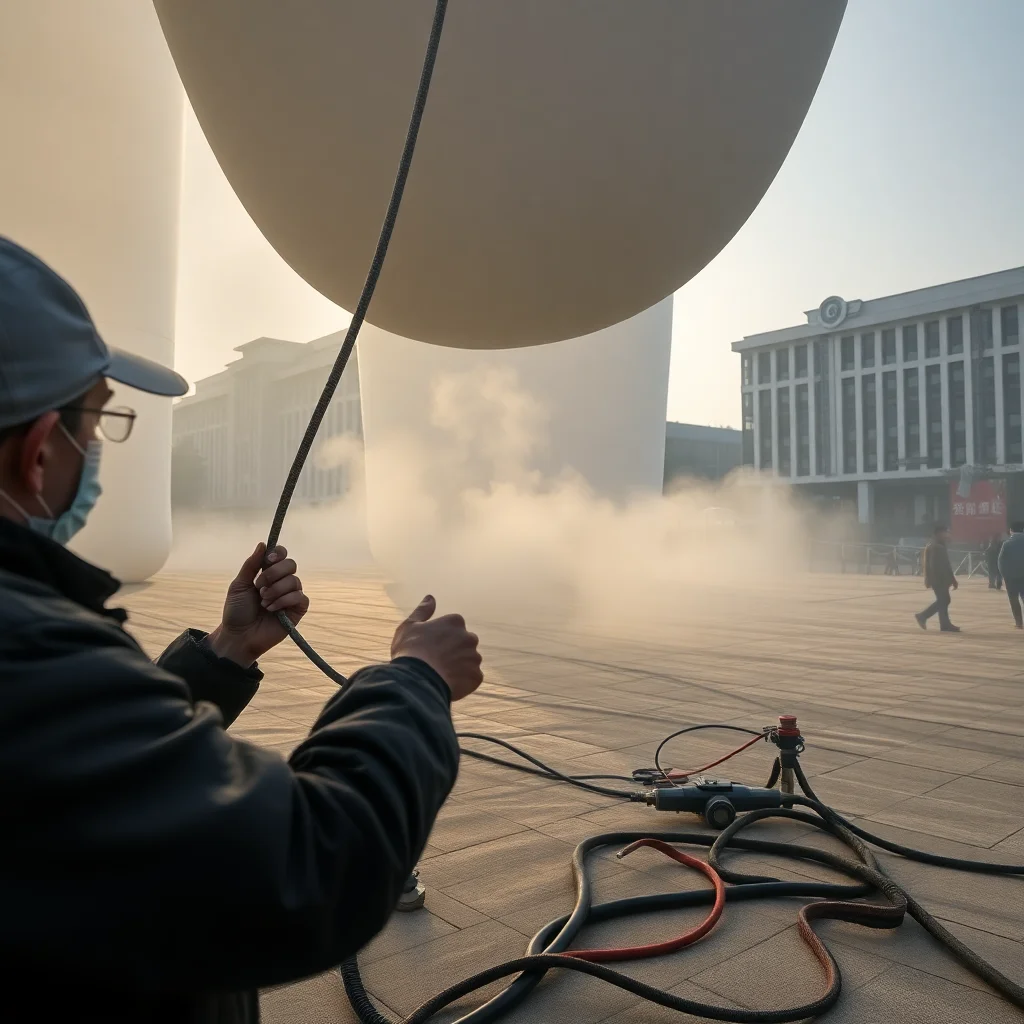
For decades, architecture was anchored in objecthood. Even when architects claimed social ambition, the discipline still prized the enduring artifact: the building that could be photographed at dusk, entered by a crowd, and left to outlast its rhetoric. But today, many of the most memorable spaces are not buildings in the traditional sense. They are responsive installations, temporary climates, and programmable envelopes that transform occupancy into performance.
Think of the fog-heavy work of Diller Scofidio + Renfro and Mark Wigley at the Blur Building, where the architecture was literally made of water vapor and sensors. Or Fujiko Nakaya, whose fog sculptures have for decades erased the boundary between site and atmosphere, making form appear and disappear as a condition rather than a stable shape. Or the inflatable, soft-architectural experiments of groups like SPACES and Archigram predecessors, who imagined environments as mutable skins instead of hard walls.
What is different now is the mainstreaming of the impulse. These atmospheric gestures are no longer confined to biennales, experimental pavilions, or art-world commissions. They are moving into commercial developments, waterfronts, mobility hubs, retail frontages, and civic plazas. The architecture of sensation is no longer fringe. It is becoming a strategy.
Why mist, motion, and membranes are suddenly everywhere
The appeal is obvious. In a climate of urban overexposure—too much glass, too much hardscape, too much visual noise—mist and movement create relief. They offer softness in cities that have been optimized for surveillance and consumption. They also generate immediate differentiation: a drifting cloud is harder to ignore than a polished lobby. In a media economy, where every public project must also operate as image, atmosphere becomes a brand asset.
But the deeper reason is cultural. Architecture is being pressured to deliver emotional legibility fast. A museum, campus, mall, or mixed-use district can no longer depend on scale alone to produce meaning. It has to create a memorable sequence, a shareable condition, a reason to stay. Kinetic installations and vapor environments do that with ruthless efficiency. They compress narrative into a spatial encounter.
That is why projects like PILLS feel so symptomatic. Inflatable membrane technology is not just a material novelty; it is a shortcut to affect. A soft form that rises and falls suggests breath, life, vulnerability, and change. Mist amplifies this by turning the air itself into a medium. Together they convert the site from a neutral commercial setting into an emotionally scripted environment. The architecture is no longer backdrop. It is stage direction.
The best atmospheric projects are not spectacle; they are spatial arguments
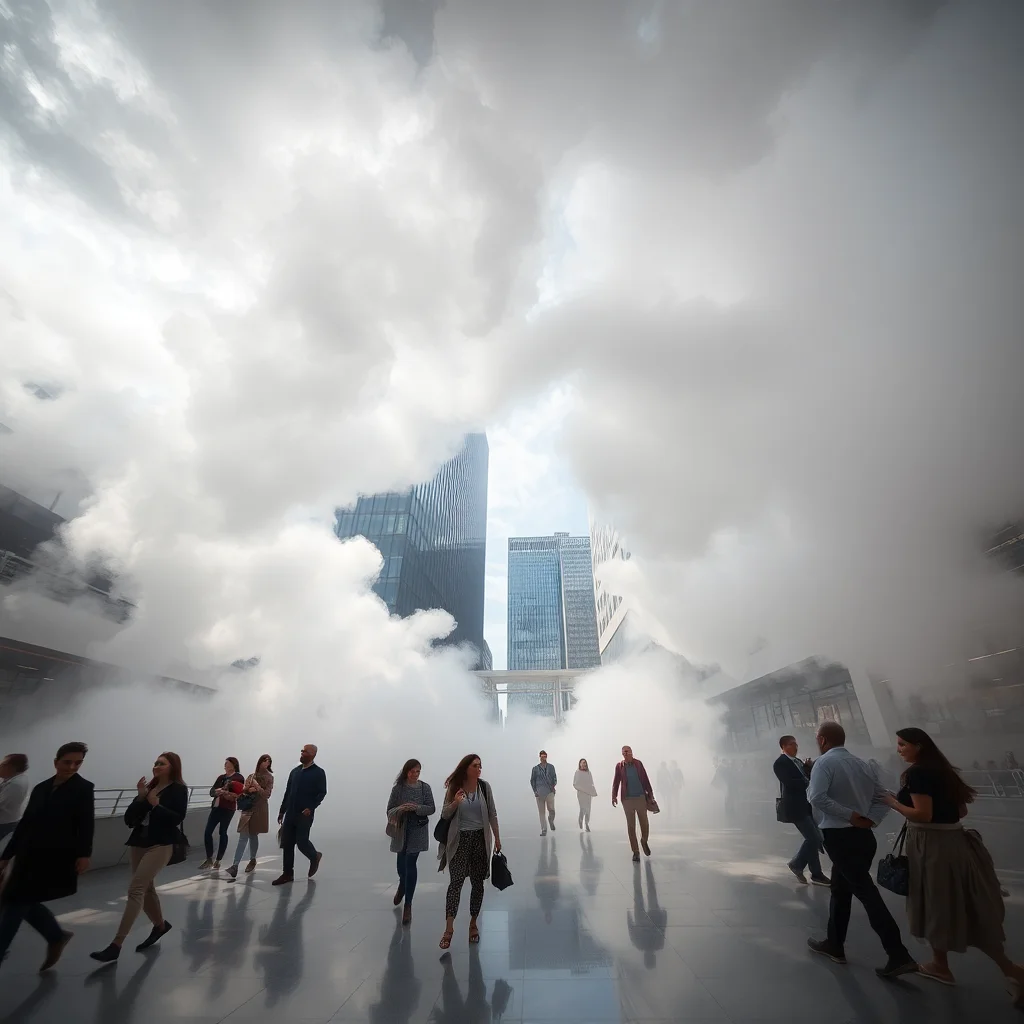
To dismiss these works as spectacle is too easy—and lazy. The most serious atmospheric environments are not merely trying to look unusual. They are arguing that perception is architectural material. They understand that a space is not only composed of walls and structure, but also of humidity, sound, temperature, light reflection, and the body’s uncertainty as it moves through all of them.
Look at Olafur Eliasson’s installations, where light, mist, and reflection destabilize the viewer’s relationship to scale and orientation. Or the temporary urban experiments of Asif Khan and other pavilion designers who use translucent membranes to create public rooms that feel weightless but politically loaded. These works are not asking us to admire a static object. They are asking us to inhabit a sequence of thresholds.
There is a civic possibility here. Atmospheric architecture can soften the hard edges of the city, create microclimates, and invite people who might otherwise pass through without stopping. In hot, dense, or hostile urban conditions, a misting canopy or responsive envelope can be more than aesthetic theater; it can be a public amenity. If designed intelligently, these environments make climate, sensation, and access visible as architectural concerns rather than afterthoughts.
But atmosphere is also a trap
Now the contradiction: the same qualities that make these projects seductive can make them ethically thin. Atmosphere is expensive to produce and expensive to maintain. Pumps fail. Nozzles clog. Membranes puncture. Sensors drift out of calibration. What looks effortless in a rendered image often depends on a hidden regime of labor, energy, water management, and technical upkeep. If the installation is public, who pays to keep the cloud alive?
This is where the discipline’s new fascination with ephemeral effects can become ideological camouflage. A developer can commission a misting installation and appear culturally sophisticated while avoiding deeper commitments to housing, shade trees, or long-term civic infrastructure. An immersive environment can distract from the fact that the place around it is otherwise banal, exclusionary, or climate-vulnerable. Atmosphere can be used to decorate a deficit.
There is also a philosophical cost. Architecture has always had to negotiate permanence, but the fetishization of transience risks hollowing out the discipline’s claim to public value. If every project becomes a programmable mood machine, what happens to longevity, repairability, and collective memory? Not every public space should be a performance. Some should be stubborn, legible, and built to endure without spectacle.
The maintenance question is the real design question
In atmospheric architecture, maintenance is not a back-end issue. It is the central aesthetic and political problem. A mist system is only as good as its service plan. An inflatable structure is only democratic if it can be repaired, cleaned, and reactivated without elite technical intervention. Otherwise, these projects deteriorate into dead images: deflated skins, silent nozzles, moisture stains, and ghostly remnants of a promised experience.
This is why the current wave of kinetic environments must be judged beyond launch-day photography. We should ask: Can it survive a summer of overuse? Can local technicians operate it? Does it waste water? Is the membrane recyclable? Is the choreography accessible to people with different sensory needs? The emotional weather of a project means little if its operational weather is extractive.
Architects often celebrate complexity when what the public needs is reliability. If atmosphere is to mature into a serious architectural field, it must embrace maintenance as design intelligence. That means designing for replacement parts, seasonal downtime, water reuse, low-energy actuation, and transparent lifecycle costs. Otherwise, the field will keep producing glamorous but brittle objects that age badly and serve only the first impression.
What public value looks like in an age of emotional weather
The most provocative argument for these environments is not that they are beautiful, but that they can recondition public life. A mist-laden plaza can slow pedestrian movement, encourage gathering, and make a place feel less punitive. A kinetic canopy can mark time and gather strangers in shared anticipation. A responsive envelope can turn an ordinary commercial site into a civic event—if the value is distributed rather than privatized.
But public value cannot be claimed by mood alone. It must be demonstrated through access, durability, and usefulness. The best atmospheric works do not just entertain; they produce comfort, orientation, and collective delight without requiring consumption as the entry fee. That is the standard. Anything less is architecture as theme park logic.
The rise of kinetic, mist-laden environments reveals a discipline in transition. Architecture is moving from making objects to composing conditions. This is a powerful expansion of what the field can be. But it also exposes its weakest point: an obsession with effect over responsibility. If architecture wants to become atmosphere, it must learn that weather is not only poetic. It is infrastructural, political, and expensive. The future will belong not to the loudest spectacle, but to the environments that can feel alive without becoming unsustainable.
FAQ
- What is kinetic architecture? Kinetic architecture refers to buildings or installations that move, transform, or respond to conditions such as light, wind, occupancy, or time. It can include retractable facades, inflatable membranes, mist systems, and responsive surfaces.
- Why are mist and vapor being used in architecture? Mist and vapor soften space, create microclimates, and produce strong emotional and visual effects. They can make public environments feel cooler, more immersive, and more memorable, though they also demand water, energy, and maintenance.
- Is atmospheric architecture only for temporary installations? No. While many examples are pavilions or art installations, atmospheric strategies are increasingly appearing in commercial developments, civic spaces, and cultural buildings. The challenge is making them durable and maintainable over time.
- What is the biggest criticism of this trend? The biggest criticism is that atmosphere can become a decorative substitute for real public investment. If these projects rely on expensive systems and deliver only spectacle, they may distract from more urgent urban needs like shade, housing, and infrastructure.
Get the Mainifesto weekly — curated design debates, speculative ideas and the week's best articles every Saturday.
Editorial Perspectives
Questions and counterpoints developed by the Mainifesto editorial desk to extend the discussion.
Perspective 1
I’m interested in anything that changes how a guest feels the moment they walk in, but the second the mist system needs a specialist callout every week, the magic starts looking expensive. If architecture becomes atmosphere, then the responsibility sits with whoever sold the experience—and the operating model has to prove it can survive a bad day, not just a launch event.
Perspective 2
Atmospheric architecture sounds poetic until you ask who maintains it, who pays for water and power, and what happens in cities where infrastructure is already stressed. If the weather fails, it’s not a design failure alone; it’s a systems failure, and that means responsibility is shared by designers, owners, and the public agencies that approve fantasy without enforcing resilience.
Perspective 3
I like buildings that work hard and age well, so I’m wary of anything that needs constant intervention to feel complete. If the atmosphere is part of the brief, then the developer owns the failure too—because the maintenance bill, the downtime, and the tenant complaints all land on the balance sheet sooner or later.
Perspective 4
There’s a long history of buildings performing, breathing, and mediating climate, but we usually only call it innovation when it comes wrapped in novelty. When the weather fails, the real question is whether the project was designed as a durable civic work or as a disposable spectacle; permanence has ethics, not just engineering.
Perspective 5
This is where the discipline gets interesting: if atmosphere is part of the architecture, then performance metrics have to include failure modes, not just ideal conditions. I’d want to know whether these systems can degrade gracefully, because otherwise we’re designing emotional weather without a plan for the climate we already have.