
The Emotional Future of Desk Accessories
The cactus that changed the brief
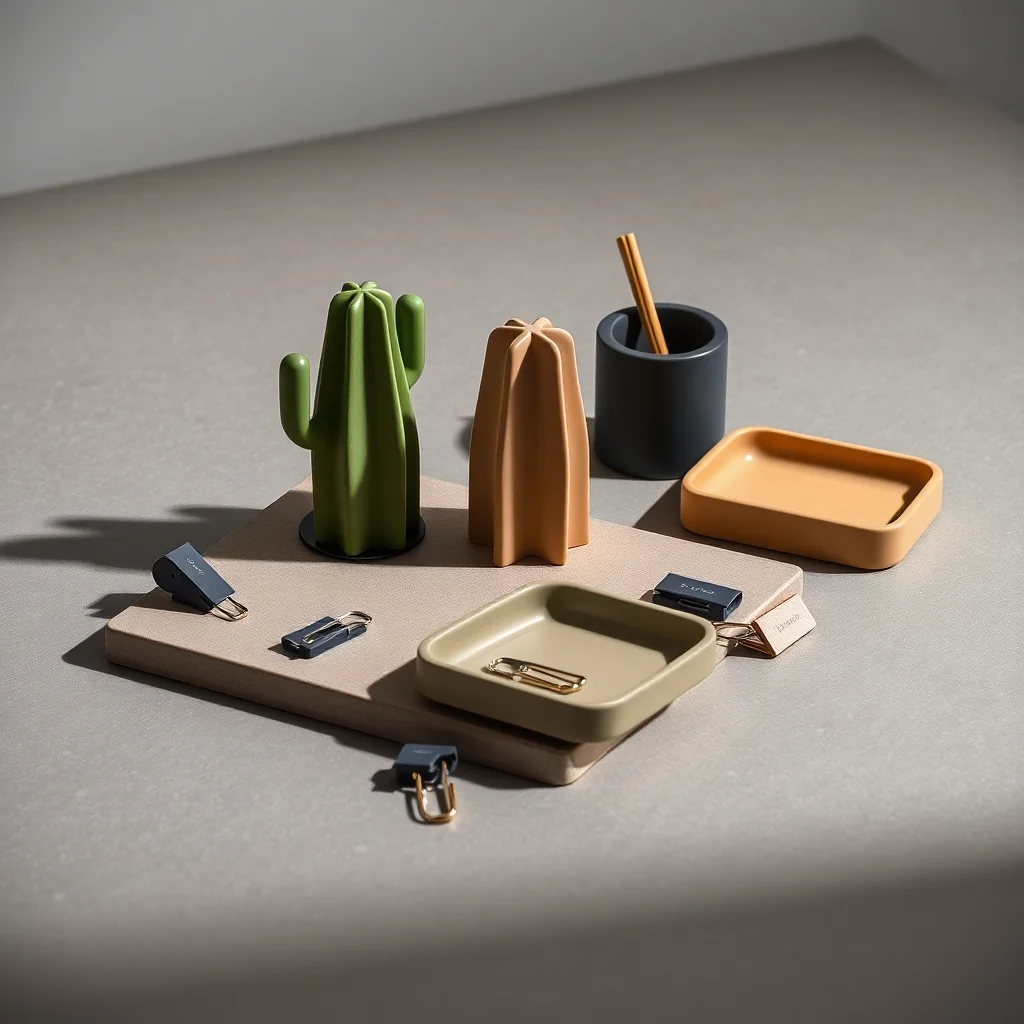
It starts with an object that should not matter as much as it does: a cactus-like memo holder, absurdly upright, a little prickly in silhouette, and oddly tender in its function. It clips paper, yes. But that is not why it exists in the cultural imagination. It behaves like a tiny character on a desk, a mood punctuation mark that says the workplace no longer wants anonymous tools. The memo holder is a clue that product design has moved from performance alone into emotional choreography. In the contemporary office, utility is the entry fee, not the differentiator.
This shift is not about gimmicks, and it is certainly not about nostalgia dressed up as form. It is about objects acquiring a new mandate: they must stabilize mood, soften friction, and broadcast identity in environments that have become algorithmic, hybrid, and vaguely airless. The best-known precedents in design history already anticipated this hunger. Naoto Fukasawa’s Super Normal philosophy argued for quiet familiarity, while Jasper Morrison has long defended the ordinary object as a carrier of deep cultural intelligence. But the latest wave of desk accessories is less interested in disappearing than in performing a subtle emotional role. They want to be useful and legible, almost affectionate.
That matters because the desk is no longer a static workstation. It is a stage for self-management. Since remote and hybrid work collapsed the divide between domestic and professional life, the objects we keep near our hands have become proxy architecture: they frame the face on camera, regulate attention, and help us rehearse professionalism without the support of a whole office ecosystem. A memo holder, a pen tray, a charging dock, a lamp, or a cable clip now competes with a person’s own sense of calm. In that sense, desk accessories are not accessories at all. They are micro-environments with ambitions.
Utility was never the whole story
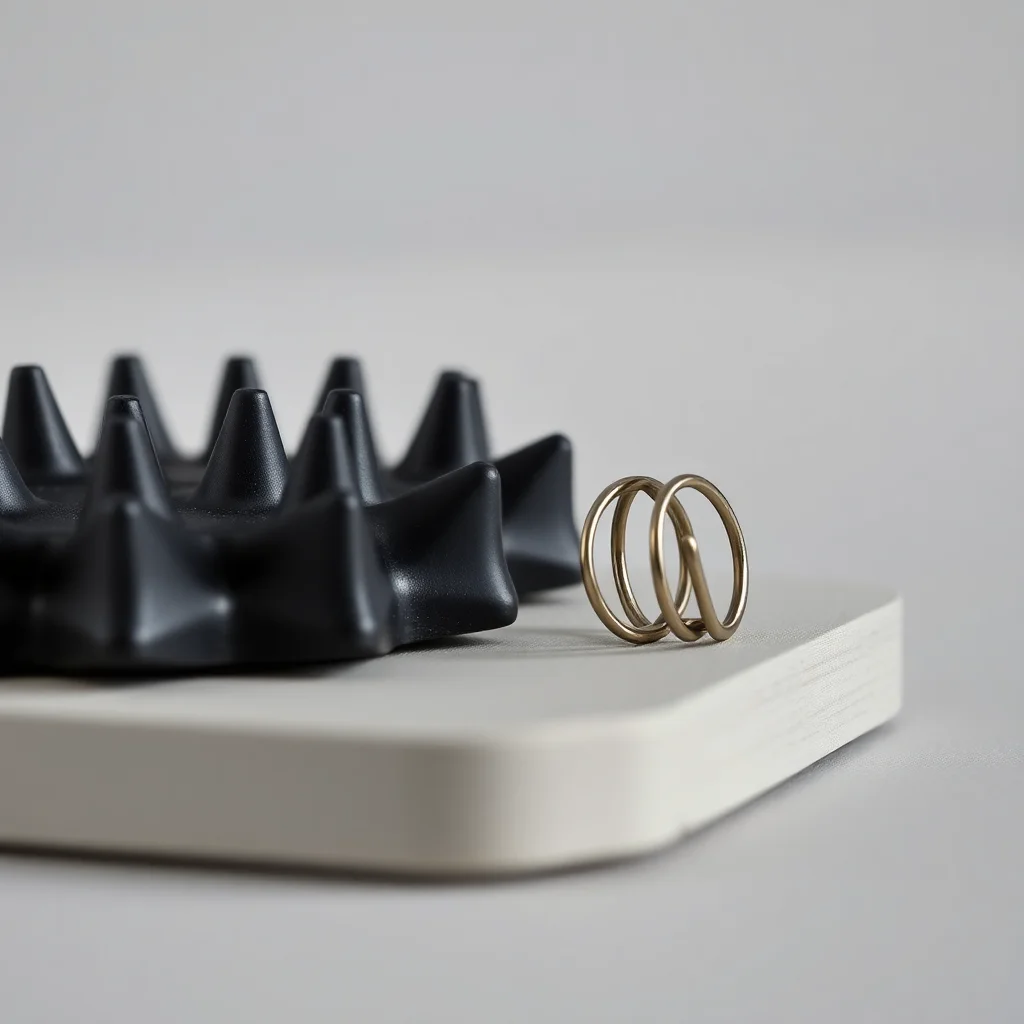
The modernist fantasy that good design should be neutral, efficient, and self-effacing has not disappeared, but it has been outflanked. On today’s desk, the object that merely solves a task often feels underwritten. Designers such as Hella Jongerius have long resisted the tyrannical purity of industrial sameness, insisting on the importance of imperfection, texture, and human presence. Her work suggests what the office product market is now finally willing to admit: tactile ambiguity can be more persuasive than sterile optimization.
Consider how many contemporary desk tools borrow from the language of soft sculpture, domestic décor, or collectible toy design. A stapler is no longer only a stapler if it is coated in rubbery matte paint, rounded into a pebble profile, or assigned a color somewhere between clay and candy. Brands like Hay and Muuto have understood that office products must now participate in a broader interior sensibility, where even storage bins and tape dispensers are expected to harmonize with a room’s emotional temperature. The object is no longer judged merely by its task; it is judged by the atmosphere it produces.
That atmosphere is not innocent. It influences conduct. A desk populated by hard-edged, institutionally coded tools tells the body to tense up, perform, and accelerate. A desk with softened forms, warmer materials, and playful proportions asks for a slower rhythm, a less punitive mode of work. This is the real soft power of objects: they do not command behavior directly, but they insinuate it. They normalize a tempo, a posture, even a mood. In a post-discipline office, the accessory becomes a behavioral script.
For that reason, the current fascination with surface and finish also connects to broader conversations about tactile experience in design. In many cases, the most persuasive objects are those that invite touch before they announce function, a quality explored in The Gritty Renaissance: Texture Reshaping Design. When an office object has enough material presence to slow the hand for a second, it can alter the whole tempo of use.
From accessory to micro-influencer
The phrase may sound comic, but it is precise. Office objects increasingly function like micro-influencers of behavior because they shape perception through proximity rather than through authority. A sculptural pen cup can make an empty desk feel organized enough to begin. A whimsical clip holder can make repetitive paperwork feel less punitive. A lamp with warm dimming can suggest closure at 6 p.m., even if the calendar says otherwise. These are not trivial effects. They are environmental nudges, and design is becoming more fluent in nudge theory by the year.
There is a lineage here. Karimoku New Standard has translated Japanese woodworking into contemporary office and home objects that feel calmer than corporate plastic, while Vitra’s accessory ecosystem has long blurred the line between institutional equipment and interior personality. Even the most banal supply has become an opportunity for emotional calibration. The best products now understand that the office is not simply a place where work happens; it is a place where selfhood is continuously edited.
That helps explain the cactus form, which is not random. Cacti are contradictory symbols: resilient, domestic, a little sharp, but also decorative and alive. Translate that into a memo holder and you get a small object that embodies both caution and warmth. It can look like a joke, and that is exactly the point. Humor softens compliance. If a product can make you smile, it can more easily make you use it, keep it visible, and let it influence your habits. This is persuasion by charm, and it is far more effective than overt functionality preaching at the user.
PRO: Emotional objects make work less brutal
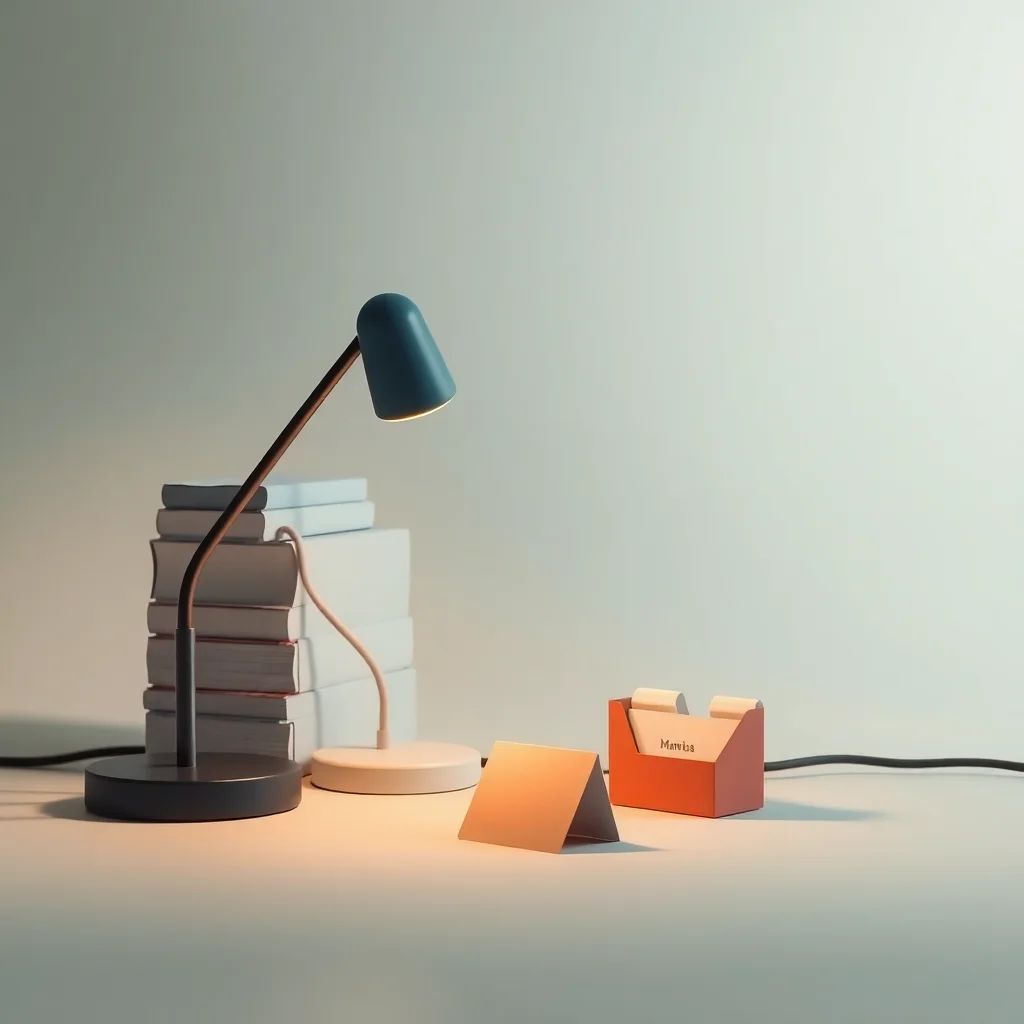
The strongest argument for emotional desk accessories is that they humanize an environment that has become too abstract. In an office increasingly governed by software, metrics, and surfaces designed for cameras, small objects reintroduce touch, memory, and scale. A ceramic tray, a felted cable keeper, or a hand-finished desktop stand can interrupt the numbness of digital labor and remind users that the body still exists.
There is also a psychological case. Designers and workplace strategists have long understood that sensory cues affect focus. Material warmth can reduce perceived stress, while playful forms can reduce the intimidation of task initiation. This is not fringe thinking. The broader wellness design industry, from Herman Miller’s ergonomic chairs to the ambient lighting approaches popularized by contemporary workspace brands, has already normalized the idea that objects influence cognition. Desk accessories simply take the logic down to the micro scale, where behavior is actually negotiated minute by minute.
Just as importantly, emotional objects resist the soulless homogeneity of commodity office supply chains. The world has no shortage of disposable plastic trays and chrome loops that feel identical whether they are on a startup desk or in a municipal archive. Designers such as Andrea Branzi and Ettore Sottsass understood decades ago that the domestic and the symbolic should not be split apart. Sottsass’s postmodern vocabulary, especially through Memphis, proved that objects could be functional while still carrying wit, color, and narrative excess. The current desk accessory wave inherits that provocation, albeit in a quieter register. The object becomes a small cultural signal, not just a tool.
CONTRA: Emotional objects can become decorative coercion
But let’s not romanticize the situation. The same emotional intelligence that makes desk accessories appealing can also become a new layer of corporate control. Once objects are asked to “improve mood,” “boost creativity,” or “promote focus,” they risk becoming instruments of behavioral management disguised as lifestyle upgrades. The office no longer tells you what to do through policy alone; it cues you through atmosphere. That is a softer form of power, and soft power is still power.
There is a danger that emotional desk design becomes a consumerist solution to structural problems. If an organization offers employees a cactus-shaped memo holder instead of fair workload distribution, real flexibility, or privacy, the object is acting as a sedative. It soothes the symptoms while leaving the system intact. In that scenario, design is not democratizing work; it is aestheticizing its pressures.
Moreover, once personality is built into the object, the pressure to perform taste intensifies. A desk full of curated accessories can become a status display, a visual résumé of cultural literacy and purchasing power. The emotional object then stops being intimate and starts being aspirational, another signal in the contest for being seen as thoughtful, creative, and well adjusted. Even the “fun” memo holder can become a disciplinary tool if it joins an office culture that rewards performative individuality. The irony is vicious: objects meant to free the desk may end up policing it.
Design history warns us here. Whenever function and expression become too tightly coupled, objects tend to absorb ideology. The promise of humane design can slide into manipulative design. This is why the current enthusiasm for tactility, softness, and character must be read critically. Emotionality is not automatically ethical. It can be used to care for users, or to coax them into tolerating worse conditions with prettier tools.
The tension between expressive form and inherited design language also echoes in revivals of older silhouettes, especially when they are updated for contemporary interiors. That dynamic is explored in Vintage Bauhaus revival: modern twists on iconic 1920s silhouettes, where the past is less a template than a toolkit for rebranding utility as feeling.
The future belongs to the object that can behave
If this trend continues, office products will not simply be designed to hold, clip, store, or illuminate. They will be expected to adapt to moods, signal transitions, and maybe even learn from habits. The next generation of desk accessories may borrow from smart-home logic without becoming overtly technical: lights that warm as the day ends, organizers that subtly reconfigure with usage, surfaces that invite touch rather than resist it. But the deeper change is conceptual. The object will be judged by whether it participates in a person’s emotional ecology.
That is why the cactus-like memo holder matters. It is not a novelty trapped in a gift shop logic. It is a symptom of a larger design condition in which everyday tools are asked to do symbolic labor. They must now be legible on a desk, on a screen, and in a life. The best will achieve this without becoming sentimental or overdesigned. They will stay close to use while refusing emotional blankness.
In that sense, the new soft power of objects is not about cuteness. It is about agency. The office accessory is becoming a small behavioral actor, a quiet negotiator between work and self. That may sound benign, but it is one of the most consequential design shifts of the moment. If an object can tune mood, suggest pace, and make labor feel less brutal, then it is no longer peripheral. It is part of the architecture of conduct.
And once you accept that, the question changes. We are no longer asking whether a desk accessory is practical enough. We are asking what kind of person, posture, and tempo it is trying to produce.
FAQ
Are emotional desk accessories just a trend? No. They are a response to structural changes in work: hybrid offices, camera-facing labor, and the collapse of the boundary between home and workplace. The trend may fade in style, but the demand for objects that shape mood and behavior is likely to deepen.
How do these objects differ from traditional office supplies? Traditional office supplies prioritize efficiency and standardization. Emotional desk accessories add tactility, personality, and atmosphere, making the object part of the user’s daily psychology rather than a neutral tool.
Which designers or brands influenced this shift? Jasper Morrison, Hella Jongerius, Naoto Fukasawa, and Ettore Sottsass are key references for the emotional and cultural legitimacy of everyday objects. Contemporary brands like Hay, Muuto, Vitra, and Karimoku New Standard have also helped normalize expressive office products.
Can emotional design be manipulative? Yes. If companies use mood-boosting objects to compensate for poor working conditions, emotional design becomes a form of soft coercion. The line between care and control is thin, especially in the workplace.
Conclusion
The desk accessory is no longer a minor supporting actor. It is becoming a behavioral medium, a tiny but powerful negotiator between utility, identity, and atmosphere. That makes it one of the most revealing product categories of the moment: small enough to ignore, strategic enough to matter.
Watch the Mainifesto Short
Get the Mainifesto weekly — curated design debates, speculative ideas and the week's best articles every Saturday.
Editorial Perspectives
Questions and counterpoints developed by the Mainifesto editorial desk to extend the discussion.
Perspective 1
I’m all for a desk that feels considered, but once a stapler starts being treated like a mood device, I start asking who’s paying for the experiment. If it genuinely helps people work better, fine — but most offices need fewer gestures and more things that last, clean easily, and don’t become obsolete in a year.
Perspective 2
The interesting question isn’t whether objects influence behavior — they obviously do — but whether that influence is being measured honestly. If these accessories improve comfort, focus, or social cues without pretending to be therapy, they can be useful; if not, they’re just soft architecture for management.
Perspective 3
We’ve gone from the desk as a tool to the desk as a stage set, which is very on-brand for contemporary work culture. The danger is obvious: when every object is designed to nudge, soothe, or optimize, control starts wearing a very elegant face.