
Preserve or Reprogram Heritage Buildings?
PRO: A building survives by being used, not embalmed
The seductive lie of preservation is that a landmark is safest when it is frozen in place, converted into a kind of architectural taxidermy. Yet the real enemy of heritage is not change; it is abandonment. The debate sharpened again with Snøhetta’s proposal to transform Aino and Alvar Aalto’s Paimio Sanatorium into a “future-oriented” hotel, where patient rooms would become bedrooms and the building’s healing narrative would be translated into hospitality. That same tension haunts the New York Historical extension, where a historic institution is expanded not as a shrine but as a living civic machine. In both cases, the question is not whether the past should be admired. It is whether architecture can remain legible only by remaining active.
Adaptive reuse is often dismissed as compromise, but the best examples prove the opposite: reprogramming can intensify memory. Caruso St John’s transformation of the de la Warr Pavilion, Herzog & de Meuron’s Tate Modern, and David Chipperfield’s restoration of the Neues Museum all demonstrate that public life can sharpen, not erase, historical meaning. These projects do not preserve architecture by sealing it behind ropes. They make old structures perform again, forcing contemporary occupants to confront original spatial ideas in real time. A museum without visitors is a mausoleum; a heritage building without use becomes a beautiful liability.
PRO: Reprogramming can reveal the original idea more clearly
Paimio Sanatorium is not any old shell. It is an architecture of care, precision, and environmental intelligence, conceived in the 1930s as a total therapeutic setting for tuberculosis patients. Aalto designed everything from light and air to furniture and color as part of a healing system. To keep such a building alive as a static exhibit would be to misunderstand it. A hotel conversion, if handled rigorously, could make the building’s health logic newly intelligible: guests would sleep within a spatial philosophy of rest, orientation, silence, and daylight. That is not betrayal by tourism; it is interpretation through occupation.
This is the stronger argument for adaptive reuse: it allows architecture to be read through use, not just through labels. Consider how Carlo Scarpa’s interventions at Castelvecchio in Verona made medieval fragments speak through modern sequencing, or how the Roman walls embedded in many contemporary European libraries gain force because they are still encountered in daily life. Buildings communicate most clearly when they are inhabited with a purpose that respects their original spatial DNA. If the New York Historical extension expands access to archives, exhibitions, and civic programming, then it too is not diluting heritage. It is extending the institution’s democratic function. That broader civic role is part of why projects like museum extensions that become public landscapes matter so much in contemporary preservation debates.
Preservation purists often talk as though a building has one sacred narrative. It does not. Most heritage structures are layered, contradictory, and already full of alterations. The idea that a landmark can only be “authentic” in a single frozen state is a fantasy of conservation bureaucracy. In reality, architecture has always been edited. What matters is whether the new layer is intelligent enough to enter into conversation with the old one, rather than shouting it down.
CONTRA: Too much utility can turn memory into branding
But adaptive reuse has a darker mode, and it is increasingly common: the building survives, yet its meaning is flattened into atmosphere. Heritage becomes a premium aesthetic, a usable backdrop for events, wellness tourism, or cultural consumption. Once a sanatorium becomes a hotel, there is a real risk that the ethics of healing are converted into lifestyle marketing. The original building’s social urgency — illness, rest, vulnerability, the collective infrastructure of care — can disappear behind carefully curated linen, espresso bars, and “authentic” narratives.
This is the line that preservationists are right to defend. A landmark is not simply a form; it is an argument about history. When reprogramming becomes too aggressive, architecture loses its specificity and becomes a generic host for experience. Think of the many industrial conversions where exposed brick and steel have been reduced to an interchangeable luxury code, or of heritage districts where “activation” means retail occupation rather than cultural continuity. The building remains, but the memory is edited to fit the market.
The New York Historical extension raises a different but related danger: even a noble institutional expansion can overwhelm the original identity of a heritage site if the new program dominates the reading of the ensemble. Additions to historic buildings are always political because they decide which era gets to speak first. The wrong move does not just alter circulation or square footage; it can redefine the institution’s public face. When new interventions are too self-consciously current, the heritage core becomes a decorative relic inside a contemporary envelope.
There is also an ethical issue that architecture culture prefers to avoid. Not every historically significant building should be monetized simply because it can be. A former hospital, sanatorium, prison, or workers’ housing block carries social memory that may be compromised when converted into a consumable experience. Reuse can be technically excellent and still morally awkward. The fact that a building can support another program does not mean it should be made to serve one without resistance. Sometimes the most respectful act is restraint.
PRO: The real threat is not change, but bad change
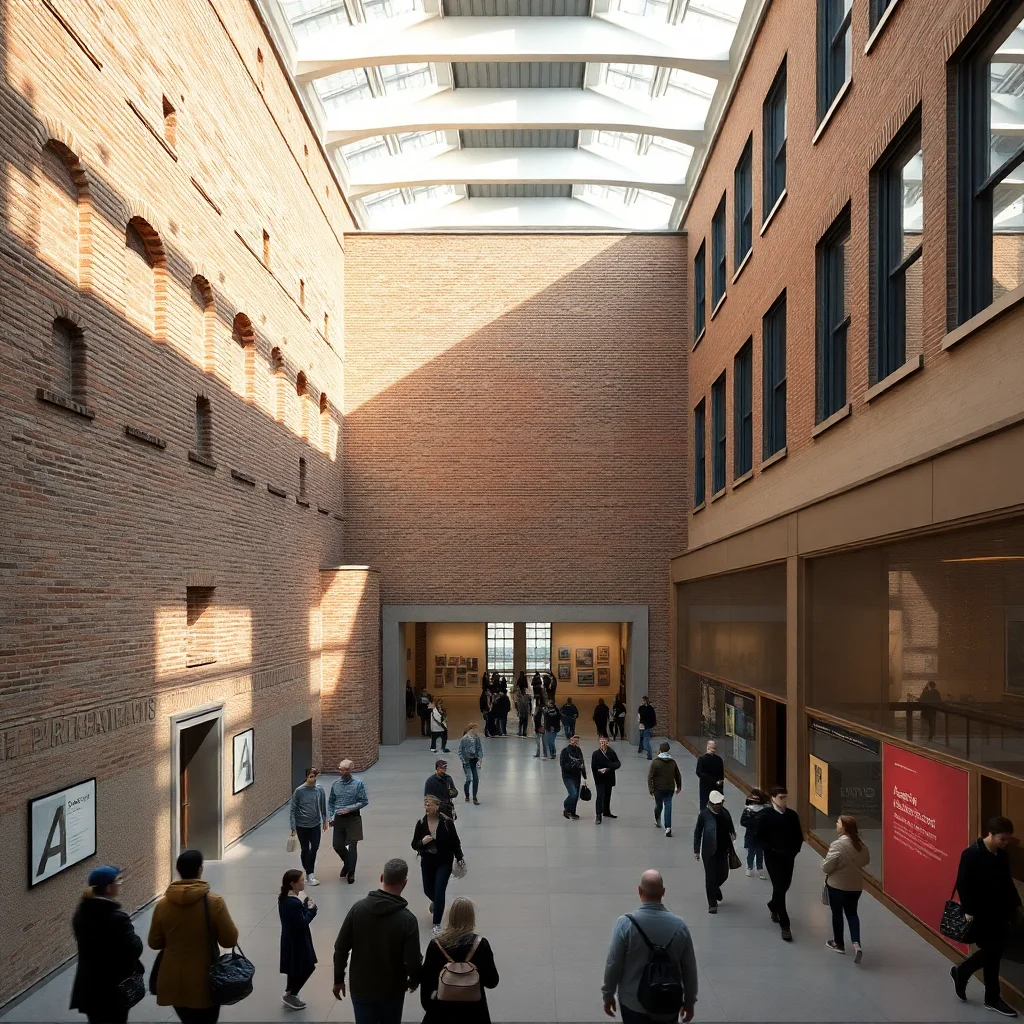
Opponents of adaptive reuse often argue as if the choice is between purity and violation. That binary is lazy. The real question is whether the intervention deepens the building’s architectural intelligence. Snøhetta’s reputation suggests an answer rooted in spatial sensitivity rather than spectacle: the studio often treats historical material as a living system, not a fossil. If Paimio becomes a hotel, the challenge is not to preserve every room’s original use, but to preserve the building’s operational ethics — the choreography of light, the calming proportions, the attention to the body.
This is where design judgment matters more than nostalgia. Adaptive reuse is not an excuse to paste contemporary finishes onto old fabric and call it stewardship. It requires severe discipline: clear reversibility, legible distinctions between old and new, and a refusal to over-theatricalize history. The best conversions make their alterations readable. They do not mimic the original, but neither do they treat it as disposable scenery. This is precisely why projects by Lacaton & Vassal, especially their housing transformations, matter so much: they prove that retaining structure can be more radical than demolition, and that generosity can be architectural rather than merely symbolic. For a broader look at this shift in practice, see how renovation is becoming the urban default.
If heritage is a resource, then utility is not its enemy. Utility is the proof that the resource still matters. The building that continues to host public life is not just preserved; it is validated. In a climate-pressured era, this argument becomes even harder to dismiss. Reusing existing structures conserves embodied carbon, keeps urban memory in place, and resists the wastefulness of replacement. The ethical center of architecture is shifting away from pristine novelty and toward intelligent continuity, especially as policy and design increasingly collide in the code reform fight around adaptive reuse.
CONTRA: Yet some buildings deserve to remain difficult
Still, not every landmark should be made easy. There is value in architecture that resists optimization. Some buildings exist precisely to hold an uncomfortable distance from the present, preserving a cultural friction that would disappear if they were too readily repurposed. A museum is not merely a storage device for artifacts; it can be a civic refusal to let history become seamless. In that sense, leaving certain heritage buildings more or less intact may be less passive than it seems. It can be a deliberate decision to keep their meanings uncompromised by commercial logic.
The museum model is sometimes caricatured as deadening, but it can also protect against opportunism. It establishes a boundary around interpretation. Visitors enter to learn, not to consume. The building becomes a site of encounter rather than extraction. For some structures — especially those associated with collective trauma, public care, or major architectural innovation — that boundary is essential. Paimio Sanatorium, for instance, is not just a beautiful object; it is a historical document of medical modernity. Turning it into a hotel may reveal one layer of its significance, but it risks suppressing others beneath the softer language of leisure.
That is the unresolved truth at the heart of the current debate. Adaptive reuse can rescue architecture from irrelevance, yet it can also sand down the edges that make a building historically charged. Preservation can protect memory, yet it can also fossilize it. Between the two positions lies a more demanding standard: not “change” or “no change,” but a precise accounting of what must remain sacred, what may be transformed, and what can never be packaged as experience.
The strongest heritage projects will be those that accept conflict as part of conservation. They will not pretend that every new use is neutral, nor that every old wall should be untouched. They will argue, visibly and unapologetically, that architecture is alive only when its past is allowed to remain stubborn. The question is not whether landmarks should adapt. It is whether we are willing to admit that adaptation always costs something — and to name exactly what that something is.
- Paimio Sanatorium is a test case, not a template. Aalto’s building can absorb a hotel program only if the conversion preserves its therapeutic spatial logic. If the project turns care into luxury atmosphere, it will have preserved the shell and lost the meaning.
- New York Historical shows how institutions reinvent themselves. Extensions to heritage institutions are not just technical additions; they decide whether history remains public, accessible, and active, or becomes an inward-looking archive.
- Adaptive reuse is strongest when it is legible. Good conversions do not imitate the past or erase it. They make old and new parts readable in relation to each other, so the building tells a longer story rather than a smoother lie.
- Not every historic building should be optimized. Some places deserve to stay awkward, specific, and resistant to commercial logic. That resistance can be a form of cultural protection.
- Carbon makes preservation more urgent, not less. Reusing existing buildings is no longer only an aesthetic or heritage issue. It is a climate strategy, and often the most responsible one available.
- The real debate is about permission. Who gets to decide how much reinvention a landmark can absorb before it becomes something else: architects, curators, developers, the public, or the building itself?
FAQ
What is adaptive reuse in architecture?
Adaptive reuse is the practice of repurposing an existing building for a new function while retaining significant parts of its structure, character, or historical value. It is often used to extend a building’s life and reduce demolition waste.
Why is Paimio Sanatorium significant?
Completed in 1933 by Aino and Alvar Aalto, Paimio Sanatorium is a landmark of modern architecture designed as a therapeutic environment for tuberculosis patients. Its layout, lighting, furniture, and atmosphere were conceived as part of a healing system.
Does turning a heritage building into a hotel damage its authenticity?
It can, depending on the quality of the intervention. If the new program respects the building’s spatial logic and historical meaning, it may strengthen public engagement; if it merely exploits the building’s aura, authenticity becomes branding.
Is preservation always better than reuse?
No. Preservation can protect memory, but it can also freeze buildings into irrelevance. The strongest approach is usually the one that balances continuity, public value, and architectural integrity without reducing the landmark to a backdrop.
Should heritage buildings be preserved as museums, or reprogrammed to stay relevant?
Get the Mainifesto weekly — curated design debates, speculative ideas and the week's best articles every Saturday.
Editorial Perspectives
Questions and counterpoints developed by the Mainifesto editorial desk to extend the discussion.
Perspective 1
If a building can’t earn its keep, it becomes a museum piece for a shrinking audience. I’m firmly on the side of adaptive reuse here: keeping a landmark alive means giving people a reason to enter it, spend money there, and make it part of daily life again.
Perspective 2
I’m not convinced usefulness should be the condition for survival. Once you start forcing every landmark to justify itself through new programming, you risk stripping away the very spatial logic and historical meaning that made it worth preserving.
Perspective 3
This is never just a design question; it’s about who gets to decide what a city remembers and who pays for that memory. Adaptive reuse can be a smart survival strategy, but if the new use erases the public value of the original, then we’ve just replaced one form of neglect with another.