
The New Rural Roofline: Industrial Geometry Returns
Industrial Geometry Is Back, and the Forest Is Paying Attention
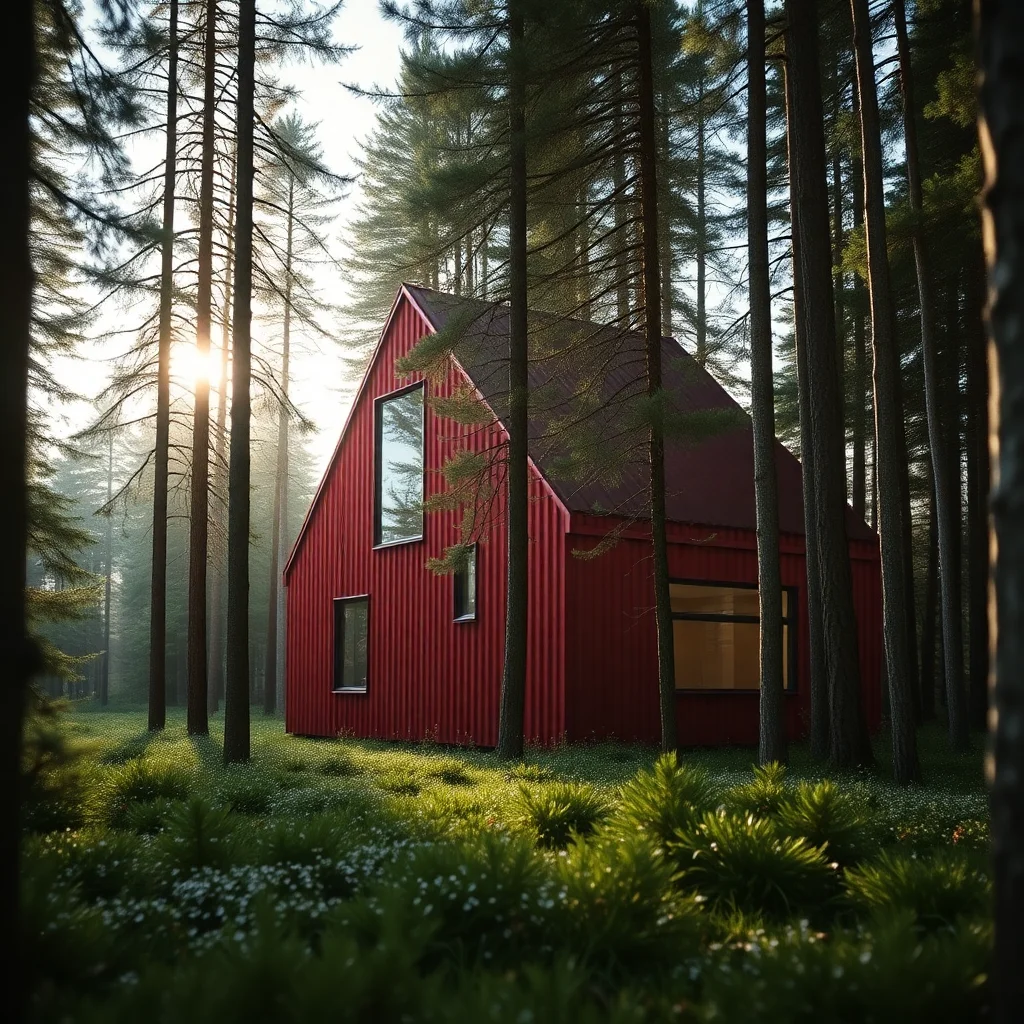
A red steel sawtooth roof rising through a spruce forest in the Czech Republic is not a nostalgic gesture. It is a provocation. The image from Jevany Villa, reported by designboom, lands with unusual force because it exposes a contradiction that contemporary architecture keeps trying to resolve: how can a form born from manufacturing, extraction, and standardization become appropriate in a low-density landscape that is supposedly defined by restraint, quiet, and ecological sensitivity?
The answer is not to hide the industrial silhouette. That would be cowardly. The more interesting move is to let the forest edit it. In that reading, the trees are not scenery; they are an active design constraint. The canopy determines the roofline’s visibility, the steel frame’s color intensity, the way daylight lands on the serrated profile, and the degree to which a house can read as object versus habitat. The sawtooth roof, once a grammar of factories and workshops, is increasingly appearing in domestic and rural architecture because it offers something the generic pitched roof no longer does: a disciplined way to choreograph light, volume, and climate in one exacting gesture.
Think of this as the new rural roofline: not a return to the picturesque, but an industrial intelligence softened by ecology. In low-density landscapes, where every building is forced to justify itself against field, forest, or horizon, roof form becomes moral as well as formal. A sawtooth can declare that the house is neither a cabin nor a villa in the old bourgeois sense. It is a machine for living with weather, tree shade, and seasonal change. That is a far more radical proposition than decorative rusticity.
From Factory Daylight to Forest Light
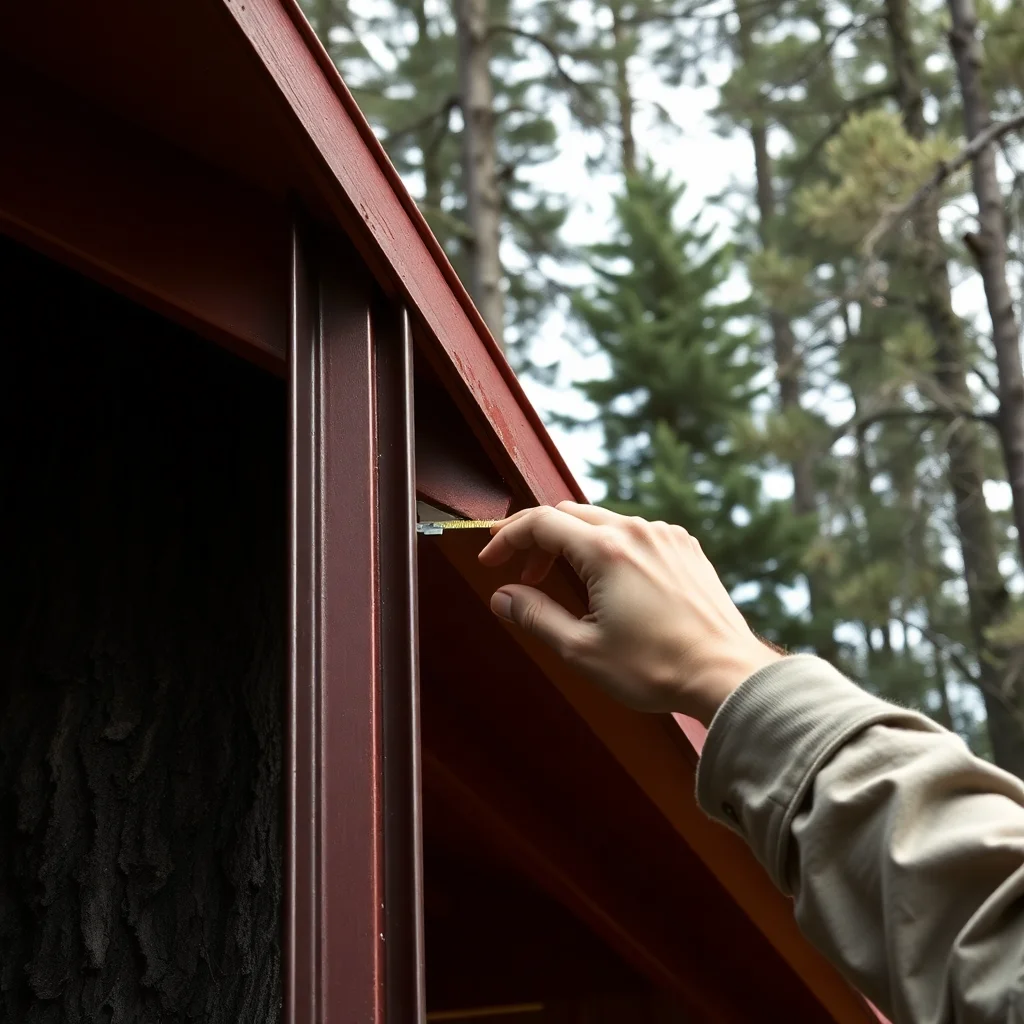
The sawtooth roof was historically a device of industrial efficiency. It was designed to bring controlled north light deep into factories, workshops, and assembly halls, from early modern manufacturing plants to later twentieth-century production buildings. Its authority came from performance: it captured even illumination, reduced glare, and structured large spans with rational repetition. The form was never just aesthetic; it was a technology of work.
That history matters because the contemporary rural versions are not simply borrowing a silhouette. They are borrowing a logic. In a forested setting, the sawtooth roof becomes an instrument for managing variable light beneath trees, creating rhythmic interiors, and staging a relationship between roofscape and horizon. The industrial form has not been tamed; it has been repurposed. Japanese architecture has long understood this kind of technical translation. Tadao Ando’s precise openings and SANAA’s atmospheric envelopes show how architecture can regulate light as a material condition rather than a decorative afterthought. In the same vein, a sawtooth roof in the woods is not an industrial costume. It is a light machine adapted to a different ecology.
That adaptation is why these roofs keep returning. They are legible, buildable, and stubbornly non-inert. In an era when rural houses are often expected to dissolve into the landscape, the sawtooth refuses disappearance. Instead, it offers a frictional coexistence: steel against needles, repetition against organic irregularity, geometry against growth. And that friction is precisely what gives the architecture its contemporary charge.
The Forest as a Design Constraint, Not a Backdrop
The most useful thing about the Jevany Villa image is that it reveals the forest’s agency. A spruce grove is not neutral terrain waiting for a house to arrive. It is a dense field of verticals, filtered views, shadow layers, moisture, and seasonal abrasion. It limits sightlines, complicates access, and changes how a building is perceived from every angle. In a city, architecture competes with adjacent façades. In the forest, it competes with recurrence: trunks, branches, and the cumulative pressure of green.
This is where speculative rural architecture becomes politically interesting. Treating the forest as a constraint means designing against the old fantasy of the solitary house as sovereign object. Instead, the building becomes a negotiated insertion. The red steel frame is not only a visual contrast; it is a decision to be seen at certain moments and partially withheld at others. That logic recalls the work of Sigurd Lewerentz, whose churches and landscape sensibility understood that architecture can become more powerful when it resists full visual dominance. It also echoes rural interventions by firms like Studio Mumbai, where material, climate, and landscape are never separate concerns.
The real question is whether these industrial forms can be made ecological without becoming sentimental. The answer lies in how they handle edge conditions: rainwater, thermal performance, forest fire risk, maintenance, and the possibility of future adaptation. A sawtooth roof in the woods is only convincing if it does more than look sharp. It must work as climate intelligence. It must earn its geometry. For related thinking on how domestic form can actively shape microclimate, see Courtyard Living as Climate Strategy, where spatial enclosure becomes a tool for regulating heat, shade, and airflow.
Softening the Machine Without Neutralizing It
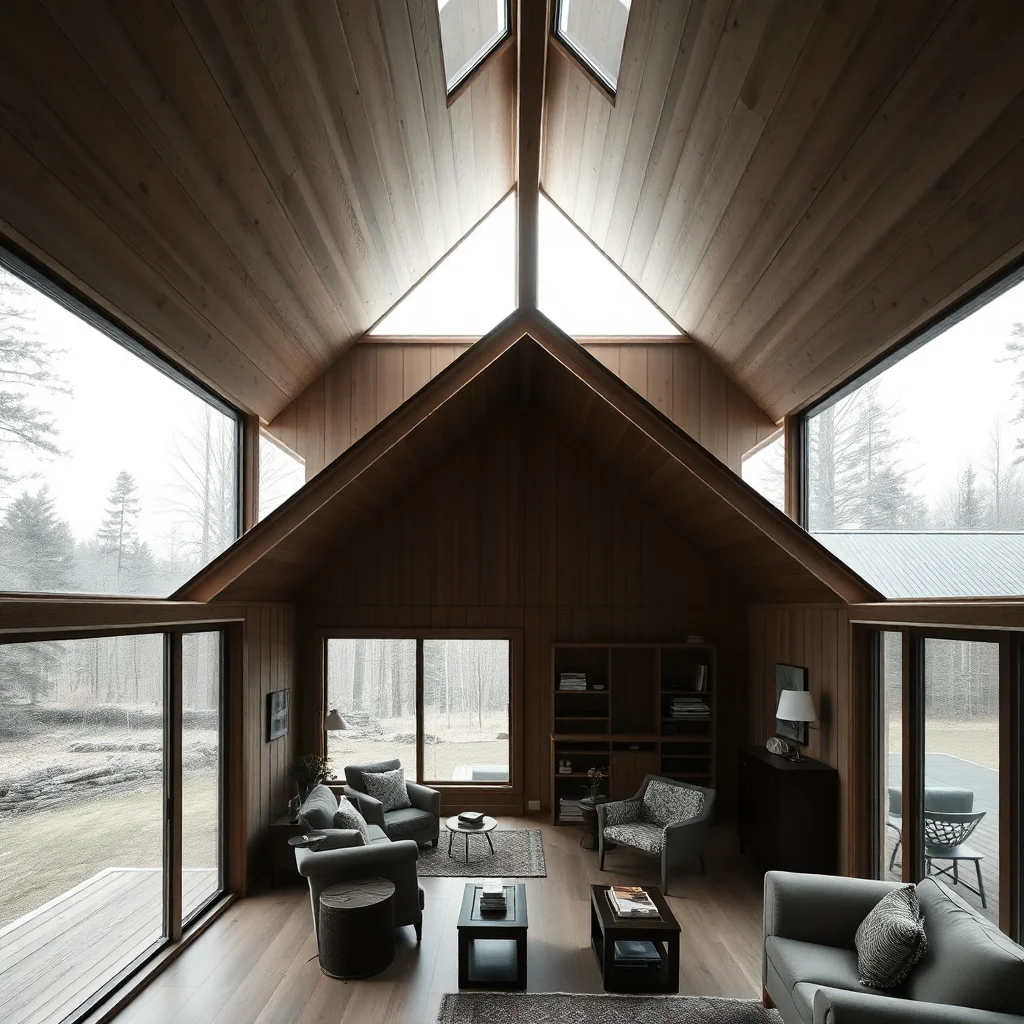
There is a lazy architectural tendency to assume that ecological design must look soft, biomorphic, and visually timid. That idea should be retired. Ecology is not always pastoral. Sometimes it is structural, angular, and uncompromising. The contemporary rural house can use industrial geometry precisely because it makes environmental performance visible. Daylighting strategies, ventilation pathways, and roof runoff can all become part of the building’s formal expression.
Several projects have already pushed in this direction. Rural and semi-rural houses by Herzog & de Meuron, for example, often turn material mass and roof articulation into climate tools rather than stylistic overlays. In Scandinavia, projects by Tham & Videgård and Johan Celsing show how roof profiles can register local weather while remaining formally severe. Meanwhile, in the Netherlands and northern Europe, timber and steel hybrids have continued to test the boundary between utility and inhabitation, proving that a building can be both hard-edged and environmentally attentive.
What distinguishes the Czech example is the way red steel refuses camouflage. The color intensifies the building’s presence against the green field and dark trunks, but it also performs a kind of edited hospitality. The house does not pretend to be a forest creature; it acknowledges that it is an insertion shaped by industry, memory, and craft. That honesty is refreshing. Too many contemporary houses in wooded settings perform ecological innocence through brown cladding and vague vernacular references. Those gestures often feel defensive. Industrial geometry, by contrast, can be honest about its lineage while still becoming ecologically literate.
Why the Rural Wants the Industrial Again
The return of industrial silhouettes to the countryside is not a stylistic fad. It reflects a deeper shift in how we imagine rural life. The romantic countryside of retreat, purity, and timelessness is collapsing under the pressure of climate change, labor transitions, and new patterns of hybrid living. Rural architecture now has to support remote work, seasonal occupation, repair culture, and low-energy resilience. It must be practical without looking banal. It must accommodate infrastructure without apologizing for it.
That is why factory-derived forms feel newly relevant. A sawtooth roof offers a direct answer to the problem of overhead light in deep plans. A steel frame can be precise, durable, and adaptable. A repeating roof profile can make a house read as a small system rather than a single picturesque volume. This systems thinking aligns with contemporary design culture more than the old fantasy of the isolated cottage ever could.
And yet the stakes are not merely functional. To bring industrial geometry into the forest is to insist that ecology and modernity are not opposites. The countryside does not have to be preserved as a museum of softness. It can host architecture that is sharp, technical, and future-facing. The challenge is to prevent that sharpness from becoming arrogance. The forest will accept only those forms that understand scale, shadow, and season. It is the strictest client architecture has ever had.
That same tension between memory, material, and adaptation also appears in conversations around Heritage Materials and Lower-Carbon Architecture, where older building traditions are re-read through the lens of contemporary performance rather than nostalgia.
What a Future Rural Architecture Might Actually Look Like
If the new rural roofline has a manifesto, it would reject both camouflage and spectacle. It would favor forms that are legible from a distance but materially disciplined up close. It would use industrial geometry not to dominate the landscape, but to negotiate with it. That means roofs that capture light intelligently, structures that age with dignity, and envelopes that can tolerate weather, moss, and repair.
This is where the sawtooth roof becomes more than a formal reference. It becomes a thesis about rural futurity. The serrated profile can host solar orientation, daylight modulation, and ventilation logic. It can produce an interior rhythm that feels generous without being wasteful. It can also remind us that low-density landscapes are not exempt from architectural ambition. In fact, they need more rigor because the margins for error are larger. A bad urban building can hide in the crowd. A bad forest house cannot hide anywhere.
The Czech villa, glimpsed through spruce, suggests a world in which industrial geometry is no longer the enemy of nature but one of the tools used to build a more serious relationship with it. That is a strong claim, and it should be controversial. If architecture is going to keep going back to the forest, it should stop pretending that the forest is passive. The trees are already redrawing the plan. In that sense, the project belongs to the same broader family of design questions explored in When the Home Becomes a Master Plan, where domestic architecture expands into a more territorial way of thinking.
FAQ
Why are sawtooth roofs returning in residential architecture?
Because they offer a powerful combination of light control, structural clarity, and formal distinction. In domestic and rural settings, they translate industrial efficiency into a more climate-aware architectural language.
How does a forest influence the design of a house?
A forest affects visibility, daylight, moisture, maintenance, and access. It is not a backdrop; it is a dense environmental system that changes how a building is perceived and how it must perform.
Is industrial geometry really ecological?
It can be, if it is used to improve daylighting, ventilation, material efficiency, and long-term adaptability. Geometry alone is not ecological; performance and durability are what make it credible.
What makes the Czech example relevant beyond its local context?
It captures a broader shift in architecture: the move away from rustic camouflage toward honest, technically informed forms that can survive and remain meaningful in low-density landscapes.
Get the Mainifesto weekly — curated design debates, speculative ideas and the week's best articles every Saturday.
Editorial Perspectives
Questions and counterpoints developed by the Mainifesto editorial desk to extend the discussion.
Perspective 1
I’m interested in sawtooth roofs coming back, but only if they earn their keep. If the forest is a real design constraint, then yes, rural architecture may need to get more industrial in its logic — better daylight, drainage, spans, and buildability all matter more than nostalgia. The danger is turning a practical form into a styling exercise that costs more and performs less.
Perspective 2
The question isn’t whether rural architecture should become more industrial, but which industrial habits are worth keeping and which ones were always destructive. Sawtooth roofs can work when they’re treated as a careful adaptation to climate, light, and local craft — not as a corporate silhouette dropped into the woods. What worries me is when the language of ecology gets used to sanitize a new wave of aesthetic gentrification.