
Can a Better Cruise Terminal Make a Bigger Problem?
Can a Better Cruise Terminal Make a Bigger Problem?
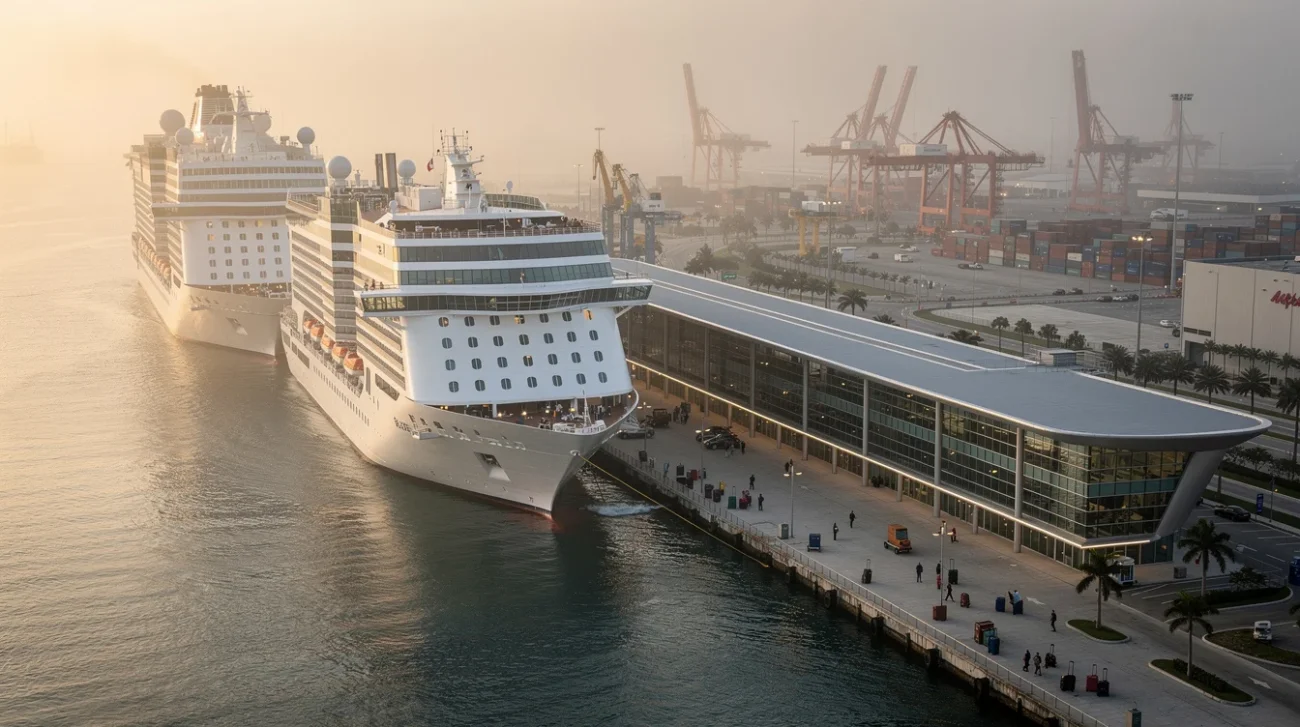
A building can perform brilliantly while helping a damaging system perform better. Arquitectonica’s MSC Cruise Terminal at PortMiami makes that uncomfortable possibility architectural: a slim, elongated structure designed to accommodate three ships simultaneously and process 36,000 passengers a day. According to Dezeen’s September 16, 2026 report, its 492,000 square feet—approximately 45,700 square metres—make it the world’s largest cruise terminal by size.
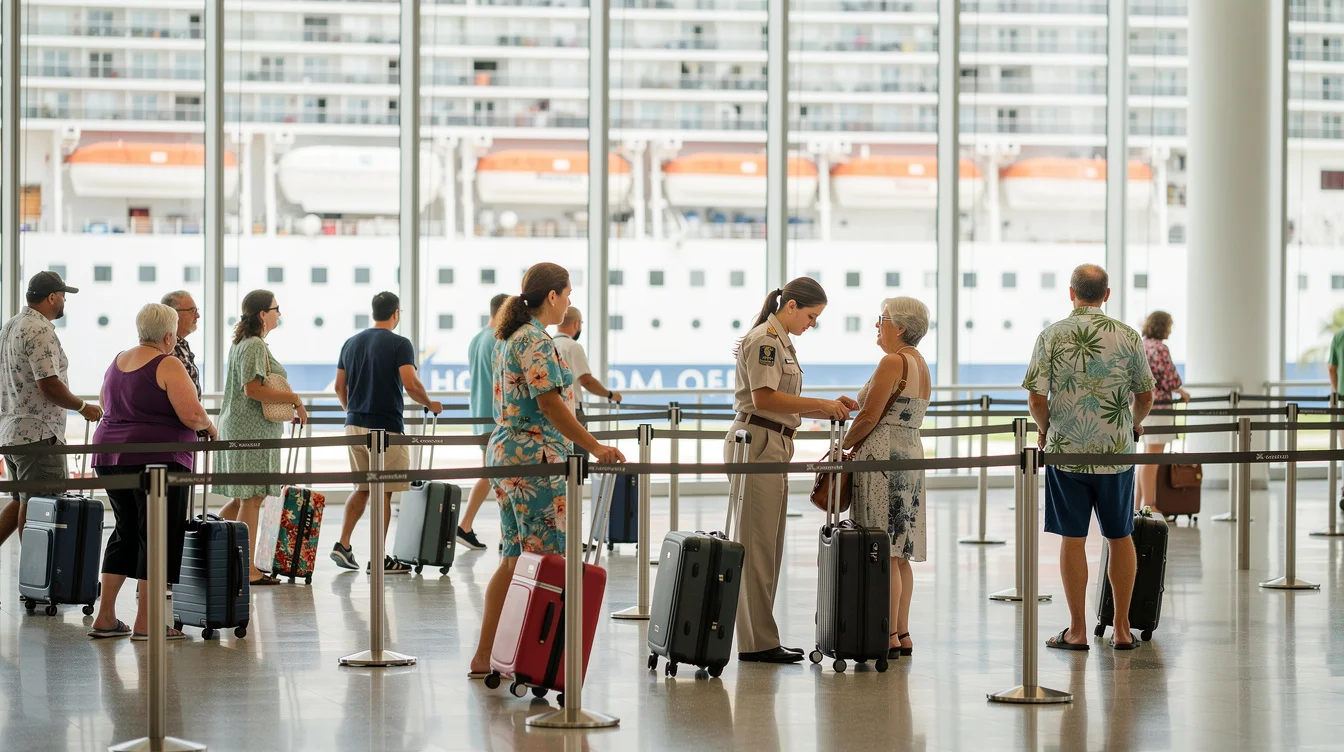
Those figures describe capacity, not proof that 36,000 people pass through every day. Nevertheless, they establish the project’s ambition. This is architecture measured partly by how effectively it converts crowds, luggage, security checks and boarding procedures into movement. Its reported intention to “mirror directionality” of ships gives that logistical task a formal expression.
There is genuine skill here. Moving thousands of people without confusion is neither trivial nor aesthetically irrelevant. But the celebratory vocabulary of throughput conceals a harder question: when a building removes friction from a resource-intensive activity, can its environmental performance be judged independently of that activity? The terminal is an unusually clear test because its purpose is not merely to accommodate travel. It is to make travel at enormous scale work.
Efficiency Is Not an Environmental Argument
Architecture has spent decades learning to admire circulation. At London Heathrow’s Terminal 5, designed by Rogers Stirk Harbour + Partners, the large-span enclosure separates an expansive architectural framework from the changing machinery of passenger processing. At Yokohama International Passenger Terminal, Foreign Office Architects turned circulation into a folded landscape, making infrastructure double as public space. These projects demonstrate that transport buildings can offer more than queues beneath a roof.
PortMiami deserves to be assessed for similarly concrete achievements: legibility, accessibility, weather protection, staff working conditions and the relationship between pedestrian routes and vehicle movements. A passenger who can navigate without anxiety experiences a real improvement. So does a worker spared an awkward or hazardous route.
Yet operational excellence is not automatically environmental progress. Processing more people per hour measures output. Using less energy per passenger measures intensity. Reducing total environmental pressure requires a different calculation.
A smaller footprint per traveller can coexist with a larger footprint overall. If efficiency helps accommodate additional departures or larger passenger volumes, some savings may be overtaken by growth. That is a possibility to investigate, not a causal claim established by this terminal’s dimensions. The architectural mistake is treating a smoother journey as evidence of a greener one.
The Boundary Does the Moral Work
Imagine two environmental assessments of the same terminal. The first counts construction materials, replacement cycles, electricity, cooling, water and waste. These are indispensable concerns. In Miami’s hot, humid climate, envelope design and cooling demand matter considerably. But the source account does not establish this project’s energy performance, embodied carbon or certification, and its streamlined appearance proves none of them.
The second assessment also examines the activity the building supports: ship operations, passenger journeys to the port, provisioning and pressures at destinations. Suddenly, the terminal’s own energy use is one component within a much larger system.
This expanded boundary does not mean assigning every ship’s emissions to the architect’s carbon ledger. Doing that could double-count impacts and confuse responsibility. It means acknowledging material consequences that a building-only assessment excludes.
The distinction already appears elsewhere. An efficient airport terminal does not make aviation low-carbon. A highly insulated warehouse does not establish that its supply chain is sustainable. Conversely, a railway station’s construction emissions cannot capture every possible benefit of shifting journeys away from cars.
Accounting boundaries are necessary; pretending they are ethical boundaries is optional. A credible sustainable cruise terminal claim should therefore say exactly what is being improved, against which baseline, and which consequences remain outside the calculation.
A Plug at the Berth Is Not the Whole Voyage
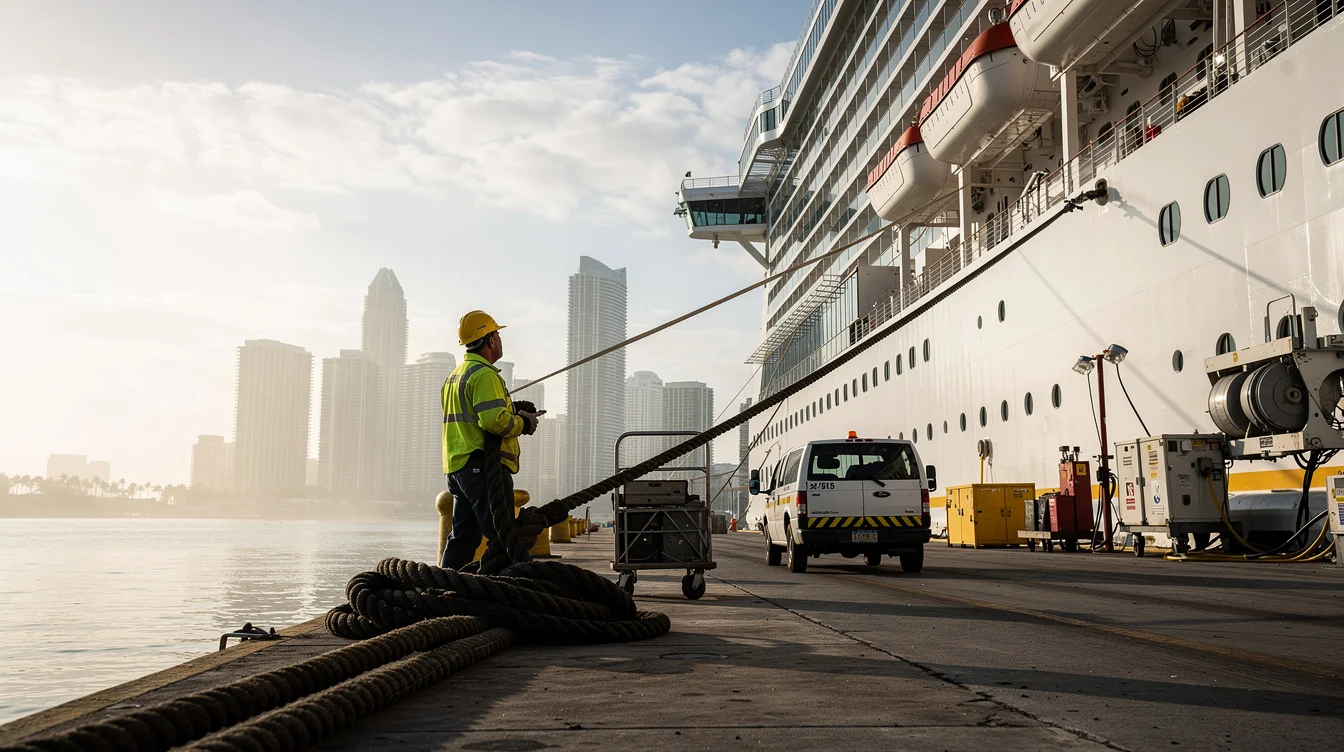
Shore power illustrates both the value and the limits of infrastructure-led improvement. Where compatible ships connect to an appropriate electricity supply, they can switch off onboard generators used to meet hotel loads at berth. This can reduce local air pollution; the climate benefit depends partly on the electricity source. None of that makes propulsion emissions during the voyage disappear.
The relevant design questions are practical. Are connections available at the required berths? Can the electrical system serve simultaneous demand? Will operators actually connect? Who reports usage? These are questions to put to a cruise development, not verified features or failings of Arquitectonica’s building.
The same scrutiny belongs at the landward edge. Better public transport links, shaded pedestrian routes and carefully managed coach access could improve the port journey. But they cannot be credited without evidence, and they do not erase flights taken to reach Miami.
Venice supplies the cautionary reference. Restrictions on large cruise ships in its historic waterways showed that the relationship between cruising and a city cannot be resolved through terminal design alone. Vessel access, alternative berths and regional consequences require political decisions. Architecture can improve an interface; it cannot independently reform the network attached to it.
Responsibility Without the Fantasy of Total Control
The easy defence is that architects do not choose a cruise company’s business model. True. Port authorities determine infrastructure priorities; operators commission ships and set itineraries; governments regulate fuels and emissions. Designers cannot substitute for those institutions. Blaming the architect alone would let more powerful actors disappear behind a facade.
But limited control is not zero agency. Architects help define options, test capacity and give projects public legitimacy. They can ask whether expansion is necessary, whether existing facilities could be adapted, and whether construction should be phased against demonstrated demand rather than optimistic forecasts.
Lacaton & Vassal’s transformation of 530 dwellings at Grand Parc Bordeaux, undertaken with Frédéric Druot and Christophe Hutin, offers a useful methodological contrast—not a terminal template. The project challenged demolition as the assumed starting point and demonstrated the value of working with what already existed. Its relevance is the willingness to interrogate the brief before refining the object.
Applied to cruise infrastructure, that attitude would require an explicit comparison between new capacity, adaptation and doing less. We do not know from the source context whether such alternatives were examined in Miami. We should know before treating scale itself as progress.
Make the Claim Smaller—or the Ambition Larger
A more demanding brief would distinguish between passenger welfare, building performance and transport-system impacts. It would set measurable targets for each rather than allowing success in one category to stand in for all three. It would also compare absolute annual impacts alongside per-passenger figures, so rising volumes could not quietly overwhelm efficiency gains.
Some obligations belong in design contracts: material accounting, passive-design studies, adaptable layouts and accessible routes. Others belong in port agreements and operating rules: shore-power use, environmental reporting and coordination with public transport. These are different instruments, held by different actors. A serious environmental strategy connects them instead of expecting architecture to compensate for their absence.
Adaptability also deserves scrutiny. A terminal designed around peak cruise demand may be difficult to repurpose if travel patterns or regulations change. The brief should test future uses, not merely promise generic flexibility.
Arquitectonica’s terminal can be recognised as an achievement in organising movement without becoming evidence that cruise expansion is environmentally justified. That distinction is not hostility to design. It is respect for what design claims mean. “Better terminal” and “better future” are separate propositions. The profession should stop allowing the first to imply the second without evidence.
FAQ
What makes Arquitectonica’s Miami cruise terminal significant?
Dezeen describes the MSC Cruise Terminal at PortMiami as the world’s largest by size, covering approximately 45,700 square metres. Designed to accommodate three ships simultaneously, it has a reported processing capacity of 36,000 passengers daily. Capacity should not be confused with measured daily attendance.
Can a cruise terminal be sustainable if the ships remain polluting?
A terminal can reduce its own construction and operational impacts while serving an environmentally damaging travel model. Those improvements matter, but an unqualified sustainability claim requires a wider assessment. Efficient lighting or cooling does not establish the environmental performance of the voyages being enabled.
Does faster passenger processing necessarily increase emissions?
No. Better processing can improve comfort and reduce congestion without increasing departures. However, when additional capacity supports more travel, total impacts may rise. Establishing that relationship requires evidence about passenger demand, ship schedules and what would happen without the expansion.
How far should an architect’s responsibility extend?
Beyond the building boundary, but not beyond meaningful distinctions in control. Architects should question the brief, compare alternatives and disclose the limits of environmental claims. Operators, port authorities and regulators remain responsible for decisions that designers cannot make or enforce.
If a terminal becomes cleaner, calmer and more efficient while enabling more environmentally damaging travel, should architecture celebrate its success—or challenge the brief that defined it?
Get the Mainifesto weekly — curated design debates, speculative ideas and the week's best articles every Saturday.
Editorial Perspectives
Questions and counterpoints developed by the Mainifesto editorial desk to extend the discussion.
Perspective 1
Processing 36,000 passengers a day is an impressive optimization—but what sits outside the model? If we measure terminal energy use without accounting for the voyages it enables, we’ve drawn the system boundary exactly where the design starts to look sustainable.
Perspective 2
Modernism also promised to make circulation cleaner and more rational; it was rather less curious about where everyone was going. A calmer cruise terminal may be good architecture, but treating that as an environmental achievement requires a conveniently narrow view of the brief.
Perspective 3
If the terminal is going to be built, making it cheaper to run and less miserable to use is worth doing. But efficiency savings don’t settle the environmental case for expansion: the operator needs to justify the extra capacity, not borrow credibility from the architect’s sustainability credentials.