
Can Temporary Housing Give Families Control?
Can Temporary Housing Give Families Control, Not Just Shelter?
A family can have a roof and still lack a home. The difference becomes obvious at breakfast: who decides when the kitchen opens, whether a visitor can stay, where a child does homework, or when a closed door must be opened? These apparently small permissions reveal who actually controls domestic life.
HawkinsBrown’s Harold Hill Family Welcome Centre in London brings that question into architectural focus. Dezeen’s November 2026 report describes the newly unveiled project as the UK’s first purpose-built development providing temporary accommodation for homeless families. That claim belongs to the source; it should not erase the longer history of family hostels and supported accommodation. The available source summary does not establish the centre’s detailed layouts or operating rules. What follows therefore examines the proposition it raises, rather than pretending to assess unverified features.
The argument has two sides: organised provision can restore choices that homelessness destroys, but it can also turn ordinary family life into a managed service.
PRO: Purpose-Built Accommodation Can Restore Everyday Power
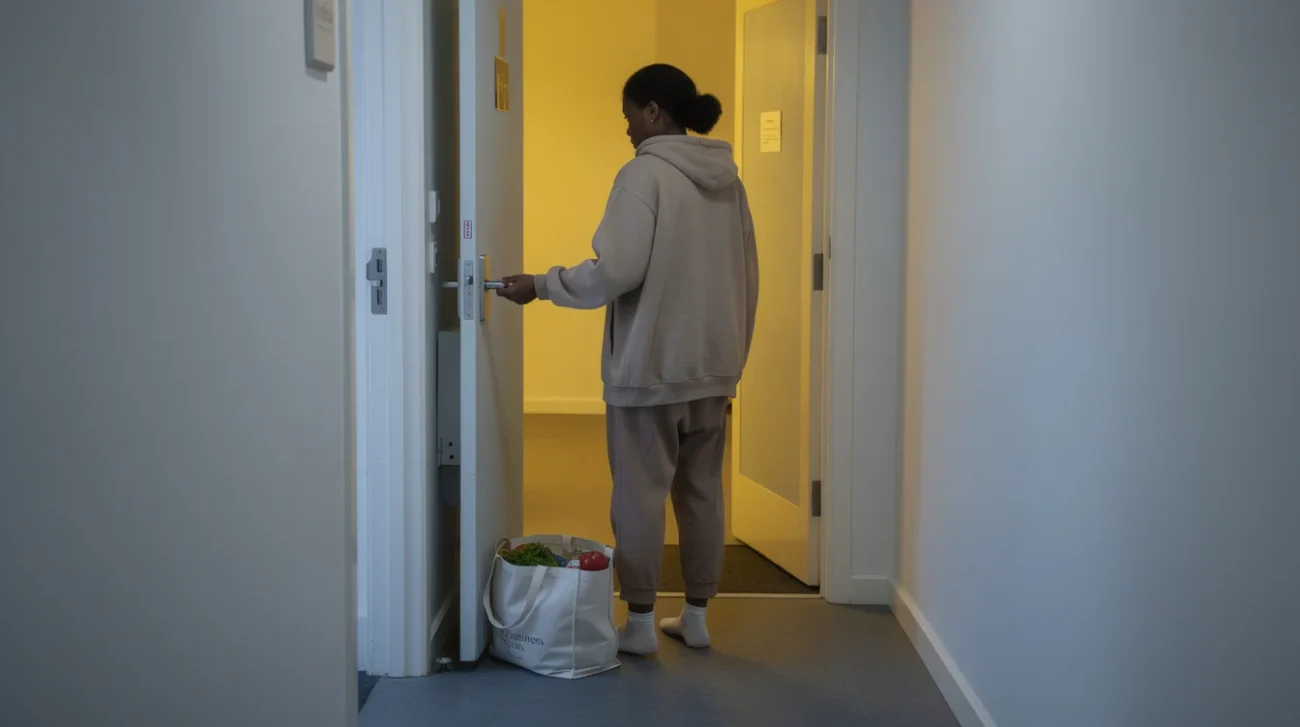
There is nothing inherently liberating about being left alone in unsuitable accommodation. A parent trying to prepare dinner without cooking facilities, negotiate repairs through several intermediaries, or keep children quiet in a single room has nominal independence and very little practical agency. Purpose-built temporary family housing offers the opportunity to design those pressures out rather than ask families to endure them.
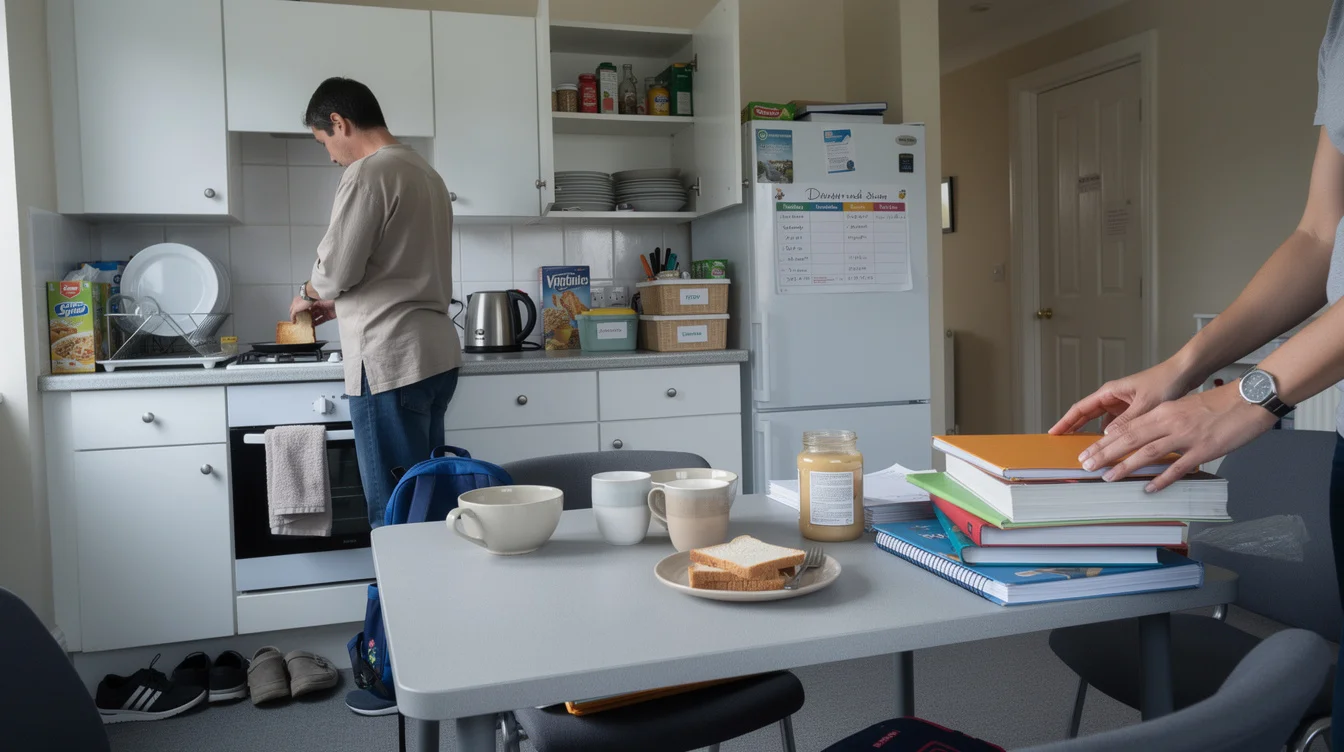
The architectural priority should be a self-contained domestic base: somewhere to cook, wash, sleep and retreat without negotiating access to essential facilities. Separate sleeping areas matter because a toddler’s bedtime should not end everybody else’s evening. Storage matters because living from bags makes even a settled routine provisional. Acoustic separation matters because privacy includes not having to hear, or explain, every argument through a wall.
Goldsmith Street in Norwich, designed by Mikhail Riches with Cathy Hawley, provides a useful reference, although it is permanent council housing, not temporary accommodation. Its streets, individual entrances and careful treatment of overlooking demonstrate how relatively dense housing can retain recognisable domestic territory. The lesson is not to copy its appearance. It is to treat thresholds, daylight and privacy as infrastructure rather than rewards reserved for secure tenants.
Temporary tenure is not a justification for temporary standards of dignity. A purpose-built centre can make that principle spatially credible.
PRO: Shared Support Can Expand Freedom, Not Restrict It
Domestic autonomy does not require every family to manage a crisis in isolation. Help with housing applications, benefits, school arrangements or safeguarding can expand a parent’s ability to make decisions. Organising access to that help in one place may reduce exhausting journeys and repeated explanations. The crucial distinction is between making assistance available and making participation the price of an ordinary private life.
Architecture can support this distinction through a clear gradient of access. Public-facing advice rooms could sit near an entrance, with shared play or meeting spaces beyond them and family accommodation behind a further controlled threshold. A parent should be able to attend an appointment without bringing a professional into a bedroom, and to return home without having to perform sociability in a communal lounge. These are design propositions, not verified descriptions of Harold Hill.
Neave Brown’s Alexandra Road estate in London offers another relevant precedent. Its combination of private dwellings, pedestrian circulation and communal landscape shows that collective provision and domestic identity need not cancel each other out. Shared space becomes valuable when it adds something beyond the dwelling, rather than compensating for what the dwelling lacks.
A welcoming centre could therefore be more than an efficient accommodation machine. It could provide a private household with an accessible support network around it. On this reading, organisation is not the enemy of control: it is what makes meaningful control possible.
CONTRA: The Welcome Can Become a Checkpoint
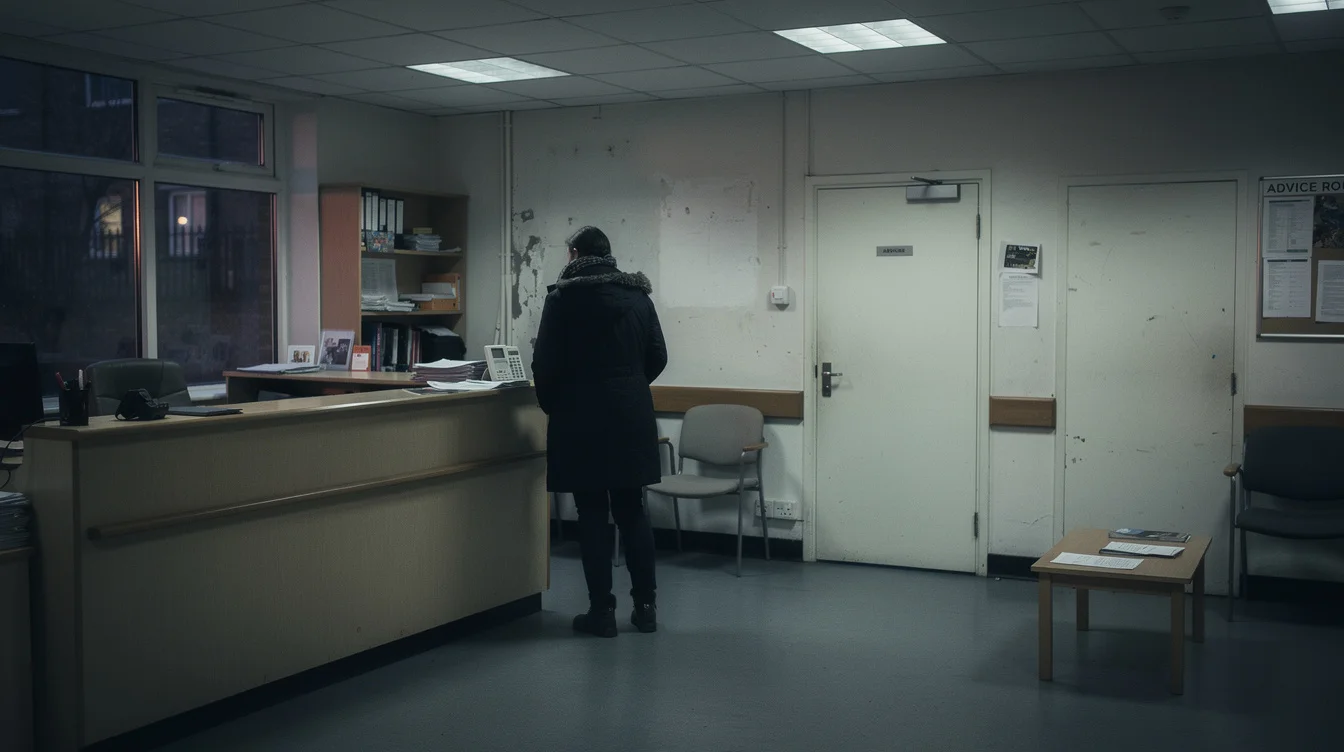
The opposing argument begins where the architectural presentation usually ends: with the management handbook. A generous entrance can still operate as a checkpoint. A communal kitchen can still impose someone else’s timetable. A beautifully furnished meeting room can still be where residents must repeatedly account for themselves. Good materials do not neutralise an unequal relationship between the person receiving shelter and the organisation empowered to administer it.
The relevant questions are uncomfortable and specific. Can families receive visitors without discretionary approval? Can a teenager return from an evening activity without their movements becoming a case-management issue? When may staff enter a dwelling, with what notice, and under which emergency exceptions? Can residents complain without fearing consequences for their placement? None of these policies is established by the supplied account of Harold Hill, but each belongs in any serious evaluation of its model.
Consider the Narkomfin building in Moscow, designed by Moisei Ginzburg and Ignaty Milinis. Its experimental relationship between private living units and collective facilities made domestic organisation an explicit architectural project. It remains a useful warning against assuming that shared provision is socially innocent: where an activity takes place affects who controls it.
A place becomes institutional when access to ordinary life depends on permission. That condition cannot be diagnosed from a facade, and it cannot be solved by calling residents guests.
CONTRA: Better Temporary Housing Can Normalise Insecurity
There is a second danger: a successful temporary-housing building can become an alibi for an unsuccessful housing system. If a centre is praised for making displacement more comfortable, attention may drift from whether families can leave it for a secure, affordable home. Architecture risks being asked to civilise a queue that policy keeps extending.
Here the transformation of 530 dwellings at Grand Parc Bordeaux by Lacaton & Vassal, Frédéric Druot and Christophe Hutin offers a sharp counterpoint. The project expanded existing homes through winter gardens and balconies rather than replacing the residential community with a new institutional arrangement. It is not a template for emergency accommodation. It is a reminder that architectural ambition can be directed towards strengthening existing domestic life instead of continually designing places for its interruption.
Temporary provision still has an urgent role. But its success should be judged through residents’ experience and housing outcomes, not bed capacity alone. Can families maintain school relationships? Can they arrange furniture and personalise rooms? Are shared facilities genuinely optional? How long do placements last, and what secure housing follows them? The operator and commissioning authority share responsibility for those answers.
The test for Harold Hill is therefore larger than whether purpose-built accommodation improves on unsuitable alternatives. It is whether families gain enforceable boundaries and everyday discretion while they are there, without the quality of the building becoming an excuse to keep them there. Shelter protects a body; a home gives its occupants authority.
FAQ: Privacy, Support and the Right to an Ordinary Home
What is the Harold Hill Family Welcome Centre?
It is a HawkinsBrown project in London providing temporary accommodation for homeless families. Dezeen’s November 2026 report presents it as the UK’s first purpose-built development of this kind. The supplied summary does not establish its detailed facilities, occupancy arrangements or management policies.
What makes temporary family housing feel like a home?
Privacy, usable domestic facilities and control over everyday routines are fundamental. Families need space to sleep, cook, study and withdraw, alongside clear rights concerning visitors, staff access and complaints. Attractive interiors cannot substitute for those practical freedoms.
Are communal spaces necessarily a threat to autonomy?
No. Shared gardens, playrooms and support spaces can reduce isolation and widen opportunities. Problems arise when essential domestic activities depend on communal facilities governed by restrictive schedules, or when residents cannot reach their own accommodation without unwanted interaction.
How should the success of temporary accommodation be measured?
Assessment should combine building performance with residents’ accounts of privacy, safety and control. It should also examine placement duration, continuity of schooling, complaints procedures and access to secure housing afterwards. Occupancy figures alone reveal little about the quality of family life.
If families cannot decide who crosses their threshold and how their day unfolds, should even the best-designed temporary accommodation be called a home?
Watch the Mainifesto Short
Get the Mainifesto weekly — curated design debates, speculative ideas and the week's best articles every Saturday.
Editorial Perspectives
Questions and counterpoints developed by the Mainifesto editorial desk to extend the discussion.
Perspective 1
Yes, temporary housing can be a home; permanence is a rather bourgeois admission requirement. Harold Hill is right to treat support and domestic privacy as compatible ambitions, though Lefebvre’s distinction between inhabiting and merely being housed still applies: families must be able to make the place their own.
Perspective 2
No—if families cannot control entry or their daily routines, good architecture does not make the accommodation a home. Working with Mexico City’s vecindades teaches you that shared space can sustain domestic life, but only if you respect the residents’ arrangements rather than replace them with somebody else’s idea of order.
Perspective 3
I’d like to see access permissions and daily schedules evaluated as seriously as daylight and circulation. Can a family refuse a visit, cook late or change how a room is used without asking permission—and would the building’s management actually support those choices?