
Democratic Housing: Who Has Time to Participate?
Democratic Housing Takes Time. Who Can Afford to Participate?
A housing meeting scheduled for seven in the evening is not equally accessible to everyone. For one resident, it follows a salaried working day. For another, it competes with a second shift, a school pickup or the only available hours of rest. Democracy has a timetable—and that timetable can become a gatekeeper.
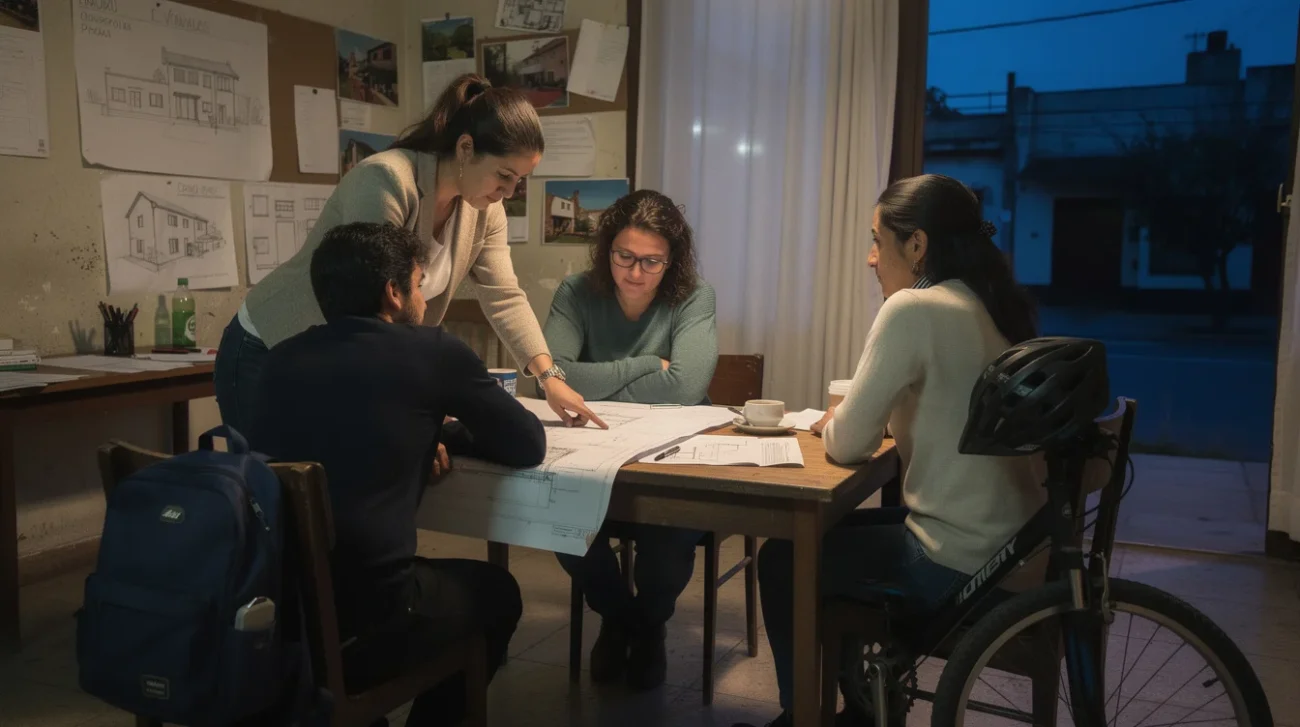
The Biarritz Building, a 35-unit residential project in San Martín, Province of Buenos Aires, offers a compelling starting point. Developed by Ariel Jacubovich Oficina de Arquitectura alongside a cooperative of teachers and education workers, it emerged from a participatory process initiated in 2017. According to the project account published by ArchDaily, that process extended from finding land to construction, encompassing training workshops, debates about ways of living and policy proposals developed with local organisations. Its achievement raises an uncomfortable question: can residents become housing’s co-authors without having to prove they possess years of disposable time?
PRO: Participation Is Housing’s Democratic Infrastructure

The strongest argument for Biarritz is not that consultation produces happier customers. It is that housing residents should not be customers in the first place. A conventional development generally establishes the land deal, financial model and spatial priorities before an occupant arrives. Participation then means choosing between options someone else has already made viable. Beginning with the land search changes the political sequence: the people who will live with the consequences enter before the fundamental decisions harden. The same question of resident agency arises in decisions to demolish or retrofit public housing towers.
That distinction connects Biarritz to a longer Latin American cooperative tradition. Uruguay’s FUCVAM, the federation of mutual-aid housing cooperatives founded in 1970, demonstrates that collective housing production can build organisational capacity alongside homes. Its relevance is not a claim that Biarritz follows the same tenure or labour model. It is the insistence that residents can constitute an organised client rather than a market segment.
Training matters within that transformation. Reading a plan, questioning a budget or understanding maintenance obligations is learned work. Without it, an architect’s technical vocabulary can quietly determine what counts as a reasonable demand. A workshop can redistribute that authority, allowing residents to challenge a proposed arrangement rather than merely endorse its presentation.
Time spent developing this competence is not automatically bureaucratic waste. It can be the infrastructure that makes consent meaningful. Compress the process too aggressively and the apparent efficiency may simply transfer decision-making back to professionals.
PRO: Collective Decisions Can Outlast the Design Team
Housing is not finished when construction ends. Residents must manage repairs, negotiate noise, accommodate changing households and decide what deserves collective expenditure. A participatory development process can establish habits for these later decisions: how disagreement is recorded, when a minority receives protection and which questions require another vote. Biarritz’s workshops and debates suggest a conception of housing broader than the delivery of individual units, although the supplied project account does not establish its eventual governance arrangements.
Barcelona’s La Borda, designed by Lacol for a housing cooperative, offers a useful comparison. Its shared facilities make collective living a spatial proposition, not merely an administrative label. Such arrangements require choices about access, cleaning and expenditure. The architectural question is inseparable from the institutional one: who decides how a shared resource works when preferences diverge?
John F. C. Turner’s writing on resident control provides another reference. His central provocation was that the value of housing concerns what it enables people to do, not only the object delivered. Read through that lens, Biarritz’s collaboration with local organisations on policy proposals is particularly significant. Residents were involved in thinking beyond their own front doors, towards the conditions under which democratic housing could be produced.
The defence of a long process is therefore substantial. It can create knowledge, solidarity and political leverage that a turnkey purchase cannot provide. If participation is reduced to a quick survey, the project may retain the language of cooperation while abandoning the power that makes cooperation worth having.
CONTRA: Unpaid Participation Can Become a Hidden Deposit
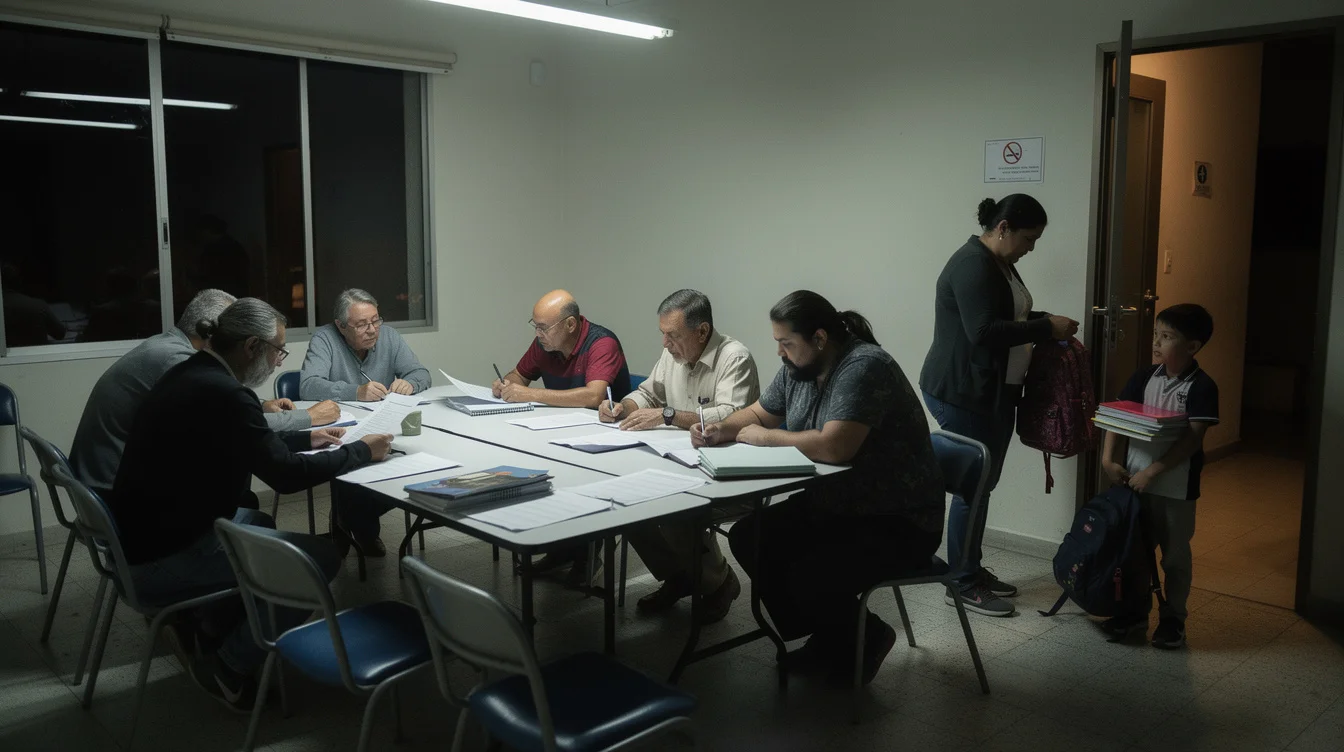
Yet the defence becomes dangerous when endurance is treated as evidence of deserving a home. A financial deposit is visible. The cumulative cost of evening meetings, travel, training and administrative work is easier to conceal. Neither cost is distributed fairly. A person may possess the desire and judgement to contribute while lacking control over their working hours or access to dependable care. This raises a parallel to the debate over backyard ADUs and inherited advantage: which resources must someone already possess to benefit from a proposed housing solution?
The available account of Biarritz does not tell us who could not join, who withdrew or how participation was supported. It would be irresponsible to invent that exclusion. It would be equally irresponsible to assume that an education-worker cooperative is insulated from unequal time resources. Shared occupational identity does not erase differences in income, disability, household responsibility or employment security.
Sherry Arnstein’s influential 1969 essay, “A Ladder of Citizen Participation,” distinguishes substantive citizen power from token involvement. Housing needs a second diagnostic beside that ladder: the cost of reaching each rung. Authority may be real while remaining practically accessible only to those able to attend repeatedly.
This matters because attendance can become an unofficial franchise. Regular participants accumulate procedural knowledge, relationships and confidence; intermittent participants encounter decisions already framed by others. A formally equal vote then sits atop unequal influence. A cooperative can reject the passive consumer and still manufacture another restrictive ideal: the tireless resident-organiser. Democracy has failed if someone must perform that role to have their needs taken seriously.
CONTRA: Preserve the Power, Stop Outsourcing the Cost
The answer is not to replace resident control with professional benevolence. It is to distinguish political authority from the labour needed to exercise it. Residents should govern consequential choices; they should not necessarily have to arrange every meeting, chase every invoice or teach themselves every regulation. Architects, cooperative staff and public agencies can undertake supporting work without acquiring the right to make all the decisions.
A credible participation budget would fund facilitation, accessible documents, childcare, transport and compensation where appropriate. These are proposals for democratic housing generally, not documented features of Biarritz. As with FUCVAM’s broader lesson about organisation, collective agency needs institutions behind it. It cannot depend indefinitely on individual sacrifice.
Decision-making also needs thresholds. Land commitments, major borrowing and changes to collective rights warrant broad resident scrutiny. Routine procurement or scheduling can be delegated within agreed limits, with published records and a route to challenge decisions. Time-limited working groups, rotating meeting hours and summaries circulated before votes can widen access. Asynchronous contributions help some households, but digital access must supplement—not replace—other ways of participating.
Most importantly, late entrants and residents whose circumstances change need routes into influence. Induction should explain past decisions without turning founding members into permanent gatekeepers. Governance should be revisable after occupation.
The test is whether someone can miss meetings without losing standing. Biarritz makes resident authorship imaginable across an unusually broad development process. The next ambition must be more demanding: a system that protects that authorship even when a resident has neither spare evenings nor the capacity to become a housing expert.
FAQ: Who Gets to Co-author Housing?
What makes Biarritz relevant to democratic housing?
The 35-unit building in San Martín, Province of Buenos Aires, was developed alongside a cooperative of teachers and education workers. Participation began in 2017 and extended from land searches to construction, including workshops, debates about living arrangements and collaborative policy proposals.
Does a long participatory process necessarily exclude people?
No. Duration can support learning and meaningful resident control. Exclusion becomes a risk when participation demands substantial unpaid labour without support or alternative routes to influence. The supplied Biarritz account does not establish who might have been unable to participate.
How can residents retain power while attending fewer meetings?
Reserve major decisions for collective scrutiny, delegate routine tasks under clear mandates and provide accessible records. Rotating schedules, multiple contribution channels and supported induction can reduce attendance burdens without handing unrestricted authority to professionals or a small resident group.
Who should pay for the work of participation?
Participation should be an explicit development and operating cost, supported through project budgets and, where available, public funding. Allocations for facilitation, care, access and resident time should be transparent: transferring every cost into residents’ unpaid hours is not a neutral saving.
If democratic housing requires collective work, what must a cooperative guarantee so that a resident can contribute less time without becoming less entitled to power?
Get the Mainifesto weekly — curated design debates, speculative ideas and the week's best articles every Saturday.
Editorial Perspectives
Questions and counterpoints developed by the Mainifesto editorial desk to extend the discussion.
Perspective 1
I’m for resident-led housing: working with existing buildings teaches you how much a plan can erase when nobody listens to the people already there. But a cooperative must protect equal voting rights regardless of hours contributed and fund childcare and paid participation; otherwise, it risks reproducing the exclusions it was meant to resist.
Perspective 2
I’m against making years of collective design work the route to a home: delays cost money, and residents eventually carry that bill. Give members equal votes on budgets and major decisions, then pay an accountable team to deliver rather than turning attendance into a second job.
Perspective 3
If someone finishes a shift and still needs three hours to understand what they’re voting on, the process isn’t working. Pay for clear briefings, offer voting outside meetings, and protect the right to put an issue on the agenda—not just approve whatever the regulars have already decided.
Perspective 4
Equal votes are necessary, but I’d check who writes the agenda and which decisions get settled before the meeting. A cooperative should guarantee ways to propose and challenge decisions without attending, then track whether residents with less available time actually influence the outcome.
Perspective 5
Could residents delegate a vote for a specific decision, revoke that delegation easily, and still retain direct control over major changes? I’d want a transparent decision record too: if contributing less time means losing the ability to question the brief, we’ve only made participation more efficient for the people already in charge.