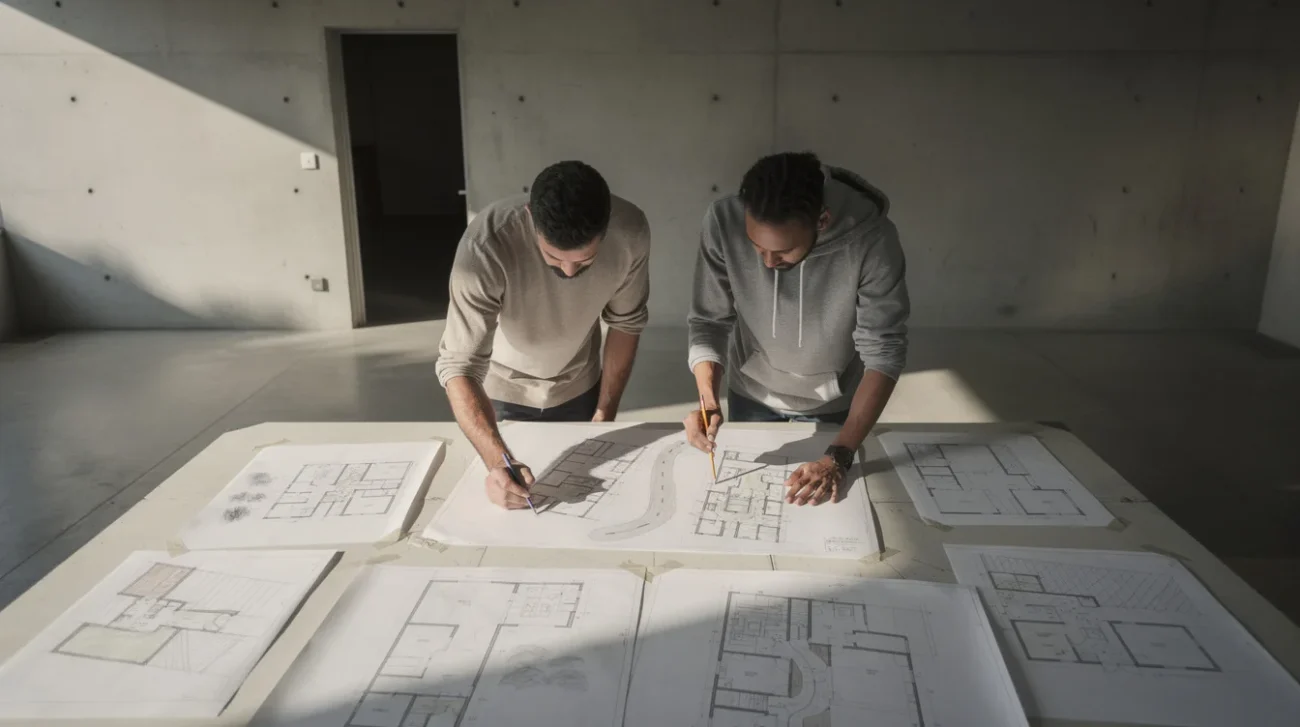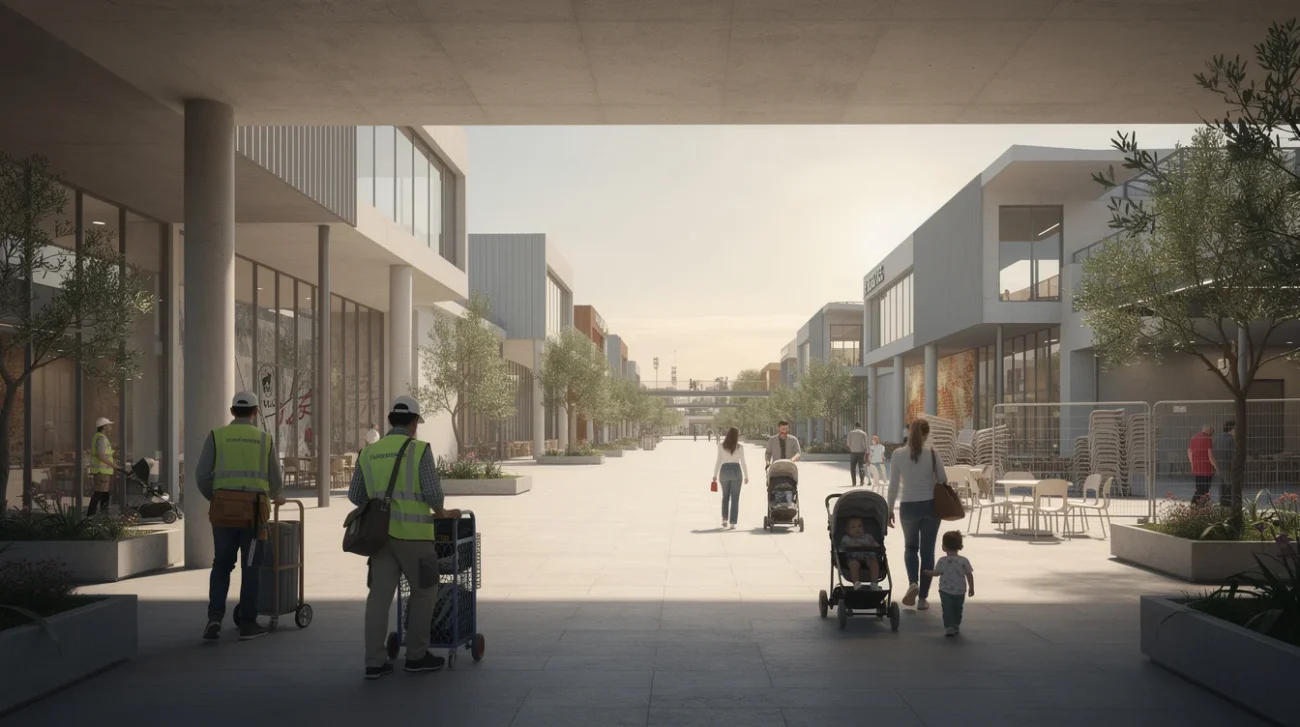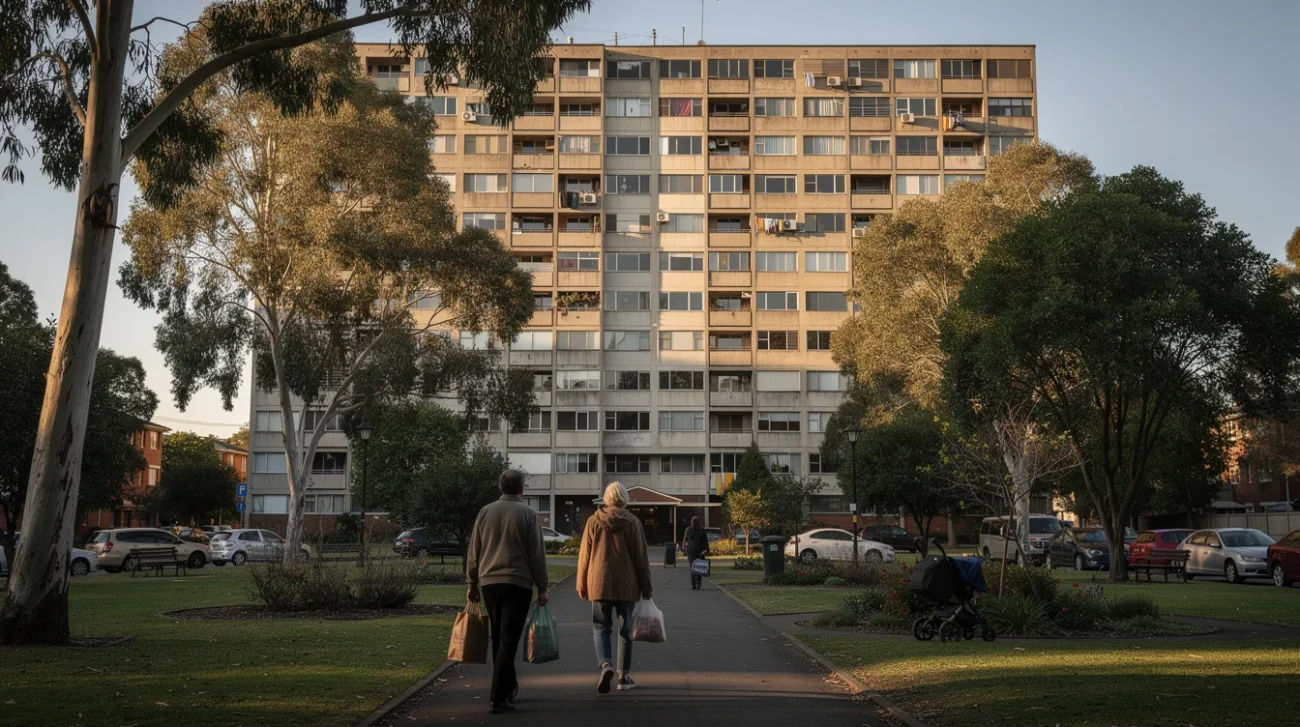

Backyard ADUs: Housing Relief or Inherited Advantage?
The Backyard Housing Solution Depends on Whose Parents Own Land
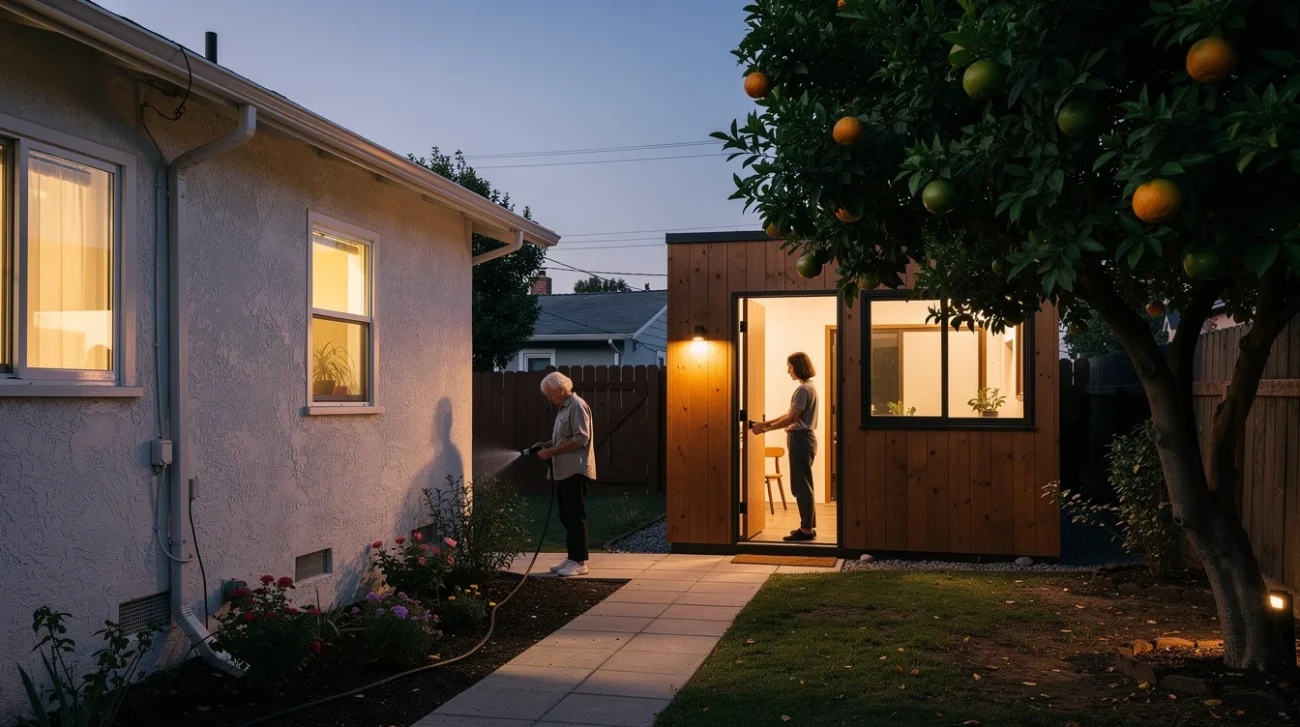
The new starter home may sit behind the house where you grew up. Architectural Digest’s account of adult children moving into their parents’ accessory dwelling units captures a revealing adjustment to an unforgiving housing market: families are turning gardens, garages, and spare development capacity into places to live. The insulting question is whether these young adults have failed to launch. The useful question is why launching now so often requires a parental deed.
Backyard ADUs deserve both architectural enthusiasm and political suspicion. They can create genuinely independent homes without requiring another land purchase. They can also convert inherited advantage into an increasingly decisive housing credential. A useful family solution and an equitable housing strategy are not the same thing. The distinction is not the quality of the cladding. It is who gets access, who carries the debt, and who ultimately owns what gets built.
PRO: Build Independence Without Buying Another Plot
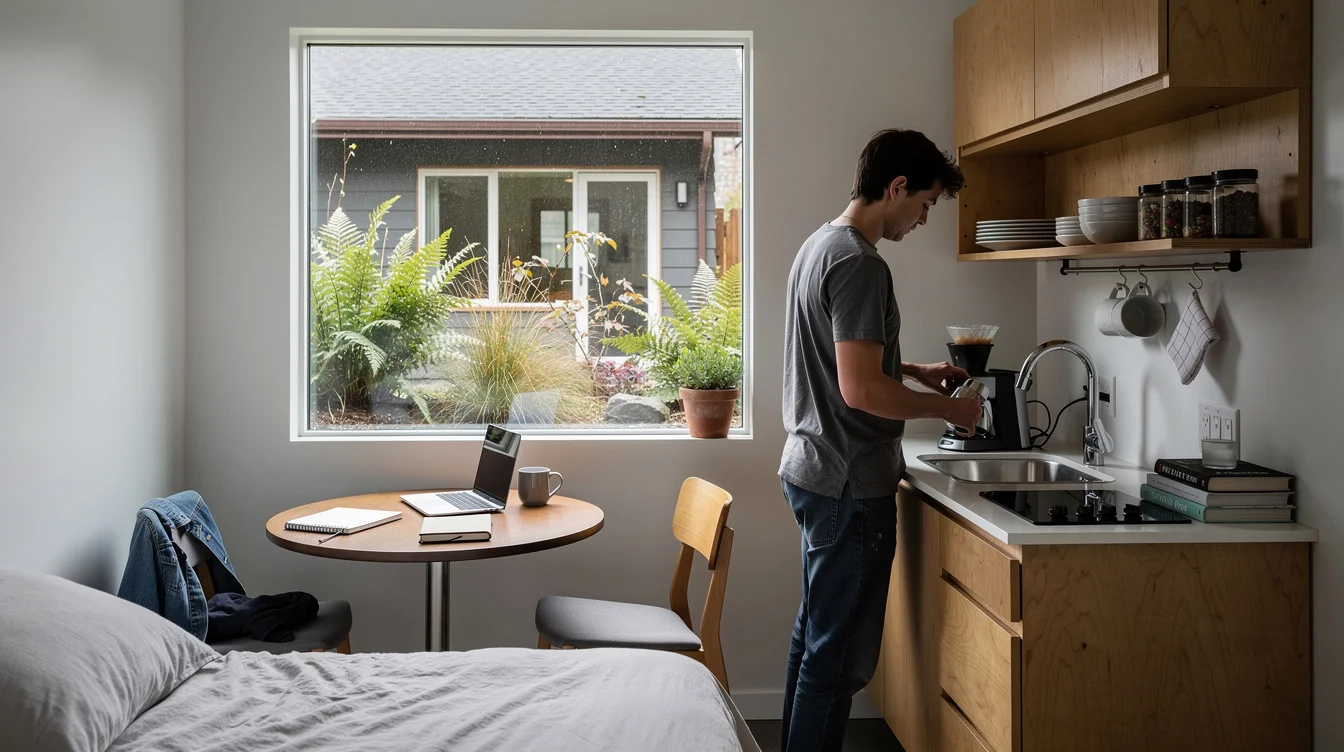
An ADU’s strongest argument is brutally practical: the land is already there. A family that controls a suitable property can add a home without asking an adult child to compete for a separate parcel. Construction, permits, utility connections, and financing still cost money, sometimes enough to derail the project. But eliminating a new land acquisition changes the calculation, especially in expensive metropolitan areas where location consumes a large share of housing value.
The architecture matters because proximity need not mean regression. A separate entrance, a proper kitchen, acoustic separation, and a private outdoor threshold distinguish an independent dwelling from a childhood bedroom with better furniture. For an adult working irregular hours or living with a partner, the route from street to front door can matter as much as floor area. Independence is partly a circulation plan.
Los Angeles’s ADU Standard Plan Program offers a useful institutional reference: preapproved designs can reduce repetitive plan review, although site-specific approvals and work remain necessary. Seattle’s ADUniverse similarly makes ADU information and preapproved detached designs more accessible. Neither initiative makes construction free. Both recognize that homeowners should not have to reinvent a small housing type from scratch.
For an adult child otherwise choosing between an overcrowded rental and leaving their community, this is not a lifestyle accessory. It is an additional home where an additional home was previously prohibited, impractical, or simply unimagined.
PRO: Make Family Wealth Useful Before Inheritance
A backyard dwelling can put family wealth to work when it is most useful, rather than only after a parent dies. Below-market or rent-free occupancy may let an adult child reduce debt, withstand insecure employment, or accumulate savings. That benefit is a form of intergenerational transfer even when no ownership changes hands: the family supplies housing services that would otherwise have to be purchased from a landlord.
The arrangement can also work in more than one direction. Parents may eventually move into the smaller dwelling while their child’s household occupies the main house. Nearby relatives can share some childcare or help with errands without combining every domestic routine. None of this should be romanticized as guaranteed unpaid care. But a flexible second dwelling offers more choices than a single house designed around one household configuration.
Prefabricated ADU companies such as Abodu illustrate an effort to make that addition more legible as a product, with defined layouts and a coordinated delivery process. The appeal is predictability, not magic: site access, foundations, servicing, and local requirements still shape feasibility.
At neighborhood scale, repeated additions can accommodate more residents within existing residential areas. That does not automatically reduce driving or make rents affordable; transit, location, and occupancy matter. Nevertheless, using existing plots more intensively is a serious architectural alternative to treating every family change as a reason to buy another detached house farther away.
CONTRA: The Entry Requirement Is Already Owning Land
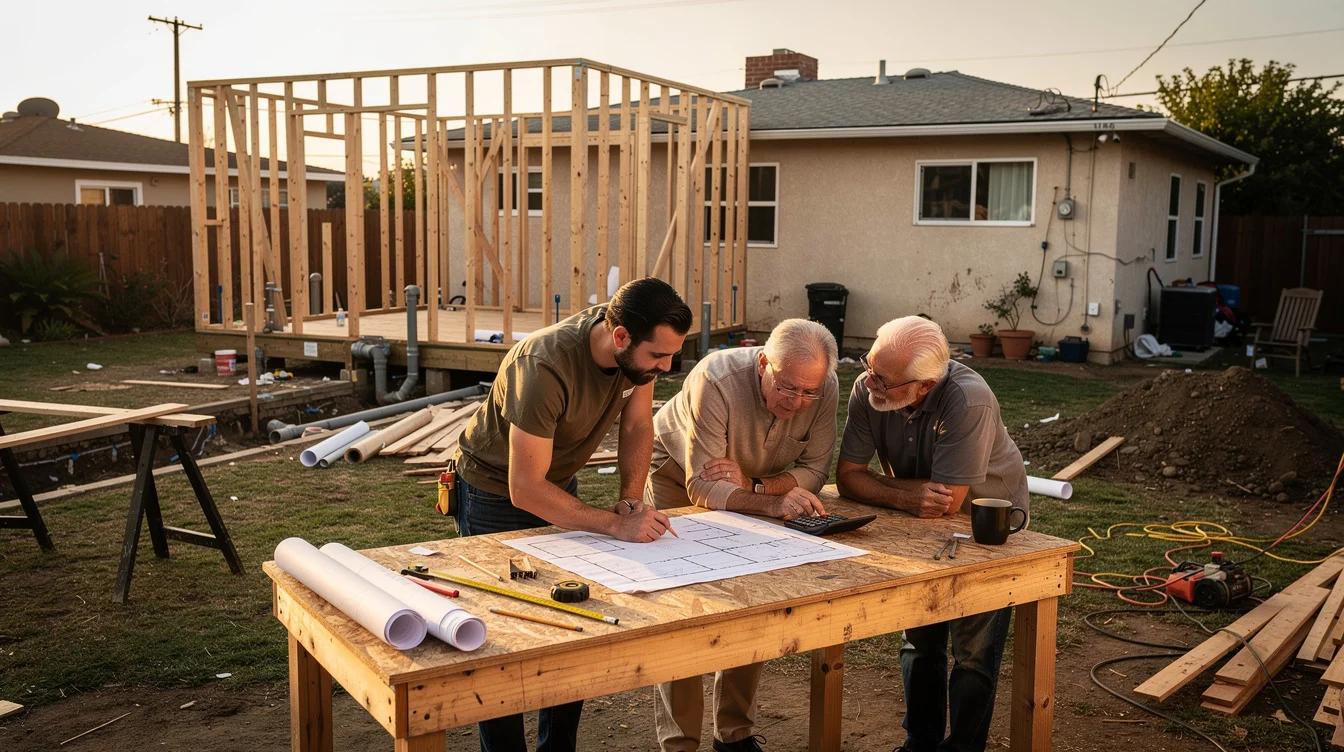
The same feature that makes the family ADU attractive exposes its political limit. “The land is already there” means it is already there for somebody. A renter’s adult child cannot usually propose a backyard home on equal terms. Nor can every homeowner finance construction, absorb overruns, or navigate a difficult site. The relevant inheritance is not merely money; it is access to a buildable parcel in a place where someone wants or needs to live.
Historical discrimination in lending, ownership, and neighborhood access makes that starting line anything but innocent. Even a formally universal right to build an ADU distributes its most immediate opportunities to existing property owners. Relaxing exclusionary zoning is necessary, but it does not retroactively distribute the land that zoning helped protect.
Seattle’s preapproved designs and Los Angeles’s standard-plan initiative demonstrate the difference between procedural access and economic access. A more navigable approval system can lower friction. It cannot provide a family with a down payment, construction credit, or parents who own a suitable lot. A beautifully simplified process still has a gate.
Nor does a new ADU automatically become an affordable rental available to the public. Housing an adult child creates real shelter and may release another dwelling into circulation if that child moves out of one. But that indirect effect is not equivalent to a guaranteed affordable home for a household selected by need. Additional supply and equitable allocation are related objectives, not interchangeable claims.
CONTRA: Living in the Asset Is Not Owning It
The cheerful language of “investing in the family property” can conceal a sharp imbalance. If an adult child contributes savings toward an ADU built on a parent’s parcel, that contribution does not automatically create a separately owned home. Unless a lawful ownership structure establishes otherwise, the building generally becomes part of the parent’s real estate. The child may have paid for an asset they cannot independently sell or borrow against.
Consider two siblings: one funds construction and lives in the backyard; the other expects an equal share of the eventual estate. Without clear agreements, a housing solution becomes an inheritance dispute waiting for a triggering event. A parental divorce, death, sale, or mortgage problem can expose the same ambiguity. Written arrangements should address occupancy, contributions, maintenance, exit rights, and estate intentions, with appropriate legal advice.
Affordability also requires a mechanism, not an aesthetic. LA-Más’s Backyard Homes Project offers a relevant counterexample to the purely familial model: it linked ADU development support with a commitment to rent to Section 8 voucher holders. The important design move was institutional, connecting private backyard capacity to households beyond the owner’s family.
That approach raises demanding questions about subsidy, landlord participation, and long-term compliance. Good. Those are housing-policy questions. An attractive cottage offered to a fortunate relative may be an excellent private decision, but it cannot answer them on its own.
The Verdict: Support the Home, Audit the Advantage
The right response is not to shame families for using the resources available to them. It is to stop presenting their workaround as a universal ladder. Cities should allow well-designed ADUs broadly, simplify approvals, and avoid unnecessary parking or dimensional barriers. But targeted public financing should purchase a public benefit: enforceable affordability, access for lower-income households, or other clearly defined housing outcomes.
Support should also reach owners who have land but little disposable capital, rather than merely discounting projects affluent households would build anyway. And ADUs must sit alongside apartments, social housing, tenant protections, and community land ownership—not substitute for them.
The defensible position is pro-ADU and against inheritance as housing policy. A backyard home can make one family more resilient. An equitable strategy must also serve the person whose parents have no backyard.
FAQ
What distinguishes an ADU from a backyard office or guest room?
An accessory dwelling unit is a secondary home on a property with a principal residence, with independent living facilities, including cooking and sanitation. A backyard office or guest room is not necessarily a legal dwelling. Definitions, permits, and occupancy requirements vary by jurisdiction.
Does paying to build an ADU on parental land give an adult child ownership?
Not automatically. Paying construction costs does not itself establish a separate property title or a defined equity share. Ownership, repayment, occupancy, and inheritance arrangements require explicit documentation and jurisdiction-specific legal advice before money changes hands.
Can backyard ADUs provide affordable housing beyond the family?
Yes, but affordability is not guaranteed by small size. Voucher participation, income-linked rent requirements, or enforceable affordability agreements can connect ADUs to households outside an owner’s family. Any public subsidy should specify its beneficiaries and the duration of the affordability commitment.
What design decisions help adult children live independently beside their parents?
Prioritize a separate entrance, acoustic privacy, carefully positioned windows, accessible circulation, and usable cooking and laundry facilities. Define outdoor boundaries and visitor routes. A compact home works better when its residents do not need permission to perform ordinary daily routines.
If cities help turn private backyards into housing infrastructure, what should property owners owe the people whose parents own no land?
Watch the Mainifesto Short
Get the Mainifesto weekly — curated design debates, speculative ideas and the week's best articles every Saturday.
Editorial Perspectives
Questions and counterpoints developed by the Mainifesto editorial desk to extend the discussion.
Perspective 1
I’m for backyard ADUs: housing several generations on one plot is older than the detached-house ideal, and adapting what exists can keep families rooted. But a subsidized cottage that later becomes a holiday rental is no housing victory. Public money should buy a lasting affordability commitment, with support so owners aren’t forced to sell to meet it.
Perspective 2
I’m against making private backyards a pillar of housing policy: independence shouldn’t come with your landlord’s family rules and a gate they control. If cities are spending money, show me the cost per secure tenancy—not just how much value we’ve added to somebody’s property. I’d rather fund homes people can access without the right parents.
Perspective 3
A city can add units and still reproduce exclusion if land ownership decides who gets housed. Separate permission from subsidy: let owners build, but tie public grants to enforceable tenant protections and affordable access for households outside the family. Then use public land for housing too; backyard construction cannot carry the whole system.