
Open All Night—but What Makes It a Library?
Open All Night—but What Makes It a Library?
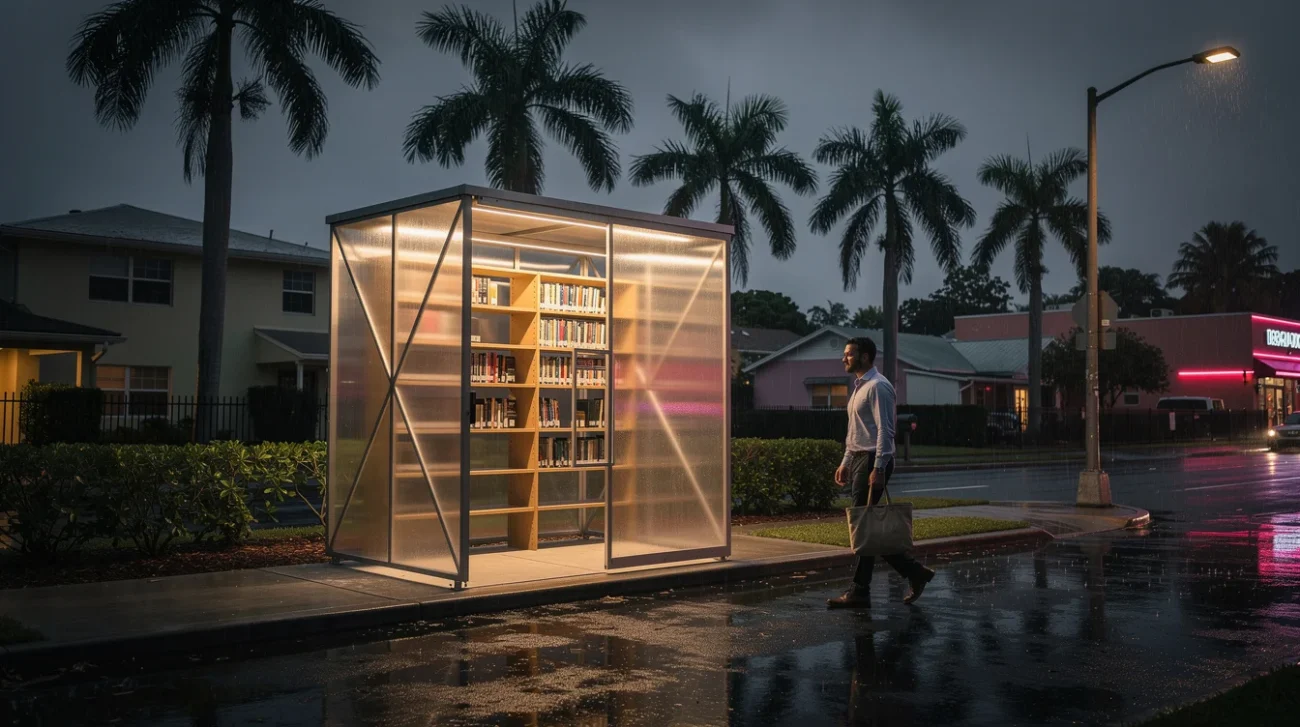
A library that never closes sounds like an uncomplicated public good. In Miami, it is also an architectural proposition: an automated collection sheltered by a geometric steel frame wrapped in polycarbonate paneling described by designboom as high-velocity. The envelope addresses hurricane exposure; the automated service extends access beyond conventional opening hours. Together, they offer a persuasive image of resilient civic infrastructure.
But resilience for what, exactly? Keeping books available is not the same as keeping assistance available. Nothing in the supplied project description establishes that librarians are being displaced. The issue is the precedent: does round-the-clock infrastructure enlarge the public library, or make a reduced version of it look complete?
PRO: The Public Does Not Live on Office Hours
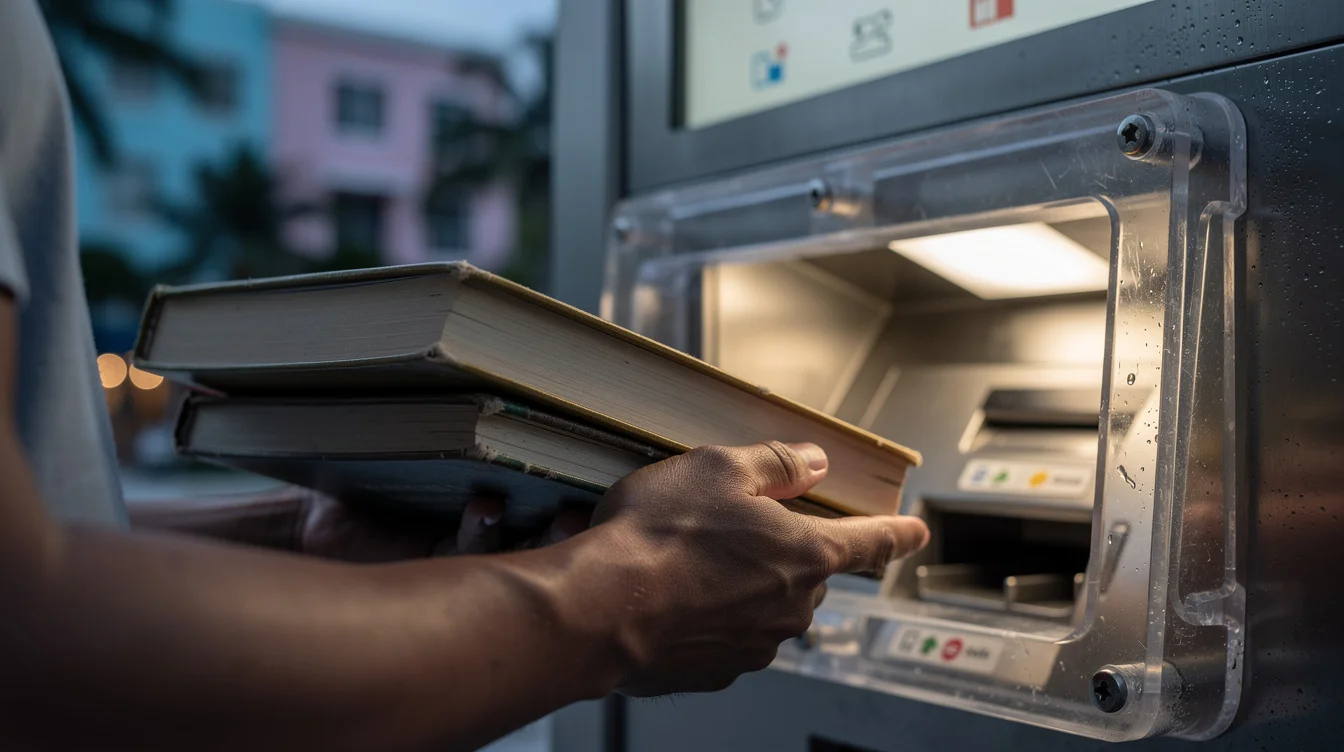
The strongest argument for a 24-hour library is embarrassingly simple: conventional schedules exclude people. A hospital worker finishing a late shift, a restaurant employee traveling home after midnight, or a parent whose only free hour arrives before dawn may be perfectly capable of choosing and borrowing a book. What they lack is an unlocked service window. Requiring those readers to reorganize their lives around institutional hours is not a defense of public service.
Automation can remove that obstacle without pretending to replace the institution behind it. Materials still need selection, cataloging, maintenance, replenishment, and circulation support. An unattended transaction is not necessarily an unstaffed system. Used properly, it extends the reach of labor already invested in a public collection.
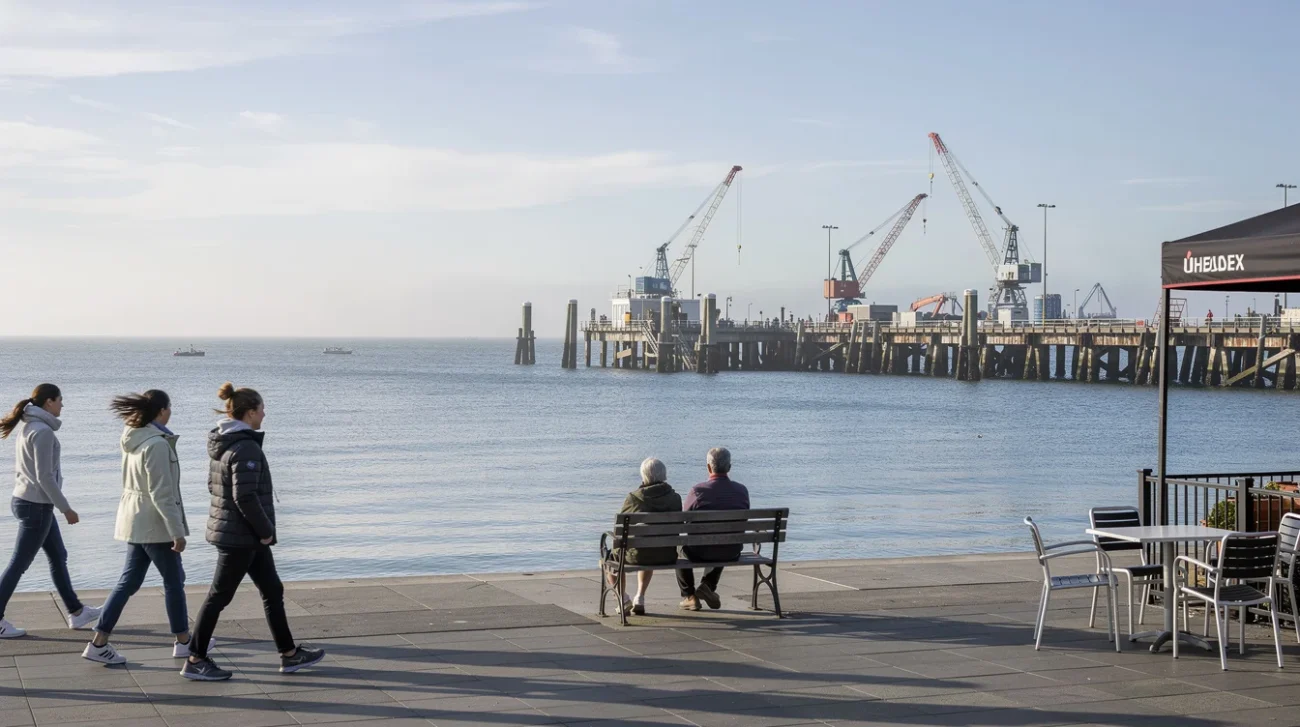
Helsinki’s Oodi, designed by ALA Architects, offers a useful comparison rather than an identical model. Its automated book-handling equipment operates within a library also defined by staffed services, workshops, gathering spaces, and cultural activity. The lesson is not that Miami needs a Finnish monument. It is that machinery can handle a bounded task while people sustain a broader civic program.
The right measure is additional access, not fewer employees. A late-night borrowing point that supplements nearby staffed branches gives residents another way into the library system. That is a genuine improvement, especially when the alternative is simply a locked door.
PRO: Architecture Can Make Access Dependable
Miami’s climate makes the enclosure more than packaging. Wind-driven rain, airborne debris, heat, and power disruption complicate any promise of continuous outdoor service. The reported steel frame and polycarbonate wrapping make weather resistance central to the architectural expression, rather than concealing infrastructure behind an ornamental civic facade.
Yet the source’s hurricane framing must not be mistaken for proof of uninterrupted operation. Actual performance depends on the complete assembly: panels, fixings, frame, foundations, openings, and installation. Flood exposure and electrical reliability raise separate questions. The supplied description does not establish a particular testing standard, backup-power provision, or post-storm operating capacity. A robust shell is valuable; it is not a guarantee that borrowing continues through an evacuation.
That distinction strengthens the design argument. Dependable access requires an architectural brief that includes safe approach routes, glare control, readable interfaces, accessible reach ranges, lighting, and clear closure information. Attention to sensory choice in neuroinclusive architecture can also help frame how readers experience the installation. These are proposals for evaluating the service, not verified features of this installation.
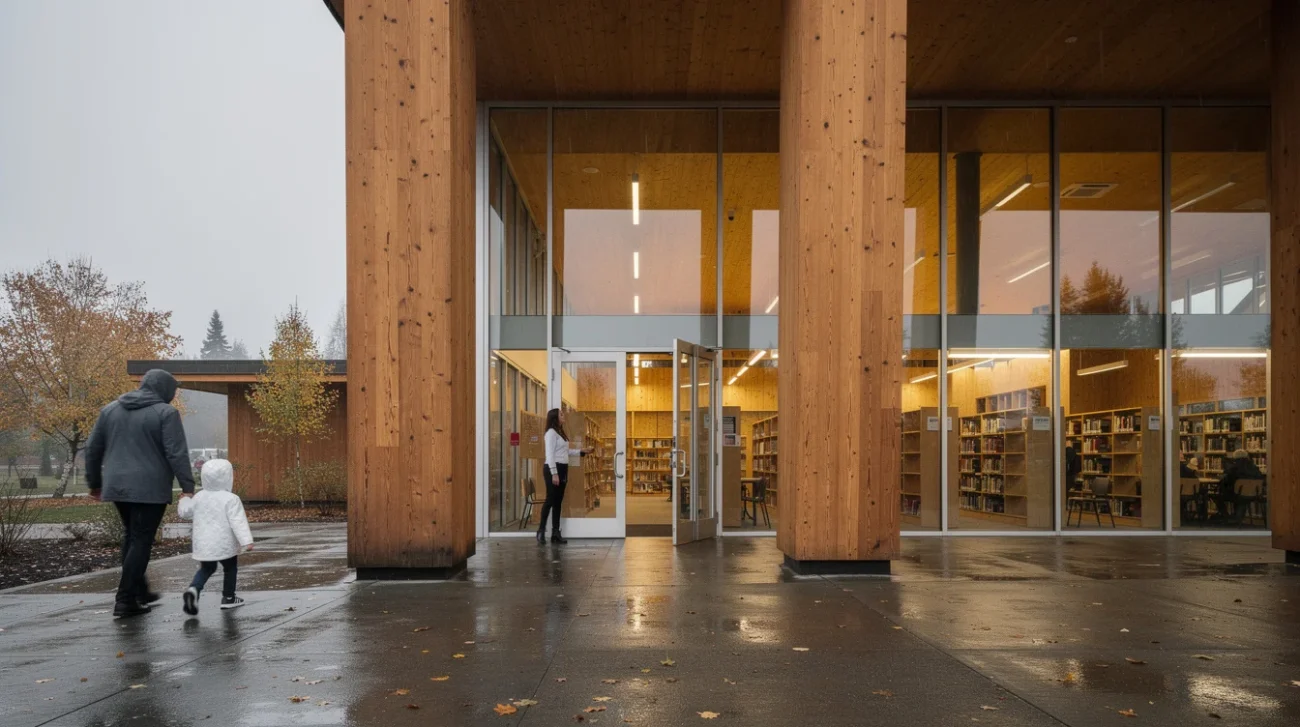
Seattle Central Library, designed by OMA with LMN Architects, made circulation and collection organization conspicuous parts of its architecture. Miami’s much smaller proposition deserves similarly serious attention to how a reader encounters books. When the mechanism is the principal public interface, its usability becomes civic architecture. A modest structure can perform an important public role if the surrounding system remains generous.
CONTRA: A Collection Is Not the Whole Service

The case against automation begins when a successful transaction becomes the definition of a successful library. Borrowing statistics can count a book leaving a machine. They cannot adequately describe a librarian helping someone distinguish a trustworthy medical source from an advertisement, navigate a government application, or discover reading material when they cannot yet formulate a search.
Those encounters are not inefficiencies waiting to be engineered away. They are part of the service. A person who knows the title they want has a different need from someone confronting an unfamiliar language, disability, confusing form, or digital interface. The machine may serve the first reader exceptionally well while leaving the second stranded.
London’s Idea Stores offer a pointed counterexample to the library-as-dispenser. At Whitechapel, David Adjaye’s design places library and learning functions in a conspicuous, accessible civic setting. Its significance lies not merely in making stock visible but in connecting reading with education and everyday public life. The institution is more than its inventory.
Nor should every automated access point be condemned for lacking classrooms or meeting rooms. That would confuse a useful component with a complete branch. The danger is calling the component an equivalent replacement. A borrowing installation can be excellent infrastructure while remaining insufficient as a substitute for a staffed, habitable public institution. Architectural criticism should insist on that distinction before the budget office erases it.
CONTRA: Efficiency Can Become a Script for Retreat
The political risk arrives after the opening photographs. An institution adds automated access, celebrates longer availability, and later faces a funding cut. The same equipment can then be invoked to justify shorter staffed hours: why maintain human coverage when the service is supposedly available all night? This is a plausible governance risk, not an established account of what has happened in Miami.
Architecture can nevertheless help sell the substitution. A crisp geometric frame and luminous-looking polycarbonate envelope give a limited service the visual authority of a finished civic project. The danger is not attractive design itself. It is allowing architectural completeness to stand in for institutional completeness.
Any efficiency claim therefore needs a public ledger. Compare staffed hours before and after installation, not just total access hours. Include maintenance, software, security, energy, restocking, and eventual replacement alongside labor costs. Record failed transactions and requests that required assistance. Ask whether people without reliable devices, confident literacy, or straightforward account access can actually use the system.
Set boundaries before procurement: preserve a meaningful staffed-hours commitment, provide accessible routes to human help, and assess whom the additional hours serve. Emergency planning must also distinguish a weather-resistant collection point from a designated refuge; one should never imply the other. Automation complements librarians when it adds capability. It becomes civic withdrawal when expanded machine availability disguises reduced access to people. That is the line Miami’s compelling enclosure asks every library authority to draw.
FAQ: What Should a 24-Hour Library Promise?
What makes an automated book facility part of a public library?
Its connection to a publicly accountable service matters more than its machinery. Collection management, equitable borrowing rules, maintenance, and routes to assistance can make it a valuable library access point, without making it equivalent to a full staffed branch.
Does hurricane-resistant construction guarantee continuous service?
No. As debates over whether rebuilding after a flood amounts to recovery illustrate, structural and envelope performance are only part of operational resilience. Flooding, power loss, communications failure, maintenance, and emergency closure orders can interrupt service even when the enclosure remains intact. The supplied project description does not establish uninterrupted hurricane operation.
Can automation benefit librarians rather than replace them?
Yes, if routine transactions are automated while staffing and professional services are protected. The benefit must be demonstrated through greater service capacity and useful additional access, not assumed from the presence of equipment or longer advertised hours.
How should a city evaluate a 24-hour library?
Measure additional users reached, successful and failed transactions, accessibility, whole-life costs, and changes to staffed hours. Include feedback from people who need assistance, not only satisfied borrowers who already know how to navigate the system.
If a city can keep its books available all night, what obligation does it still have to keep a person available to help?
Get the Mainifesto weekly — curated design debates, speculative ideas and the week's best articles every Saturday.
Editorial Perspectives
Questions and counterpoints developed by the Mainifesto editorial desk to extend the discussion.
Perspective 1
I’m for it: a hurricane-resistant library that serves people after their shifts is a meaningful improvement in public infrastructure. Keep staffed hours intact, then measure whether overnight access reaches residents the daytime service misses.
Perspective 2
I’m against treating an automated borrowing point as a replacement for a staffed library. Price in maintenance, security and equipment replacement before calling it a saving—and remember that a machine dispensing the wrong book perfectly hasn’t helped someone find what they need.
Perspective 3
We can design a system that retrieves a book at 3 a.m., but what happens when someone can’t name the book—or even frame the question? I’d want a route to human help designed into the service, with a clear response time, rather than treating every successful checkout as a successful library visit.