Watching Architects Work Is Not the Same as Having a Voice
Watching Architects Work Is Not the Same as Having a Voice
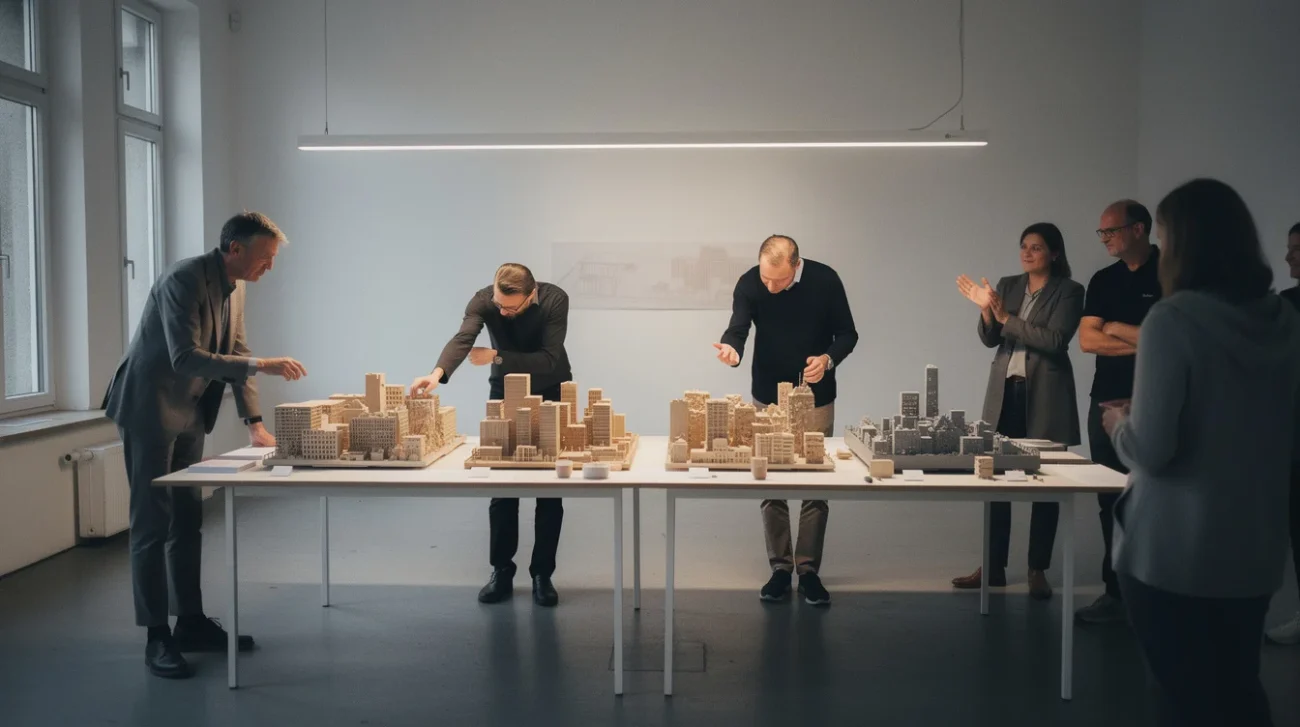
An architect moves a model. A visitor questions the entrance. Someone photographs the exchange. The exhibition looks democratic. But unless that objection can enter the project’s decision-making process, the visitor has supplied atmosphere, not exercised influence.
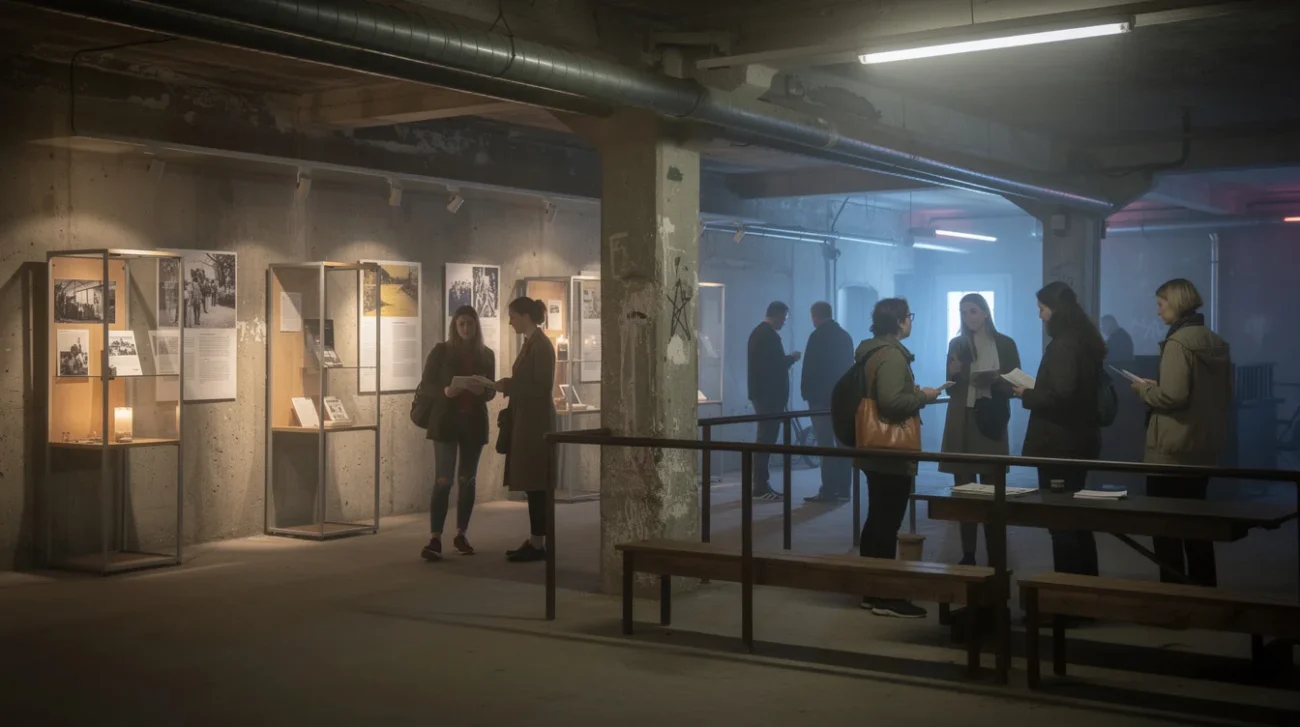
That distinction should frame Building the Existing City, CHYBÍK + KRIŠTOF’s exhibition at Aedes Architecture Forum in Berlin. Running from October 23 to December 3, 2026, it turns the gallery into a working architecture studio. Over six weeks, the practice develops four architectural and urban design proposals addressing Berlin sites or urban situations selected through an open call. Visitors can follow research, discussions and design work as they unfold.
This is a worthwhile departure from the immaculate model and retrospective wall text. Architecture usually exhibits its conclusions while concealing its negotiations. A working studio can expose uncertainty, competing priorities and discarded options. But making a process observable is not the same as making it answerable. The risk parallels the question of whether a museum can turn critique into another attraction: even challenges to authority can become part of the display.
The available source description establishes public visibility; it does not establish a mechanism through which visitors influence decisions. That is not proof that such mechanisms are absent. It is the central question the exhibition’s promise of openness leaves us needing to ask.
An Open Call Is a Door, Not a Distribution of Power
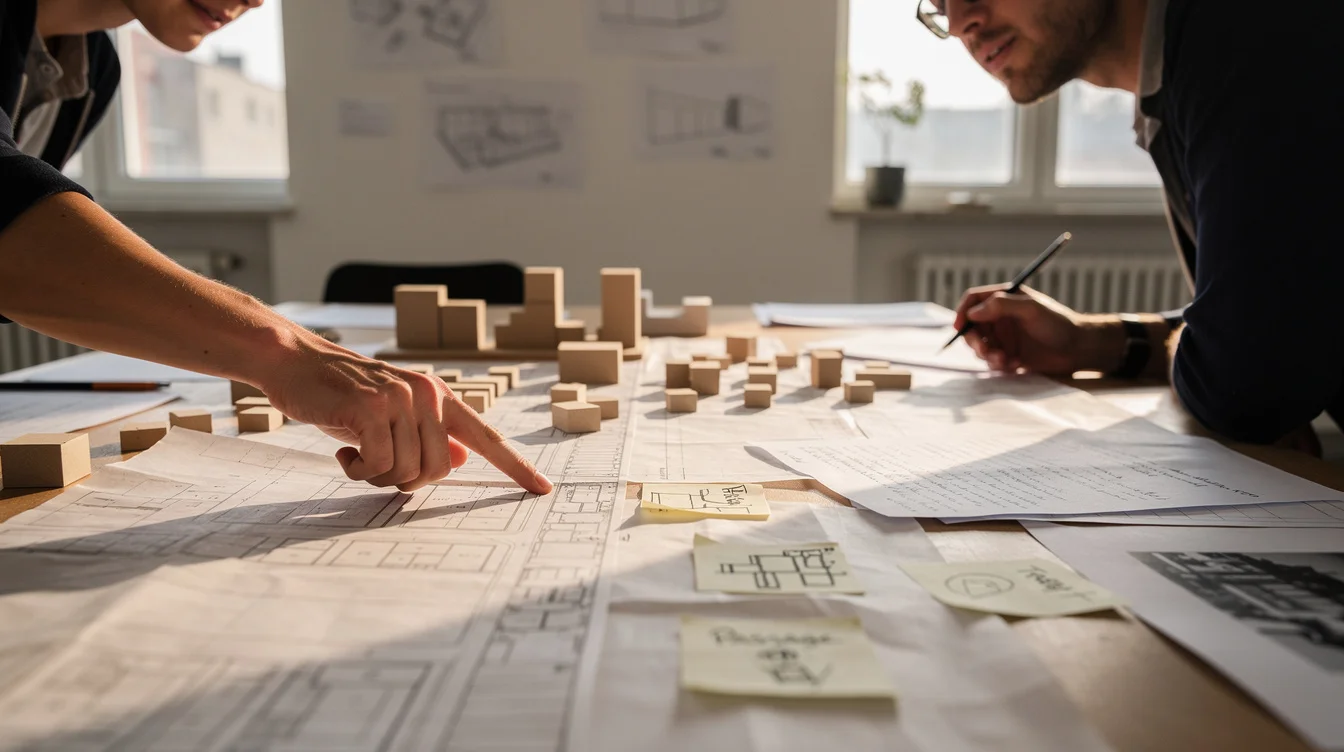
The four proposals’ selection through an open call matters. It potentially broadens the agenda beyond a practice’s self-assigned interests. Yet an open call can still concentrate authority: someone writes the invitation, defines eligibility, judges submissions and decides which problems deserve architectural attention.
Who could submit? Who selected the four situations? Were criteria published? Did people affected by a proposal help frame its brief, or did they become its subject after selection? These are not administrative details. They determine whether the public enters as a partner, a source of material or an audience.
Sherry Arnstein’s 1969 essay, A Ladder of Citizen Participation, remains useful precisely because it refuses to confuse consultation with power. Informing people and asking their opinions do not, by themselves, oblige decision-makers to act. Her framework was developed for planning and public programmes, not gallery exhibitions, but the diagnostic question travels well: what can participants actually change?
For Aedes, a meaningful answer might be modest. Visitors need not control every drawing. They could help establish evaluation criteria, challenge a brief’s assumptions or require an alternative to be tested. What matters is that this scope is stated before they contribute, rather than inferred afterwards from photographs of a busy room.
The First Test: Can a Contribution Survive the Conversation?
A genuinely participatory exhibition needs a memory. The neighbour who explains that a seemingly redundant passage is an essential step-free route should not depend on whether an architect remembers the conversation after lunch.
Each substantive contribution should enter a project-specific register: the issue raised, the relevant location, the date, the proposed change and any supporting information. Contributors should be able to remain anonymous in public records. Personal details require consent and protection, not an exhibition wall.
Consider a hypothetical visitor contribution to one of the Berlin proposals: a courtyard identified as an opportunity for new construction is also where residents gather during summer heat. Recording this as “more greenery requested” destroys its substance. A useful record distinguishes an existing use, a concern about thermal comfort and a challenge to the project’s development assumptions. Each demands a different response.
Ralph Erskine’s Byker redevelopment in Newcastle is a relevant reference because its on-site architectural office brought design work into closer contact with residents. Its lesson is not that proximity guarantees consent. It is that contact must become sustained working knowledge. At Aedes, a numbered comment linked to the next design iteration would demonstrate more accountability than a wall covered in untraceable sticky notes.
The Second Test: Who Evaluates the Input?
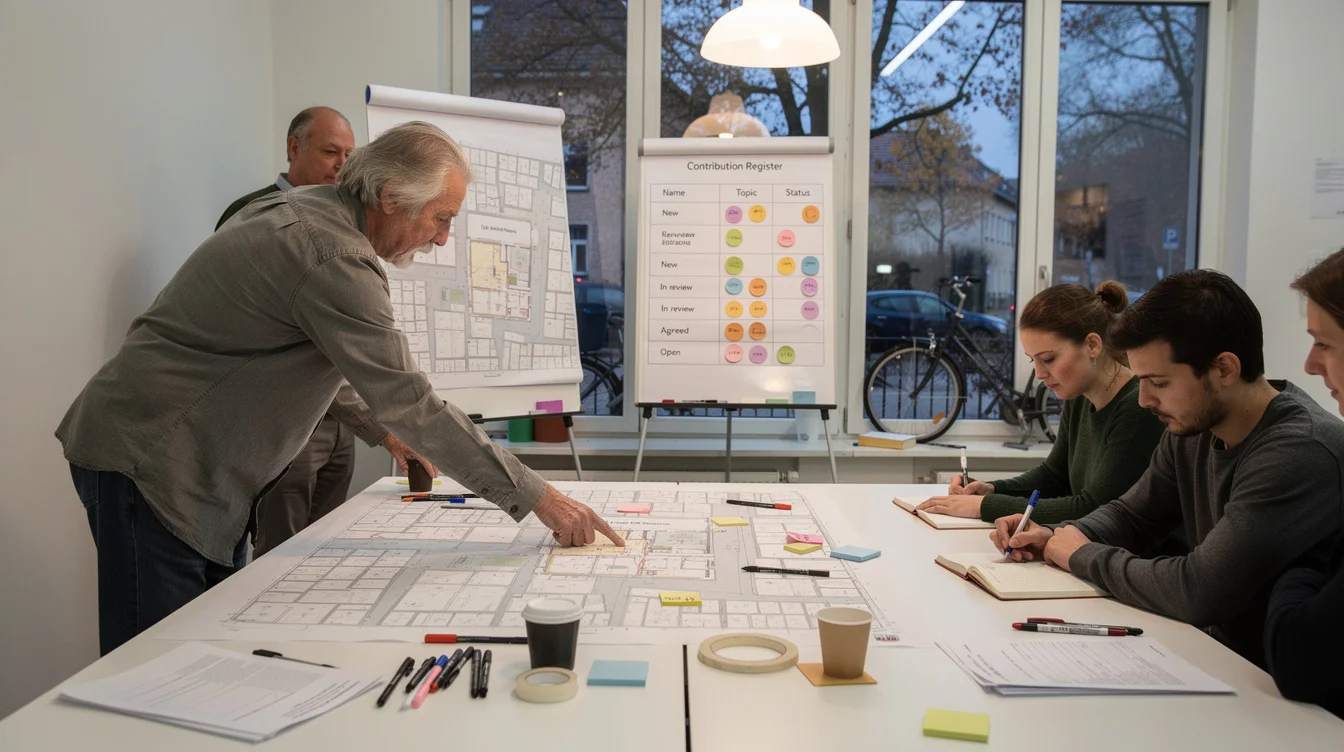
Recording everything is insufficient if the architects retain an invisible veto over everything. The next requirement is a published method for evaluating contributions, including who participates and which constraints are genuinely fixed.
A proposal might be assessed against accessibility, housing affordability, retained embodied carbon, maintenance obligations and existing patterns of use. These criteria can conflict. An additional lift may improve access while requiring structural intervention; a public route may increase connectivity while compromising residents’ privacy. Participation should expose those conflicts, not dissolve them into an uplifting claim that every voice was heard.
For each of the four proposals, a review session could bring together the design team, people directly affected and relevant independent expertise. Participants should be able to question both the options and the criteria used to rank them. A tenant’s account of displacement risk is not interchangeable with a passing visitor’s preference for a façade colour.
Attendance is not representation. A Berlin gallery audience cannot automatically stand in for shift workers, children, disabled residents or people uncomfortable discussing technical drawings in German or English. Targeted outreach, translated summaries, accessible formats and compensated involvement for sustained work would help correct that imbalance. A crowded opening proves interest; it does not establish a mandate.
The Third Test: Show What Changed—and What Did Not
The strongest exhibit in a participatory studio might be a decision log. Each contribution could carry a visible status: under review, incorporated, being tested or declined with reasons. Accepted ideas should point to an actual revision. Rejected suggestions should receive an explanation specific enough to challenge.
Imagine a before-and-after drawing showing that an entrance moved because residents identified an unsafe crossing. Beside it, a request for additional public space might remain unresolved because ownership information is missing. Neither example requires pretending that the gallery can approve development. Both make the design process inspectable in a consequential way.
Assemble’s work with Granby Four Streets in Liverpool offers a useful comparison, although it is not a model that can simply be transplanted into an exhibition. Its significance lies in the relationship between design practice and long-running resident organising, including a community land trust. The people involved were not merely invited to comment on someone else’s finished agenda.
Aedes could distinguish influence over a speculative proposal from authority over a real site. A change to a model is not a planning commitment. The exhibition should identify who, if anyone, could carry proposals forward, and whether contributors would retain a role beyond December 3. Otherwise, participation risks expiring when the gallery is cleared.
Openness Must Include the Possibility of Refusal
There is a harder test still: can public input challenge the premise that an architectural intervention is needed? If visitors may choose between designs but cannot question the brief, the exhibition offers a menu, not shared agenda-setting.
Berlin already has a forceful reference point. The 2014 referendum on Tempelhofer Feld demonstrated that a public can reject development ambitions rather than merely improve their presentation. A gallery workshop is not a referendum, and should not claim equivalent legitimacy. But the comparison exposes a limit: participation becomes decorative when “do less” or “do not build” is excluded in advance. A similar tension arises when a design festival argues for fewer products: questioning production must remain a legitimate outcome.
CHYBÍK + KRIŠTOF’s working studio has the potential to make architectural judgement unusually legible. That educational value is real. The mistake would be to promote legibility into democracy without documenting the transfer of influence.
Participatory architecture exhibitions should therefore publish their terms: what is negotiable, who is missing, how contributions are assessed, which decisions changed and what happens afterwards. These are not bureaucratic accessories to an otherwise compelling display. They are the infrastructure that separates a public role from a public-facing performance. If openness never obliges the architect to reconsider, it remains an aesthetic.
FAQ
What is Building the Existing City at Aedes?
It is a CHYBÍK + KRIŠTOF exhibition at Aedes Architecture Forum in Berlin, running from October 23 to December 3, 2026. The gallery becomes a working studio where visitors can follow the development of four Berlin architectural and urban design proposals selected through an open call.
Does watching a live architecture studio count as participation?
It provides access and potentially valuable architectural education, but observation alone does not establish influence. Participation requires a defined opportunity to affect the brief, evaluation criteria, design options or subsequent decisions, with evidence of how contributions were considered.
How should an exhibition document public contributions?
A project-specific register should record the issue, context and requested change, while protecting personal information. A linked decision log should show whether the contribution was incorporated, tested, deferred or declined, explain why, and identify any resulting design revision.
Can a speculative exhibition offer meaningful participation?
Yes, if it is honest about its limits. Participants can shape research questions, priorities and proposed designs without controlling land ownership or planning approval. The exhibition should distinguish those forms of influence and explain whether any relationship continues after it closes.
If visitors can watch every architectural decision but cannot meaningfully challenge one, whose openness is the exhibition really celebrating?
Get the Mainifesto weekly — curated design debates, speculative ideas and the week's best articles every Saturday.
Editorial Perspectives
Questions and counterpoints developed by the Mainifesto editorial desk to extend the discussion.
Perspective 1
A live studio can be genuinely compelling; seeing a design take shape beats another polished render. But I’d look for what happens when a visitor disagrees: does that objection enter the brief, or just become more content for the exhibition?
Perspective 2
Putting the studio on display also builds the studio’s brand: accessible, candid, open. If visitors cannot affect a decision, those qualities belong to the presentation, not necessarily the practice.