When Does Engineering Caution Become Design Paralysis?
When Does Engineering Caution Become Design Paralysis?
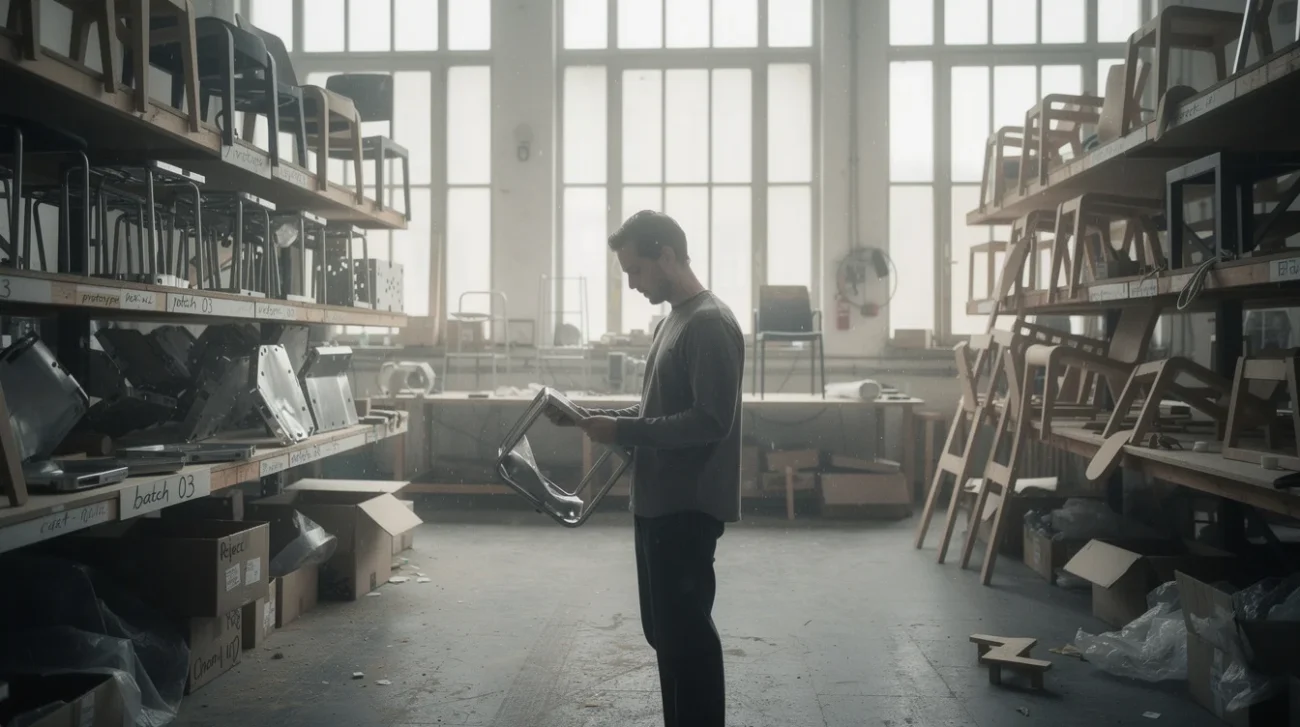
An abandoned prototype can be evidence of excellent judgment. It can also be the physical remains of an organisation’s failure of nerve. The difficult part is telling the difference.
Monocle’s account of Berlin-based industrial designer Konstantin Grcic brings that ambiguity into focus: an archive of abandoned prototypes, the Italian manufacturers who shaped his practice, and his blunt assessment that German industry is not agile enough. The available source context does not establish why individual prototypes were abandoned. Their significance here is not as proof of corporate cowardice, but as an invitation to interrogate how decisions get made.
The argument has two serious sides. Manufacturing discipline protects people from designers’ overconfidence. Yet approval systems can also protect manufacturers from discovering anything they do not already know how to sell.
PRO: Engineering Caution Is a Design Responsibility
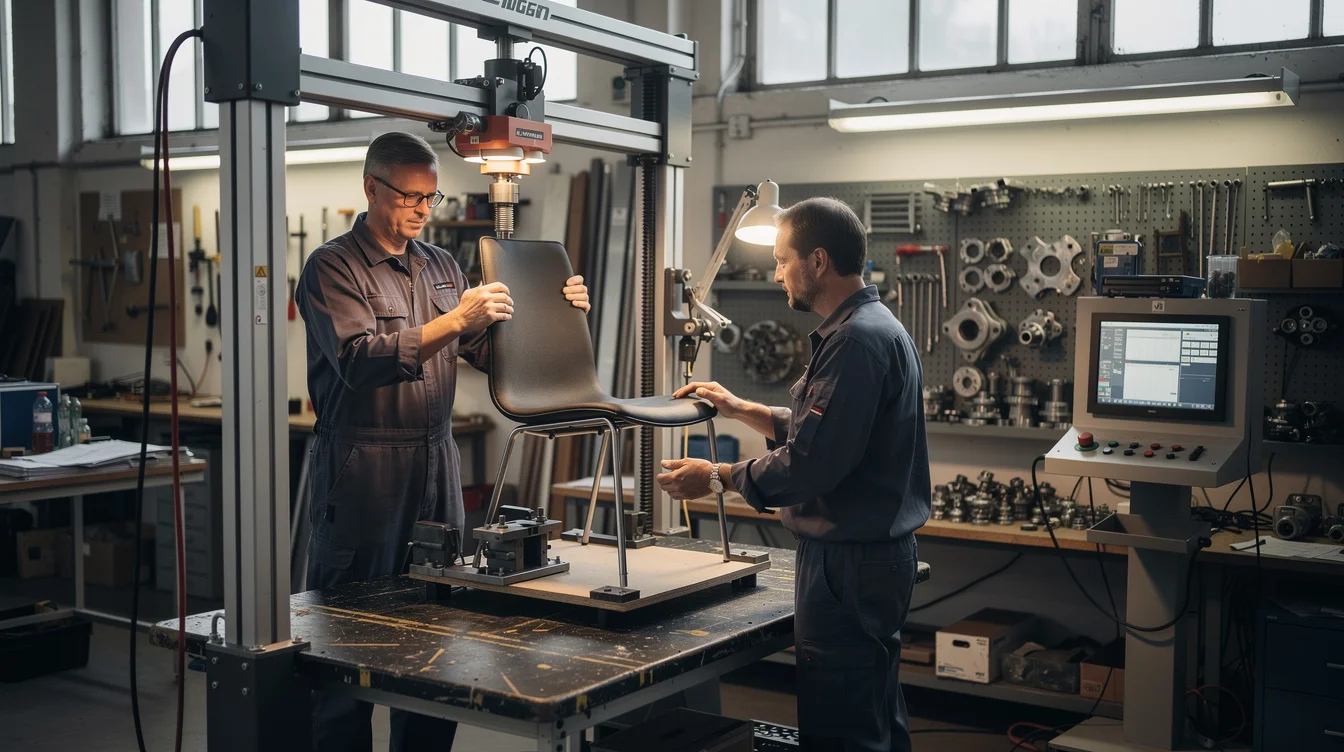
Start with the unfashionable defence: a manufacturer is right to distrust a beautiful prototype. A workshop object can conceal hand-adjusted joints, unusually favourable material properties and assembly operations that become intolerable when repeated thousands of times. What works once is not necessarily a product.
Grcic’s Chair_One for Magis, introduced in 2004, makes the distinction tangible. Its open, triangulated, die-cast aluminium seat looks like a provocation against conventional comfort and construction. But a production chair must do more than hold a designer during a presentation. Casting consistency, edge treatment, stability and repeated loading all matter. The visual radicalism does not cancel those obligations; it makes resolving them part of the achievement.
For seating, standards such as EN 12520 for domestic use and EN 16139 for non-domestic use provide structured ways to address strength, durability and safety. Which requirements apply depends on the intended market and setting. These are not aesthetic referendums. They are ways to stop the customer becoming an involuntary test subject.
Caution earns its authority when it identifies a failure mode. A weak junction, an unstable footprint or an inaccessible repair is an engineering problem. Calling those concerns conservative merely gives negligence a fashionable vocabulary.
PRO: The Factory Is Part of the Design
The romantic account of product design places invention in the studio and compromise in the factory. That distinction is both lazy and technically illiterate. Tooling, cooling, assembly and quality control actively shape what an object can become.
Consider Myto, Grcic’s plastic cantilever chair developed with Plank and BASF and introduced in 2008. Its significance lies partly in the relationship between a demanding structural idea, an engineering thermoplastic and injection-moulding expertise. The manufacturer and material specialist were not simply executing a finished drawing. Their capabilities were constitutive of the design.
A responsible approval process asks whether the proposed geometry tolerates normal production variation. Will a modest change in material behaviour produce unacceptable deflection? Can operators detect a defective component before shipment? Does the chosen finish survive the cleaning regime expected in its intended setting? These questions can look obstructive from the presentation table. From the warranty department, they look overdue.
Manufacturing discipline also protects resources. A premature production commitment can strand expensive tooling and generate unsellable inventory. Repair access and replacement-part availability deserve scrutiny before launch, not after a sustainability campaign has been written. Slower approval can be justified when it prevents a much longer material afterlife of mistakes.
PRO: An Archive of Rejections Can Signal Intelligence
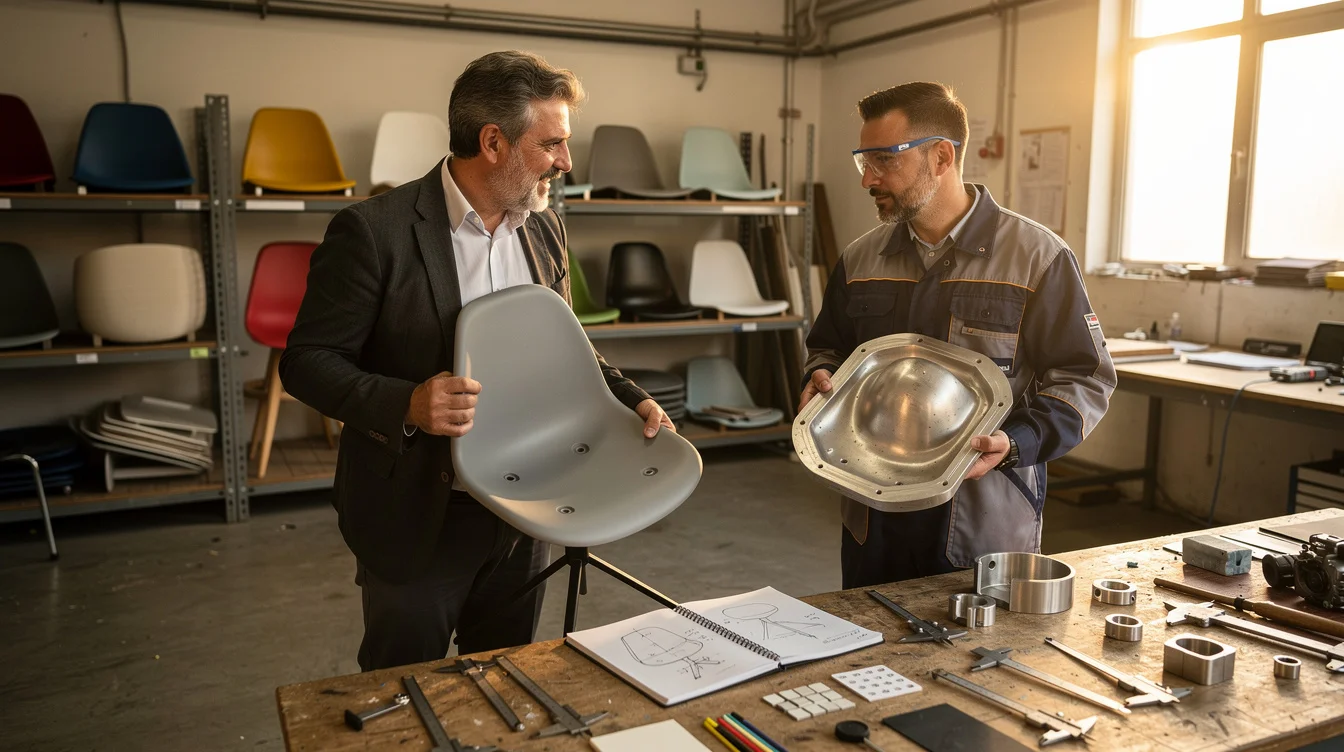
Not every abandoned prototype deserves resurrection. Some ideas are compelling precisely because they have not yet encountered ordinary life: uneven floors, careless handling, limited storage, cleaning chemicals and users with bodies unlike the designer’s.
Charles and Ray Eames’s experiments with moulded plywood demonstrate that a design language can emerge through material investigation and revision rather than the immediate production of an initial vision. The lesson is not that every experiment must survive. It is that failure becomes productive when its causes are understood and recorded.
Manufacturers therefore need permission to stop projects. A mechanism that cannot reliably be guarded, a surface that cannot meet a necessary hygiene requirement, or a structure whose durability depends on implausibly perfect use should face a firm refusal. Investing more money does not automatically turn an unsuitable concept into a responsible product.
The crucial condition is a legible decision record: the requirement, the evidence, the alternatives investigated and the reason for stopping. An archive organised this way becomes technical memory rather than a cemetery of unexplained vetoes. It can also reveal when a later material or process change makes reconsideration worthwhile. The strongest defence of caution is not that engineers know best. It is that their objections can be tested.
CONTRA: Approval Often Measures Familiarity, Not Risk
Now the indictment. Manufacturers frequently treat unfamiliarity as if it were a measurable defect. A proposal falls outside an existing product category, requires a different supplier or cannot be benchmarked against last year’s bestseller. None of those facts establishes that it is unsafe or unmanufacturable. They establish that the organisation must learn something.
Grcic’s Mayday lamp for Flos, introduced in 2000, is a useful counterexample to category obedience. Its handle and hook, cable-winding function and portable character connect domestic lighting with the practical vocabulary of a utility lamp. Its identity is not exhausted by the familiar distinction between a table lamp and a pendant.
A hypothetical approval committee demanding a neat fit within an established merchandising category could have treated that ambiguity as a weakness. Yet the ambiguity is central to the proposition: an object whose use can migrate rather than remain fixed to one prescribed position.
This is where caution becomes paralysis. The organisation stops asking whether an unfamiliar idea can work and starts asking why it cannot resemble something already approved. A sales forecast is not a safety test. It may justify limiting financial exposure, but it should not masquerade as an engineering verdict.
CONTRA: Too Many Vetoes Produce Too Little Knowledge
A committee can reject a prototype without anyone accepting responsibility for discovering whether it was viable. Engineering requests certainty before testing; purchasing wants a settled specification before approaching suppliers; marketing wants a price before commissioning research. Each demand sounds reasonable alone. Together they create a system in which evidence cannot be generated because evidence is required to authorise its generation.
Grcic’s collaborations with Italian manufacturers such as Magis, Plank and Flos suggest a more useful line of inquiry than a national character contest. Germany does not possess a monopoly on bureaucracy, nor Italy on courage. The question is whether a company gives identifiable people the authority, budget and supplier access to pursue an unresolved proposition.
Achille Castiglioni’s work with Flos offers another reference point for relationships in which technical development and unconventional ideas could meet. Such histories should not be reduced to heroic designers overcoming factories. They show why a committed manufacturing partner matters.
For a contemporary manufacturer, the practical alternative is a bounded learning programme: a named project sponsor, a prototype budget, an agreed testing window and explicit stop conditions. Approval should purchase the next piece of evidence, not demand certainty about the entire future. Otherwise, procedural tidiness becomes a substitute for development.
CONTRA: Make Every Objection Declare What It Protects
The dividing line should be operational, not philosophical. Every objection should identify what it protects: user safety, production consistency, financial exposure or established commercial preference. Those categories deserve different responses. A fatigue concern requires a test. A tooling-cost concern requires an investment decision. A category-fit concern requires market learning, not an engineer’s borrowed authority.
Manufacturers could require each development gate to specify the unresolved question, the evidence needed, the decision owner and a review date. Safety-critical requirements remain non-negotiable. Commercial assumptions should remain contestable. Where appropriate, prototype tooling, supplier trials or a limited launch can reduce uncertainty before full investment. A limited launch, however, does not excuse an unsafe product.
Abandoned prototypes should undergo periodic review, too. Was the obstacle a documented technical limit, a supplier constraint that has since changed, or a management preference presented as inevitability? The purpose is not to revive everything. It is to expose recurring patterns of rejection.
Grcic’s critique becomes most useful when translated into accountability. A disciplined manufacturer can explain what would change its mind. A paralysed one keeps adding approvals. The real opposition is not engineering versus creativity. It is evidence-led development versus an institution’s determination never to be surprised.
FAQ
What distinguishes engineering caution from design paralysis?
Engineering caution identifies a specific risk and a way to assess it. Design paralysis substitutes indefinite review, shifting requirements or demands for familiarity for a clear decision. The key test is whether new evidence can move the project forward.
Does an abandoned prototype prove that a manufacturer resisted innovation?
No. Prototypes may be abandoned for sound technical, financial or usability reasons. Grcic’s archive prompts scrutiny of those decisions, but the available source context does not establish why individual projects stopped.
How can manufacturers experiment without weakening safety?
Separate permission to investigate from permission to sell. Fund controlled prototypes, involve relevant specialists early and define applicable safety requirements. Small production volumes can limit financial exposure, but they do not remove product-safety obligations.
What should a manufacturer change first?
Require every rejection to name the risk, supporting evidence and conditions for reconsideration. Assign a decision owner and deadline. This makes legitimate safeguards clearer while exposing objections based primarily on habit or commercial preference.
If a manufacturer cannot say what evidence would change its mind, is it practising engineering caution—or simply refusing to design?
Get the Mainifesto weekly — curated design debates, speculative ideas and the week's best articles every Saturday.
Editorial Perspectives
Questions and counterpoints developed by the Mainifesto editorial desk to extend the discussion.
Perspective 1
If no prototype or trial could change your mind, you're defending a comfort zone, not an engineering standard. Working with new media makes me wary of promises that novelty will save us, but that's a reason to test unfamiliar ideas—not refuse them.
Perspective 2
I wouldn't call it design paralysis just because a manufacturer can't specify the evidence upfront. In buildings, unfamiliar systems can create maintenance problems that a prototype won't reveal; working out what counts as a credible test is itself design work.
Perspective 3
In adaptive reuse, caution can save a building from an irreversible mistake—or become the excuse for declaring it impossible to repair. I'd ask who gets to define acceptable evidence: the supplier selling a replacement, the craftsperson who knows the existing material, or the people still using it.
Perspective 4
A manufacturer that cannot name what would change its mind has built a little Kafka novel: every door leads to another approval meeting. Still, designers should stop treating unfamiliarity as proof of merit; some ideas deserve rejection, just with reasons better than 'we don't do that here.'