
Who Remains Responsible When Waste Becomes Landscape?
A Temporary Dump, a Permanent Inheritance
Architecture loves an afterlife. The factory becomes a cultural centre; the railway becomes a promenade; the landfill becomes a park. Each conversion offers a seductive plot: yesterday’s damage supplies tomorrow’s public good. But at Fresh Kills, on Staten Island’s western shore, the transformation is too enormous—and its obligations too persistent—to fit comfortably into a redemption story.
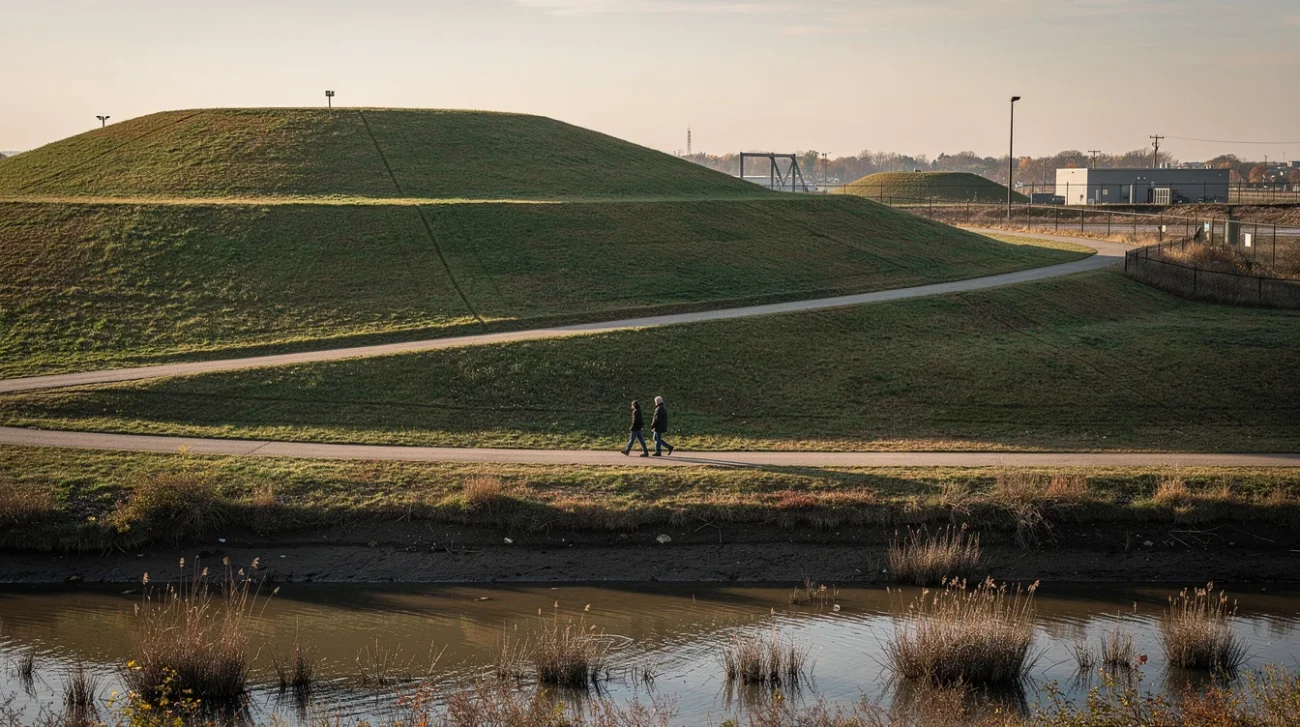
Established by Robert Moses in 1948, the landfill was supposed to be temporary. According to the historical account discussed by ArchDaily, it was the world’s largest by 1955 and received up to 29,000 tons of refuse daily at its 1991 peak. By 2001, it occupied approximately 2,200 acres, roughly three times Central Park’s area. Four artificial hills, rising as high as sixty metres above sea level, made metropolitan consumption into topography.
The Fresh Kills transformation therefore poses something sharper than a design challenge. When a city turns its accumulated waste into an attractive landscape, does responsibility become more visible—or easier to forget? Reclamation deserves support. The idea that reclamation settles the debt does not.
PRO: Public Access Is a Material Form of Repair
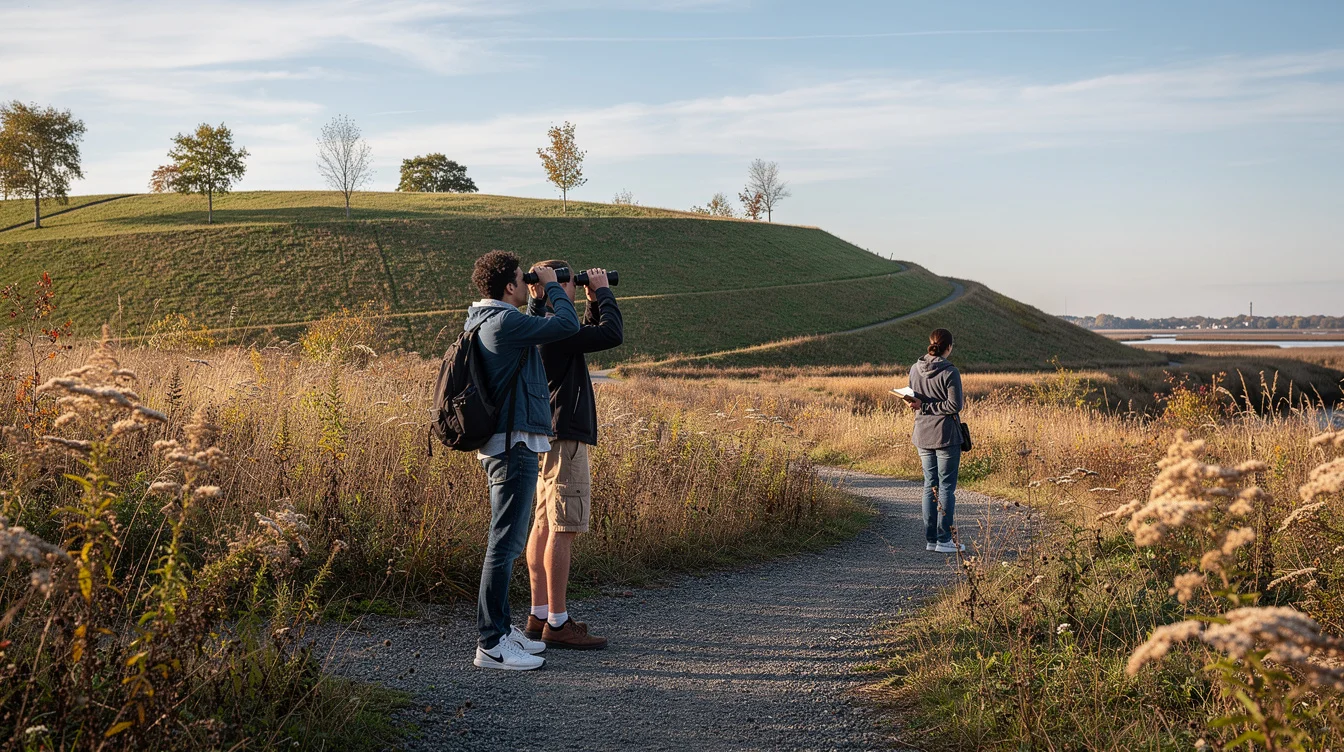
Leaving damaged land inaccessible is not automatically the more ethical choice. A fence can protect people from hazards, but it can also preserve a geography of exclusion indefinitely. Staten Island carried a disproportionate share of New York City’s disposal burden. Returning substantial land to public use can constitute a tangible redistribution of urban resources, provided safety and access govern the process rather than opening-day optics.
James Corner Field Operations’ master plan for Freshkills Park treats the site as a landscape unfolding over decades, not a finished object delivered at a ribbon-cutting. That distinction matters. Its phased development acknowledges that landfill engineering, ecological change and recreational access operate on different schedules. The opening of the 21-acre North Park section in 2023 offered a concrete result: trails and opportunities for observation within a landscape previously associated with exclusion and disposal.
This is more than cosmetic compensation. Walking routes, outdoor learning and encounters with grassland and wetland habitats are real public benefits. Residents should not have to choose between remembering environmental harm and enjoying public space. A neighbourhood does not prove its historical injury by remaining deprived of amenities. The strongest argument for reclamation is that people deserve useful land now, without waiting for an impossible return to conditions before the dump.
PRO: Design Can Make Long-Term Care Legible
The second argument for transformation is institutional: a publicly valued landscape can give long-term public-space management a constituency. An abandoned disposal site is easy to place beyond everyday attention. A park with regular visitors, educators and organised local advocates can generate persistent demands for inspection, investment and disclosure. This is not guaranteed accountability, but it creates opportunities that isolation does not.
Other projects demonstrate how design can resist a simple before-and-after narrative. At Landschaftspark Duisburg-Nord, Latz + Partner retained industrial structures rather than presenting the former steelworks as untouched nature. At Seattle’s Gas Works Park, Richard Haag’s design made the surviving gasification equipment central to the public landscape. Neither project is an engineering template for Fresh Kills; their relevance lies in refusing complete visual erasure.
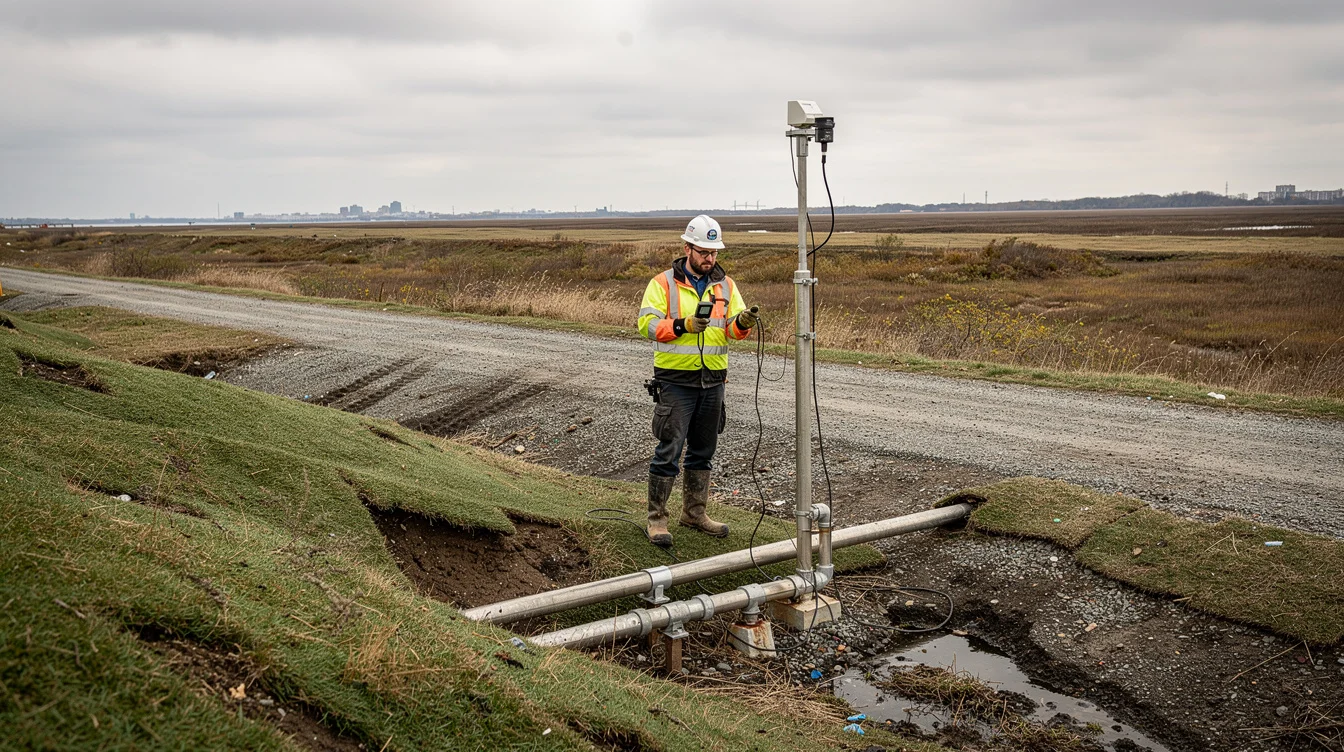
Fresh Kills could extend that principle beyond preserving industrial silhouettes. Visitor routes, where compatible with operational safety, could explain gas collection, landfill caps and leachate management. Public displays could connect the apparent calm of a grassy hill to the systems keeping buried waste contained.
The design achievement would then be neither concealment nor a theatrical display of toxicity. It would be environmental literacy: a landscape in which recreation and an understanding of continuing care reinforce one another. The park becomes valuable precisely because it teaches that its ground is constructed, monitored and never politically innocent.
CONTRA: The Beautiful Surface Can Become an Alibi
The opposing case begins with the image. An aerial photograph of rolling grassland can communicate recovery more quickly than any technical report can explain containment. The buried material disappears from view; the city acquires an emblem of ecological ambition. Architecture’s talent for producing compelling futures becomes dangerous when those futures are mistaken for evidence that the past has been resolved.
A landfill cap is not absolution. It is part of an engineered system intended to limit exposure and water infiltration while waste remains beneath it. Gas and leachate require management; settlement can complicate construction and maintenance. New paths and habitats do not cancel those conditions. Public access demonstrates that particular uses can be accommodated under specified controls—not that the entire site has become harmless.
Gas Works Park is instructive here for a less celebratory reason: its enduring public appeal has coexisted with environmental management and restrictions associated with its industrial history. Attractive public space and unresolved contamination are not mutually exclusive categories.
At Fresh Kills, the danger is therefore not necessarily a badly designed park. It is a brilliantly designed park whose visual success outruns public understanding. If awards, tourism campaigns and planning presentations foreground biodiversity while relegating maintenance liabilities to inaccessible documents, landscape becomes an instrument of institutional amnesia. The grass need not hide an engineering failure to hide a political obligation.
CONTRA: Public Benefit Does Not Automatically Repay Local Burden
Who counts as the public receiving the benefit? A metropolitan destination can attract visitors and investment while failing to address the priorities of those who lived with truck traffic, odours and the stigma of proximity to the dump. Regional acreage statistics say little about neighbourhood access, transport connections or who influences spending. A spectacular park can still be an unequal settlement.
The High Line, designed by James Corner Field Operations with Diller Scofidio + Renfro and planting designer Piet Oudolf, offers a caution rather than a direct comparison. Its success helped make landscape infrastructure an engine of real-estate value. Fresh Kills has different geography and development pressures, but the lesson travels: public-space investment does not distribute benefits evenly merely because admission is free.
Responsibility must consequently remain attached to named institutions, budgets and enforceable duties. New York City’s Department of Sanitation retains landfill-management responsibilities; the Parks Department develops and operates park space; New York State’s Department of Environmental Conservation provides regulatory oversight. A shared landscape must not become an excuse for blurred accountability between them.
Published monitoring results, understandable maintenance budgets, clear reporting channels and sustained neighbourhood participation should be conditions of reclamation, not optional outreach. Designers cannot replace regulators, and residents should not become unpaid compliance officers. The decisive measure of transformation is whether the city remains answerable when a maintenance problem is expensive, technically awkward and entirely unphotogenic.
FAQ: What Reclamation Does—and Does Not—Resolve
Why was Fresh Kills allowed to become so large?
Its establishment as a supposedly temporary disposal site in 1948 did not prevent decades of continued use. Cheap marshland, a location treated as peripheral and New York City’s immense waste stream helped turn a provisional arrangement into long-term infrastructure. Its scale exposes the political danger of calling a damaging land use temporary without securing a credible exit.
Does turning a landfill into a park remove the waste?
Not generally. At Fresh Kills, reclamation relies on engineered containment and continuing management rather than wholesale excavation. The visible landscape sits above buried refuse. Public access must therefore be planned around the integrity of protective systems, operational requirements and the uses permitted in particular areas.
Who remains responsible after park areas open?
Opening parkland does not end landfill obligations. Municipal landfill managers, park authorities and environmental regulators retain distinct roles. The public needs clear information identifying who maintains each system, who checks compliance and whom to contact when problems arise. A landscape designer’s authorship is no substitute for that institutional chain.
What would a more accountable transformation look like?
It would pair accessible recreation with funded environmental care, legible monitoring information and meaningful participation by affected communities. Interpretation would explain both the waste infrastructure and its social history. Success would be measured through maintenance, equitable access and responsiveness—not simply visitor numbers, attractive photographs or the amount of green space announced.
If the city can afford to make its waste landscape beautiful, what must it guarantee the people who carried its burden before it earns the right to call that landscape a success?
Get the Mainifesto weekly — curated design debates, speculative ideas and the week's best articles every Saturday.
Editorial Perspectives
Questions and counterpoints developed by the Mainifesto editorial desk to extend the discussion.
Perspective 1
I support turning Fresh Kills into parkland: repair should give a damaged place another public life, not pretend it has no past. But the neighbors who lived with the landfill need funded environmental oversight and protection from displacement, or this becomes another restoration whose original community cannot afford to stay.
Perspective 2
I don’t buy the idea that the city must settle every historical obligation before it can call a useful park a success. Judge it on safe access, reliable maintenance and whether nearby residents actually use it; keep environmental liabilities funded and enforceable, but don’t make public enjoyment wait for a moral finish line.
Perspective 3
Before calling this a success, I’d want published groundwater and landfill-gas monitoring, clear intervention thresholds and a maintenance budget that survives a change of mayor. Then measure who gets convenient access and who bears the remaining risks—citywide visitor totals won’t answer that.
Perspective 4
We can model the terrain in extraordinary detail, so why not make the systems beneath it equally legible to the public? Residents should be able to see monitoring results, understand their limits and know who must act when a threshold is crossed; a dashboard without that obligation is just another rendering.
Perspective 5
The picturesque has always been good at making worked land look innocent; a landfill offers it an especially convenient assignment. Keep the park, certainly, but its interpretation should name who bore the waste burden and who remains liable—not offer a tasteful little history of how rubbish became nature.