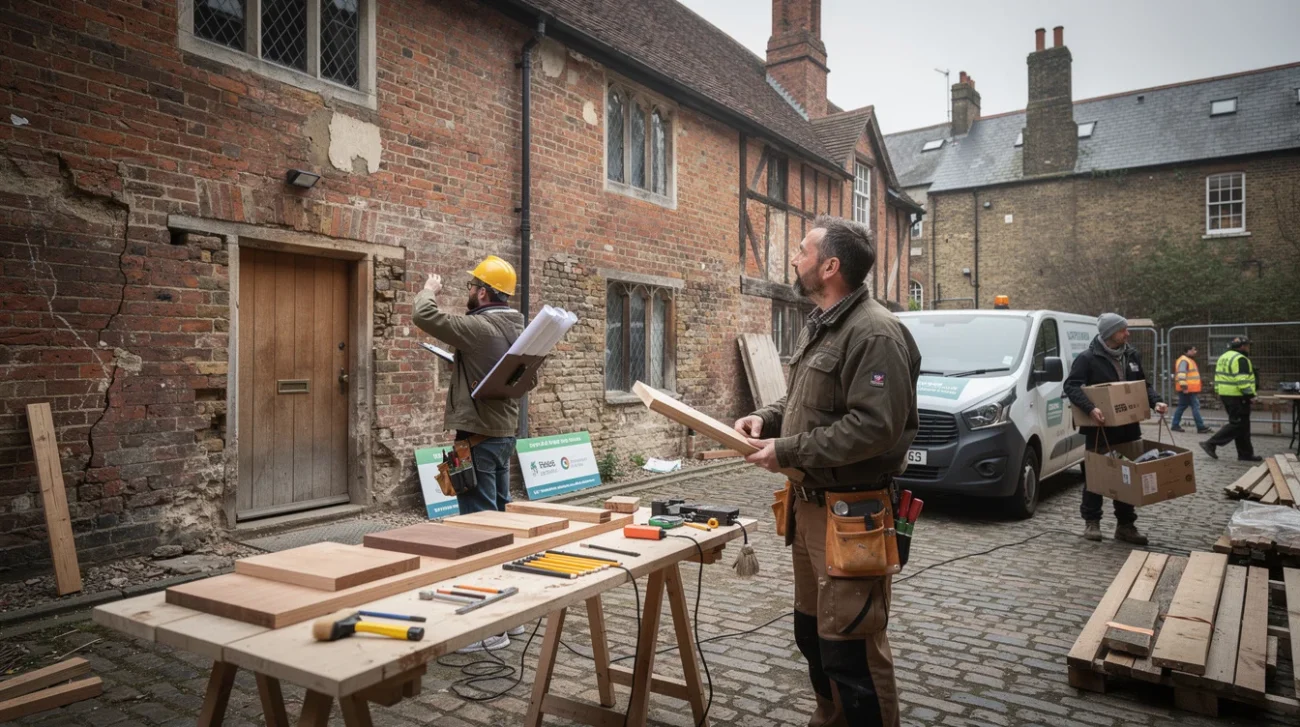

Benghazi’s Digital Masterplan: Who Gets to Edit the City?

When the Masterplan Becomes Software, Who Gets to Edit the City?
The fixed masterplan has a seductive weakness: it makes the future look settled. Roads arrive on schedule, neighbourhoods fill neatly, infrastructure follows an orderly sequence. Cities rarely cooperate. In Benghazi, where reconstruction and future growth must negotiate existing lives as well as future investment, the distance between a finished drawing and an unfinished city is especially consequential.
As reported by designboom, Zaha Hadid Architects’ proposed citywide strategy centres on a digital planning hub: an adaptable framework intended to evolve alongside Benghazi rather than lock its development into a fixed masterplan. That is the proposition, not proof of how the system would govern. The available source summary does not establish its public-access arrangements, decision-making powers or safeguards.
The architectural question is whether this approach can respond better to change. The political question is sharper: when the plan can be edited, who holds the permissions?
PRO: A City Should Be Able to Correct Its Plan
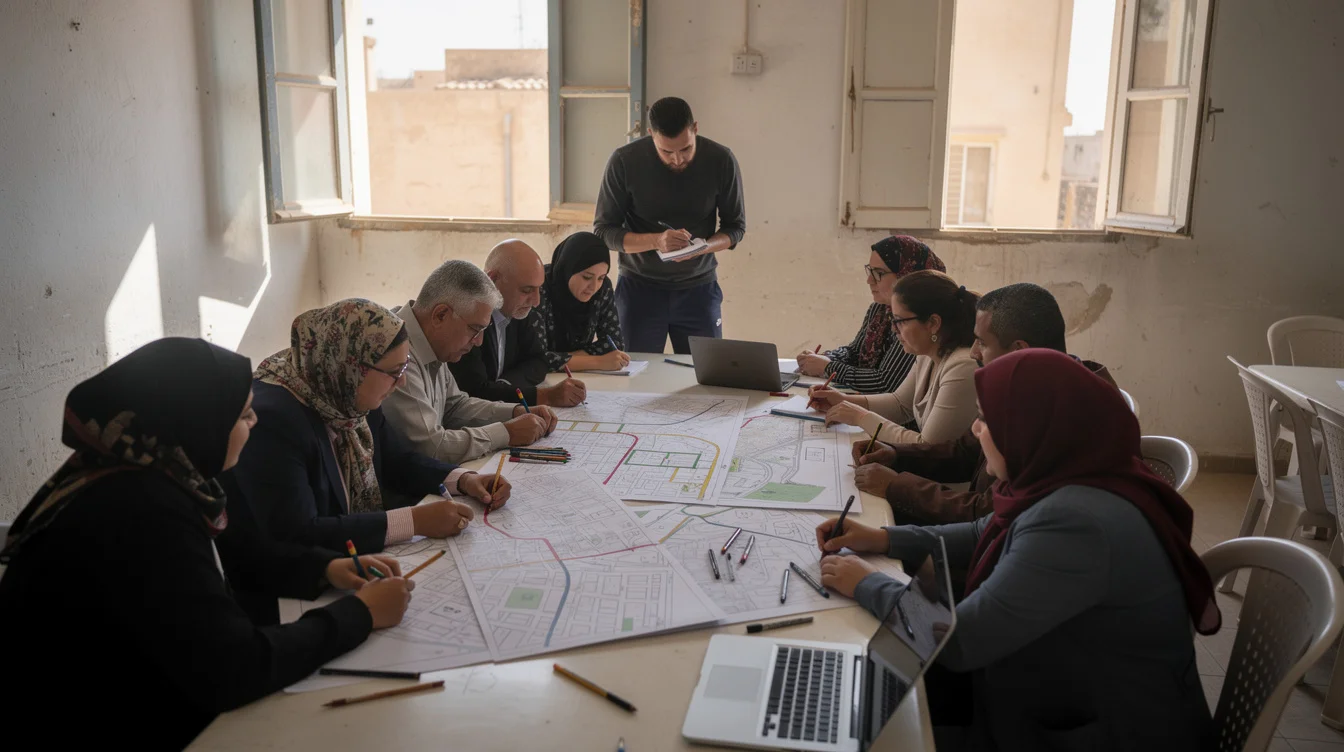
A responsive framework could replace the fiction of perfect foresight with a discipline of revision. Suppose a Benghazi neighbourhood gains residents faster than expected, while a proposed development elsewhere remains unoccupied. A planning system that updates its assumptions could help redirect school provision, transport investment or utility upgrades towards actual demand. The benefit is not a more animated map. It is less time spent servicing yesterday’s forecast.
This is not an argument for abandoning spatial ambition. Barcelona’s superblocks demonstrate how a strong citywide idea can be pursued through local interventions, observation and adjustment. Their lesson for Benghazi is methodological, not a prescription to import Barcelona’s street geometry: establish the public objective, implement carefully and assess what changes on the ground. Traffic displacement, accessibility and local business needs must enter the evaluation alongside attractive public-space photographs.
Singapore’s Virtual Singapore initiative offers a different reference: a three-dimensional digital city platform conceived to support simulation and collaborative planning. Such tools can help test relationships that a conventional land-use drawing struggles to communicate. For Benghazi, possible applications might include comparing infrastructure costs across growth scenarios or examining access to services. These are potential uses, not confirmed functions of ZHA’s proposal.
The strongest case for adaptability is the ability to recognise a mistake before concrete makes it expensive. Residents gain when course correction protects everyday access rather than simply accelerating construction.
PRO: Make Revision a Public Capability
Digital planning could also expose choices that conventional masterplans bury in technical documents. Imagine residents comparing two proposed growth scenarios: one extends the urban footprint and requires new infrastructure; another concentrates investment within existing neighbourhoods. A useful interface would show not only building volumes but also assumptions about costs, travel times, service capacity and who receives the benefits. The visualisation should make disagreement easier, not make a preferred option look inevitable.
Helsinki’s public 3D city models illustrate how shared spatial information can support uses beyond the planning department. Barcelona’s Decidim platform offers a complementary lesson about structuring participation online. Neither example supplies a ready-made governance model for Benghazi. Together, however, they suggest that the digital model and the public decision process should be designed as connected systems rather than unrelated products.
Residents could contribute knowledge that formal datasets miss: a crossing children avoid, a bus stop that lacks shade, a shopfront that anchors daily social life. Jane Jacobs’ insistence on observing cities at street level remains a useful corrective to the view from the dashboard. A responsive framework becomes more intelligent when local testimony can challenge its categories.
That requires offline access too: neighbourhood meetings, printed scenario maps, accessible venues and explanations in clear Arabic. Participation cannot depend on owning a recent smartphone or understanding planning software. The public benefit is not merely a city that updates faster, but a city whose reasons for updating become easier to question.
CONTRA: Adaptability Can Become a Permanent Exception
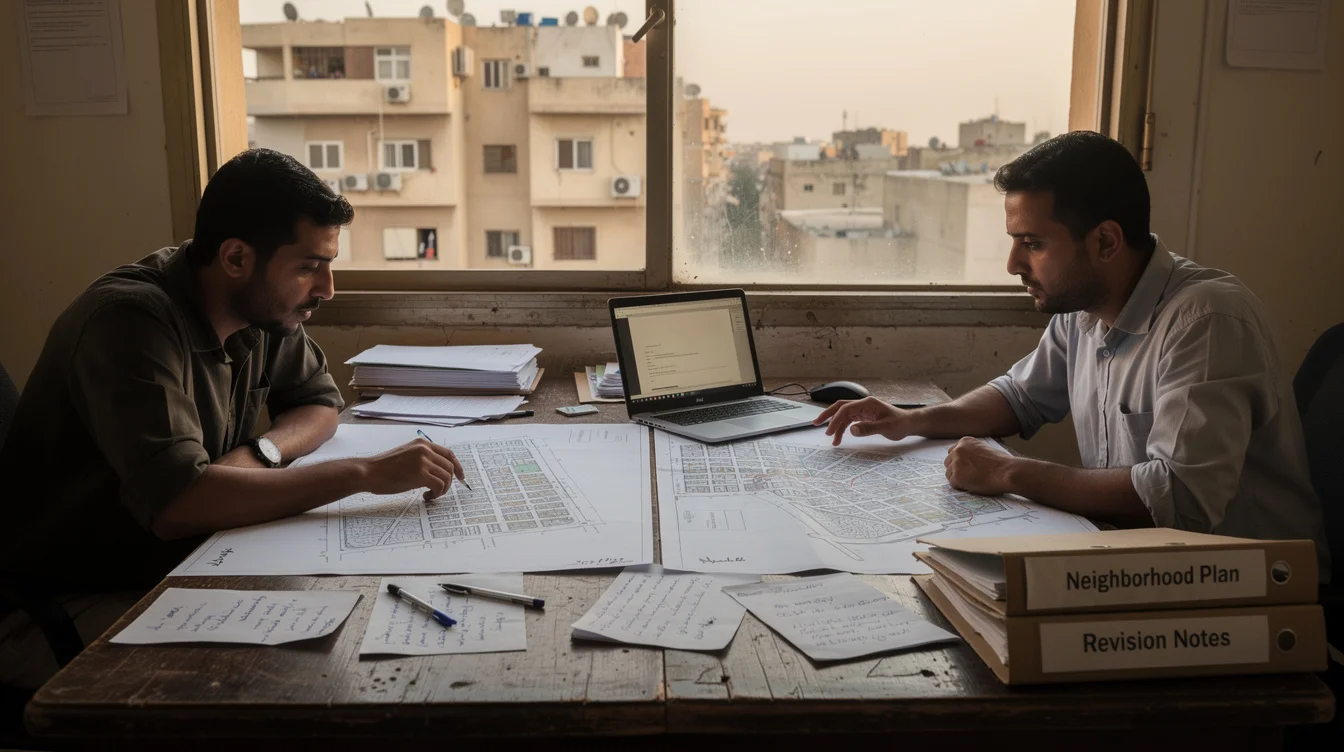
The same flexibility that corrects a bad forecast can accommodate a powerful applicant. Consider a hypothetical developer seeking extra height or a land-use change beside a promised public space. In a fixed plan, the departure is visible as a departure. In an endlessly revised framework, it could be presented as the system responding rationally to new conditions. The crucial distinction is between updating evidence and rewriting obligations.
This is where the language of optimisation becomes dangerous. A model cannot decide, without political choices embedded in it, whether investment returns matter more than affordable premises, heritage continuity or short walking distances. Someone selects the indicators. Someone assigns weight to each objective. Someone decides which losses are acceptable. Software can calculate within those decisions; it cannot make them democratically legitimate.
Toronto’s abandoned Sidewalk Labs waterfront proposal remains a useful warning. Its ambitions extended well beyond conventional development, while public debate exposed difficult questions about data governance, institutional authority and private influence. Its cancellation should not be reduced to a single cause, but the controversy demonstrated that technical ambition does not settle the question of public control.
For Benghazi, the risk is not that adaptability is inherently corrupt. It is that discretion could become harder to locate. A published plan can be challenged; an evolving system with hidden settings may leave residents arguing with an outcome whose author has disappeared.
CONTRA: An Editable City Needs Enforceable Limits
Transparency must mean more than publishing a polished dashboard. Benghazi’s framework would need a public change log recording what changed, who requested it, who authorised it, what evidence supported it and which objections remained unresolved. Earlier versions should remain accessible. Residents should be able to distinguish a corrected dataset from a revised development entitlement.
Changes also need different approval thresholds. Updating an infrastructure inventory is not equivalent to removing a public-space commitment. Major changes affecting land use, displacement, heritage or public expenditure should face formal notice, accessible consultation and approval by an identifiable, legally responsible authority. Where decisions affect rights, people need a credible route to challenge them. Engagement without the possibility of changing or contesting an outcome is customer research, not participation.
There is also the problem of who appears in the data. UN-Habitat’s participatory mapping work offers a relevant counterpoint to purely administrative records: lived conditions need investigation, not inference from clean-looking datasets. Informal livelihoods, uncertain tenure and people displaced from their homes must not become blank areas that software interprets as available land. Public accountability must coexist with privacy; household-level vulnerability should not become an open-data spectacle.
Finally, procurement should secure usable data exports, documented methods and continuity beyond any single consultant or vendor. Some commitments must resist easy editing. Public access, due process and responsibility for decisions cannot be treated as adjustable parameters. Without those limits, the adaptable masterplan risks becoming an elegant interface for unequal power.
FAQ
What is ZHA proposing for Benghazi?
According to the supplied designboom summary, Zaha Hadid Architects proposes a citywide growth strategy organised around a digital planning hub. It is intended to evolve with Benghazi rather than operate as a fixed masterplan. The summary does not establish detailed technical functions or public governance arrangements.
How could residents benefit from responsive planning?
Regularly reassessing demand could help align infrastructure, transport and public services with changing neighbourhood needs. Residents could also compare development scenarios and contribute local knowledge, provided the system includes meaningful public access and decision-makers are required to respond.
Does a digital planning hub automatically give software control?
No. A digital hub can support human decisions without making them automatically. The essential questions are who sets its assumptions, who can authorise changes and whether legal responsibility remains clear. A sophisticated model is neither an elected authority nor a substitute for planning law.
What safeguards should come before implementation?
Public version histories, clear approval powers, accessible participation, privacy protections and independent review should be established before consequential decisions rely on the platform. Major revisions need formal scrutiny, and affected residents need routes to challenge decisions. Technical contracts should also prevent dependence on a single supplier.
If Benghazi’s plan becomes continuously editable, which decisions should residents be able to rewrite—and which public commitments should no administrator or developer be allowed to alter alone?
Get the Mainifesto weekly — curated design debates, speculative ideas and the week's best articles every Saturday.
Editorial Perspectives
Questions and counterpoints developed by the Mainifesto editorial desk to extend the discussion.
Perspective 1
I’m for an editable plan if residents can flag a dangerous crossing or a useless bus route and actually get it changed—not just receive a dashboard notification. That responsiveness is worth investing in, but developers shouldn’t be able to quietly trade away public waterfront access or affordable housing commitments to improve a project’s returns.
Perspective 2
I’m against making continuous editability the organising principle for Benghazi’s plan: infrastructure needs stable commitments, and frequent revisions can make cumulative harm harder to spot. Residents should be able to initiate changes, but major amendments need published impact assessments and a binding public approval process—not administrator permissions.
Perspective 3
A historic neighbourhood isn’t a collection of façades you preserve while editing out the people who give it meaning. Let residents rewrite reuse rules and repair priorities, but don’t let an administrator or developer erase tenancy protections, shared spaces or rights to return under the heading of regeneration.
Perspective 4
In Benghazi, who holds the administrator account is a political question before it’s a software question. Residents need real amendment rights and an accessible appeals route; changes to land rights or public-service guarantees need approval beyond whoever runs the platform, with every revision logged and open to challenge.