
When the Original Makes Its Own Knockoff

When the Original Makes Its Own Knockoff
Furniture design has a copycat problem, but it rarely admits it so plainly. Danish brand OMHU has released a deliberately cheaper version of its Teddy sofa bed through third-party websites, intentionally misspelling the name as “Tedy” and presenting the object as a limited-edition dupe. The maneuver is part product launch, part provocation, and part marketing campaign: instead of pursuing every imitation from the shadows, OMHU has made the imitation itself.
That gesture turns a familiar industry irritation into a public spectacle. The original designer is no longer simply defending a product against an unauthorized copy. It is competing with its own parody, using the visual language of the counterfeit marketplace to expose how quickly design identity can be detached from price, provenance, and labor.
The question is not merely whether OMHU’s Tedy is authentic. It is whether authenticity still has useful cultural force when the original willingly performs its opposite.
PRO: The dupe makes copy culture impossible to ignore
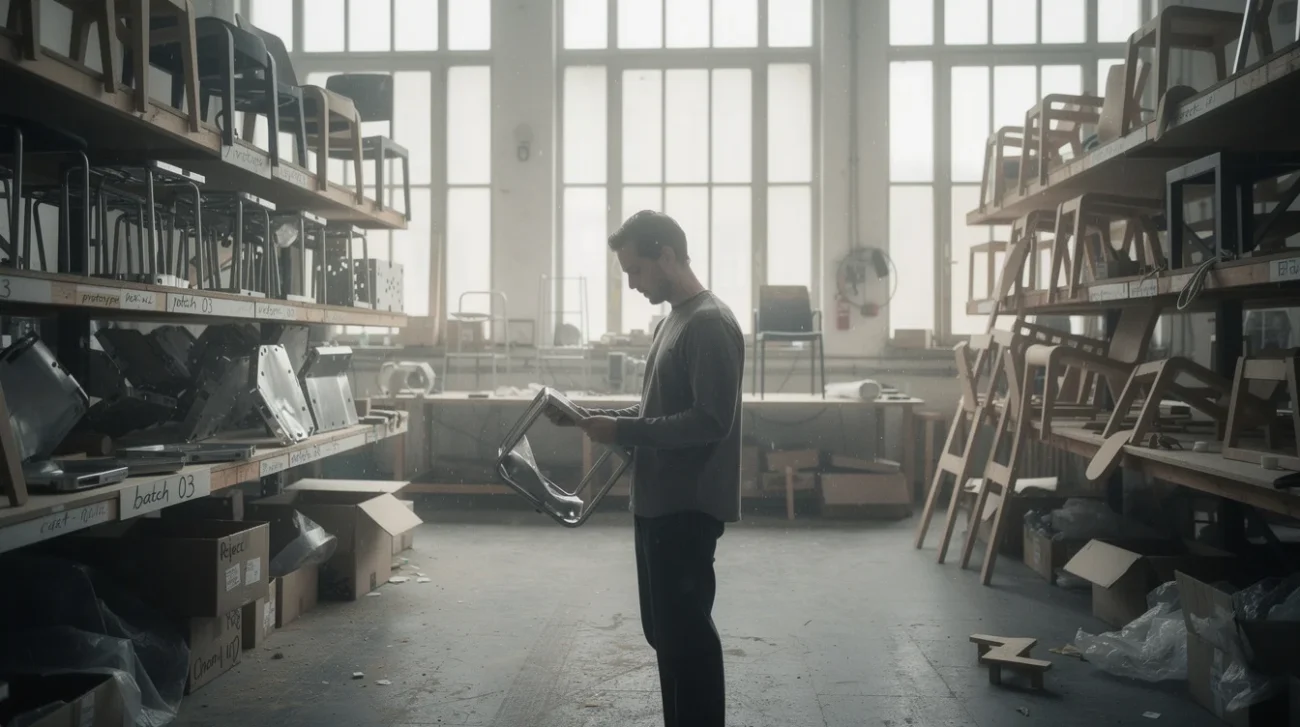
OMHU’s strongest move is rhetorical. Copying in furniture is usually treated as an unfortunate background condition: a manufacturer notices a successful silhouette, a marketplace reproduces it at lower cost, and the original brand responds with legal warnings, revised marketing, or silence. The public often sees only two similar sofas. The chain of authorship, prototyping, licensing, material testing, and manufacturing disappears.
By releasing its own cheaper Tedy sofa, OMHU puts that chain on display. The misspelling is crucial. “Tedy” looks like the kind of near-identical name used to capture search traffic while maintaining a thin layer of deniability. It is a graphic wink at the evasive tactics surrounding online commerce, where a product can be made to resemble an established design without claiming to be the established design.
This is not a new tension in design. The postwar history of furniture is full of objects whose authorship became unstable once they entered mass production. Charles and Ray Eames spent decades confronting unauthorized versions of their molded plywood and fiberglass chairs; today, the Eames name itself is often used to distinguish licensed production from the endless visual field of “Eames-style” seating. Marcel Breuer’s tubular-steel furniture has similarly become a vocabulary that can be reproduced without carrying the history of its original commissions or construction logic.
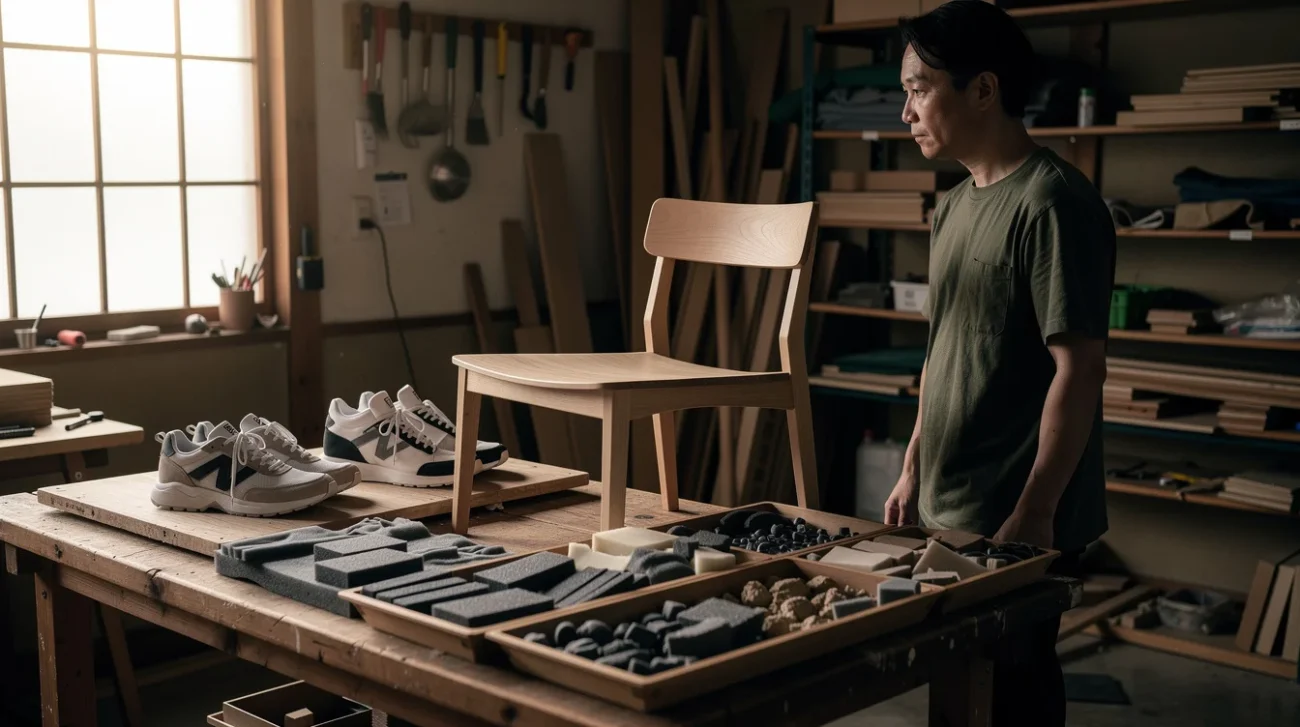
OMHU’s intervention changes the conversation from “How do we stop copies?” to “What exactly are consumers buying when they choose one?” The answer may be comfort, price, availability, status, sustainability, or simply a familiar shape. By making a copy-coded object under its own control, OMHU can show that these motivations are not morally or aesthetically tidy.
There is also a smart commercial logic here. A cheaper product can reach people who would never consider the usual price of the Teddy sofa bed. The campaign can generate attention beyond conventional furniture media, especially because its premise is instantly legible: the original has decided to outdupe the dupes. In an overcrowded market, that is a stronger hook than another announcement about foam density or upholstery options.
More importantly, the campaign treats transparency as a design material. It does not pretend that furniture exists outside algorithms, resale platforms, viral images, and price comparison. The Tedy is an object made for a market in which consumers encounter products first as thumbnails and only later, if ever, as physical things. OMHU is asking whether a brand can reclaim that degraded visual economy by exaggerating it until its mechanisms become visible.
PRO: Parody can restore value to the original
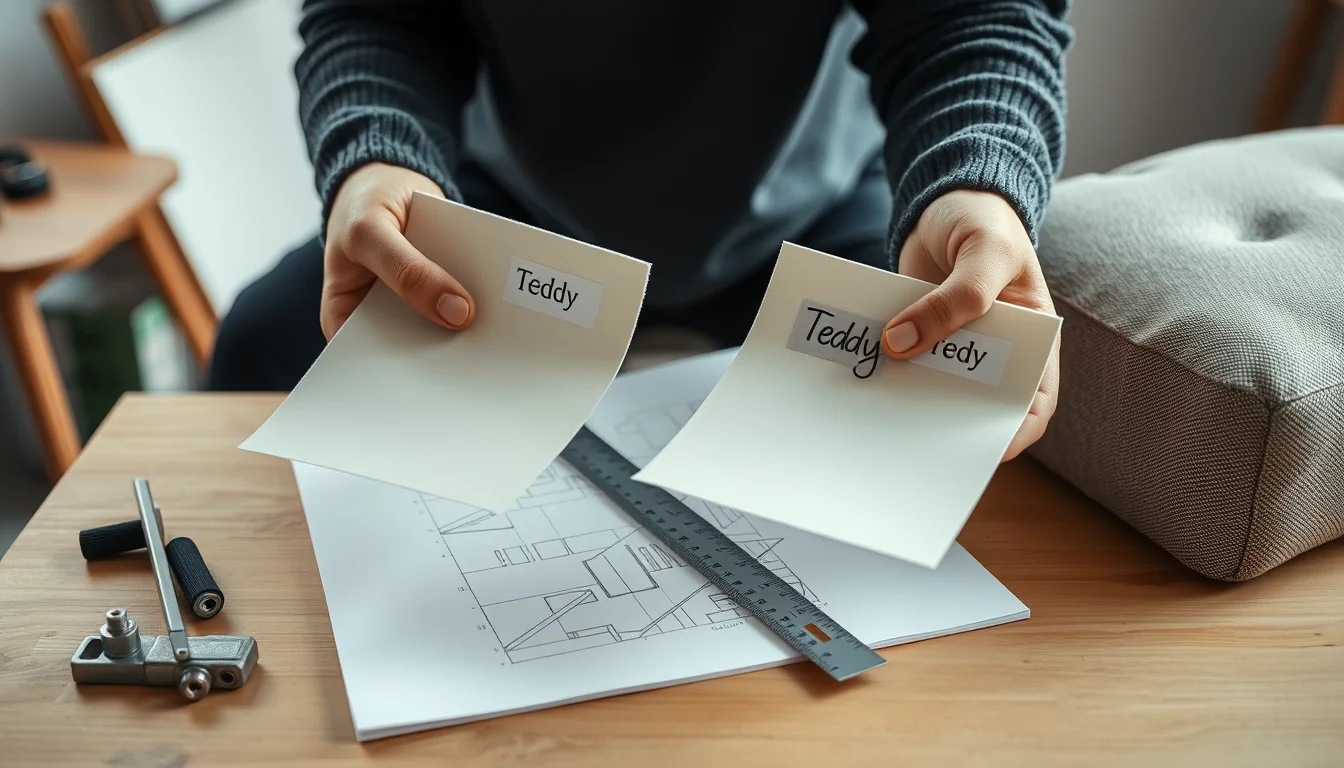
The Tedy also argues that authorship is not exhausted by appearance. Two sofas may share a broad outline while differing in construction, comfort, durability, warranties, repairability, and the conditions under which they were made. A parody can expose that distinction more effectively than a press release defending intellectual property.
This matters because contemporary design culture often confuses recognition with originality. A recognizable silhouette becomes a kind of public property once it circulates widely enough. The Barcelona chair, the Tolix chair, the Arco lamp, and countless Scandinavian-inspired sofas are now surrounded by affordable interpretations. Some reinterpretations are legitimate design evolution; others are opportunistic replicas. The visual field alone cannot reliably tell us which is which. That same tension between iconic form and changing use appears in the Aeron’s evolution as a cultural object in hybrid work.
OMHU’s strategy makes the brand responsible for explaining what lies behind the surface. If the Tedy is deliberately cheaper, the difference should invite scrutiny: What has changed? Are materials different? Is production organized differently? Is the lower price temporary, symbolic, or a challenge to the economics of the original? Those questions create a more useful form of consumer literacy than the usual binary between “designer” and “cheap.”
There is a precedent for this kind of self-conscious branding in fashion, where labels have sold deliberately distressed, logo-heavy, or counterfeit-looking objects to comment on luxury and imitation. In furniture, however, the tactic feels sharper because sofas are large, expensive, domestic objects. A logo can be mocked on a T-shirt; a sofa occupies a room, structures daily habits, and may be expected to last for years. The parody therefore carries material consequences.
At its best, OMHU’s Tedy reframes the original Teddy not as a sacred shape but as a proposition with accountable origins. It tells customers that design value is built through decisions they cannot see at first glance. That is a productive provocation, and one the industry badly needs.
CONTRA: The joke may normalize the very behavior it criticizes
The danger is that parody does not necessarily produce critical distance. It can simply make copying feel fashionable. Once the original brand launches its own dupe, the market receives a seductive message: imitation is not a structural problem but a clever aesthetic position. The copy becomes content, and the ethical distinction between authorized interpretation and unauthorized appropriation gets softened into a branding opportunity.
That ambiguity is especially troubling for independent designers and smaller studios. A global or established brand may have the resources to turn infringement into publicity. A young designer whose first chair is copied by a factory cannot necessarily respond with a limited-edition campaign, third-party distribution, and a media strategy. For them, authorship is not an abstract principle. It is tied to royalties, future commissions, press visibility, and the ability to recover development costs.
OMHU’s move could therefore be read as a luxury version of resilience: if you are powerful enough, turn the attack into a headline. But the fact that one brand can weaponize copying does not make the copy economy fairer for everyone else. It may even teach platforms and manufacturers that imitation is safe as long as it produces engagement.
The campaign also risks confusing critique with complicity. If consumers purchase the Tedy because it is cheaper and amusingly self-aware, many will not treat it as a lesson in authorship. They will treat it as permission to buy the look without asking who designed it or how the price was achieved. Satire has a familiar weakness: the target and the audience do not always share the joke.
CONTRA: Price can erase the argument behind the object

There is a further contradiction in using a cheaper product to discuss copying. Price is not only a marketing signal; it is a material fact with consequences. Lowering the cost can widen access, but it can also intensify pressure on labor, materials, shipping, quality control, and product longevity unless those variables are clearly accounted for. The question of how material choices shape perceived value also animates debates about whether recycled materials can become luxury again.
OMHU’s source context identifies the Tedy as a limited-edition dupe released through third-party websites, but the campaign’s force depends on consumers understanding the terms of that release. Is the lower price a temporary stunt? Does the Tedy share the Teddy’s construction and performance? Is it a separate product, an authorized derivative, or a piece of brand theater? Without precise answers, the parody risks becoming another layer of opacity.
Designers have long used controlled scarcity to create desire. Ettore Sottsass and the Memphis group challenged the seriousness of high design through exuberant, often impractical objects, but their work still entered a market of collectors, galleries, and status. OMHU’s Tedy operates differently: it borrows the language of the mass-market dupe while relying on the cultural attention attached to the original. The cheaper object may be accessible, but the campaign’s meaning is still powered by scarcity, novelty, and insider recognition.
There is also an environmental question. A furniture dupe campaign can generate a second object where the first already exists, encouraging comparison, acquisition, and disposal rather than repair or long-term use. If the industry’s answer to copying is to release more versions, the result may be a faster cycle of visual novelty. The furniture sector does not need another reason to confuse consumption with participation.
Most seriously, the Tedy could let brands claim the moral high ground without changing the systems that make copying profitable. Naming the problem is not the same as protecting designers, enforcing contracts, improving supply-chain transparency, or building durable products. A parody can be an excellent advertisement and a weak intervention.
The real test is what happens after the punchline
OMHU has made a compelling object lesson, but the lesson will be measured by what the brand does next. If the Tedy encourages clearer information about design authorship, production, materials, and pricing, it may become a meaningful precedent. If it merely produces a spike in attention before returning to business as usual, it will be remembered as a particularly elegant advertising stunt.
The furniture industry should resist the temptation to treat the campaign as a simple victory for originality. Originality is not protected by mocking the copy alone. It is protected by making the invisible work legible and valuable: naming designers, paying them properly, documenting manufacturing, supporting repair, and giving consumers enough information to distinguish an authorized interpretation from a parasitic replica.
That is why OMHU’s strategy matters even if it fails. It reveals a market where brands increasingly have to narrate their own authenticity because the image of a product travels faster than its context. The Tedy asks whether design can survive as more than a recognizable contour circulating through feeds and marketplaces. It also asks whether the industry is willing to abandon the comfortable fiction that consumers can be blamed for copying while brands keep exploiting the same visual economy.
Parody may make design culture more transparent, but only if it points beyond itself. Otherwise, the original has not defeated its knockoff. It has simply taught the knockoff how to sell.
When the original turns imitation into a product, does it expose the copycat economy—or give that economy its most persuasive new marketing strategy?
Get the Mainifesto weekly — curated design debates, speculative ideas and the week's best articles every Saturday.
Editorial Perspectives
Questions and counterpoints developed by the Mainifesto editorial desk to extend the discussion.
Perspective 1
If OMHU can turn a familiar silhouette into an affordable, durable sofa, that is useful disruption—not a moral failure. In hospitality, access, lead time, and replacement cost matter more than protecting the aura around an original, and parody makes the value proposition impossible to miss.
Perspective 2
I’m not convinced that labeling a dupe as parody solves the authorship problem; it may simply make copying feel more sophisticated. The real test is whether OMHU is transparent about who designed the original and whether its manufacturing choices deliver comparable durability, not whether the joke is clever.
Perspective 3
This is less a battle between originality and imitation than a lesson in who controls distribution, pricing, and attention. Once the original sells its own copy, it may expose the system—but it also teaches every manufacturer that provenance can be converted into a marketing asset.