

How Old Stations Become New Civic Interiors
PRO: The station as civic common room
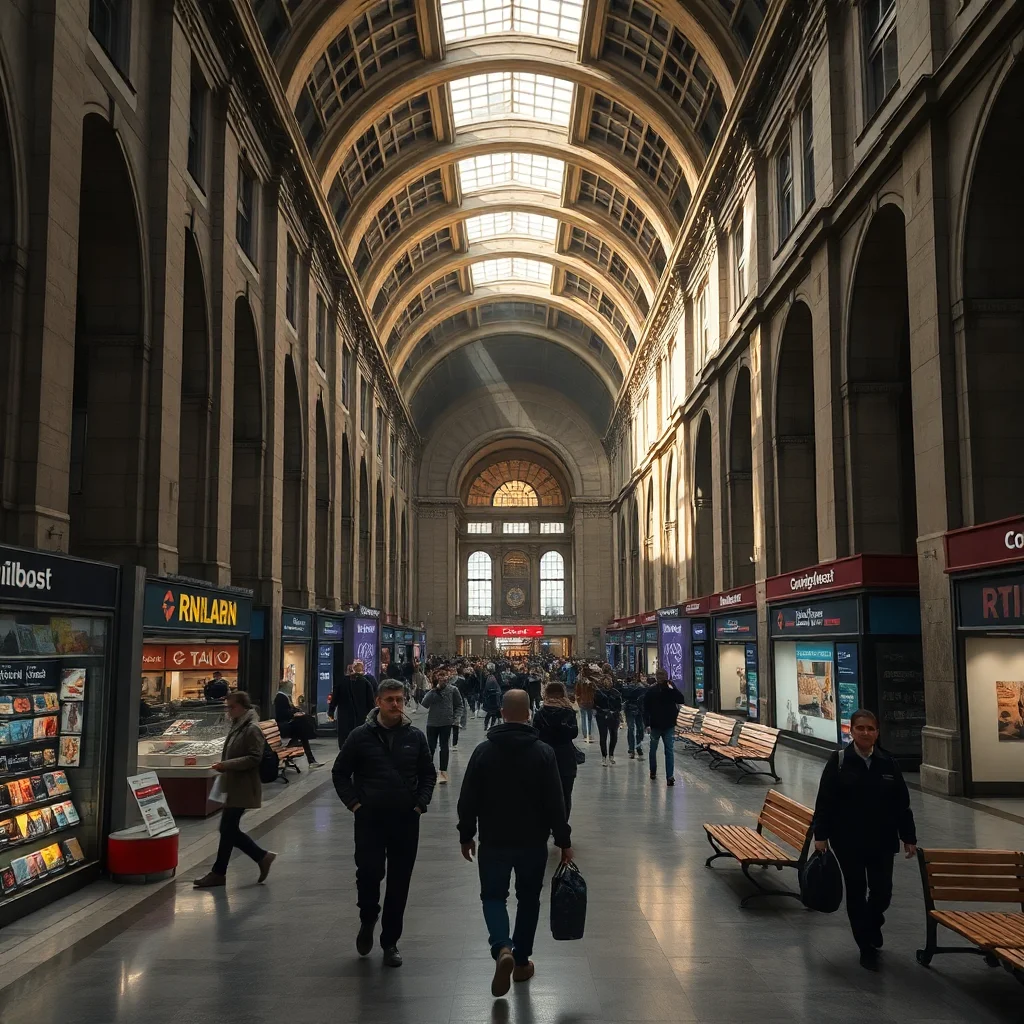
Milano Centrale has always been more than a transport machine. Opened in 1931 on the bones of an earlier station from 1864, it was designed as a monument first and an exchange hall second: a vast fascist-era stage set for power, movement, and national performance. That original ambition is precisely why its reinvention matters now. When Park was selected through a private competition promoted by Grandi Stazioni Retail to redesign the ground floor and mezzanine, the task was not simply aesthetic renewal; it was a test of whether a building engineered to overwhelm can be made legible, usable, and public again.
The strongest argument for reuse is that it can democratize what once felt exclusive by intimidation. A station is already a civic interior in the raw sense: it is where classes, accents, labor, tourism, waiting, and urgency collide. In Milan, the opportunity is to turn monumental circulation into an urban room, rather than a corridor of control. This is the logic behind successful adaptive interiors such as the transformation of old industrial halls into libraries, markets, and cultural venues across Europe: the reuse does not erase history, but it changes who gets to occupy it. A station that once staged authority can, through careful planning, become a place where ordinary life is not merely tolerated but designed for.
Park’s intervention is compelling because it accepts that the station’s scale cannot be “softened” in the sentimental sense. Instead, it must be edited. Contemporary interventions in historic infrastructure often fail when they either over-restore, fossilizing the past, or over-brand, turning heritage into lifestyle scenery. The more radical route is to make the building function better without pretending it was innocent. That means clearer wayfinding, better seating, less friction between flows, and spaces where people can pause without being pushed toward consumption. In an age when many railway stations have become retail atriums with trains attached, Milano Centrale offers a chance to argue for a different model: commerce present, but not sovereign.
TRIGGER: Park’s redesign and the politics of polish
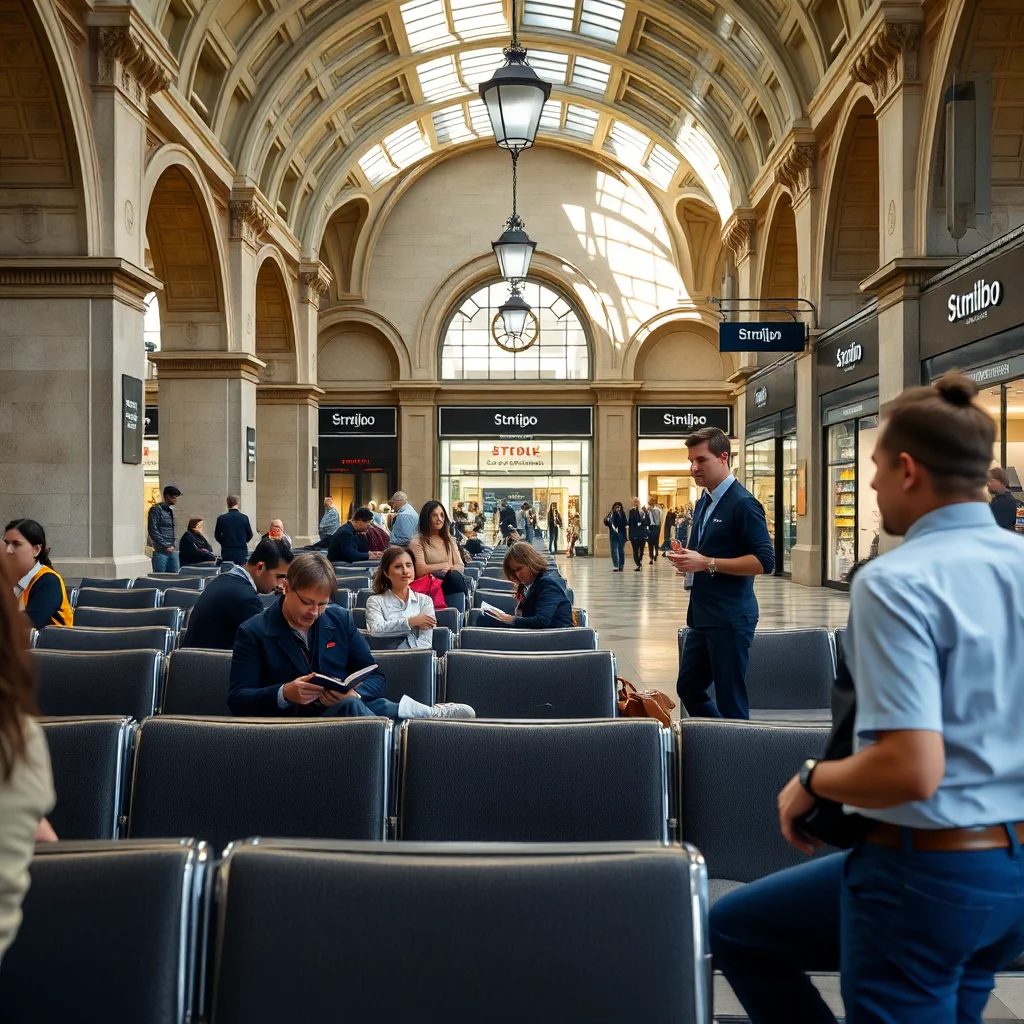
The trigger for this debate is the new interior strategy at Milano Centrale’s ground floor and mezzanine, a project framed as making the station a contemporary urban platform. That phrase sounds benign, but it hides a hard question: what exactly counts as “urban” in a private retail-led station makeover? Too often, the answer is a controlled choreography of surfaces, lighting, concessions, and soft branding that makes public infrastructure feel inclusive while actually narrowing the conditions of use. The building becomes easier to navigate, yes, but also easier to monetize. Its roughness disappears. Its conflict is managed out of sight.
This is not a uniquely Italian problem. Across the world, monumental infrastructure is being recast as civic interior design. St. Pancras in London became a luxury threshold as much as a transport hub. Antwerp Central proves that grandeur can survive utility, but only when maintenance, circulation, and spectacle are held in tension rather than merged into retail serenity. Even less obviously monumental spaces, like train halls reworked by contemporary practices such as AAs Architecture in transit environments or the market-like urbanity promoted in recent station retrofits, show the same risk: the language of openness can conceal a private agenda. The architecture looks public; the lease structure does the real work.
Milano Centrale is particularly charged because its origin is inseparable from authoritarian imagery. The station’s arches, volumes, and ceremonial axis were designed to impress the state onto the body. Reuse here is not neutral conservation; it is an act of political editing. The question is whether editing can become critique, or whether it simply swaps one form of authority for another. If the new interior is polished into a seamless consumption landscape, then the building’s past is not confronted, only varnished. A fascist monument translated into upscale circulation risks becoming a moral laundering device: history retained as atmosphere, stripped of force.
PRO: Reuse can expose history instead of hiding it
Yet the best adaptive interiors do not erase difficulty; they stage it. Think of the way Peter Zumthor’s Kolumba in Cologne lets ruins remain legible inside a new envelope, or how David Chipperfield’s work often treats old fabric as a pressure to be read rather than a nuisance to be concealed. In a station like Milano Centrale, the challenge is similar: preserve the monumental voltage, but redirect it toward contemporary civic life. The most responsible reuse does not apologize for the scale of the original building. It gives that scale a new ethic.
There is a difference between democratizing a monument and domesticating it. Democratization means more than adding seats, shops, and polished surfaces. It means accepting unpredictability: commuters lingering, non-ticketed visitors crossing the hall, younger users occupying the station as a meeting point, not just a transit filter. It means allowing the station to function as a public interior in the fullest sense, where lingering is as legitimate as leaving. This is where interiors become political. The plan, the bench, the threshold, the lighting all determine whether a body is welcomed, tolerated, or subtly expelled.
Milano Centrale’s new life can also be read against the broader Italian tradition of rethinking civic space through infrastructure. From transit-linked piazzas to museumized industrial sites, Italy has repeatedly turned obsolete or compromised structures into urban assets. But the strongest examples avoid the fantasy of purity. They keep the scars visible. They let new insertions remain distinct from the old envelope. If Park’s intervention succeeds, it will not be because it made the station feel “timeless.” It will be because it clarified the difference between the monumental past and the civic present, and used design to make that difference productive.
CONTRA: Retail architecture is not democracy
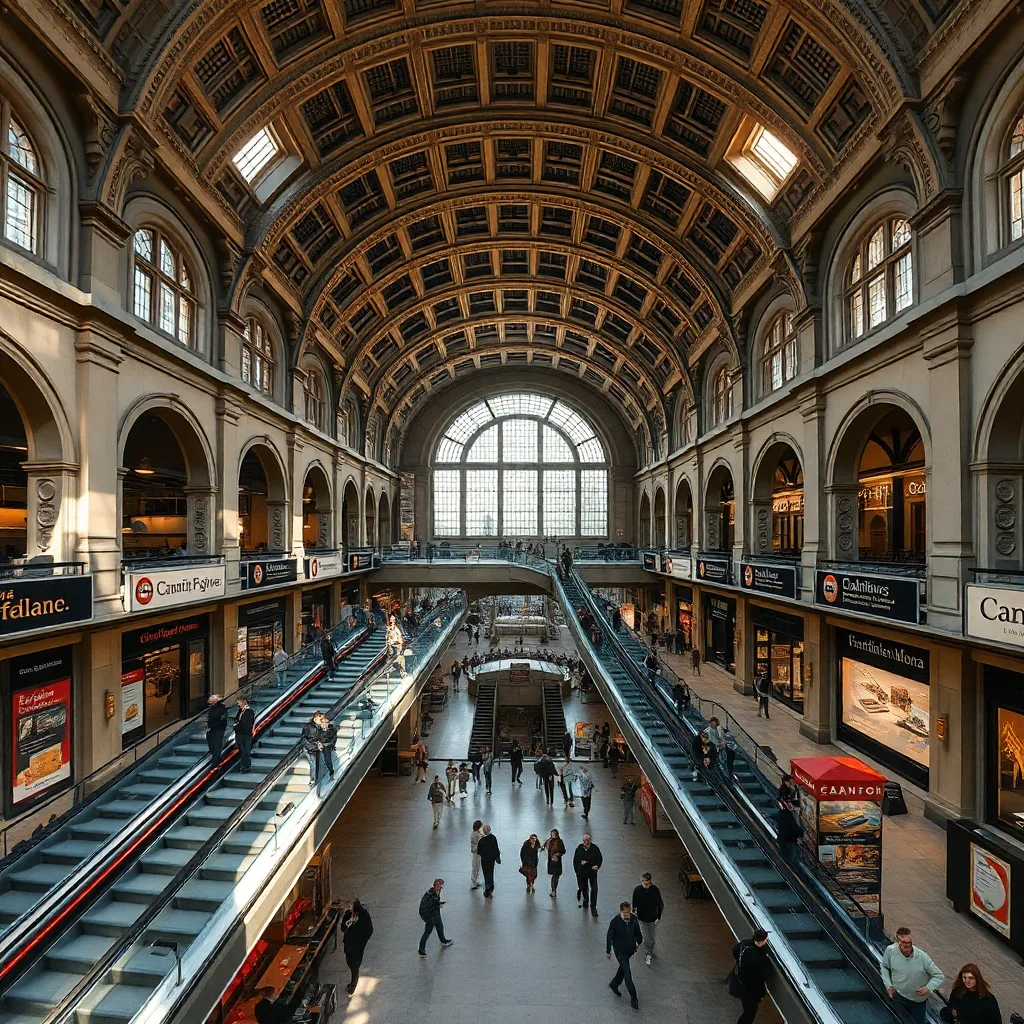
And yet the counterargument is brutal: stations are increasingly being captured by retail logic precisely because that logic is efficient, legible, and profitable. The new public interior is often a privatized one, softened with civic vocabulary. Benches become brand adjacencies, waiting areas become consumption zones, and architecture performs inclusivity while extracting value from attention and movement. Under these conditions, reuse can become a cosmetic upgrade on structural exclusion.
That danger is heightened in a building like Milano Centrale because monumentality itself can be seductive. People mistake grandeur for generosity. They assume that because a space feels impressive, it must also be public-minded. But power has always understood spectacle. Fascist architecture did not need to be comfortable to be effective; it needed to command belief. Today’s polished station interiors can do the same in quieter terms. They do not shout; they curate. They replace coercion with ambience, which is often more persuasive and harder to resist.
There is also a historical ethical problem. When a fascist-era rail monument is recoded as a sleek interior, the danger is not just amnesia. It is conversion: a building once designed to embody centralized authority is reintroduced as evidence of enlightened urbanity, as if design alone had redeemed it. That is a seductive but shallow claim. Adaptive reuse is not moral absolution. If anything, it should sharpen our attention to the continuity between infrastructures of control and infrastructures of convenience. The same hall that once staged state power can now stage market power. The surface changes; the governance may not.
CONTRA: The future of stations depends on who controls them
The deeper issue is not style but ownership. A station can be redesigned to look open while remaining operationally narrow. This is where projects across the world become cautionary tales: when heritage becomes a premium backdrop, the public’s role is reduced to circulation and spending. The lesson from many recent reconversions is that architectural quality is not enough. If access, programming, rent structure, and seating policy are all filtered through private management, then the “civic” interior is a fiction supported by good lighting.
Milano Centrale should therefore be judged by its politics of use, not just by its visual refinement. Does the redesign expand forms of lingering, meeting, and crossing that are not commercially scripted? Does it make the station more readable to first-time users, not only more photogenic to visitors? Does it allow the building’s authoritarian origin to remain present as a critical memory, or does it bury that history beneath the smoothness of premium circulation? These are the real tests. Anything less is decorative governance.
That is why the debate matters beyond Milan. As stations, terminals, and transit halls are increasingly asked to act as urban interiors, designers are being handed a dangerous power: to make extraction feel like hospitality. If reuse is to mean anything progressive, it must do more than preserve envelope and update materials. It must redistribute spatial dignity. Otherwise, old stations will not become new civic interiors; they will become better-lit versions of the same old hierarchy.
What this debate really asks of design
Milano Centrale exposes the central contradiction of contemporary reuse. The case for adaptation is real: why abandon a colossal public room to decay when it can be reprogrammed for collective life? But the critique is equally real: why trust design to civilize what may simply be rebranded authority? The answer lies in whether architecture treats the building as a shared institution or a consumable image.
There is no innocent station interior. Every bench, lease line, escalator, and opening decides who belongs, who waits, who spends, and who passes through. The task is not to make power disappear, because it will not. The task is to make power accountable in public space. Milano Centrale’s reinvention is promising precisely because it refuses the easy story that heritage plus polish equals progress. It forces a harder question: can an architecture born to intimidate be redesigned to host democracy without hiding its past?
If the answer is yes, then station reuse can become one of the most consequential civic practices of our time. If the answer is no, then we are merely learning how to redecorate authority.
FAQ
Q: Why is Milano Centrale such a politically charged building?
A: Because it was built in the Fascist era as a monumental expression of state power. Its scale and ceremonial architecture were never neutral; they were designed to project authority onto daily life.
Q: What makes station interiors different from other adaptive reuse projects?
A: Stations are not just buildings; they are public thresholds where movement, waiting, commerce, and governance overlap. That makes them especially vulnerable to being turned into retail-led spaces disguised as civic ones.
Q: Can design really democratize a historic monument?
A: Yes, but only partially. Design can improve access, legibility, and comfort, but democracy also depends on who controls programming, rents, seating, and access policies.
Q: Is retail always a problem in station redevelopment?
A: Not always. The problem begins when retail becomes the dominant logic, reducing public space to a consumption corridor. Commerce can coexist with civic use, but it must not govern it.
Get the Mainifesto weekly — curated design debates, speculative ideas and the week's best articles every Saturday.

Elena March June 25, 2026
Adaptive reuse can absolutely democratize a place like Milano Centrale, but only if the redesign changes access, not just aesthetics. If the station becomes easier to navigate, more legible, and genuinely usable beyond the ticketed commuter, then it’s doing civic work rather than cosmetic branding.
Helena Lindqvist June 25, 2026
What worries me is that polishing a monumental station often smooths away the rough edges that give it public character. Softer light, better finishes, more retail polish can make it feel welcoming, yes, but also more supervised and less free.
Marcus Reed June 25, 2026
The real test is whether people move through it more easily and stay there for reasons that matter to them, not just because the branding is nice. If the retrofit improves flow, comfort, and commercial performance at the same time, that’s not a betrayal of the monument—that’s a smarter operating model.