
Co-Living for an Aging Society
Between mutual aid and market product
Intergenerational housing is being marketed as the rare urban idea that can do everything at once: ease loneliness, solve affordability, reduce elder isolation, and replace the brittle nuclear household with something kinder, denser, and more social. On paper, it is irresistible. A Sydney high-rise with a clubhouse and church. A Malaysian residence where mahjong becomes the social engine. A new wave of developments that borrow the language of village life while being delivered through the machinery of contemporary real estate. The appeal is obvious, and so is the danger: once care becomes a design feature, it can also become a branding exercise.
That tension is the real story. These projects are not simply about mixing age groups; they are about deciding who is expected to adapt, who gets comfort, and who quietly absorbs the labor of making “community” work. Architecture has always claimed the right to choreograph relationships, but here the stakes are higher. If co-living is sold as a humane answer to demographic pressure, it must be judged not by its slogans but by its daily logistics: who hears the noise, who cleans up, who pays, who has privacy, and who is being gently persuaded to perform sociality on demand.
PRO: The strongest argument for intergenerational housing is that it answers a real social failure with spatial intelligence. Loneliness is not a sentimental problem; it is an infrastructural one, intensified by apartment towers, car dependence, and fragmented kinship networks. In developments such as the Sydney model described by Monocle, the clubhouse and church are not decorative extras but spatial admissions that people need recurring third places inside housing itself. The elderly resident is no longer hidden at the edge of the city; they are placed where life happens.
This matters because many older people do not want institutional care, and many younger households cannot afford conventional family-sized homes. When a building organizes shared kitchens, lounges, gardens, and adaptable rooms around mixed-age occupancy, it can slow the social bleaching effect of standard real estate. It also reassigns dignity to aging: not as decline managed behind closed doors, but as continued membership in a living collective. The best versions of these schemes recall the original promise of cooperative housing and collective living, from early twentieth-century social housing experiments to contemporary mutual-aid models in Europe, where design supports reciprocity instead of isolating it.
CONTRA: Yet the phrase “intergenerational living” can conceal a brutal simplification: if care is embedded in the architecture, the institution may no longer need to pay for care. The model risks turning social contact into an unpaid substitute for staffing, and companionship into a cost-saving metric. A lounge filled with residents of different ages is not evidence of support; it is simply a room. Without trained caregivers, accessible services, and protocols for dependency, the promise of community can become a polite way of offloading responsibility onto neighbors.
Privacy is the first casualty. Elder residents are often asked to surrender autonomy in exchange for activity, while younger tenants are invited to treat age diversity as a wellness amenity. That arrangement can become coercive in subtle ways. The building says: be present, be grateful, be flexible, be social. But aging is not a lifestyle category, and neither is vulnerability. If a resident needs quiet, medication management, assisted bathing, or simply the right not to be sociable every afternoon, then the social architecture must make room for refusal as seriously as it makes room for mingling. Otherwise the project is less a village than an open-plan performance.
Designing contact, not intimacy by force

PRO: The most thoughtful intergenerational projects are not trying to engineer family; they are trying to design chance encounters that do not feel mandatory. This is where architecture can be intelligent rather than sentimental. Shared thresholds, visible circulation, generous seating, and program elements such as libraries, clinics, cafés, and worship spaces can create low-pressure contact between residents who would otherwise remain strangers. The Sydney example, with its clubhouse and church, suggests a building that understands ritual as much as amenity: recurring events create familiarity, and familiarity makes help easier to ask for.
In Malaysia, the image of mahjong in a communal lounge is telling. It is not a “senior activity” packaged for brochures; it is an intergenerational social technology already embedded in everyday life. The most effective co-living schemes often succeed when they are less innovative than they appear, using existing habits—games, meals, prayer, gardening, repair work—as the basis for cross-age reciprocity. In that sense, the architecture is not inventing community out of thin air. It is giving spatial legitimacy to behaviors that already bind people together.
CONTRA: But the industry loves the optics of intimacy precisely because it is easier to market than structural care. A cheerful shared kitchen photographs better than a robust care plan. A child playing near an older adult reads as proof of social harmony, even when the practical realities remain thin. This is the risk of lifestyle branding: it aestheticizes mutual aid while leaving the hardest parts—staffing, maintenance, conflict resolution, disability access, affordability—underdesigned or outsourced.
Architecture magazines should be suspicious of projects that treat community as an atmosphere rather than an obligation. Who cleans the communal spaces after the event is over? Who mediates tensions between different sleep schedules, cultural expectations, or mobility needs? Who has the authority to say no to shared life? If these questions are not embedded into the brief, then the project is performing social inclusion while quietly reproducing hierarchy. The younger resident becomes the flexible participant; the older resident becomes the moral reason for the project’s existence; the developer gets the public-relations dividend.
That is why courtyard housing for density and social repair remains such a useful reference point: it shows how shared space can support everyday contact without pretending every interaction must become intimacy. The lesson is not nostalgia, but calibration—how to make communal life feel optional, legible, and humane rather than compulsory.
What the market gets right, and what it distorts
PRO: To dismiss all intergenerational housing as branding would be lazy. Demography is changing, and housing policy is not keeping pace. Many cities are simultaneously aging, densifying, and becoming unaffordable. In that context, multi-age co-living can be a serious response to underused domestic space, rising loneliness, and the absence of affordable support systems. If properly governed, it can also redistribute everyday competencies: younger residents may help with digital tasks or heavy lifting; older residents may offer continuity, memory, and informal supervision. These exchanges are not sentimental; they are practical, and practical is where architecture has the most credibility.
There is also an environmental argument that deserves more attention. Intergenerational housing can reduce redundant consumption: fewer isolated households, more efficient use of land, shared services, and adaptable units that allow residents to remain in place longer. For older adults especially, “aging in community” can be preferable to relocation into institutions that sever them from place. A well-designed building can support that continuity through universal design, clear wayfinding, acoustic control, and adaptable common areas that shift from quiet mornings to lively evenings without becoming hostile to either.
CONTRA: The market distorts these benefits by converting them into a premium lifestyle category. Once co-living becomes a branded product, it is often priced and curated for relatively privileged residents who can afford novelty, flexibility, and curated sociality. The language of inclusion then masks exclusion. The model may gesture toward “aging society,” but it can easily serve affluent urban consumers looking for a softer, more communal version of the apartment tower.
That is why the question is not whether mixed-age housing is good in theory. It is whether the model is being built as a public good or a private amenity. If it relies on premium services, polished interiors, and controlled social programming, then it is not solving social isolation so much as rebranding it into a desirable experience. The elderly resident becomes a symbol of warmth; the younger resident becomes a prop for vitality; the building becomes an advertisement for ethical urbanism. That is not community. It is atmospherics with a lease.
Seen in that light, the debate overlaps with broader arguments about whether renovation should become the new urban default, especially when existing buildings can be adapted for shared living rather than replaced by bespoke developments. Reuse often makes the politics of care more visible because it has to work with what already exists, not with a clean slate.
Architecture after the family, not before it
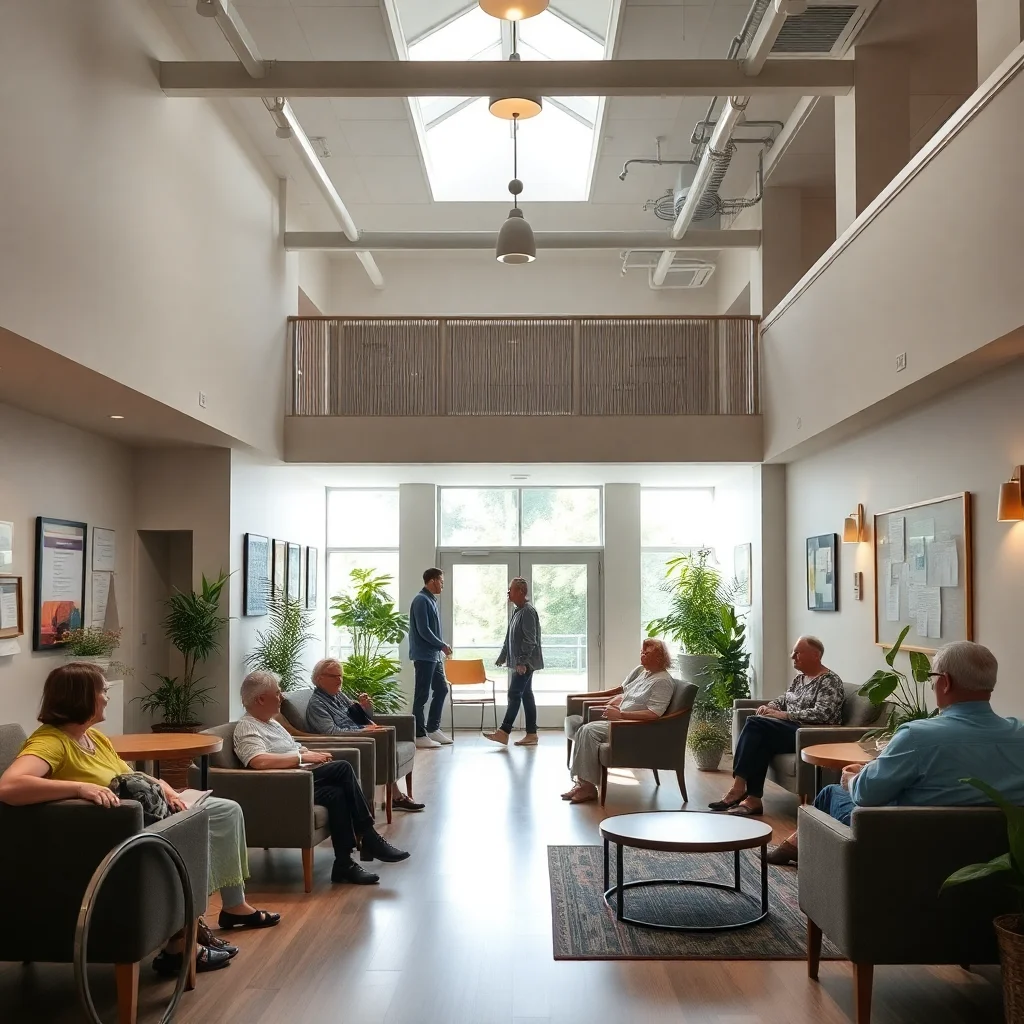
PRO: The most radical promise of intergenerational housing is that it can acknowledge a truth modern architecture often avoids: the traditional family home is no longer the default unit of social life. Single-person households are rising, caregiving is unevenly distributed, and aging is often happening far from adult children. Instead of trying to restore an idealized past, these projects can offer new domestic forms built around proximity without possession. They can make the city legible as a place of encounter rather than isolation.
Designers who take this seriously will move beyond generic communalism. They will think about thresholds, respite, sound, lighting, surveillance, dignity, and the choreography of help. They will distinguish between spaces for celebration and spaces for retreat. They will design buildings that allow interdependence without demanding constant exposure. In other words, they will accept that good community requires friction-management, not just open-plan optimism.
CONTRA: But the deeper critique remains: many of these schemes are trying to solve a social crisis at the level of form, when the crisis is also economic and political. Loneliness, elder poverty, and caregiving strain cannot be resolved by attractive shared spaces alone. If governments withdraw and families are overstretched, then architecture is being asked to perform social repair while real institutions continue to fail. That is too much to ask of a floor plan, and too convenient for the people who benefit from housing as a market first and a service second.
The provocation, then, is not to reject intergenerational housing, but to refuse the comforting story told about it. Mixed-age living can be generous, resilient, and genuinely transformative. It can also be a shortcut: a way of making care look architectural so that responsibility appears solved. The decisive issue is governance, not mood. A building can host connection, but it cannot morally substitute for labor, policy, or rights. If co-living wants to be more than a well-lit illusion, it must put care before branding and privacy before spectacle.
And that is the test every new project now faces: is it building a community, or simply renting out the image of one?
That challenge also echoes the wider debate over whether adaptive reuse can be unlocked by code reform; in both cases, the question is less about aesthetics than about whether regulation, operations, and long-term stewardship can support the social promises made at the design stage.
FAQ
What is intergenerational housing? It is a housing model designed to bring different age groups together in shared or proximate living environments, often with common spaces, social programming, and support services that encourage interaction and mutual aid.
Why is it being promoted now? Aging populations, rising loneliness, housing unaffordability, and the decline of traditional extended-family living have created demand for alternatives that combine social connection with practical support.
What is the main criticism of co-living for older adults? The biggest concern is that it can substitute genuine caregiving with the appearance of community, placing emotional and practical burdens on residents instead of trained staff and robust services.
Can intergenerational housing be truly successful? Yes, but only if it is designed and governed with privacy, accessibility, conflict resolution, affordability, and real care infrastructure in mind—not merely as a marketable lifestyle concept.
Get the Mainifesto weekly — curated design debates, speculative ideas and the week's best articles every Saturday.
Editorial Perspectives
Questions and counterpoints developed by the Mainifesto editorial desk to extend the discussion.
Perspective 1
If the co-living model actually reduces isolation and keeps older residents independent longer, that’s a real product, not just branding. But it has to work like hospitality with a purpose: clear services, measurable outcomes, and no vague promise that community will magically fill the care gap.
Perspective 2
This is what happens when states and municipalities fail to fund housing, care, and transit properly, then call private packaging an innovation. Co-living can be useful, but when it’s sold as care, it usually means responsibility has been pushed onto tenants, families, and a subscription model.
Perspective 3
The distinction is pretty simple: if the project is designed around affordability, accessibility, and actual support services, it’s social innovation; if it depends on branding and soft promises, it’s not. I’d want to see who the residents are, how long they stay, and what happens when they need more care than the operator planned for.
Perspective 4
We have seen this gesture before: architecture dressing up a structural deficit as an attractive lifestyle. The danger is that “community” becomes a decorative alibi for the retreat of public provision, which is a very old trick in a new outfit.