
Adaptive Architecture for Flooded Futures
Water is no longer the exception
Architecture has spent decades pretending that water is a problem to be defended against: a crisis, a breach, an intrusion. But the work emerging from the University of Sheffield’s landscape architecture studio suggests that this logic is already obsolete. In projects responding to Hull’s rising sea levels, Manchester’s “lost water spaces,” and rewilding on Sheffield’s suburban edges, the future is not about sealing cities from water. It is about designing for a condition in which water is permanent, active, and politically loaded.
This is the decisive shift: from resilience as resistance to adaptation as choreography. The old model of flood design relied on barriers, pumps, and heroic engineering, an anxious architecture of exclusion. The new model asks more radical questions. How do urban systems expand, contract, soften, and reconfigure as tides, rainfall, and groundwater move? How do public spaces become seasonal rather than fixed? How do landscapes work as civic infrastructure rather than decorative aftermath?
The most important thing about these student projects is not that they are speculative. It is that they are realistic about the scale of the problem. Cities built on reclaimed ground, canalized watercourses, and industrial terraforming are now living with the consequences of their own historical violence. If architecture remains static, it becomes increasingly irrelevant. If it learns to move with hydrology, it can become something more ambitious: a living interface between human settlement and environmental change.
Hull exposes the limits of defensive design
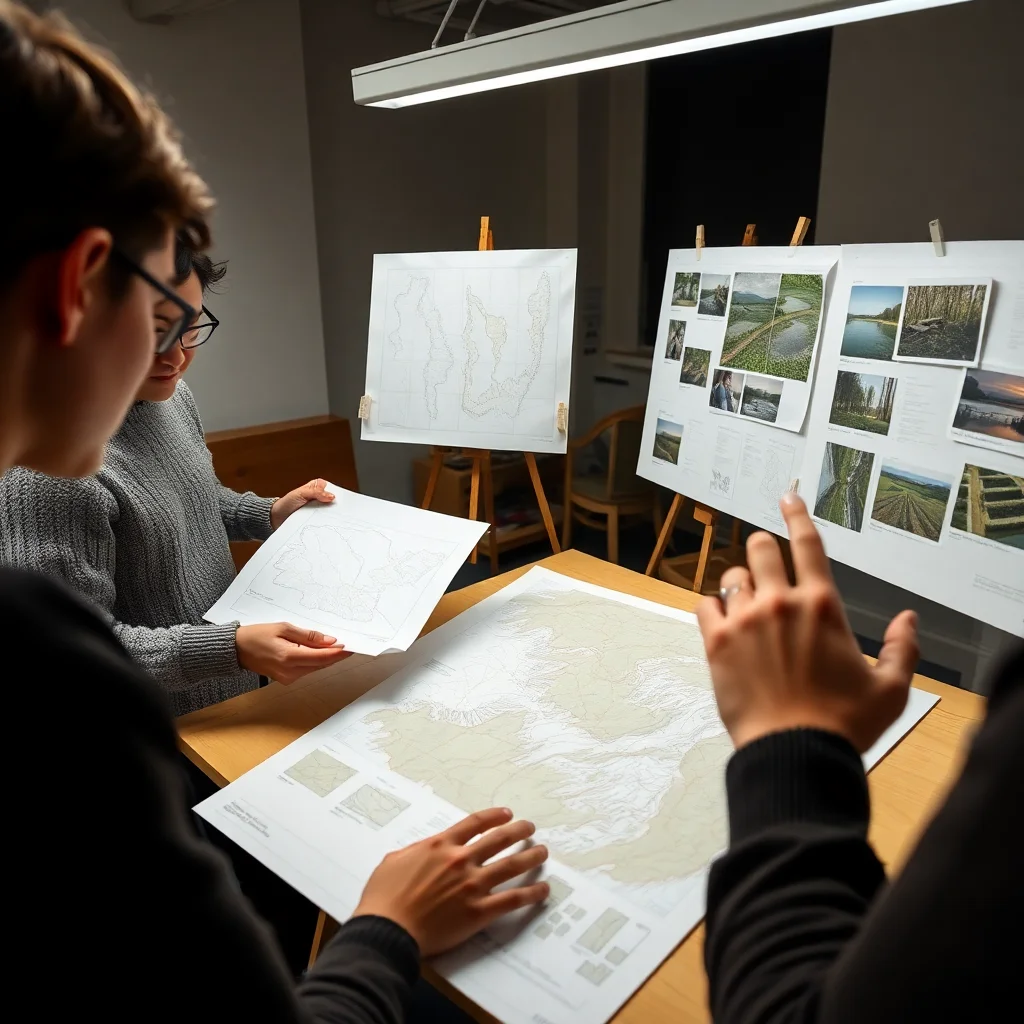
Hull is a particularly revealing case because it sits where multiple vulnerabilities converge: low-lying topography, rising sea levels, and the legacy of engineered land use that made the city legible to industrial modernity but fragile under climate stress. A proposal from the University of Sheffield addresses this directly by reframing flood response as landscape transformation rather than emergency management. That is a crucial distinction. Defensive design tries to preserve the city as it is. Adaptive design accepts that the city will have to become something else.
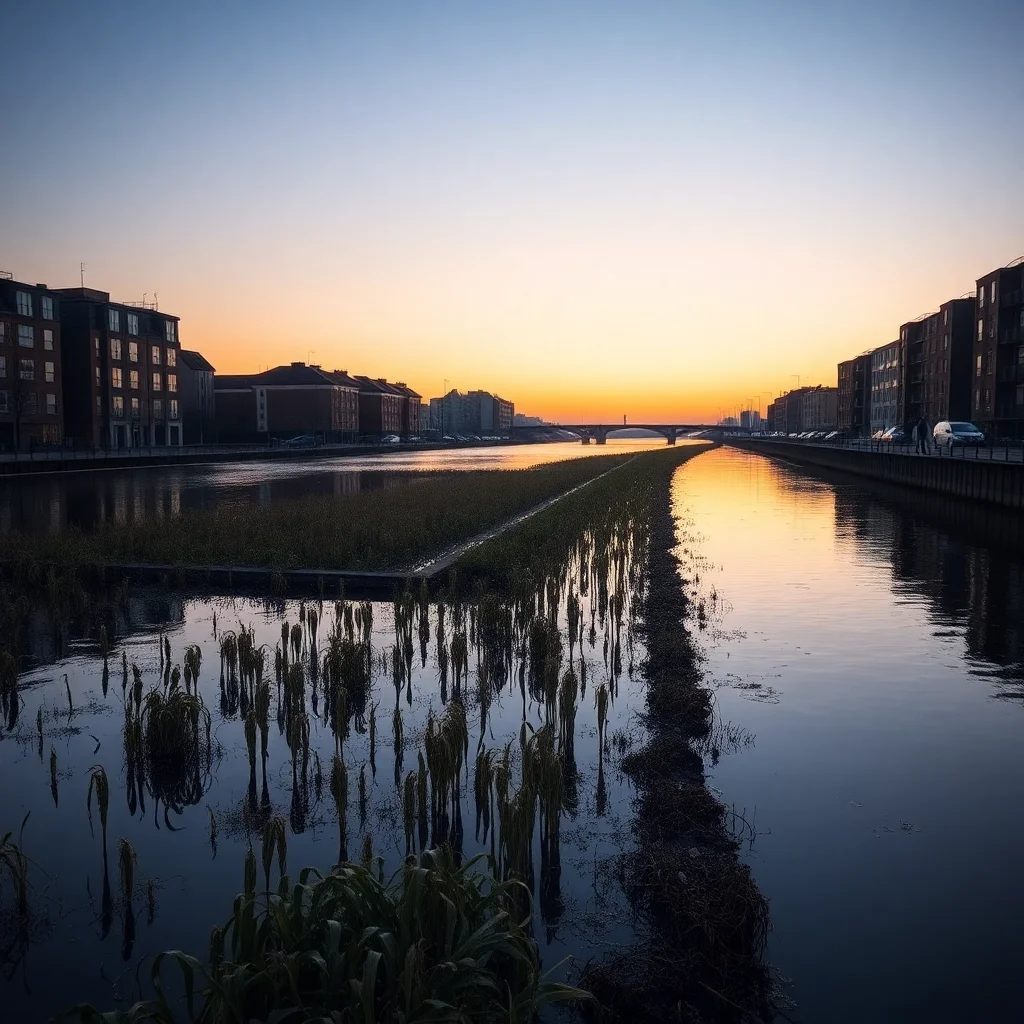
In this context, the question is not whether Hull can be protected indefinitely by higher walls or more aggressive drainage. The question is what kind of urban ecology can emerge when periodic inundation is treated as a design parameter. Think of floodable parks, tidal wetlands, multifunctional embankments, and streets that become channels during peak events. These are not aesthetic gestures. They are infrastructural rewrites that allow urban space to oscillate between everyday use and climatic absorption.
This approach resonates with broader global experiments in amphibious urbanism, from Dutch water squares to floating districts and elevating neighborhoods in Southeast Asia. But the Sheffield proposal is valuable precisely because it refuses spectacle. It grounds adaptation in the specific social and spatial realities of a northern English city whose future depends on making room for water without surrendering civic life to it. That is where adaptive architecture becomes political: it determines who gets access to land, who bears risk, and which parts of the city are allowed to remain visible when the water rises.
Manchester’s lost water spaces are a warning and an opportunity
If Hull shows the pressure of rising seas, Manchester shows the cost of erasing water altogether. The proposal to reinvent the city’s “lost water spaces” is especially provocative because it names a common urban crime: the burial, channeling, and forgetting of aquatic systems in the name of progress. Across many post-industrial cities, water was treated as waste, hazard, or logistics problem. Rivers were culverted, basins filled, floodplains paved over. The result is not dryness, but brittleness.
Reclaiming lost water spaces is therefore not a sentimental act of restoration. It is a strategic act of urban recovery. Such spaces can become a network of climatic buffers, biodiversity corridors, public commons, and new forms of landscape citizenship. In practical terms, that might mean daylighting waterways, reopening drainage ecologies, or converting obsolete industrial ground into terraced wetlands and seasonal parks. In cultural terms, it means admitting that cities have memory, and that hydrology is part of that memory whether planners acknowledge it or not.
This is where the most compelling contemporary landscape work becomes architectural in the fullest sense. It does not simply frame water as scenery. It shapes public life around fluctuating ground conditions. The city becomes less like a machine and more like a negotiated field. This is not an abstract theory of urban softness; it is a direct challenge to the hard surfaces and sealed systems that have defined modern planning. If Manchester can recover its lost water spaces, it can also recover a form of urban intelligence that industrial development suppressed: the ability to live with dynamic terrain rather than overwrite it.
That broader shift is not unique to flood landscapes. Across the field, a growing number of architects are asking whether the discipline should continue to prioritize newness over repair, or whether renovation should become the urban default. In water-sensitive cities, that question becomes even sharper, because the most resilient interventions often begin with what already exists: canals, basins, embankments, and forgotten open ground. Recovery, in other words, is often a form of reuse.
Rewilding is not retreat, it is redesign
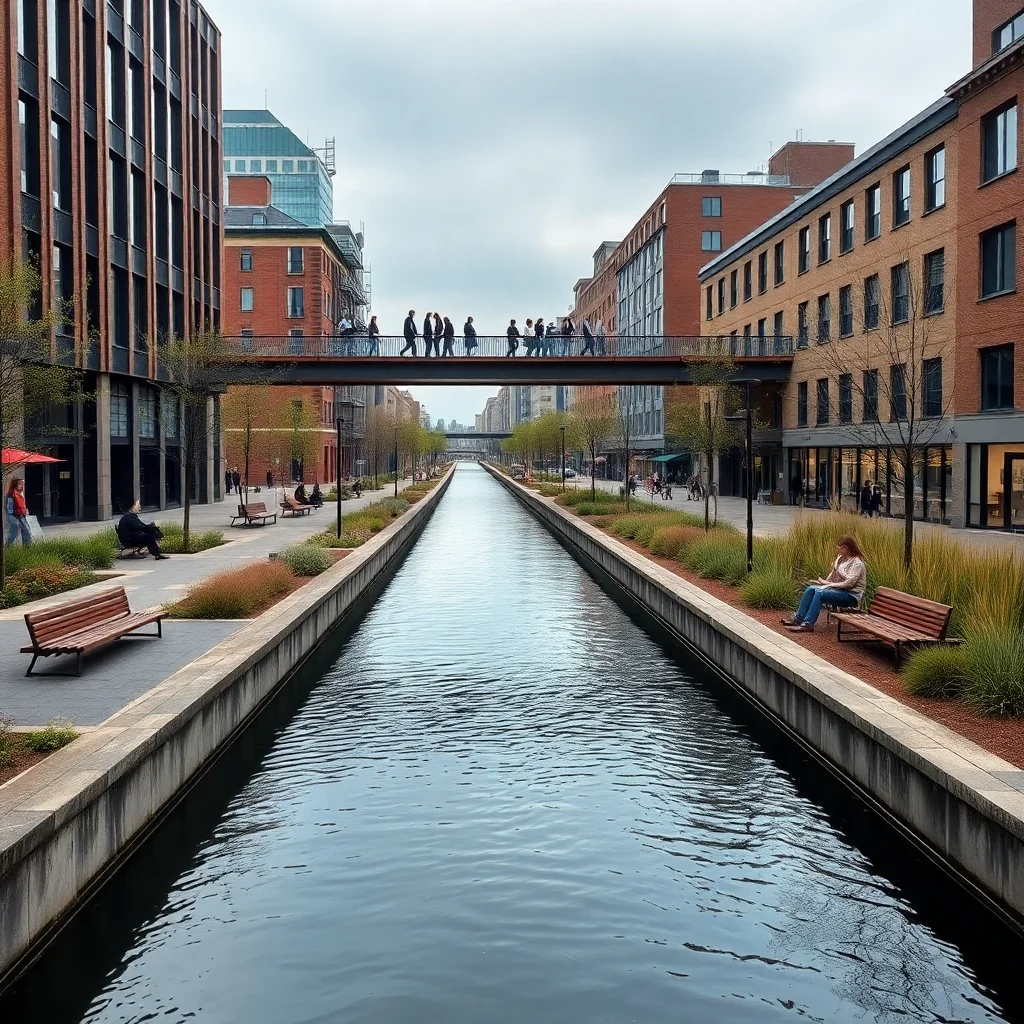
The University of Sheffield’s rewilding project in a suburban area of Sheffield may appear, at first glance, to belong to a different conversation. But it is part of the same architectural argument. Rewilding is often misread as abandonment, as if giving space back to ecological process meant withdrawing design intelligence. In fact, the opposite is true. Rewilding is one of the most demanding forms of design because it requires architects and landscape designers to orchestrate uncertainty rather than eliminate it.
In suburban contexts, where lawns, roads, and low-density development have normalized ecological simplification, rewilding can perform a crucial corrective. It can restore soil permeability, support pollinators, absorb stormwater, and create habitat continuity across fragmented neighborhoods. More importantly, it can recalibrate how residents understand the land beneath them. Instead of an inert surface optimized for ownership and maintenance, the ground becomes active, seasonal, and shared.
This matters to the larger topic because flooding and rewilding are not separate issues. They are linked by the same design failure: the refusal to treat land as dynamic. A rewilded edge, a restored wetland, or a hybrid meadow-park is not just a biodiversity measure. It is a climate infrastructure that reduces runoff, increases retention, and makes room for ecologies that can absorb disturbance. In other words, it is an architecture of coexistence. The future city will not be defended by sterility. It will survive through managed complexity.
From resilient objects to adaptive urban systems
The real paradigm shift suggested by these projects is that architecture can no longer be understood as a bounded object sitting on a stable ground plane. That model belongs to a climate that no longer exists. Rising seas, heavier rainfall, and unpredictable hydrological cycles demand systems that can adjust in time, not just in form. Buildings, landscapes, and public infrastructure must operate together as a single adaptive field.
That means moving beyond the fetish of the “flood-proof” building. Flood-proofing implies finality, a solved problem, a closed system. But water is not solved; it is negotiated. Adaptive architecture accepts this and responds with layered tactics: raised thresholds, sacrificial ground floors, temporary occupation, porous public realm, amphibious edges, and programmable landscapes that can shift function over days, seasons, and decades. The building becomes less like a fortress and more like a mechanism of exchange.
There are already precedents in this direction, from Dutch amphibious houses to floodable parks in Rotterdam and climate-responsive urban masterplans in Asia and the Caribbean. Yet what makes the Sheffield projects significant is their refusal to isolate architecture from landscape. They suggest that the next phase of climate design will not be solved by smarter envelopes alone. It will emerge through urban systems that treat water as a collaborator rather than an enemy. That is a more difficult, more honest, and ultimately more interesting future.
Some of the same thinking is visible in public projects that blur the line between civic event and urban form, especially where temporary occupation reshapes how people use the city. The lesson of those experiments is that space can be activated, not just occupied, which is why ideas like fan zones reshaping civic space matter beyond spectacle. In adaptive landscapes, the comparable challenge is to make water-led change feel like part of daily life rather than an exceptional disruption.
The uncomfortable truth: adaptation changes aesthetics and power
Adaptive architecture is not just a technical adjustment. It changes the visual and political language of the city. Once landscapes are expected to flood, be rewilded, or transform seasonally, the familiar aesthetics of permanence start to look like denial. The pristine plaza, the sealed promenade, the hard-edged embankment: all begin to read as relics of an era that believed control was a design virtue.
But adaptation also raises uncomfortable questions about power. Which districts get protected first? Which communities are asked to tolerate periodic inundation? Who benefits from new wetlands and who loses land value? Adaptive systems can become emancipatory only if they are paired with equity, public access, and long-term stewardship. Otherwise, “living with water” becomes a euphemism for distributing risk downward while wealthier zones stay dry.
This is why the strongest speculative projects are those that connect environmental design to civic justice. They do not offer water as a picturesque backdrop. They insist that hydrology shapes social futures. If cities are entering an era of permanent climate negotiation, then architecture must become more than a specialist service. It must become a public argument about how land, risk, and life are shared.
The Sheffield projects matter because they reject the fantasy of stillness. They propose cities that can change with conditions rather than collapse under them. That is not a modest goal. It is a direct challenge to the entire idea of architecture as static form. The coming task is not to build against water, but to design with it, beside it, and sometimes within it. The question is whether our institutions are brave enough to abandon permanence as an ideal.
Get the Mainifesto weekly — curated design debates, speculative ideas and the week's best articles every Saturday.
Editorial Perspectives
Questions and counterpoints developed by the Mainifesto editorial desk to extend the discussion.
Perspective 1
If water is becoming a permanent condition, then pretending we can fully “stabilize” cities feels more like wishful thinking than planning. The stronger argument here is for systems that can absorb change without failing—public space, utilities, and buildings designed for periodic disruption, not denial.
Perspective 2
This is where architecture needs to stop behaving as if permanence were the only mark of value. Cities have always adapted to flood, drought, and seasonal change; the danger now is using “resilience” as a cover for clearing out neighborhoods and rebuilding them for someone else.
Perspective 3
I’m all for adaptive systems, but the business case matters: if a building can’t handle wetter basements, disrupted access, and higher maintenance, the design is too theoretical. Architecture should still aim for stability where it can, but with enough flexibility that owners aren’t stuck with stranded assets every time the climate shifts.
Perspective 4
From a user point of view, nobody cares whether a building is “resilient” if it’s miserable to live, work, or stay in after the first flood. The real test is whether the space still functions well when conditions change, because guests and tenants notice friction long before they notice the theory.