
Floating Micro-Living as Climate Infrastructure
The home is no longer a fixed object
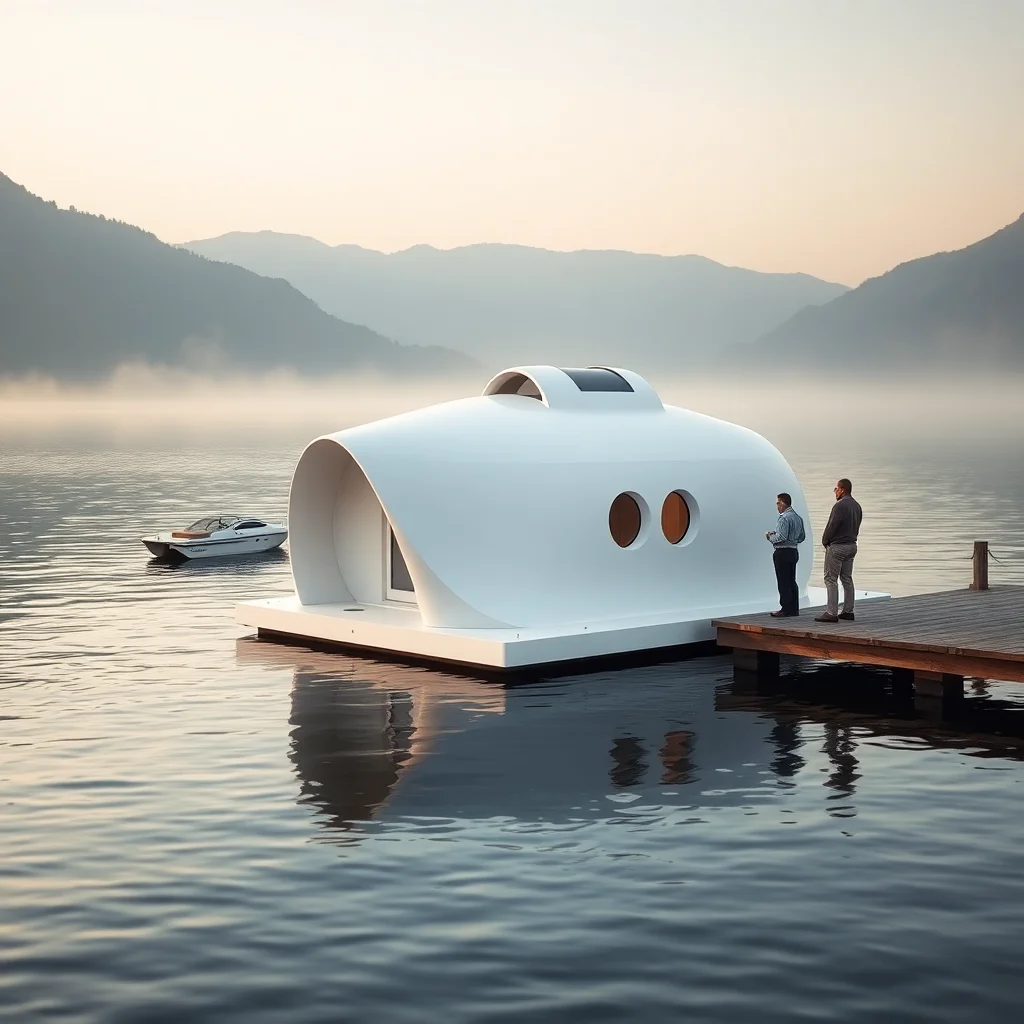
For decades, architecture treated the home as a stable endpoint: a plot, a foundation, a legal boundary, a mortgage. That logic is breaking down. As coastlines flood, land becomes more expensive, and leisure shifts from ownership to access, the smallest dwelling unit is being forced into a larger role. It is no longer just a shelter; it is becoming an instrument of territorial adaptation. The floating, foldable micro-home shown on Lake Como by Lucia UAU Studio is not interesting because it is tiny. It is interesting because it behaves like infrastructure. Its foldable roof, modular interior, recycled materials, and mobility suggest a building that can dock, drift, reconfigure, and participate in a wider system of waterborne living.
This matters because micro-housing has spent too long trapped in two lazy categories: either a cute lifestyle object for the wealthy, or a punitive box for the precarious. The better reading is harsher and more useful. Floating micro-living may be a prototype for the urban future, where housing, energy, leisure, and resilience are bundled together. The question is not whether we should admire the elegance of the object. The question is whether architecture can admit that the ground itself is becoming unreliable.
From novelty to territorial strategy
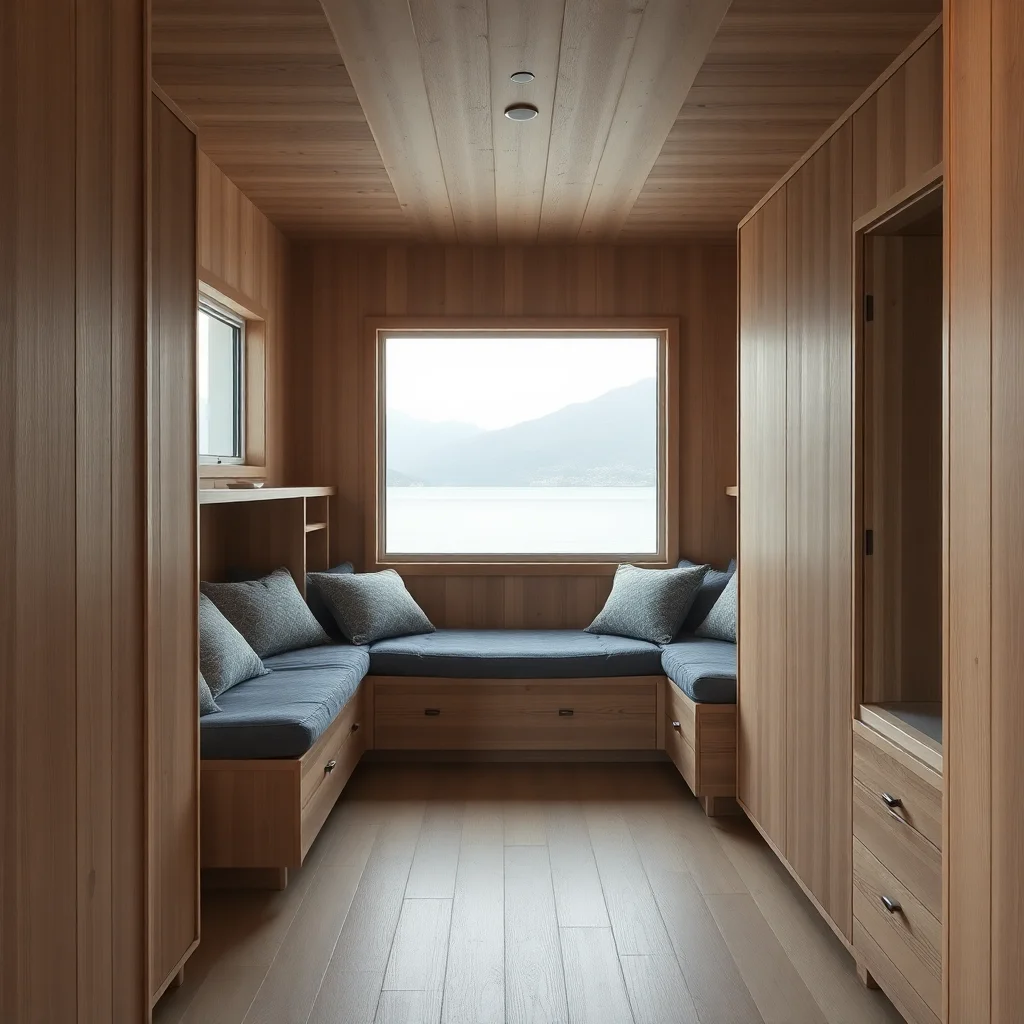
Most tiny homes still behave like consumer products. They are sold as flexibility, independence, or minimalist virtue, but they rarely alter the systems that produce housing scarcity in the first place. Floating micro-homes are different only if they stop being isolated objects and start behaving as nodes. The Lake Como proposal points in that direction: a compact dwelling connected to a broader lakeside infrastructure network, not unlike a mobile platform in a distributed territorial field. In that sense, it joins a lineage of projects that treat habitation as a system rather than a singular building.
Consider the work of Michael Jantzen, whose speculative house systems imagined architecture as changeable, dynamic, and partially mechanized long before modular living became an Instagram genre. Or the floating research homes and amphibious strategies explored by Dutch designers confronting water as a permanent condition rather than an emergency. In the Netherlands, projects by firms like Waterstudio have already argued that living with water requires a shift from defense to accommodation. In Venice, the conversation has become impossible to avoid. In Jakarta, the issue is not theory but survival. In each case, the building is only half the story; the real subject is the territory it can join.
That is why the foldable roof matters. It is not a stylistic flourish. It is a mechanical acknowledgment that the home may need to travel, close, shield itself, and perform differently depending on weather, season, or occupancy. The fold becomes a political gesture: a refusal of permanence in a climate that no longer offers it.
The architecture of mobility is also the architecture of scarcity
There is an uncomfortable truth behind floating micro-living: mobility often arrives as a luxury before it becomes a necessity. Houseboats, floating retreats, and moveable cabins have long been marketed to those who can afford freedom as an aesthetic. The same is true of many micro-homes, which promise liberation while quietly depending on expensive sites, permits, and networks. A floating dwelling on Lake Como carries that contradiction in plain sight. It can be read as leisure architecture for an elite landscape, a soft object drifting in a postcard setting. But it can also be read as a prototype for where scarcity is heading.
The architecture world should stop pretending that these two readings are mutually exclusive. The first wave of climate-adaptive housing often appears where capital is strongest, because that is where experimentation gets funded. Luxury can be the lab. The brutal question is whether the prototypes remain ornamental or become transferable. The history of architecture is full of technologies that began as elite amenities and later became civic standards: elevators, air conditioning, prefabrication, glass curtain walls, even indoor plumbing. There is no reason floating, foldable, modular systems cannot follow a similar path if governments and planners decide to scale them.
That scaling is where the real debate begins. If a micro-home can dock to shared services, share energy and water systems, and occupy temporary water lots or seasonal leisure zones, it stops being an isolated object. It becomes an urban tool. This is where the fantasy hardens into infrastructure.
Recycled materials are not a moral garnish
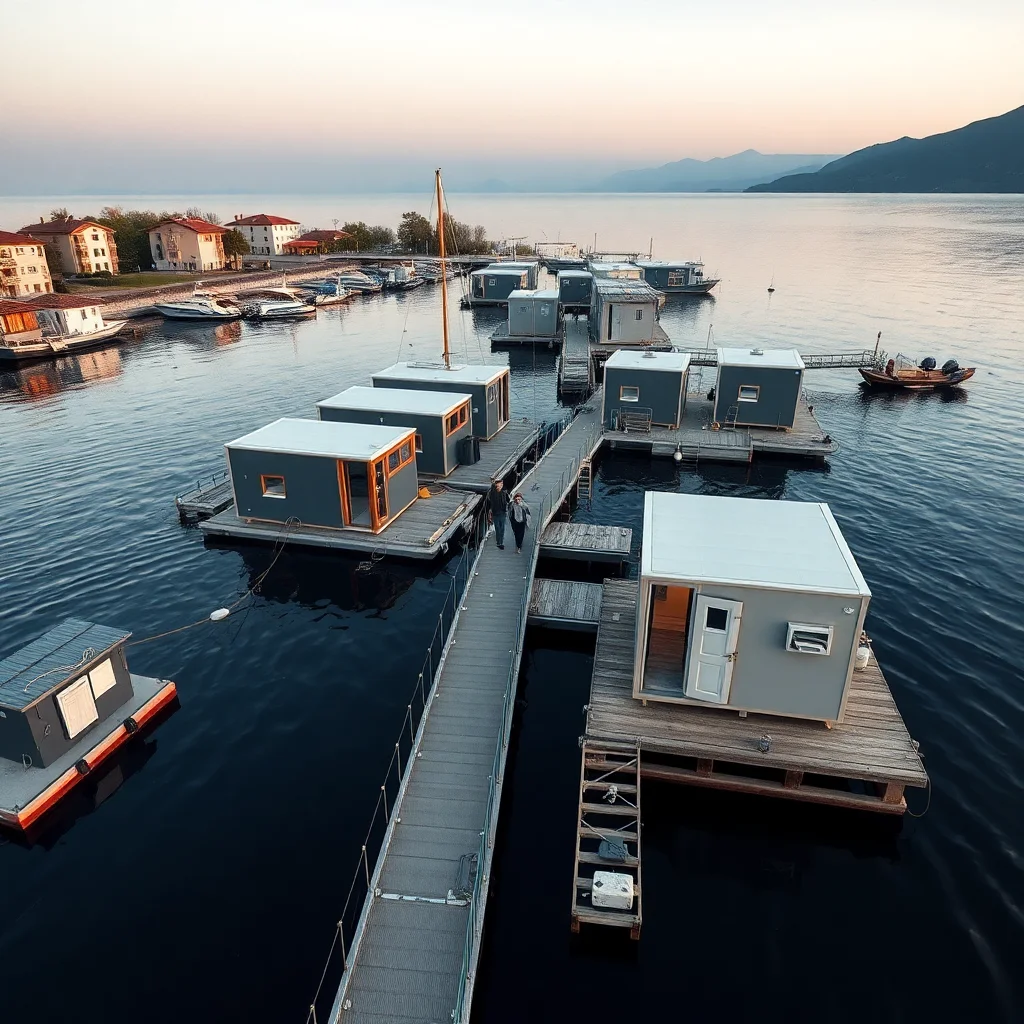
The recycled-materials narrative is often treated as design virtue signaling, a green wash over otherwise conventional development. That reflex is too easy. In climate-adaptive architecture, material reuse is not a garnish; it is a structural necessity. Floating and mobile buildings are under constant pressure from weight, maintenance, corrosion, transport, and embodied carbon. Lightweight recycled components, disassemblable assemblies, and low-impact finishes are not just ethical choices. They are performance requirements.
Here the project’s material logic connects to a larger design conversation. The best contemporary timber and reclaimed-material projects understand that sustainability is not simply about less harm, but about reconfigurable value. Think of the precision of transformable interiors by designers who make small spaces behave like complex machines, or the resourcefulness of adaptive reuse projects in cities where demolition is increasingly indefensible. In the micro-home context, modular interiors are especially important because they allow the dwelling to shift between modes: sleeping, working, storing, hosting, even docking as a service unit.
This is a radical proposition only if one still believes houses must be static containers. But the more urban life becomes fragmented across remote work, seasonal occupation, and hybrid leisure, the more the house must perform like an interface. A floating micro-home is not simply a place to live; it is a device for allocating time, proximity, and environmental risk.
Lake Como is the perfect provocation
Lake Como is an ideal stage for this argument because it is both luxurious and vulnerable, scenic and infrastructural. It is a place of villas, tourism, ferry routes, shoreline politics, and seasonal rhythms. In other words, it is already a managed territorial system, even if it is often presented as pure landscape. A floating micro-home entering that context does not just add a new form. It exposes the fact that water itself can be organized, inhabited, and negotiated through architecture.
That is what makes the project provocative rather than merely picturesque. It suggests a future in which leisure economies and climate adaptation overlap. A home that can fold, float, and relocate may serve the weekend user today and the displaced resident tomorrow. That is not a flaw. It is the point. The same spatial intelligence that makes a compact dwelling desirable in a holiday economy could also make it viable in a crisis economy. The task for architects is to build systems that can survive both markets without collapsing into either exclusivity or emergency theater.
Seen this way, the question is not whether floating homes are escapist fantasies. They are, in part. All speculative architecture begins with a fantasy. The real test is whether that fantasy is disciplined enough to become policy, infrastructure, and everyday use. If the answer is yes, then micro-living is not a retreat from the city. It is a new edge condition for it.
What comes after the tiny house era
The tiny house movement sold moral clarity: live smaller, consume less, own less. But its cultural success also revealed its limits. A tiny house does not automatically solve land inequality, climate instability, or urban fragmentation. It can even obscure them. Floating, foldable micro-living moves beyond that narrative by tying compactness to site, water, mobility, and shared networks. That is a more serious proposition. It accepts that housing must become responsive, not simply smaller.
The next wave of micro-housing will likely be judged by four criteria: can it move, can it dock, can it share services, and can it be repaired or repurposed without waste? If the answer to those questions is yes, then the project is no longer about novelty. It is about resilience. And resilience, contrary to design marketing, is not a style. It is a territorial intelligence.
There is a reason the most interesting new housing ideas increasingly resemble tools, platforms, or systems rather than fixed icons. The climate crisis has made the old architectural fantasy of permanence look naive. The floating micro-home is compelling because it does not deny that reality. It choreographs around it. Whether that becomes a civic model or remains an affluent diversion will depend on who gets to adopt it, finance it, and regulate it next. For a broader look at how cities are shifting from building new to working with what already exists, see Renovation as the New Urban Default.
In the end, floating micro-living is a test of architectural courage. It asks whether we can imagine domestic space as infrastructure without stripping it of dignity, intimacy, or beauty. That is the real challenge now: not to make homes smaller, but to make them smarter about the unstable world they are entering. That same tension between preservation and adaptation also runs through Adaptive Reuse Is Now a Code Reform Fight, where the question is not just what to save, but what rules must change to make reuse possible.
FAQ
What makes a floating micro-home different from a tiny house? A tiny house is usually a compact private dwelling; a floating micro-home can become part of a larger water-based system. Its value lies in mobility, docking, and the ability to connect to shared infrastructure rather than only reducing floor area.
Why is Lake Como a meaningful setting for this kind of project? Lake Como is both a leisure landscape and a managed territorial environment. That makes it a powerful testing ground for architecture that must negotiate tourism, seasonal occupation, shoreline regulation, and climate vulnerability at once.
Are recycled materials just a sustainability trend here? No. In floating and mobile architecture, recycled and lightweight materials are functional necessities because they reduce load, support disassembly, and help lower embodied carbon. In this context, material reuse is structural intelligence, not branding.
Could floating micro-living become a real urban strategy? Yes, if it moves beyond isolated novelty and into networks of shared utilities, planning policy, and adaptable land-water zoning. Without that systems-level support, it remains a speculative object; with it, it can become a legitimate response to water rise and land scarcity.
So are floating homes a retreat from reality, or the architecture of the future’s edges?
Get the Mainifesto weekly — curated design debates, speculative ideas and the week's best articles every Saturday.
Editorial Perspectives
Questions and counterpoints developed by the Mainifesto editorial desk to extend the discussion.
Perspective 1
Floating homes stop being cute the moment you connect them to water stress, coastal retreat, and municipal failure. If they’re treated as a real layer of infrastructure — transportable, repairable, deployable — then yes, they belong in the future’s edges, where cities are already being forced to adapt.
Perspective 2
What interests me is whether these systems can scale without losing adaptability: structure, buoyancy, utilities, and lifecycle all have to work as one. They’re not a retreat if they’re designed as a distributed response to sea-level rise and land scarcity, but then the question becomes who gets access to them and under what governance.
Perspective 3
If floating micro-homes can’t deliver comfort, reliability, and a clear business case, they’ll stay in the concept phase. The future isn’t the romantic edge of the city; it’s whatever can be maintained, insured, and occupied year-round without turning into a headache for operators or guests.
Perspective 4
We have seen this fantasy before: the houseboat, the capsule, the utopian minimum dwelling — always presented as liberation, then folded back into luxury or emergency. Floating homes are not the architecture of the future unless they confront inequality and territorial politics; otherwise they are just another elegantly marketed escape.