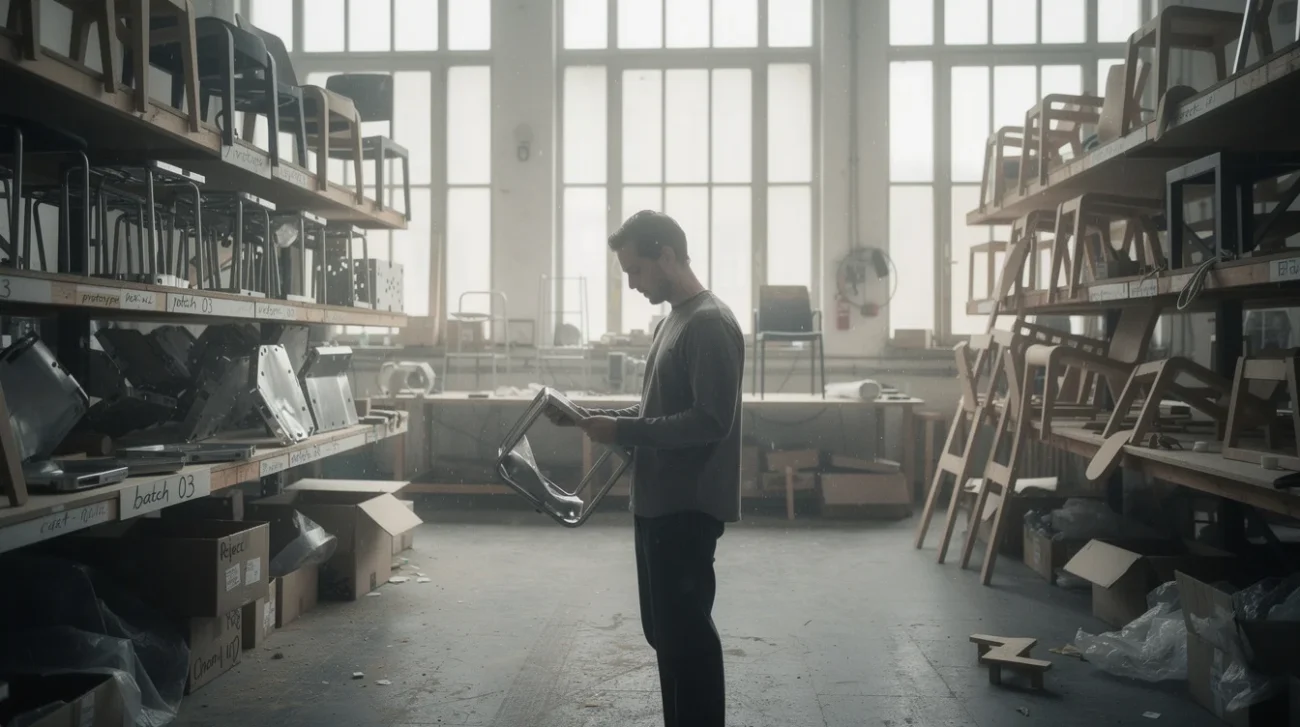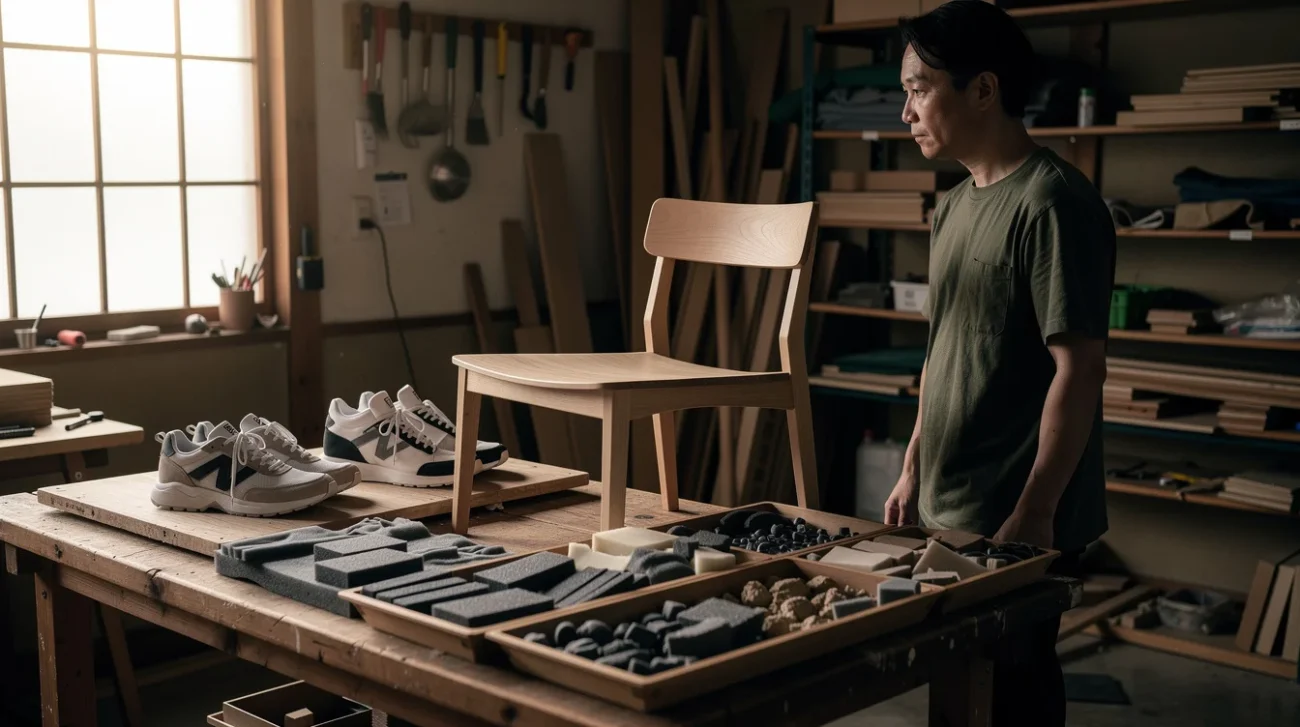

Seaweed Light and Design After Plastic
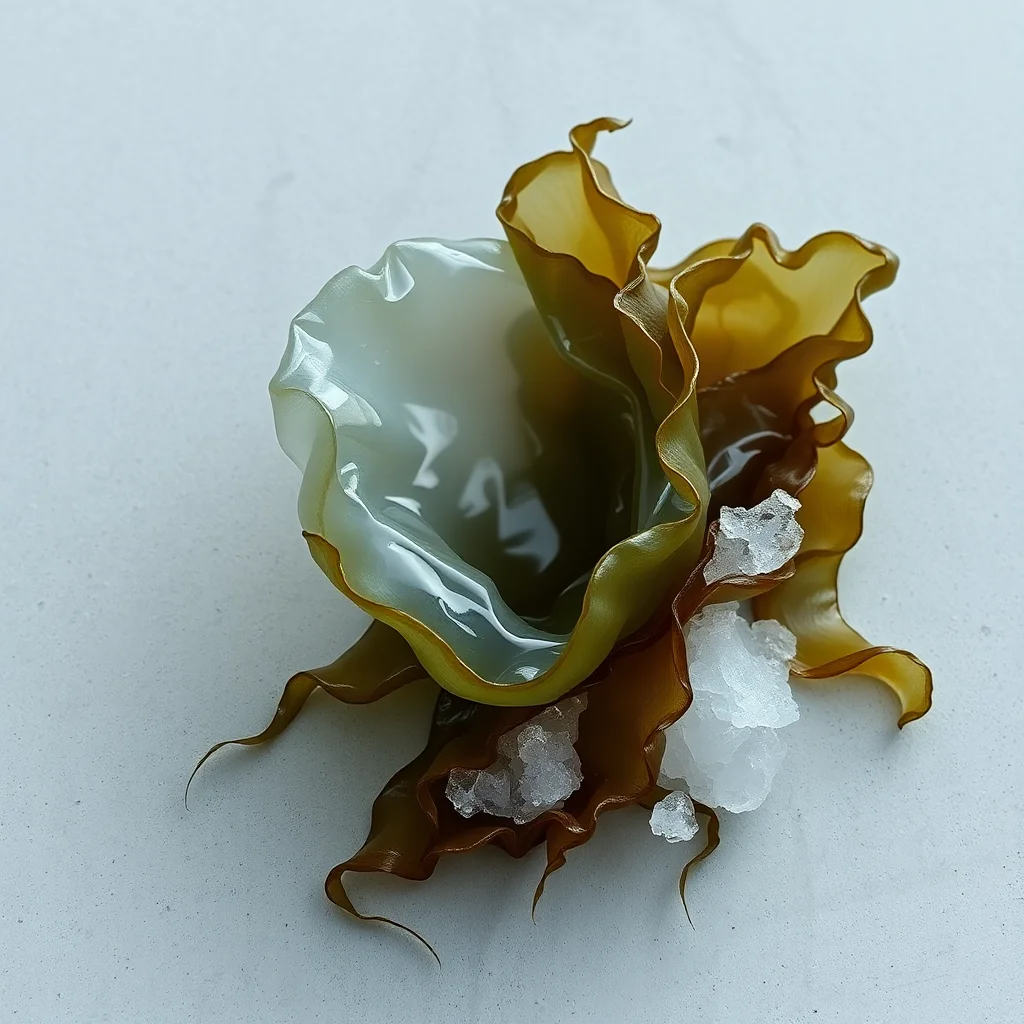
When Light Learns to Die
The seaweed-based light installation is not interesting because it is cute, local, or merely low-impact. It matters because it proposes something much more radical: that a designed object can be valuable precisely because it does not last. In a field trained to worship permanence—shiny polymers, sealed surfaces, long-life warranties, museum-grade preservation—this is a provocation. The work suggests that decomposition is not a failure of design but an authored phase of it. A light that softens, stains, buckles, or returns to the ground is not a broken prototype. It is a complete aesthetic statement.
That shift is bigger than one lamp or one installation. It asks product designers to move from the fantasy of eternal novelty to a culture of calibrated disappearance. Seaweed, cellulose, mycelium, alginate, bioplastics, waxes, salts, and starches are no longer fringe materials for craft-minded experiments; they are the first signs of a post-plastic material language. The key question is no longer whether these materials can imitate the clean reliability of plastic. The real question is whether architecture and product design can learn to value time, fragility, and decay as cultural assets rather than defects.
We already have precedents, though many were treated as curiosities. Neri Oxman’s material ecology projects linked form to lifecycle before the industry was ready to admit that lifecycle should shape form. Formafantasma’s work has repeatedly exposed the politics hidden inside materials, showing that design is never only about appearance but about extraction, maintenance, and disposal. Even earlier, Buckminster Fuller’s “ephemeralization” anticipated a future where less material could do more work. What seaweed-based lighting adds is a shift in emotional register: it does not merely reduce harm, it makes impermanence visible and beautiful.
PRO: Ephemerality as a Design Quality

The strongest argument for short-lived materials is that many of our objects should never have pretended to be immortal in the first place. Packaging, exhibition systems, event lighting, product displays, festival architecture, and seasonal interiors are all already temporary in use, yet they are routinely made from wasteful, stubborn materials that survive long after their usefulness ends. Seaweed-based composites, biodegradable films, and mold-grown structures align form with function: if the object’s life is brief, its material should be brief too. That is not a sacrifice. It is honesty.
This logic is already visible in experimental practices. Oki Sato’s Nendo has often explored poetic reduction, while Studio Swine’s installations have turned transient atmospheres into cultural events rather than liabilities. The now-famous question in biodesign is not only “Can it decompose?” but “Can decomposition be staged?” A biodegradable light installation can cast a glow for a season, then fade into a new state, leaving behind fragments, stains, or compostable remnants as part of its story. That is far more intellectually honest than the standard lifecycle of a plastic object, which usually ends invisibly in landfill, export, incineration, or micro-particles.
There is also a commercial argument, and it is stronger than skeptics admit. Luxury has always traded in controlled rarity. Fashion understands this instinctively: couture is not judged by durability alone, but by the intensity of an encounter and the discipline of its disappearance. Product design could learn from this. Limited-lifetime objects can generate desire through seasonality, renewal, and ritual replacement, much like theater sets, exhibition graphics, or scented candles. If the object is intentionally brief, its value migrates from possession to experience.
Architectural culture has examples too. The Hay Festival structures by Smiljan Radić and the temporary pavilions of the Serpentine have shown that cultural value can reside in an edifice that is not meant to last forever. The danger is when temporary is treated as cheap. The opportunity is when temporary becomes precise. A seaweed light can be engineered with a specific shelf life, a planned end-of-life, and a documented return to the biosphere. That kind of design intelligence is not less sophisticated than permanence; it is more sophisticated, because it includes death.
For designers interested in surface and tactility, this also aligns with the growing interest in texture as a design language. A material that stains, roughens, or dries with time can make aging part of the experience rather than a defect to hide.
CONTRA: The Romance of Decay Can Become a Marketing Trick
But the case for ephemeral design becomes dangerous when it slips into moral theater. Not every biodegradable object is virtuous, and not every short-lived material is genuinely sustainable. Many bioplastics require industrial composting facilities that most cities do not have. Some so-called green materials are only green in the render; in practice they persist too long, break down incorrectly, or rely on land, water, and crops that could be better used elsewhere. The rhetoric of “natural” can become a convenient cover for weak accounting. If the object biodegrades in theory but not in the real world, the gesture is empty.
There is also an aesthetic trap. Designers can become seduced by the visibly fraying surface, the charming brittleness, the Instagram-ready narrative of honest decay. But decay is not automatically ethics. It can become a fetish. A seaweed lamp may look compelling at the moment of launch precisely because its vulnerability reads as moral seriousness, yet if that fragility exists only to produce a lifestyle image, it is not a new material ethic. It is green styling. The design world has been here before with reclaimed wood, raw concrete, and “natural” finishes that concealed expensive, extractive systems beneath a palatable surface story.
The bigger problem is cultural: many products need continuity to function as social objects. Chairs, kitchen tools, medical devices, work surfaces, and domestic lighting are not festival props. They need reliability, repairability, and trust. If biodegradable materials are pushed too far into the realm of everyday infrastructural objects, consumers may face products that are biologically noble but practically useless. A lamp that dissolves at the wrong time is not poetic; it is a defect. Architecture, even more than product design, cannot casually flirt with ephemerality when it is responsible for shelter, climate control, and safety.
Design history offers reminders. The radical experiments of the 1960s and 1970s—Archigram’s inflatable fantasies, the temporary megastructures of speculative architecture—thrilled on paper because they imagined living lightly. But many of those visions were never meant to survive contact with weather, regulation, labor, or maintenance. Today’s biodesign advocates must not repeat that error. A biodegradable material aesthetic after plastic must answer hard questions about performance, repair, supply chains, and disposal infrastructure. Otherwise, the noble object simply relocates its mess.
That tension is part of a wider debate about how objects carry feeling and function, a question explored in the emotional future of desk accessories. In both cases, designers are asked to balance attachment, utility, and the risk of over-promising through form.
Beyond Permanence: A New Material Value System
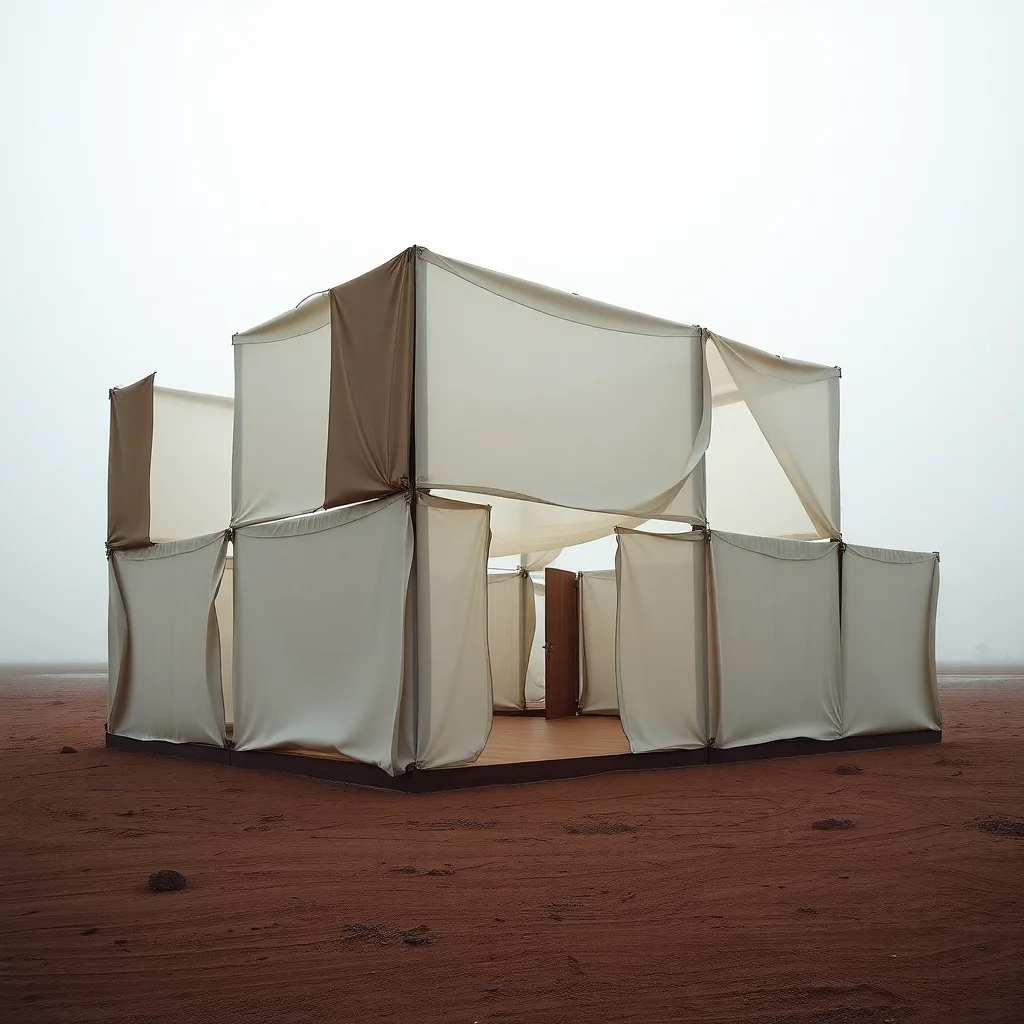
The real challenge is not to choose between durability and disappearance, but to build a hierarchy of lifespans. Not everything should be compostable, and not everything should be permanent. Design is most interesting when it matches duration to use, and most dangerous when it treats all objects as if they deserve the same kind of afterlife. The seaweed-based light installation is powerful because it makes this hierarchy visible. It invites us to imagine a world where a product’s value is measured not by how long it survives, but by how elegantly it fulfills its purpose and exits the stage.
That would require a different business model. Instead of selling permanence, brands might sell seasons, cycles, subscriptions, or return loops. Instead of fetishizing finish, they might document transformation. Instead of hiding breakdown, they might make it part of the ownership experience. A biodegradable object could come with a time-based warranty, a composting pathway, or a return incentive. In this sense, the future of design after plastic may look less like the endless accumulation of stuff and more like a choreography of material events.
Some of the most persuasive work in this direction already operates at the edge between design, science, and ritual. The material explorations of Studio Klarenbeek & Dros, for example, have treated algae and bacteria not as gimmicks but as collaborators. Research-driven platforms like the Material Innovation Initiative and the many biomaterial labs emerging across Europe and Asia are helping push these experiments from novelty toward infrastructure. But the aesthetic leap still matters. People do not fall in love with lifecycle diagrams; they fall in love with objects. If biodegradable materials are to become culturally credible, they must be not only responsible but desirable.
That is the promise of seaweed light: it offers a language for elegance after plastic. It says the future does not have to be polished, permanent, and petrochemical to be aspirational. It can be soft, damp, composite, edible in principle, and destined to change. The point is not to abandon design ambition. The point is to stop confusing ambition with longevity. In a post-plastic culture, maybe the most advanced object is the one that knows when to disappear.
This shift also echoes broader experiments in material revaluation, including projects that rethink craft and legacy through design, such as when heritage becomes furniture. Both cases ask what happens when an object’s meaning comes less from permanence than from transformation.
FAQ
What makes seaweed a serious material for product design? Seaweed is fast-growing, renewable, and can be processed into films, gels, and composites with tactile and visual qualities that suit lighting, packaging, and temporary objects. Its value lies not only in sustainability but in its ability to support a new aesthetic of softness, translucency, and controlled decay.
Can biodegradable materials really replace plastic in everyday products? Not universally. They are best suited to objects with short or clearly defined lifespans, such as packaging, event design, interiors, and certain decorative products. For high-stress, long-life applications, durability, repairability, and regulatory performance still matter more than biodegradability alone.
Is intentional impermanence a luxury-only strategy? It can be, but it does not have to be. Luxury brands may adopt it first because rarity and seasonality fit their business logic, yet public-facing institutions, festivals, and civic projects can also use ephemeral materials responsibly when the lifecycle is planned and the infrastructure exists.
What would make biodegradable design credible rather than performative? Clear end-of-life pathways, honest performance data, local composting or recovery systems, and a refusal to overclaim. If a material is marketed as biodegradable, it should actually degrade in the conditions users can access—not only in ideal laboratory scenarios.
Watch the Mainifesto Short
Get the Mainifesto weekly — curated design debates, speculative ideas and the week's best articles every Saturday.
Editorial Perspectives
Questions and counterpoints developed by the Mainifesto editorial desk to extend the discussion.
Perspective 1
Permanence shouldn’t be the default if the whole lifecycle is designed honestly from the start. But the real test is whether these materials can age in a way that’s safe, legible, and maintainable in public space, not just poetic in a studio prototype.
Perspective 2
I’m interested if short-lived materials actually improve the guest experience, not just the narrative around it. If a seaweed light gives a space a distinct identity and can be replaced without drama or huge cost, then permanence is less important than clarity of use and value over time.
Perspective 3
Permanence is still the sensible default for most buildings, because replacement has a cost and clients notice it fast. That said, I can see the case for temporary or biodegradable elements where the function is seasonal or the waste stream is the bigger problem.