
A Better Kitchen, but Whose Investment?
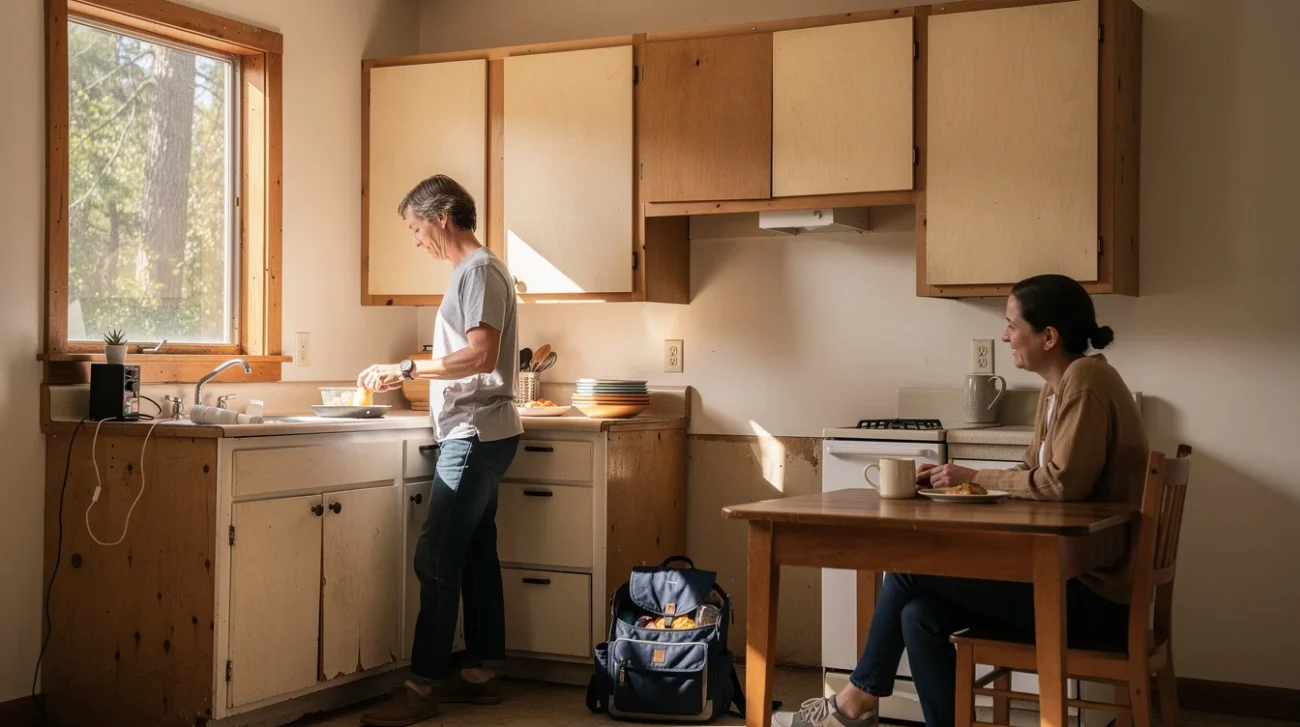
A Better Kitchen, but Whose Investment?
A kitchen can belong to your daily life without belonging to you. That distinction becomes painfully concrete when you pay to improve it. In a rented 1928 home in Topanga, Isabelle Elsliger-Garant and Mason St. Peter refaced their kitchen cabinets with plywood in a $1,200 makeover. Dwell’s account frames the designer-and-architect household’s regret simply: they wished they had done it sooner.
It is an appealing verdict, and an incomplete investment analysis. The household gets a better room now; whatever stays behind becomes part of someone else’s property. Those benefits can coexist without being equivalent.
The argument for tenant-funded design is that life should not be postponed until ownership. The argument against it is that renters should not have to subsidize the quality of an asset they cannot keep. Between those positions sits a neglected design document: an agreement about reimbursement, removal and what happens to the improvement when the tenancy ends.
PRO: Comfort Is a Return, Not a Consolation Prize
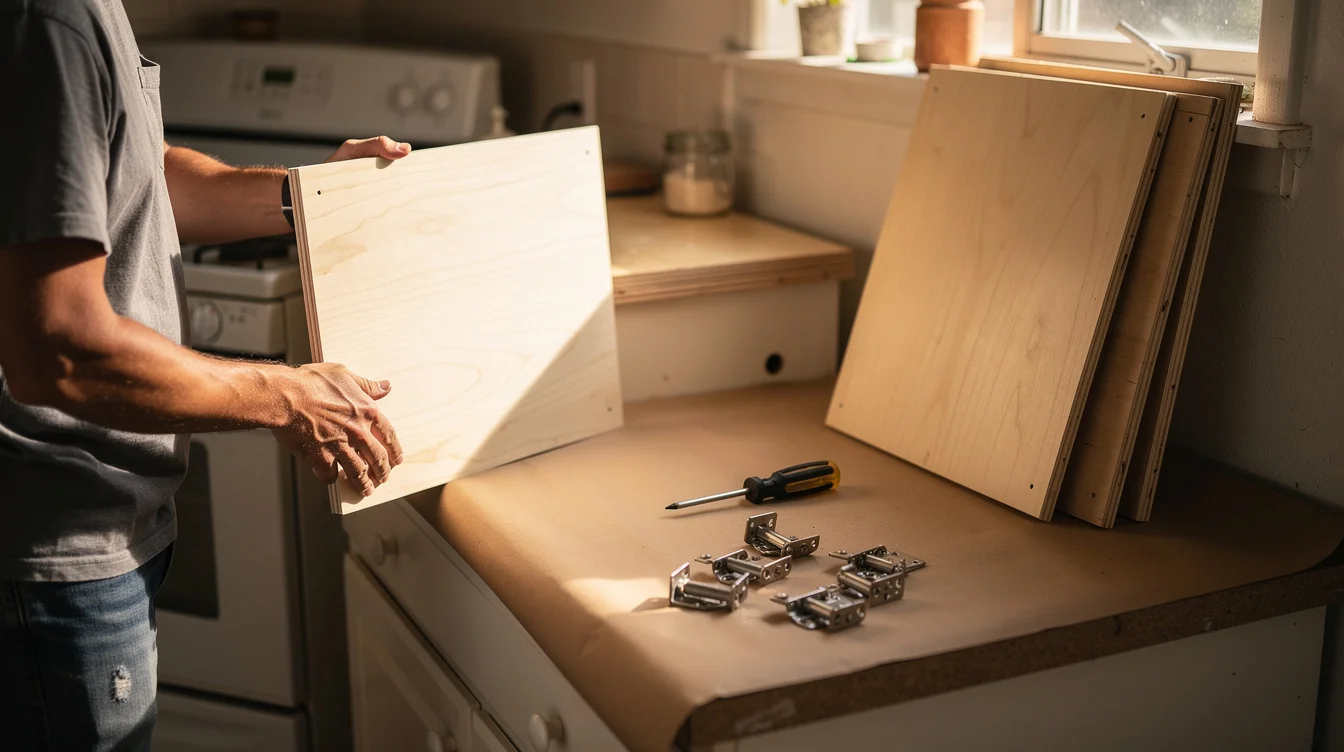
The strongest case for the Topanga makeover begins with the kitchen rather than the property market. Cabinet fronts occupy a large part of a small room’s visual field. Changing them can alter the experience of making breakfast, washing dishes and gathering at the counter without replacing the entire kitchen. This is a targeted intervention, not a demand that a rental become a bespoke architectural commission.
Plywood also belongs to a design tradition that refuses to equate dignity with expensive finishes. Enzo Mari’s 1974 Autoprogettazione offered instructions for furniture assembled from ordinary timber. Its relevance here is not that the Topanga cabinets reproduce Mari’s work; it is that useful, expressive domestic design need not wait for either luxury budgets or industrial perfection.
A renter’s expenditure can therefore be understood as consumption with lasting daily benefits, not merely as a failed attempt to accumulate equity. Spread over five years, $1,200 is $20 a month, excluding labor, tools, maintenance and any eventual restoration. Over one year, it is $100 a month. Duration changes the proposition dramatically, but neither calculation makes the pleasure imaginary.
We readily accept spending on meals, travel and furniture that depreciates. Treating every dollar spent on a rented interior as a financial mistake imposes a peculiar austerity on people who do not own homes. A good room is something to inhabit, not only something to resell.
PRO: Permission Can Enable More Intelligent Design
There is also a practical architectural argument for letting tenants make modest changes. The person who opens a drawer every morning often understands its failings better than the person who owns the building. A landlord may see serviceable cabinetry; a resident sees the door that clashes with the dishwasher, the awkward handle or the surface that makes an already dim room feel darker. These are hypothetical examples, not reported defects in the Topanga kitchen, but they explain why resident-led design matters.
N. John Habraken’s Supports, first published in Dutch in 1961, challenged the separation between housing provision and inhabitants’ agency. His distinction between collective building frameworks and changeable dwelling interiors remains useful: ownership need not be the sole qualification for shaping domestic space.
On this side of the argument, landlord permission can be enough for a tightly bounded intervention—provided the renter knowingly accepts the cost, the scope is clear and the consequences at departure are understood. Not every new cabinet face needs a complex valuation exercise. A simple written approval may be proportionate where the expense is manageable and no reimbursement is expected.
The environmental case reinforces this restraint. Refacing usable cabinets can retain more existing material than replacing whole units, although the outcome depends on what is removed, how replacements are made and what happens later. The best rental upgrade may be the one that changes the experience most while disturbing the building least. That is architectural intelligence, not a second-best substitute for ownership. A related tension between preservation and adaptation arises when the furniture itself is treated as heritage: retaining what exists must still leave room for daily life.
CONTRA: Permission Is Not an Economic Agreement

Now reverse the view. Approval answers whether a tenant may proceed. It does not necessarily answer who owns the installed components, whether they must be removed, whether the deposit is exposed to restoration costs or whether any payment is due when the tenant leaves. A pleasant email saying “looks great” is a weak foundation for resolving those separate questions.
The Frankfurt Kitchen, designed by Margarete Schütte-Lihotzky in 1926 for municipal housing in Frankfurt, treated the kitchen as part of housing provision rather than a decorative problem each resident should solve alone. Its tightly prescribed layout deserves scrutiny, but the underlying allocation of responsibility matters: domestic functionality was a subject for the housing system.
Tenant-funded improvements can quietly reverse that principle. The resident supplies money, coordination and sometimes skilled labor; the owner may retain an attractive interior without commissioning it. The Topanga budget does not, by itself, reveal the household’s total labor contribution or establish any increase in the property’s market value. Nor does the available source context establish the terms of their landlord agreement. Those unknowns should prevent speculation about this particular landlord—not prevent examination of the arrangement.
The unfairness is not that an owner might benefit. It is that the benefit can be left unpriced while the renter’s obligations remain enforceable. An unexpectedly short tenancy could turn a satisfying five-year expenditure into an expensive brief encounter with a kitchen the tenant improved but cannot use.
CONTRA: Design the Exit Before the Cabinet Fronts
The answer is not to ban renter ambition. It is to make the departure scenario part of the design brief. Before work begins, a proportionate written agreement should identify the approved alterations, who pays, what happens to original components and whether the finished work stays or goes. It should also distinguish elective improvements from repairs the landlord is already responsible for under applicable law.
Reimbursement need not pretend that every improvement produces an equivalent rise in property value. Cost, usefulness and market value are different quantities. One possible arrangement is a landlord contribution toward approved materials. Another is an agreed rent credit. A third is a declining reimbursement schedule if the owner ends the tenancy early under specified circumstances. For example, a negotiated $1,200 allowance spread over 60 months would leave $720 unamortized after 24 months. That is a contractual formula, not an appraisal or an automatic legal entitlement.
Removal needs equal precision. A plywood panel may be unscrewed, but that does not make the whole intervention consequence-free. Can the original fronts be reinstalled? Who stores them? Who repairs fixing holes? Will the replacement fronts fit anywhere else?
Habraken’s adaptable interior becomes genuinely empowering only when technical reversibility meets contractual clarity. Local tenancy rules and lease terms vary, so substantial work may warrant advice from a tenant organization or qualified lawyer. Permission opens the door; an agreement decides who carries the cost after it closes. That distinction deserves as much attention as the plywood grain.
FAQ: What Renters Should Settle Before Renovating
Is landlord permission enough for a tenant-funded kitchen renovation?
Permission may establish that the work is authorized, but it does not necessarily settle reimbursement, removal, ownership of installed parts or restoration. Record those points separately in writing. The appropriate detail depends on the project, lease and local law.
Should a landlord reimburse the full cost of new cabinet fronts?
Not automatically. A personal aesthetic preference differs from a necessary repair or an owner-requested upgrade. Negotiate the contribution before spending, using an agreed scope and budget rather than assuming the material cost equals the value added to the property.
Can renters take their improvements when they leave?
Sometimes, but neither purchase receipts nor removable fixings settle the issue alone. Lease terms, local rules and the nature of the installation matter. Agree on removal rights, storage of originals and the required condition of the kitchen at handover before beginning.
How can a small rental makeover remain financially sensible?
Choose a budget you can tolerate over a shorter-than-expected stay, include labor and restoration costs, and favor components with realistic reuse potential. If the project only makes sense after many years of occupancy, seek stronger contractual protection or reduce its scope.
If a tenant pays to make a rental more desirable, where should their responsibility for enjoying the present end—and the landlord’s responsibility for paying for what remains begin?
Get the Mainifesto weekly — curated design debates, speculative ideas and the week's best articles every Saturday.
Editorial Perspectives
Questions and counterpoints developed by the Mainifesto editorial desk to extend the discussion.
Perspective 1
If a landlord keeps a useful, durable improvement, they should share its cost—not merely give permission to install it. Agreeing on a rent credit or reimbursement before work starts makes more sense than leaving the tenant to argue about added value when they move out.
Perspective 2
I wouldn’t make landlords pay for upgrades they didn’t commission: a tenant’s better-looking kitchen isn’t automatically a return on investment for the owner. If that $1,200 makes daily life better, that’s a legitimate purchase—but unless you negotiate otherwise upfront, treat it as spending, not equity.
Perspective 3
I’d want to know what the $1,200 bought: a finish that peels near the sink is a different proposition from carefully fitted cabinetry. Tenants can take good handles and freestanding pieces with them; durable work that stays behind deserves a written agreement about payment, not just permission.