
The New Public Utility Aesthetic
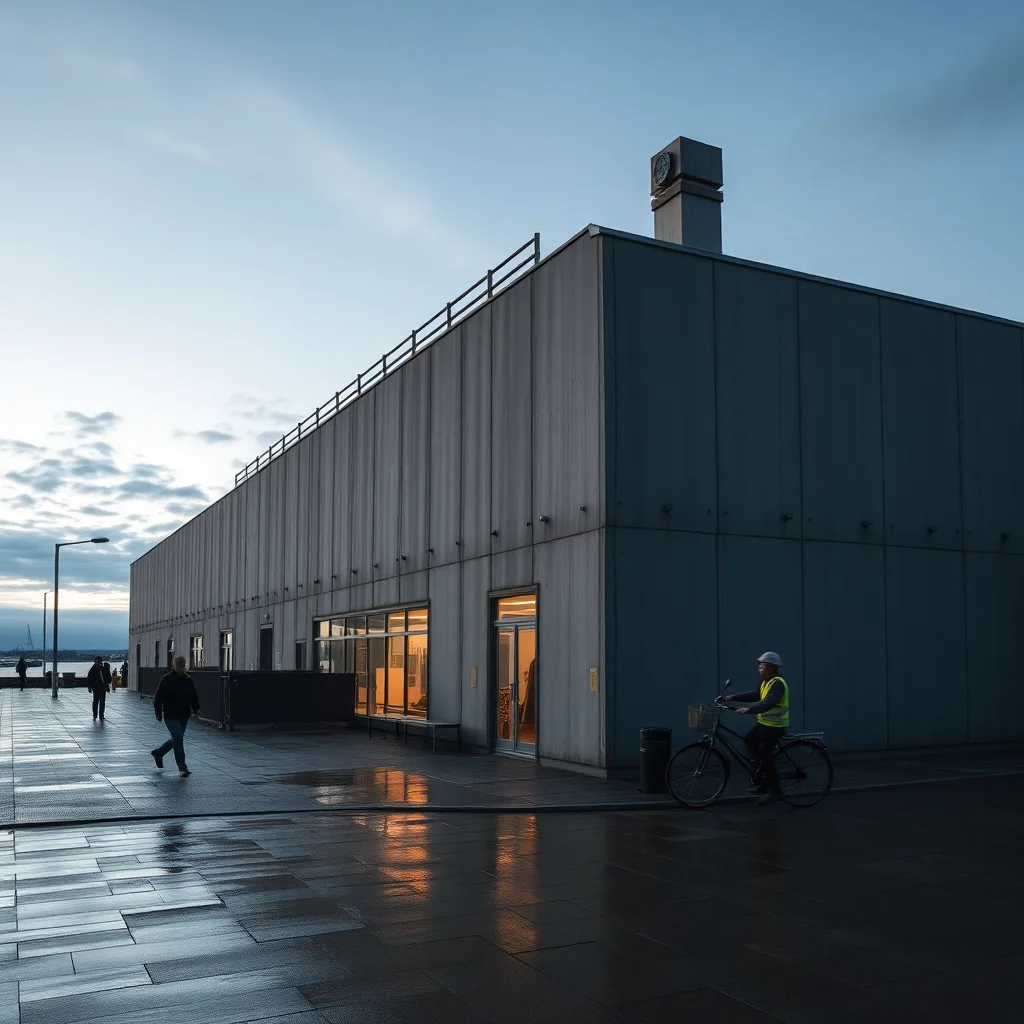
Infrastructure is no longer allowed to disappear
For much of the 20th century, the rule was simple: hide the pipes, bury the tanks, mute the pump house, and let the city admire everything except the machinery that keeps it alive. Wastewater plants were treated like embarrassments—necessary, expensive, and best concealed behind fencing, berms, and blank walls. That era is ending. Across Europe and beyond, water and wastewater infrastructure is being recast as a public face of municipal competence, civic pride, and even architectural ambition.
The new example from Denmark makes the point sharply. On the harbour front of Svendborg, GinnerupArkitekter has wrapped a wastewater pumping station in a sawtooth spiral of weathered-steel panels, a gesture meant to evoke the blades of an impeller while also anchoring a new public square. It is not pretending to be invisible. It is insisting on being seen. This is the new public utility aesthetic: a conviction that essential systems deserve the same formal seriousness once reserved for libraries, museums, and town halls.
And yet that conviction comes with a dangerous side effect. The more infrastructure is turned into a landmark, the easier it becomes for municipalities to mistake visual polish for public value. When a sewer facility starts acting like a civic sculpture, the risk is not just aesthetic excess; it is budget creep, branding theater, and a subtle shift away from maintenance toward image management.
From industrial back-end to civic frontage
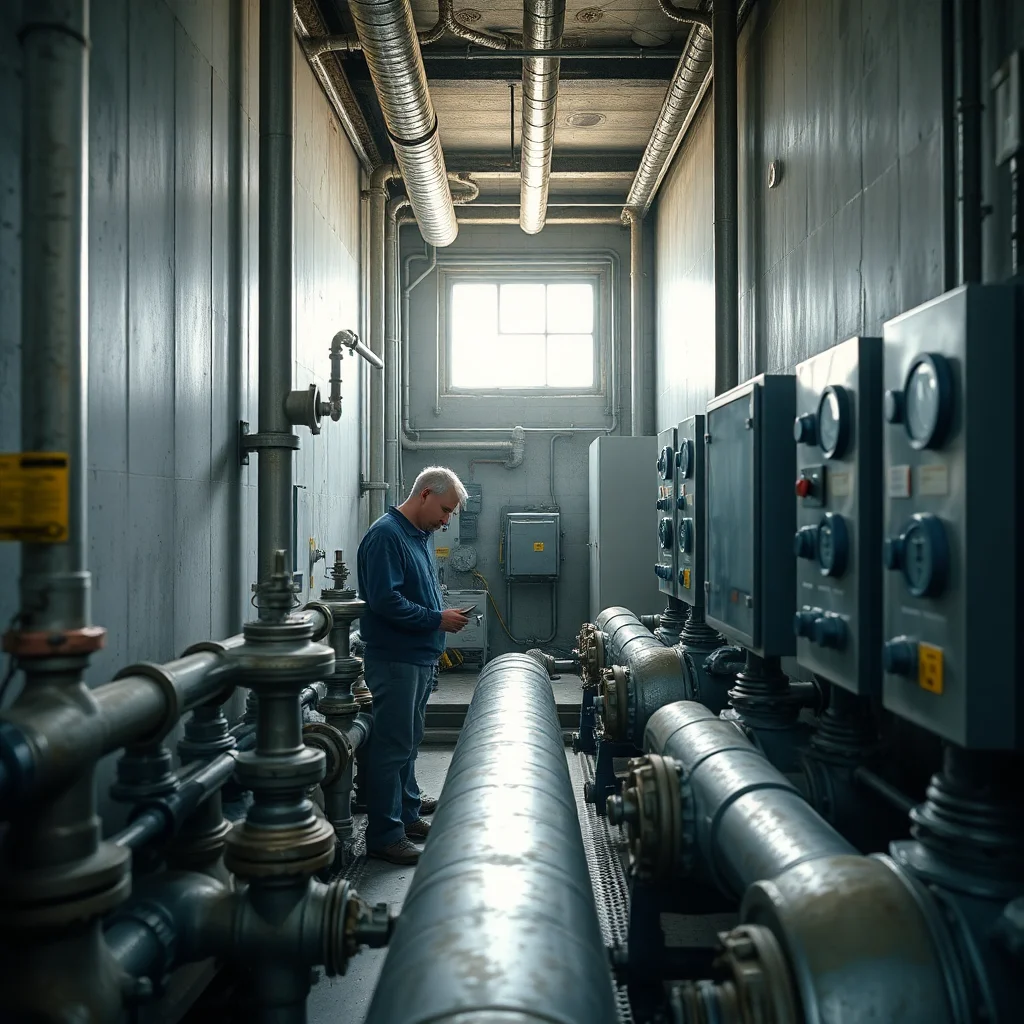
The redesign of utility infrastructure did not begin with wastewater plants, but they are now among its clearest battlegrounds. In Copenhagen, the waste-to-energy plant Amager Bakke by BIG made a utility building into a public destination by adding a ski slope, hiking trail, and a roofscape visible across the city. In Paris, the Seine’s riverside engineering projects increasingly combine flood control with promenades and public amenities. In Rotterdam, water-management architecture is often presented not as remediation but as urban culture itself. The logic is consistent: if infrastructure occupies valuable ground, it should justify its presence through public-facing design.
That logic is part of a broader shift explored in When Architecture Becomes Climate Infrastructure, where buildings are increasingly asked to perform as environmental systems as well as civic objects. GinnerupArkitekter’s Svendborg station belongs to this lineage, but with a more restrained and materially intelligent move. Weathered steel is not used as decoration in the shallow sense; it is used to signal durability, maritime context, and machine logic at once. The sawtooth profile is not merely expressive. It creates a visual rhythm that reads as industrial without looking brute-force, and civic without becoming precious. That balance matters because utility architecture has long suffered from a false binary: either it disappears entirely or it becomes an object lesson in municipal vanity.
The new approach argues for a third position: infrastructure as public infrastructure, not hidden infrastructure. That means designing plants that can sit at the edge of a square, a waterfront, or a park without inducing shame. It means accepting that drainage, filtration, pumping, and treatment are not subplots in urban life but its operating system. The question is not whether these buildings should be beautiful. The question is whether their beauty serves comprehension, trust, and dignity—or merely image.
The case for civic utility as landmark
There is a strong argument for making critical infrastructure visible and architecturally credible. First, it counters the cultural habit of treating environmental labor as dirty work best kept out of sight. Water systems are among the most essential public services in a city, and a well-designed plant can communicate that fact better than any plaque or public-relations campaign. When a pumping station sits proudly at the edge of a harbourfront or square, it teaches residents that cleanliness, drainage, and flood resilience are not invisible miracles but deliberate civic investments.
Second, landmark treatment can improve public acceptance. Utility projects are often blocked by NIMBY politics because they are assumed to be ugly, noisy, and contaminating. A project with architectural clarity can reduce resentment and create local ownership. The precedent is visible in works like the Brooklyn Greenpoint Wastewater Treatment Plant’s iconic “egg” digesters, which have become a recognizable part of the city’s skyline, and in engineering projects in the Netherlands where water infrastructure is routinely folded into landscape design rather than quarantined from it. Once a facility contributes to public space, residents are more likely to defend it politically.
Third, design can help infrastructure age better. A building that is designed to be legible, robust, and site-specific is less likely to be abandoned as an eyesore after a decade of use. Weathering steel, concrete relief, brick, and screen systems can all be deployed with a long horizon in mind. The best utility architecture does not fight its own function; it stages that function with enough dignity to survive changing standards of taste.
The danger: when form becomes municipal branding
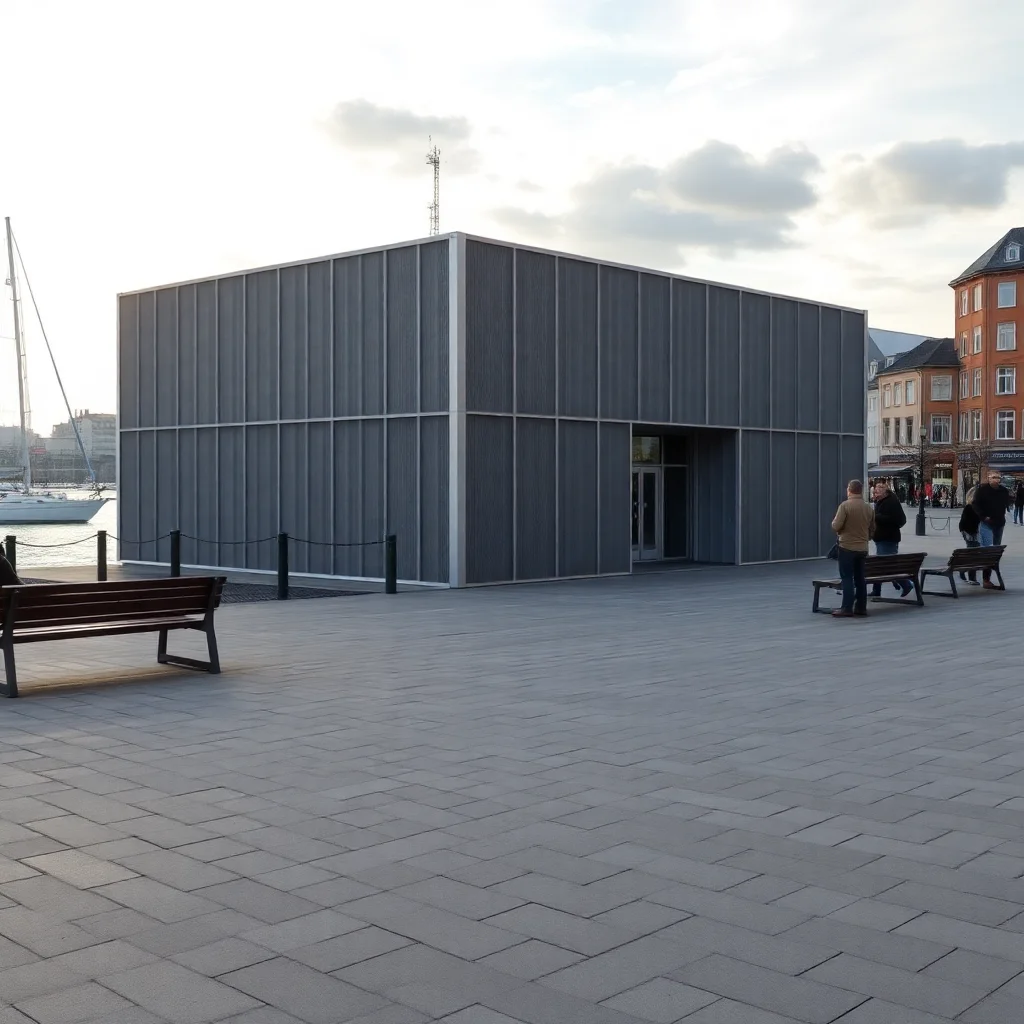
But the case against this trend is equally serious. Once infrastructure is asked to symbolize the city, it can begin to absorb the logic of branding. Instead of a pumping station, you get a logo in the landscape. Instead of an engineering building, you get a photogenic object calibrated for drone shots and award juries. In that moment, the project stops serving the public and starts performing publicness.
This is where the line between civic landmark and expensive gesture becomes perilously thin. Weathered steel, sculptural facades, and signature silhouettes are not inherently bad. The problem is when those elements are used to justify inflated costs, especially in sectors where budgets are already strained by maintenance, compliance, and climate adaptation. A utility plant does not need to win the attention economy. It needs to work, endure, and remain affordable to repair. If design inflates capital expense without improving performance, it is not civic-minded; it is aestheticized extraction from the public purse.
There is also an ethical problem in celebrating infrastructure as if symbolism alone could resolve environmental crisis. Wastewater plants sit inside bigger systems of consumption, runoff, and ecological damage. A beautiful facade does not absolve a city from underinvesting in sewer networks, ignoring combined overflow issues, or delaying upgrades to treatment capacity. If the landmark becomes a moral alibi, architecture has failed. The city has not become more responsible; it has merely become better dressed.
What good public utility design actually looks like
The answer is not to return to ugliness or concealment. That would be a coward’s solution, and an architecturally lazy one. Instead, utility design should be judged by whether it increases public literacy about how urban systems work. The strongest examples are not simply iconic; they are didactic without being patronizing. They reveal process, acknowledge scale, and use material honesty to connect engineering with place.
Think of projects that make flows visible, not just facades memorable. Stormwater landscapes that absorb, delay, and display rain as part of the urban experience. Treatment facilities that use courtyards, screens, and topographic folds to explain how water moves through a site. Pump stations that sit as compact, highly resolved civic machines rather than oversized monuments. In this sense, GinnerupArkitekter’s Svendborg project is persuasive because it does not overreach. The weathered-steel shell signals the mechanics inside, but it does not pretend to be a museum. It is a utility building that knows exactly what it is.
That distinction should guide future commissions. A good public utility aesthetic is one that earns its visibility through clarity, not spectacle. It should make maintenance easier, not harder. It should embrace local materials and climate logic rather than chasing novelty. It should turn essential systems into legible parts of the city without laundering away the fact that they are systems, not symbols. The strongest architecture here is not louder than the infrastructure; it is more truthful.
- Honor the function first. A wastewater plant is not a stage set. Any formal move must help the building operate, endure, and be maintained over decades.
- Use material intelligence, not decorative excess. Weathering steel, concrete, brick, and mesh can communicate durability and civic presence without requiring expensive embellishment.
- Make the system legible. The best utility architecture helps the public understand that water, drainage, and treatment are active civic processes, not hidden magic.
- Refuse branding logic. A landmark can build trust, but it should not become a municipal logo or a tourist prop.
- Design for climate reality. Flooding, overflow, salinity, and maintenance access should shape the architecture more than image-making ever does.
- Measure success in resilience, not likes. If a utility building photographs well but fails to support long-term operation, the design has already lost.
Why the new utility aesthetic matters now
This debate matters because cities are entering an era in which infrastructure is becoming one of the most visible fronts of climate adaptation. Water scarcity, intense rainfall, coastal flooding, and aging networks are forcing municipalities to spend on systems that were once ignored until they failed. In that context, architecture has a real role: it can turn civic investment into something the public sees, understands, and values.
It also touches on questions raised by Can Design Save Us from the Air Conditioner?, which asks whether design can meaningfully reshape everyday environmental burdens instead of merely disguising them. But visibility is a double-edged sword. If every substation, pumping station, and treatment plant becomes a branded object, cities will end up with a costly surface culture layered over unresolved systems. If, on the other hand, architects can treat these projects as serious civic commissions—neither hidden nor fetishized—then utility architecture can become one of the most responsible and intelligent arenas in the field.
The future of this aesthetic will be decided not by style, but by ethics. Can a wastewater plant be a landmark without becoming a vanity project? Can a city celebrate its infrastructure without using beauty as a substitute for stewardship? The answer will define whether the new public utility aesthetic is a mature civic language—or just another form of municipal self-advertising.
Get the Mainifesto weekly — curated design debates, speculative ideas and the week's best articles every Saturday.
Editorial Perspectives
Questions and counterpoints developed by the Mainifesto editorial desk to extend the discussion.
Perspective 1
If a wastewater plant can be made quieter, safer, and more legible to the public, I’m for it. But once the brief shifts from service to symbolism, costs climb fast and the people paying for it usually don’t get any better infrastructure out of the deal.
Perspective 2
I like the idea that infrastructure can carry civic meaning, but the real question is whether the form actually emerges from the process, or just gets pasted on top of it. If a treatment plant becomes a landmark, it should do so by revealing flows, energy, and maintenance—not by masking them with branding.
Perspective 3
Infrastructure is already political, so pretending it’s neutral is nonsense. The risk is when cities use utility design to project modernity while underinvesting in the unglamorous networks that actually keep people alive.
Perspective 4
I don’t care if it’s a landmark if it still smells bad, confuses visitors, or blows the budget. Make it beautiful if you want, but the only branding that matters is whether the public gets reliable service and a site that’s easy to live with.