
Can Shelter Be Humane and Temporary?
When Speed Becomes a Design Brief
The conversion of a former military bakery into an emergency shelter sounds, at first, like an act of pragmatic generosity: take a solid shell, clear the ovens, bring in beds, and respond to need. But emergency architecture is never just logistics. It is a moral test. When a city or aid agency asks architecture to move quickly, the question is not whether a shelter can be built fast enough; it is whether speed has already been allowed to justify humiliation.
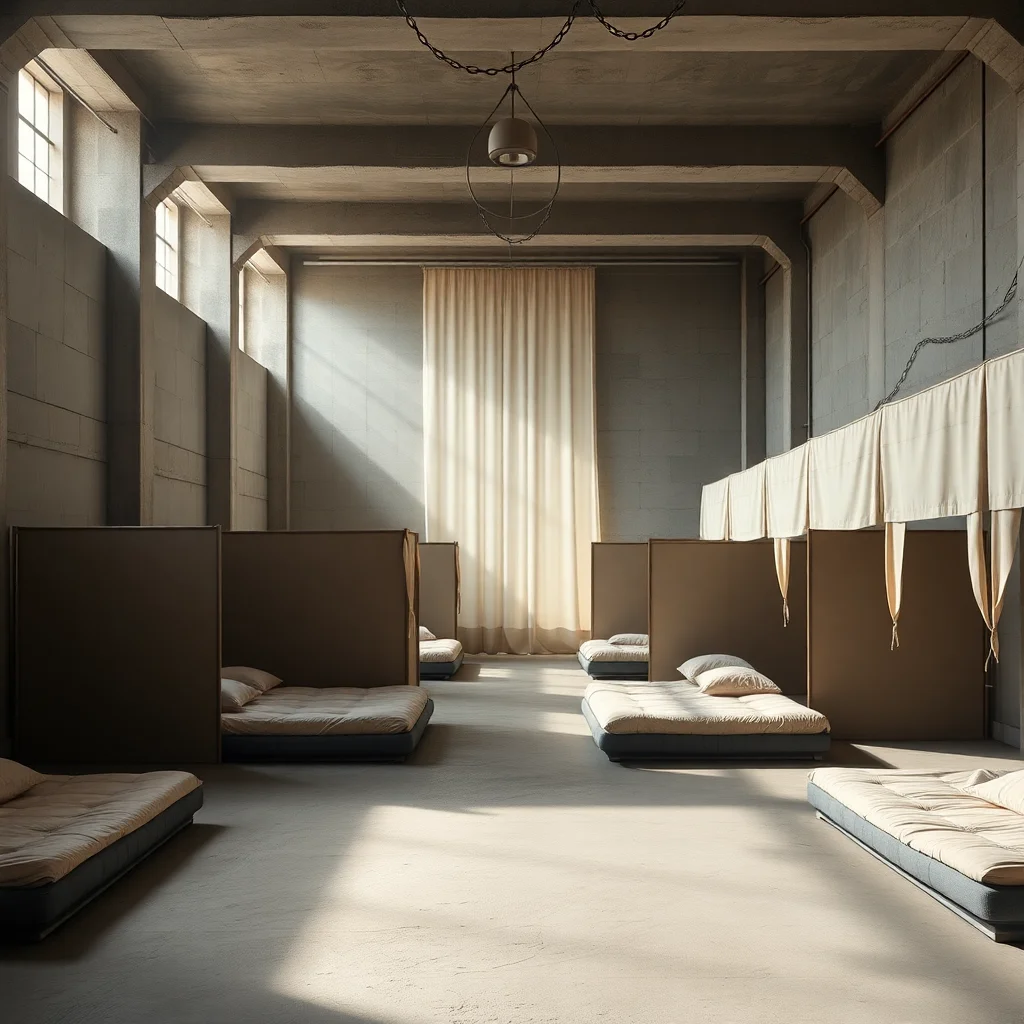
That is the uncomfortable truth behind every temporary shelter project. Temporary does not mean ethically lightweight. It means the opposite: because people are in crisis, the standards should sharpen, not dissolve. The former military bakery is emblematic because it carries a double inheritance—discipline and provision, confinement and care. To repurpose a site associated with supply chains for civilian refuge is not automatically humane. It is only humane if the new program rejects the logic of warehousing bodies and instead designs for privacy, agency, daylight, ventilation, warmth, and a minimum of emotional recovery.
Architects working in emergency contexts have long understood this tension. Shigeru Ban’s paper tube shelters for disaster relief became famous precisely because they proved that low-cost, rapidly deployable structures could still preserve a degree of personal territory. In contrast, many mass shelters reduce crisis to a floor plan of mattresses and fluorescent light. The difference is not aesthetic. It is political.
What Dignity Actually Requires
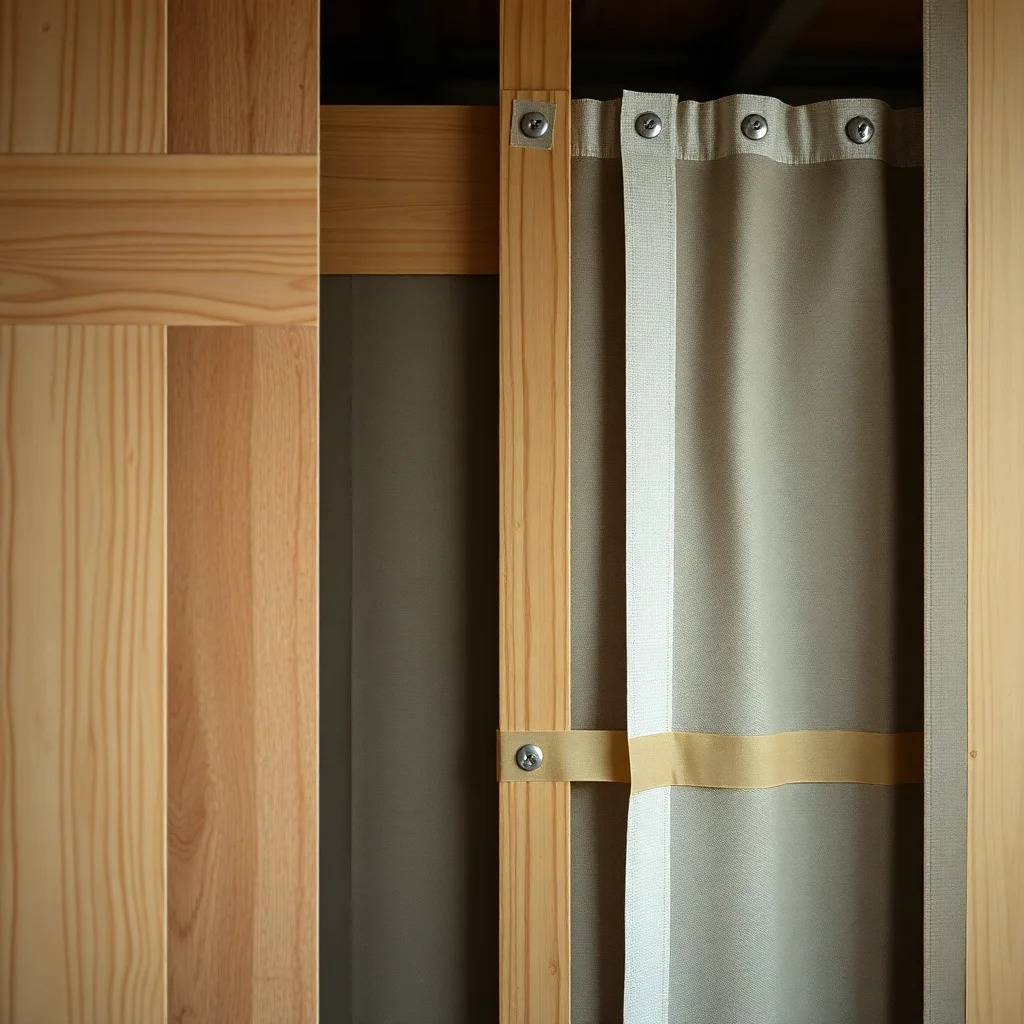
Dignity in a shelter is often discussed in vague terms, as if the word itself could substitute for design. It cannot. Dignity is spatial. It begins with the ability to sleep without being watched, to change clothes without performing vulnerability in public, to sit without feeling like one’s body is being processed, and to know where one’s things are. For people who have fled conflict, eviction, flood, or fire, these are not luxuries. They are the architecture of reassembly.
This is why projects such as the Better Shelter prototypes, developed with humanitarian agencies and designers including IKEA Foundation collaborators, mattered so much in the public debate. They were not perfect, but they insisted that emergency accommodations could be more than tarps and pallets. Similarly, Nendo and other Japanese designers have repeatedly shown that precision in small elements—screens, joints, partitions, storage—can transform a bare room into a livable interior. The point is not style. It is the politics of the threshold.
The former military bakery conversion becomes provocative because existing robust structures can seduce decision-makers into thinking adaptation is enough. Yes, the structure is there. But a structure is not a shelter until it handles the intimate realities of displacement. Does it have acoustical relief? Does it allow family units to remain together? Can women, children, elders, and disabled people move through it without being forced into a single undifferentiated crowd? If not, the building is merely shelter-shaped. For more on how compact spaces can still avoid feeling restrictive, see Can Small Houses Still Feel Generous?
PRO: The Case for Tactical Reuse
There is a compelling argument for converting an existing building rapidly, especially one with thick walls, large spans, and serviceable infrastructure. Tactical reuse can save time, money, embodied carbon, and administrative delay. In moments of housing emergency, the moral failure of waiting can be greater than the moral compromise of improvisation. A dormant military bakery, warehouse, school, or industrial shed can become a bridge between catastrophe and longer-term accommodation.
Look at the emergency response traditions developed in post-disaster Japan, where speed and precision often coexist. After the 2011 tsunami, architects and volunteers experimented with modular partitions, temporary timber structures, and community-based layouts that preserved domestic scale. Shigeru Ban’s work after Rwanda, Kobe, and Haiti demonstrated that the simplest materials can still support an ethos of respect. Likewise, the field hospitals and crisis facilities assembled during the pandemic showed that fast does not have to mean thoughtless—if design teams are allowed to intervene in circulation, light, hygiene, and user experience rather than merely fitting beds into volume.
Reusing a former military facility can also be symbolically potent. Buildings once used for systems of state logistics can be turned toward public repair. That act matters. It says that the infrastructure of force can be redirected toward care. In a period when many cities are grappling with refugee intake, climate displacement, and urban homelessness, adaptive reuse can become a form of civic refusal: refusal to build disposable architecture from scratch, refusal to waste time on ideal solutions while people sleep in dangerous conditions, refusal to treat emergency life as less deserving of architectural intelligence.
And yet the pro case is strongest when it acknowledges a hard limit: speed is only ethical if it creates real inhabitation, not just occupancy. A shelter that is quick but brutal is not an answer—it is a postponement of harm.
CONTRA: The Violence of Minimalism
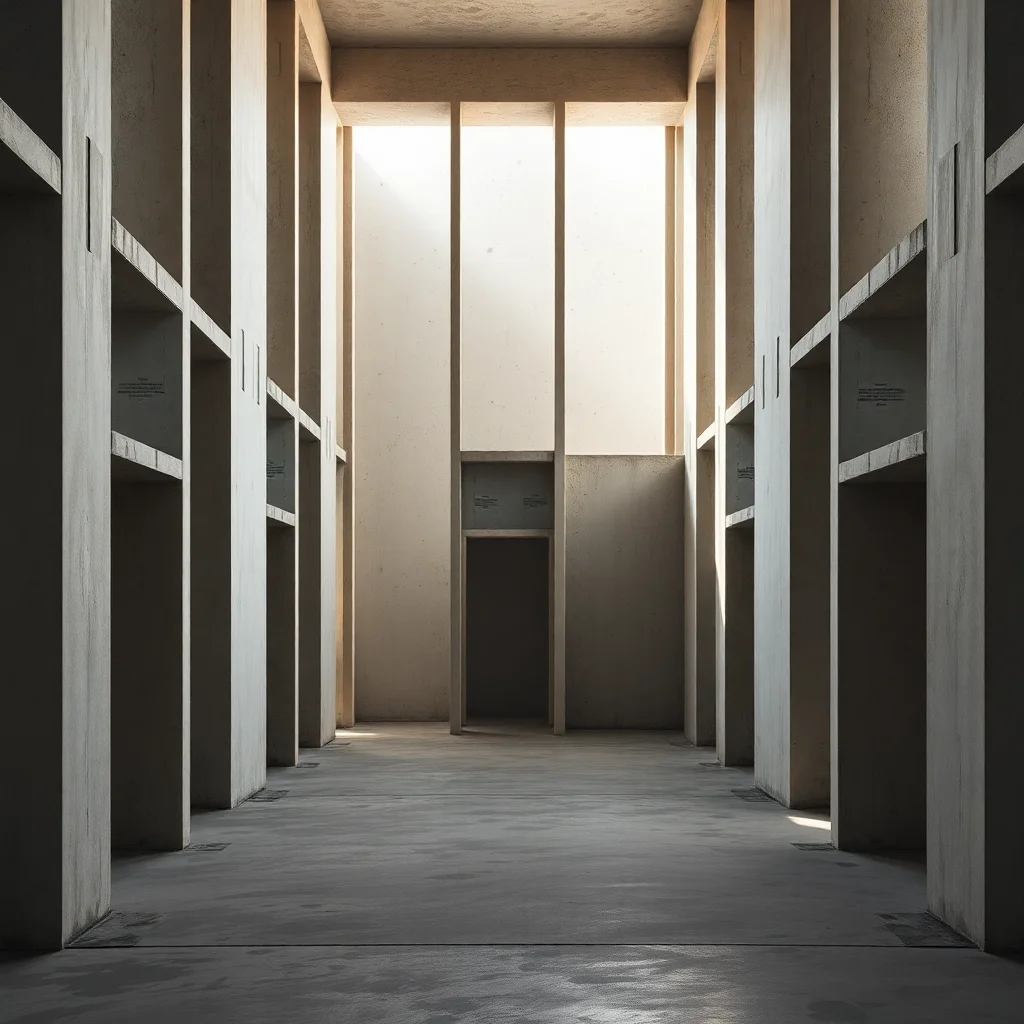
The opposing argument is harsher, and it deserves to be. Emergency architecture too often smuggles austerity in under the banner of necessity. The language is familiar: “basic,” “transitional,” “temporary,” “efficient.” But those words can become cover for institutional neglect. Too many shelters have been designed as if the crisis were only external, as if the interior could remain emotionally barren without consequence.
Consider the recurring complaints around mass accommodation: constant noise, lack of privacy, exposed lighting, no place to store medication or documents, no ability to separate rest from social exposure. These are not minor oversights. They are injuries. They tell residents that the system sees them as units of management rather than people with histories, habits, shame, grief, and routines. In that sense, the most dangerous thing about temporary shelter is not impermanence itself; it is the aesthetic and administrative temptation to reduce emergency life to the lowest possible standard.
Even celebrated humanitarian prototypes can fail when scaled without sensitivity. A shelter designed to look efficient in photographs may collapse socially when occupied by families with uneven needs, trauma, or cultural expectations about gendered space. The better-known failures of refugee camp planning globally are not failures of engineering alone. They are failures of imagination. The camp becomes a city of exceptions, and exceptions become permanent. What began as temporary hardens into a structure of unequal life.
This is where the former military bakery is politically charged. Military buildings are often robust, repetitive, and unapologetically hierarchical. Their conversion risks preserving that hierarchy unless architects actively undo it. A shelter in such a shell can inherit the atmosphere of command and obedience: long corridors, locked zones, centralized control, and a one-size-fits-all order. If the conversion merely inserts beds into a former logistics machine, then the project has not been rehabilitated; it has been repurposed as an instrument of softer discipline.
The critique is not anti-temporary. It is anti-complacency. Temporary conditions can be humane only when they are designed as if every night matters. The same caution appears in broader debates about how industrial structures can be softened without losing their character, as explored in Can Brutalism Be Spiritual?
Designing the Non-Negotiables
If architecture is to act honestly in crisis, it must decide what cannot be sacrificed, even under pressure. First: privacy. Not total isolation, but the ability to withdraw. Second: thermal comfort and air quality, because cold, heat, and stale air intensify stress and illness. Third: legibility, so occupants understand where they are, how to move, where services are, and what belongs to them. Fourth: accessibility, including level routes, clear signage, and adaptable facilities. Fifth: dignity of infrastructure—showers, toilets, charging, laundry, and storage must be treated as core architecture, not afterthoughts.
Recent experiments in crisis design point in the right direction. The Yona Friedman tradition of open, adaptable frameworks reminds us that users should be able to alter their environment. Alejandro Aravena’s incremental logic in social housing, though not emergency shelter per se, offers a crucial lesson: give people structure and agency, not a finished script that leaves no room for appropriation. In shelters, this can mean modular partitions, shared but varied commons, family clusters rather than dormitories, and interfaces that invite occupation rather than surveillance.
The best temporary shelters also consider atmosphere. Harsh light and hard acoustics tell the body to remain on alert. Softer illumination, materials that absorb noise, visible daylight, and even modest color can reduce the sense of institutional captivity. These are not decorative gestures. They are survival tools. A humane shelter does not ask people to endure the crisis twice—once in life, and again in the room that is supposed to help. That attention to sensory experience is central to Multisensory Architecture: Designing with Sound, Light, Smell, and Touch.
From Emergency Room to Civic Standard
The most radical position is this: temporary shelters should not be judged as exceptions to normal architecture, but as a distilled version of what architecture owes everyone. The emergency reveals the baseline. If a building cannot provide privacy, air, orientation, and respect under pressure, then it probably does not do so anywhere else either. In that sense, the temporary shelter becomes a civic critique. It exposes how often permanence has been built on indifference.
What would happen if the standards developed for crisis housing were treated as a public benchmark? Not luxury, not idealism—just a floor beneath which no one should fall. The former military bakery could then be more than a stopgap. It could become a prototype for how to convert inherited structures without reproducing their old discipline. Its value would lie not in the speed of the intervention alone, but in whether it demonstrates that rapid architecture can still be accountable to the human scale.
This is the challenge architecture must stop avoiding. Temporary is not the opposite of humane. Temporary is the condition under which humanity is either confirmed or denied most brutally. The question is whether designers, clients, and cities have the courage to treat crisis spaces as ethical territory rather than logistical leftovers.
Can a shelter be humane and temporary at the same time, or does the urgency of emergency planning always tempt us to accept a little less dignity than people deserve?
Get the Mainifesto weekly — curated design debates, speculative ideas and the week's best articles every Saturday.
Editorial Perspectives
Questions and counterpoints developed by the Mainifesto editorial desk to extend the discussion.
Perspective 1
Temporary doesn’t have to mean second-rate, but it usually gets treated that way because budgets and timelines are tight. If a shelter is going to serve real people, the basics still matter: insulation, privacy, ventilation, and a layout that doesn’t make daily life harder than it already is.
Perspective 2
We’d never accept a hotel room or apartment that ignored comfort, privacy, and dignity, so why do we normalize it in emergency shelter? “Temporary” is not an excuse for a bad user experience; it’s a reason to get the essentials right fast, because stress and chaos are already built into the situation.
Perspective 3
Because temporary housing is often procured as if speed alone is the metric, and that is a policy failure more than a design one. If the conditions are unsafe or degrading, the fact that they’re short-term doesn’t reduce the harm—it just shortens the time we have to admit we’re tolerating it.