When Retail Becomes Museum-Like Spectacle
PRO: The store has stopped selling only products and started selling belief
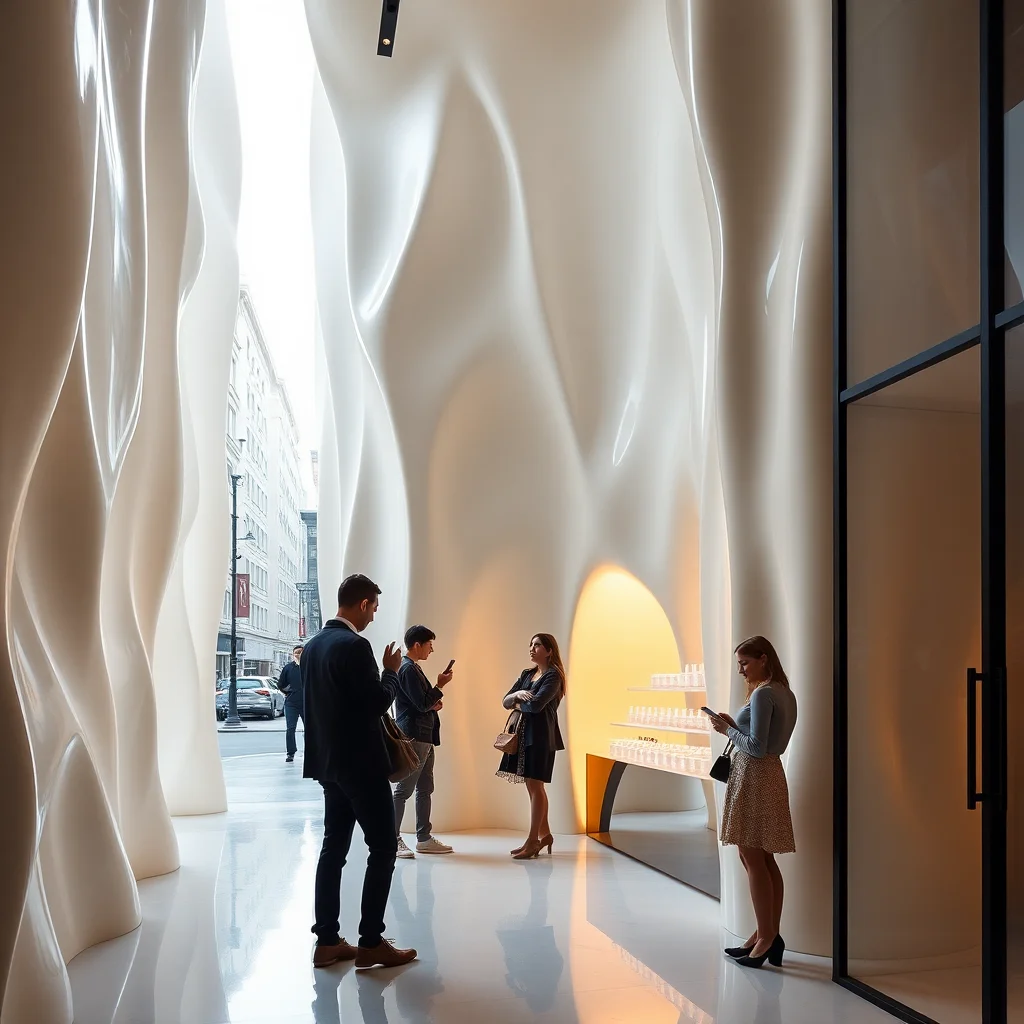
The skin1004 flagship in SoHo is not content to be a shop. It behaves like an interior argument: mirrored surfaces, sculptural canyon-like forms, and warm illuminated materials choreograph the customer into a state of attention before a single item is touched. This is the central shift in contemporary retail: the purchase is no longer the main event, because the atmosphere now does the persuasive work. Brands understand that in a market saturated with comparable products, space has become a competitive medium.
This is not a cosmetic trend; it is a structural one. Retail interiors increasingly borrow the logic of museums, galleries, and installations because these are the places we already associate with contemplation, authority, and cultural value. The store is no longer merely a point of sale. It is a stage for identity production, where architecture is asked to imply taste, seriousness, and significance. skin1004’s glossy, sculpted, almost geological setting shows how quickly a skincare brand can convert interior design into a form of narrative infrastructure.
We have seen this move before. Apple refined the retail temple into a civic object. Aesop turned repetitive minimalism into a global language of high design. Gentle Monster pushed farther, building experiential environments that feel closer to surreal art installations than product showrooms. Even when the products are modest, the setting can make them seem archival, rare, or culturally charged. Retail becomes spectacle not because brands are shallow, but because they have learned that aura is now part of the merchandise. This logic also appears in why coffee shops are becoming the new luxury chain, where ambience and ritual increasingly outweigh the drink itself.
Why museums are the new retail template
Museums offer something retail envies: the ability to slow time. In a museum, circulation is softened, attention is curated, and every object appears to have a reason for being there. That is precisely what brands want to steal. By borrowing display codes from institutional space—pedestals, niches, reflective finishes, theatrical lighting—they recode shopping as an experience of discernment. The customer is no longer pushed to consume; they are invited to interpret.
This shift aligns with the broader evolution of luxury and wellness branding, where the product alone cannot carry the full emotional load. The interiors must do the heavy lifting. In skin1004’s SoHo flagship, the interplay of mirror and form makes the environment feel less like a sales floor than a curated landscape. The effect is immersive, but not in the clumsy, amusement-park sense. It is controlled seduction, an architecture of delay that encourages lingering and, therefore, purchasing.
Designers have long understood that spatial narrative can create desire. Peter Zumthor’s atmospherics, Tadao Ando’s disciplined voids, and David Chipperfield’s restrained material precision each show how architecture can become an instrument of mood. Retail has absorbed this lesson and stripped away any lingering shame. The store now wants to be read, photographed, and posted. It wants to become culture because culture has become a distribution channel. That same desire for photogenic enclosure is central to when home becomes content, where interiors are designed as much for circulation online as for life inside them.
CONTRA: When atmosphere becomes the product, architecture risks becoming branding with better lighting
But there is a darker reading, and it is the more urgent one. If the store behaves like a museum, what exactly is being exhibited? Often it is not craft, history, or public value, but brand mythology in polished form. The danger is that architecture is reduced to a premium wrapper: all surface, no civic ambition. The museum analogy flatters the retail space while quietly emptying it of institutional purpose. A gallery can afford ambiguity because its mission is not transactional. A store, by contrast, is always trying to close the loop.
This is where the crossover starts to look cynical. The customer is given the language of culture—installation, curation, immersion—while the underlying function remains extraction. The emotional sophistication of the interior can mask the banality of the commercial exchange. In the wrong hands, this produces a kind of design inflation: every brand becomes a lifestyle universe, every entrance a threshold, every shelf a scenographic event. The result is not enrichment but fatigue.
We should also be suspicious of the aesthetic homogenization that follows. If all premium retail interiors chase the same palette of stone-like textures, mirrored surfaces, soft glows, and vaguely organic forms, then the world begins to look like one extended brand campus. This is the logic of Frieze-meets-flagship, where visual originality is sacrificed to a shared code of aspirational restraint. Instead of truly local or specific architecture, we get a global style of sanitized immersion. The space looks expensive, but not necessarily intelligent.
There is a philosophical problem here too. Museums are supposed to preserve distance between object and viewer, allowing critical reflection. Retail wants the opposite: proximity, affect, and impulse. When the two are fused, the result can be a confusion of values. The store pretends to elevate shopping into culture, but often it simply converts cultural codes into sales tactics. That is not democratization. It is appropriation.
Two sides of the same polished surface
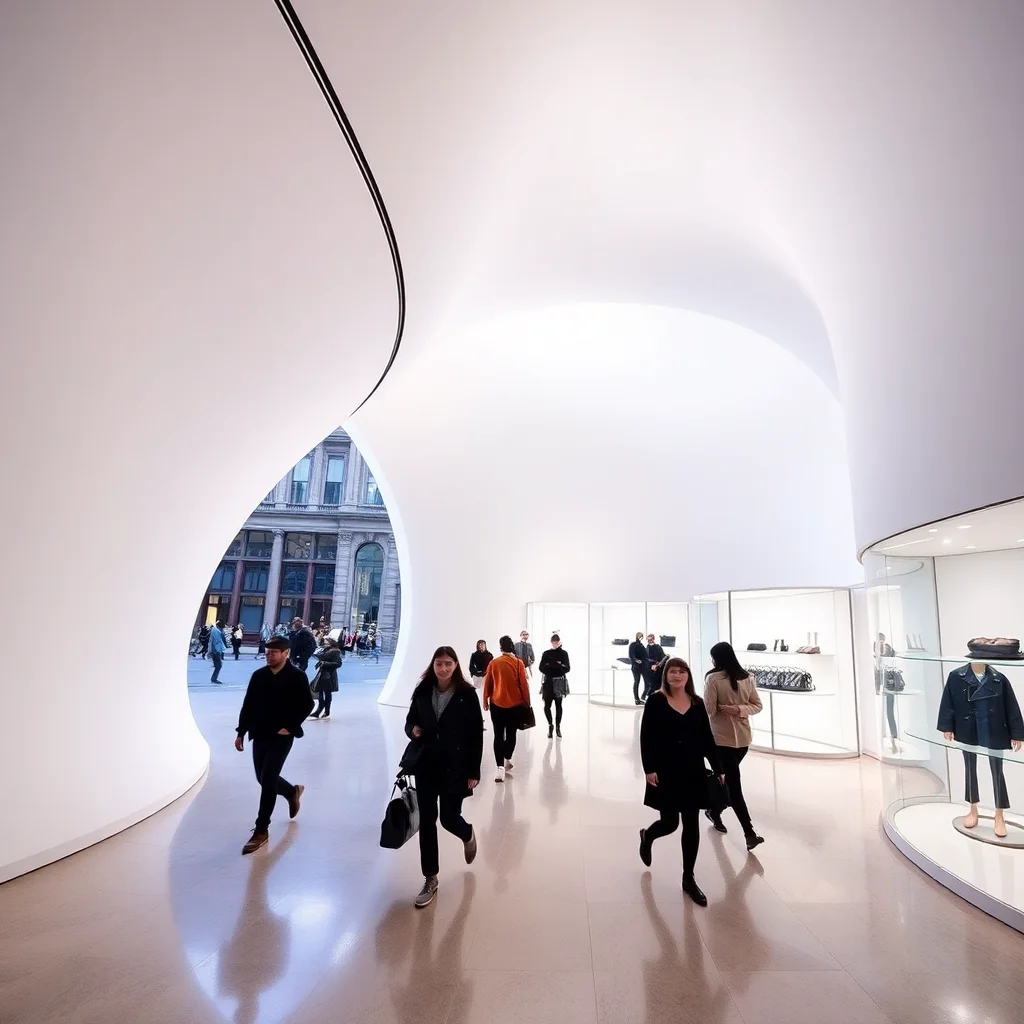
The most provocative thing about skin1004’s flagship is that both readings are true. The space is compelling precisely because it knows how to produce atmosphere at a high level. It understands that contemporary consumers are not just buying creams, candles, or sneakers; they are buying the feeling of being in the right world. This is why immersive retail is so powerful and so troubling. It can genuinely enrich the urban interior by offering a designed encounter that feels memorable, even beautiful. Yet it can also hollow out the idea of public space by making everything legible only through commerce.
What matters is not whether retail can borrow from museums—that battle is already lost. The real question is whether designers can use this crossover to create spaces with more than promotional intent. Can a flagship contribute to the city as an interior experience, not just as a brand instrument? Can it make room for interpretation rather than merely optimizing desire? Or are we now trapped in an economy where even the most spatially ambitious interiors are ultimately measured by how effectively they aestheticize consumption?
In the best cases, spectacle deepens meaning. In the worst, it replaces it. The difference lies in whether the architecture has a viewpoint beyond the campaign. A true interior does more than stage a logo. It gives the visitor a reason to remember the room after they have forgotten the product.
What this means for the future of interiors
As retail continues to converge with exhibition design, interior architecture is being asked to prove its intelligence in public. The challenge is no longer to make a store look beautiful. That is easy, and perhaps increasingly irrelevant. The challenge is to decide whether beauty is being used to reveal something about material, ritual, and place—or whether it is merely smoothing the path from attention to transaction.
skin1004’s SoHo flagship sits exactly on that fault line. Its mirrored canyon forms and luminous surfaces show how far retail has moved into the realm of scenography. It is seductive, photogenic, and carefully composed. But it also exposes the contemporary condition: brands now compete in the language of atmosphere because products alone are too weak to carry meaning. Whether that is a cultural expansion or a collapse into branding depends on how much critical friction a space is willing to allow. For a related take on how materials and ethics are reshaping commercial spaces, see can recycled copper redefine luxury retail?
The future of interiors may belong to spaces that can hold contradiction without resolving it too neatly. The most interesting retail environments will not be those that merely imitate museums, but those that understand what museums once represented: attention, sequence, interpretation, and a sense that what you are seeing exceeds the price tag. Anything less is just marketing in architectural drag. That tension also runs through when interiors become repair mechanisms, where design is asked to do emotional work well beyond decoration.
- Apple Fifth Avenue and the retail temple: Apple’s glass-box and plaza-like stores proved that retail could adopt civic scale and ceremonial calm. The lesson was clear: atmosphere itself can become a competitive advantage.
- Aesop’s disciplined repetition: Aesop stores around the world use local materials and restrained palettes to make modest products feel culturally literate. The brand’s success shows how interior consistency can manufacture trust.
- Gentle Monster’s installation retail: The eyewear brand has turned stores into surreal theatrical environments, collapsing exhibition design and commerce into one visually irresistible format. It is an influential model for spectacle-first branding.
- Museum lighting as retail strategy: Soft directional light, controlled reflections, and object-like display plinths make products seem collectible. This is not neutral design; it is a deliberate mechanism for emotional elevation.
- Immersion as urban marketing: Flagships now function as destination interiors, pulling visitors in not only to buy but to browse, photograph, and circulate online. Their success depends on turning space into content.
- The risk of a global premium style: When every brand interior chases the same polished, sculptural, gallery-like mood, architectural specificity disappears. What remains is a smooth but thin language of aspiration.
Get the Mainifesto weekly — curated design debates, speculative ideas and the week's best articles every Saturday.
Editorial Perspectives
Questions and counterpoints developed by the Mainifesto editorial desk to extend the discussion.
Perspective 1
This is exactly where retail has to go if it wants a reason to exist beyond price and convenience. If a store can make people linger, remember it, and come back, that’s not just branding—it’s a stronger business model. The museum comparison only matters if it drives traffic and conversion, and in this case it clearly does.
Perspective 2
I’m wary of calling this cultural enrichment when the whole experience is engineered to keep you inside longer. Museums earn their atmosphere through context, curation, and public purpose; retail often borrows those cues to make spending feel elevated. The result can be beautiful, but beauty alone doesn’t make it civic.
Perspective 3
The more retail leans on spectacle, the more material and energy it consumes to produce that feeling of significance. I’d rather see interiors that persuade through longevity, repairability, and restraint than through ever-more elaborate atmospheres. If a space feels museum-like, the real question is whether it’s teaching care or just intensifying desire.