
The Small Car Is Back: Renault’s EV Reset
The small car is no longer an apology
For two decades, the European city car has been treated like a guilty secret: useful, yes, but stripped of charisma, squeezed by regulations, and punished by the industry’s obsession with scale. The electric era was supposed to rescue that category, yet the market response has often been absurdly contradictory. Instead of compact, accessible machines, we got inflated crossovers wearing EV credentials like a costume. Renault’s new 4 and 5 are a direct rebuttal to that nonsense. They argue that electrification can still produce cars that are affordable, visually intelligent, and emotionally legible at street level.
This matters because cars are not just transport objects; they are urban architecture in motion. A road full of oversized EVs changes the scale of the street, the pressure on parking, and the social meaning of ownership. Renault is re-entering the conversation with a pair of cars that recall the cultural power of the original Renault 4 and Renault 5: pragmatic, optimistic, and democratic. The question is no longer whether small cars can survive. The real question is whether they can become a counterweight to the gigantism infecting European mobility.
The editorial stakes are clear: if Renault can make compact EVs desirable again, it will not just sell cars. It will challenge the assumption that progress must arrive larger, heavier, and more expensive than what came before.
Why the Renault 4 and 5 matter now
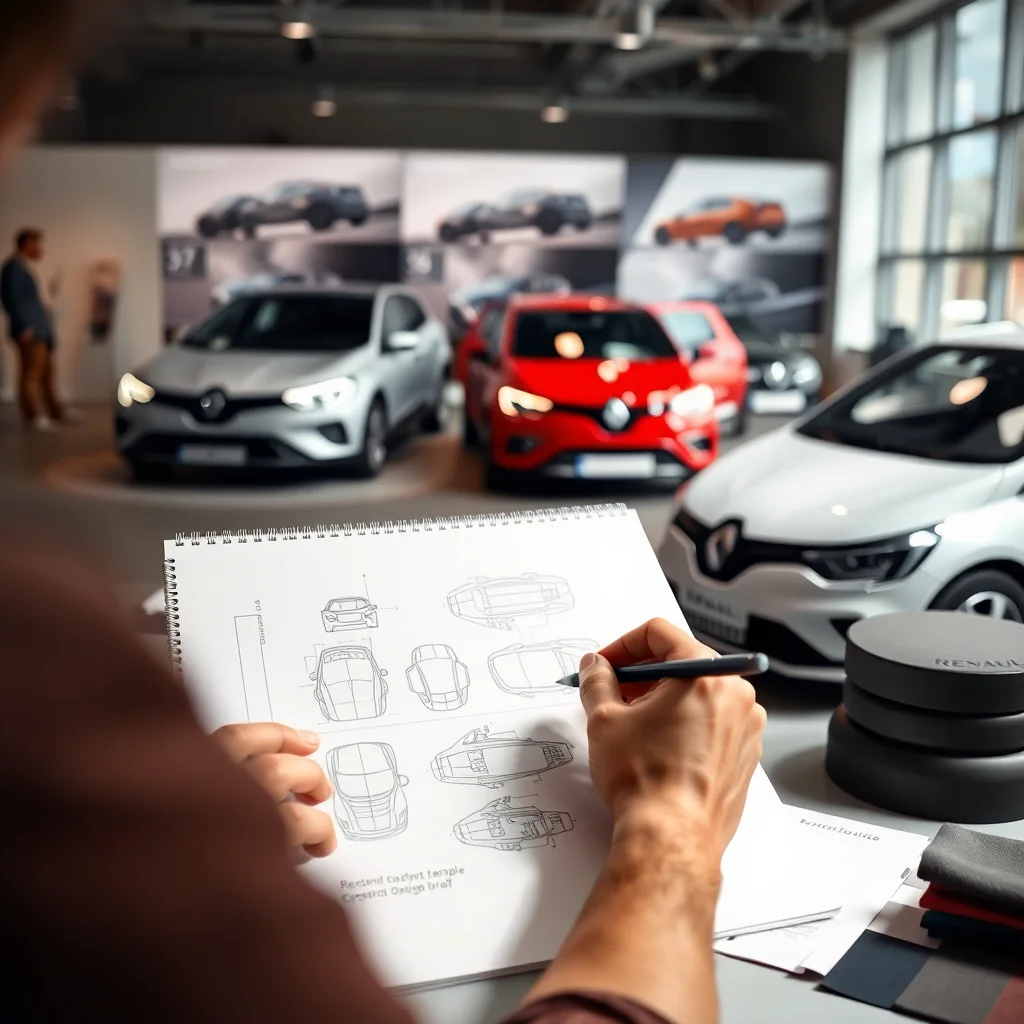
Renault’s new interpretation of the 4 and 5 is significant precisely because it refuses the false binary between design and affordability. So many “budget” EVs have been designed as cost-cutting exercises with all the grace of a rental appliance. These Renaults do the opposite. They use recognisable silhouettes, strong proportions, and cheeky detailing to make the idea of a small electric car feel culturally relevant again. That is not nostalgia; it is strategy.
The original Renault 4, launched in the 1960s, was famous for its utility and accessibility across rural and urban Europe. The Renault 5, meanwhile, became a symbol of 1970s and 1980s compact modernity, with an unapologetically simple form that still feels fresh. Their electric descendants tap into that memory without resorting to retro pastiche. In product design terms, that is crucial: the cars do not merely quote history, they translate it into a contemporary language of digital interfaces, battery packaging, and cleaner surfaces.
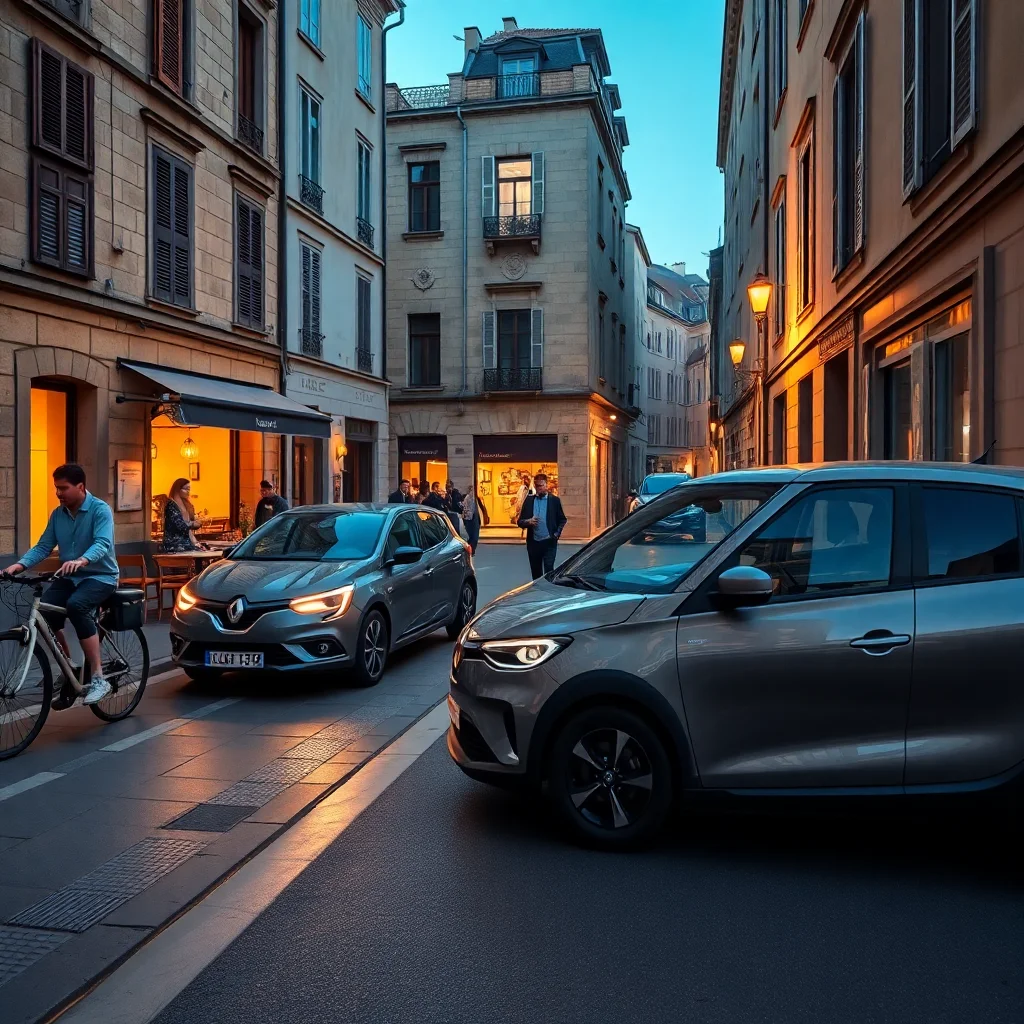
This is where Renault distinguishes itself from a market that too often confuses technological seriousness with visual heaviness. A good city car should be legible in a mirror, nimble in a tight lane, and confident when parked beside a café terrace or a bicycle lane. The new Renaults understand that urban desirability begins with proportion, not horsepower.
Design can make smallness feel like power
European car design has repeatedly proved that compactness can be a source of prestige. Think of the original Fiat 500, which transformed severe urban constraints into a symbol of style; or the Smart Fortwo, which turned microscopic scale into a provocation about density and access. More recently, the Honda e showed how a tiny footprint can host a rich, almost domestic interior atmosphere, even if its pricing undermined its democratic promise. Renault’s opportunity is to take the best of these lessons and avoid the trap that swallowed many of them: becoming charming but commercially marginal.
What Renault gets right is the visual confidence of the new 4 and 5. They are not apologetically small; they are deliberately compact. Their stance, graphics, and recognisable cues communicate that smallness can be a feature rather than a constraint. In the age of crossovers, that is a radical move. Most manufacturers have spent years teaching buyers that bigger equals safer, better, and more serious. Renault is arguing the opposite: that a well-designed compact EV can look more progressive than a bloated one because it is honest about how people actually live in cities.
This is where design becomes politics. A small EV changes the urban image of mobility. It says that efficiency is not deprivation and that accessibility does not have to be visually dull. If Renault can normalise that idea, it may reshape what buyers expect from the entire segment.
The real opponent is not combustion, but crossover culture
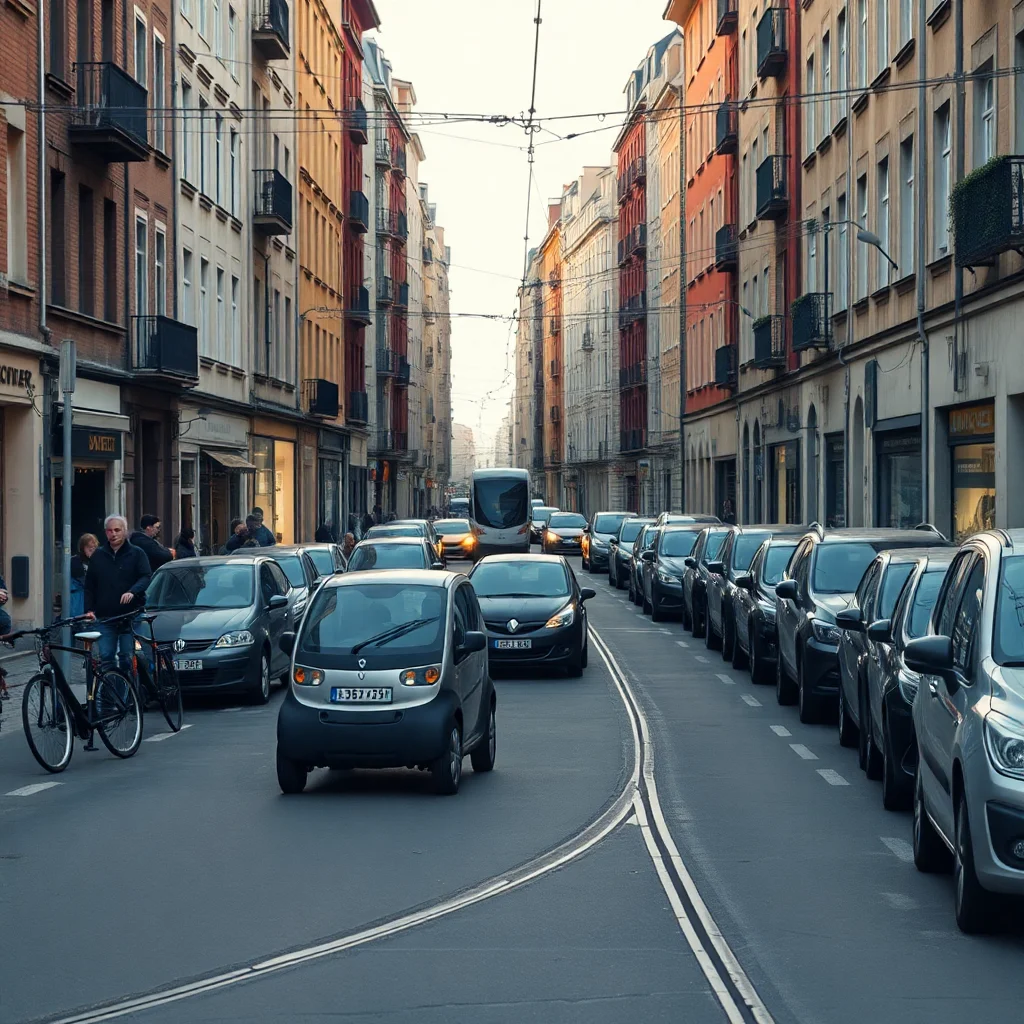
The most dangerous rival to the small EV is no longer the petrol hatchback. It is the crossover, which has become the default shape of automotive aspiration. Crossovers dominate because they promise status, visibility, and the illusion of security. Yet they are a poor fit for crowded streets, narrow historic centres, and the parking realities of European life. Electrification has made the problem worse by allowing manufacturers to justify even more bulk in the name of batteries and range.
That is why Renault’s move is editorially important. It implicitly rejects the idea that an EV must be tall, heavy, and over-equipped. The new 4 and 5 do not pretend that every buyer needs a long-distance machine capable of absurd motorway claims. They appear to be designed around a more rational use case: daily commuting, mixed urban-rural travel, and short-to-medium trips where efficiency and packaging matter more than brute capacity.
There is also a cultural dimension here. The car market has been flooded with vehicles that look like they were designed by committees afraid of offending anyone. The result is a landscape of bland, over-muscled forms. Renault’s new compact EVs bring back the possibility of a car having a point of view. In a design culture exhausted by generic premium cues, that is a refreshing provocation.
That tension between function and meaning is not unique to cars. It echoes the broader shift explored in Why Iconic Objects Still Rule Design Culture, where recognizable forms regain value precisely because they communicate more than utility.
Affordability is not a compromise; it is the brief
For electric mobility to reshape European streets, it must be accessible beyond affluent early adopters. That means price, yes, but also perceived value. The industry has spent years treating affordability as a technical problem solved by deleting features. That approach produces disappointment. A better approach is design-led economy: simplify where it matters, amplify where it counts, and make the product feel intentional rather than cheap.
Renault’s new small EV strategy appears to operate in this register. A compact platform can reduce material use, parking stress, and energy consumption. It can also support better urban ownership patterns: second-car replacement, shared family use, fleet adoption, and young buyers who do not want to be locked out of electrification by luxury pricing. The implications are broader than one model line. If the small EV becomes desirable, the market may finally start rewarding lightness over excess.
Compare that with the prevailing premium EV script, where range anxiety is “solved” by adding battery mass and price, then wrapped in a body that consumes more space than many people’s homes need. Renault is offering a different philosophy: enough range, enough space, enough character. In a sane market, that is not a compromise. It is maturity.
That idea of restraint as a premium value also resonates with When Waste Becomes Luxury Material, which asks how design can turn limits into a more persuasive form of desirability.
Could the small car reshape the European street?
If compact EVs succeed, they will affect more than purchasing decisions. They will alter parking patterns, curbside space, and the visual density of the city. Smaller cars are easier to share streets with cyclists and pedestrians; they occupy less visual and physical territory; they reduce the pressure to widen the car’s claim on urban life. That may sound incremental, but urban form is often changed by accumulation, not spectacle.
There is also a symbolic effect. The return of the small car would reassert a European tradition of intelligent restraint against the Americanized logic of vehicle enlargement. Europe’s most resilient urban fabrics were never built for oversized machinery. A wave of compact EVs would not solve congestion, emissions, or infrastructure alone, but it could support a more civil street culture. It would tell designers, policymakers, and buyers that progress can be scaled to human proportion.
Renault’s gamble is therefore larger than nostalgia. The new 4 and 5 are tests of whether the small car can once again become a mass-market idea with aesthetic credibility. If they succeed, the impact will not be confined to showrooms. It will be measured in the kind of streets we normalise, the parking spaces we accept, and the size of ambition we allow mobility to have.
Seen that way, the shift is part of a wider mobility revaluation, similar to the argument in The Bicycle Is the New Prestige Object, where status begins to detach from bulk and attach instead to intelligence, agility, and urban fit.
FAQ
Why are Renault’s new 4 and 5 important in the EV market? They challenge the assumption that electric cars must be large and expensive. By combining compact dimensions with strong design, they make the small EV feel relevant again.
How do these cars differ from most current EVs? Most EVs on the market lean into crossover bulk and premium pricing. The Renault 4 and 5 focus on proportion, affordability, and urban usability instead.
Can small EVs really change city life? Yes, because they occupy less space, are easier to park, and better suit dense European streets. Their wider adoption could influence both traffic culture and curbside design.
Is nostalgia the main reason people will buy them? No. Nostalgia helps, but the stronger argument is practical and visual: they offer a more humane, more rational alternative to oversized electric cars.
What comes next for the small car?
The crucial test is whether Renault can turn this design statement into a market shift. If the new 4 and 5 sell well, competitors will have to take compact EVs seriously again, rather than treating them as niche compliance products. That could open the door to a broader rebalancing of the market: more hatchbacks, more modest footprints, more cars designed for cities instead of marketing decks.
But the industry will not change out of enlightenment. It changes when a category proves profitable. Renault understands this, which is why its move feels both cultural and commercial. It is not simply reviving two nameplates; it is attempting to reformat what desirability means in the electric era.
The small car is back because the city never stopped needing it. The only real question is whether buyers, manufacturers, and planners are ready to stop pretending that bigger is a virtue.
Get the Mainifesto weekly — curated design debates, speculative ideas and the week's best articles every Saturday.
Editorial Perspectives
Questions and counterpoints developed by the Mainifesto editorial desk to extend the discussion.
Perspective 1
This is the first EV story in a while that sounds like a product people might actually want to live with, not just tolerate. If Renault can make small feel premium and useful, that’s a better business case than building rolling apartments for empty city streets.
Perspective 2
Small cars have always understood proportion better than most cities do. The real mistake is treating size as status when restraint is what makes design feel modern.
Perspective 3
Affordability matters, but so does the total material footprint, and smaller vehicles usually win that argument before the battery discussion even starts. If we’re serious about lower-impact mobility, the city should be rewarding efficient use of space, energy, and resources—not just bigger range figures.
Perspective 4
Cities are already full of oversized objects pretending to be normal, and cars are the worst offenders. A compact EV is not nostalgia; it is a correction to a planning culture that keeps asking historic streets to absorb modern excess.
Perspective 5
This is the direction the industry should have taken from the start: lighter, tighter, smarter, and far less arrogant. If electric mobility still copies the old big-car fantasy, we’ve learned nothing except how to add batteries to a bad idea.