When Computational Design Becomes Just Another Look
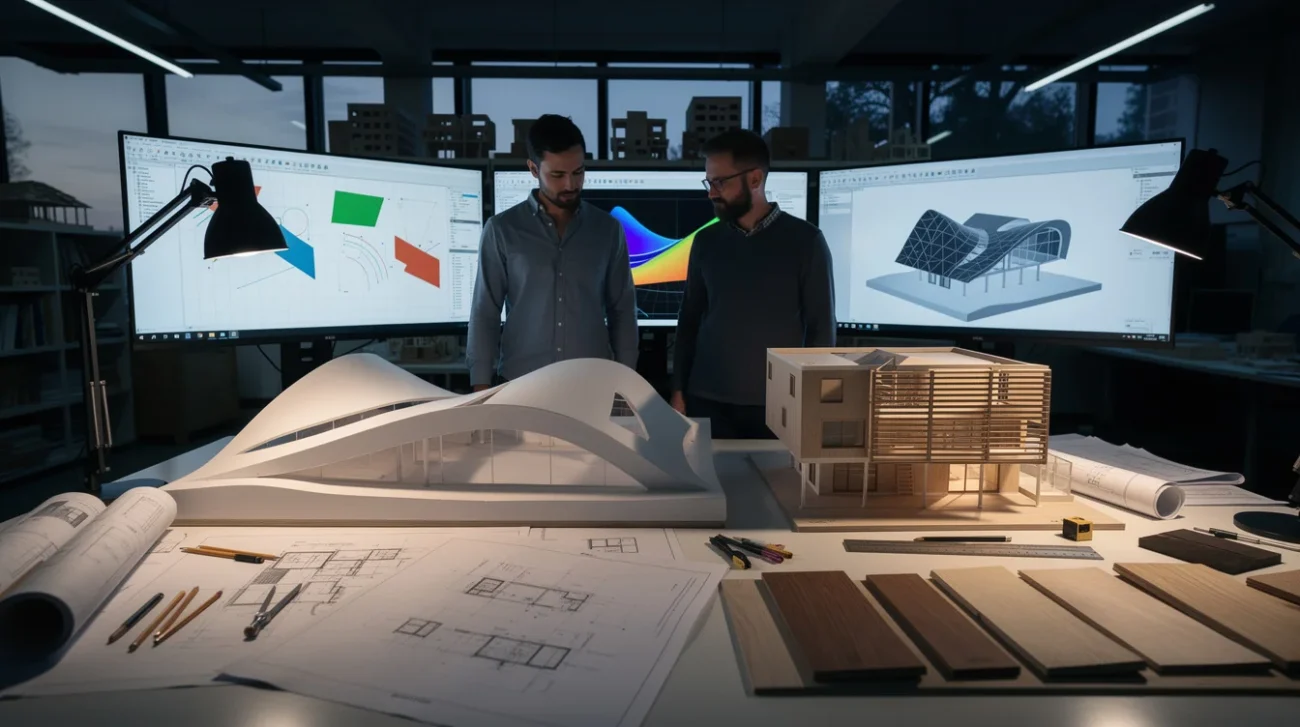
A building does not become intelligent because it looks difficult to draw. Architecture has spent too long treating the curve as evidence: evidence of innovation, technical sophistication, even an inevitable future. The smooth surface, the branching column and the continuously differentiated facade have become familiar credentials. They announce computational ambition before anyone asks what the computation actually achieved.
This is not an argument against spectacular architecture. It is an argument against letting spectacle impersonate a method. If computational design means establishing relationships between variables, then its most convincing result might be a perfectly ordinary building: rectangular, economical, comfortable and unusually good at accommodating change. The scandal is not that parametricism acquired a recognisable look. Styles do that. The scandal is that the look became a convenient substitute for examining the relationships underneath.
The manifesto that wanted everything to relate
In September 2008, during the Dark Side Club sessions organised alongside the 11th Venice Architecture Biennale, Patrik Schumacher presented a sweeping proposition. His text, Parametricism as Style, announced “the great new style after modernism”, relegating Postmodernism and Deconstructivism to “transitional episodes”. Schumacher, then a partner at Zaha Hadid Architects, was not merely advertising a software technique. He was claiming an architectural succession.
The ambition extended from urban planning to construction details, interiors and products. Elements would become variables within an interconnected system, allowing continuous differentiation and adaptation rather than the repetition of isolated, fixed objects. Change one condition and others could respond. Architecture would behave less like an assembled inventory and more like a coordinated field.
That proposition contained a productive tension. A method capable of responding to different circumstances should generate substantially different outcomes. A style, however, needs enough consistency to be recognised. Parametricism wanted both radical responsiveness and a legible architectural identity.
Zaha Hadid Architects’ Heydar Aliyev Center in Baku, completed in 2012, makes the attraction of that identity obvious. Its flowing transitions between landscape, envelope and interior produce an extraordinarily coherent spatial image. But the image cannot, by itself, demonstrate how intelligently the building reconciles its competing demands. Formal continuity is visible. The quality of the decisions behind it requires investigation.
When the signature arrives before the problem
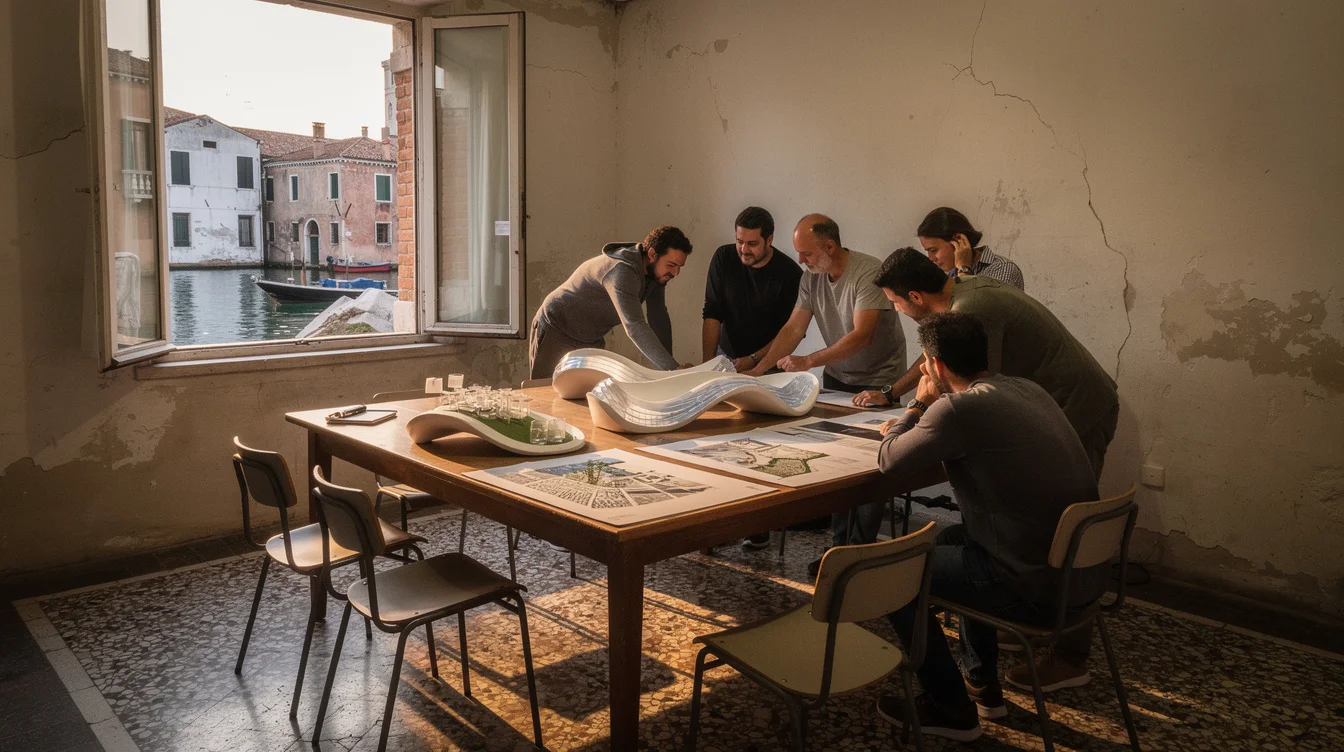
The contradiction becomes sharper when the architectural answer seems settled before the questions have been asked. If a transport interchange, a museum and an office development all arrive wearing related families of smooth surfaces and fluid transitions, we should ask what is adapting to what. Is geometry responding to the brief, or is the brief being made to support a preferred geometry?
This is a test, not a verdict on every curved building. At the London Aquatics Centre, designed by Zaha Hadid Architects for the 2012 Olympic Games, the sweeping roof organises a major public interior around swimming pools and spectator space. Its form deserves to be assessed through structure, visibility, atmosphere and the building’s subsequent public use, not dismissed because it is expressive. Equally, its expressiveness should not exempt it from those assessments.
The problem begins when a design office treats computational tools primarily as instruments for producing family resemblance. Parameters may control hundreds of components while leaving the most consequential decision untouched: the building must look like this.
A highly variable model can conceal a remarkably inflexible architectural agenda. Adjusting panel sizes across a predetermined surface is sophisticated production work. It is not necessarily evidence that the project’s fundamental assumptions were open to revision. Technical complexity and intellectual openness are different achievements.
Computation has no obligation to look computational
Parametric modelling is a way of defining dependencies. Computational design is a broader territory involving algorithms, simulation, search and other procedures. Parametricism is an architectural programme with stylistic commitments. These terms overlap, but treating them as synonyms gives a particular visual culture ownership of tools that belong to the whole discipline.
Consider Al Bahar Towers in Abu Dhabi, designed by Aedas with engineering by Arup and completed in 2012. Their responsive shading system provides a concrete relationship to examine: the movement of external screens in relation to solar exposure. The important discussion is not whether the facade looks sufficiently futuristic. It concerns shading, daylight, maintenance, control and how the mechanism performs in use. A responsive component has to answer to conditions beyond its photograph.
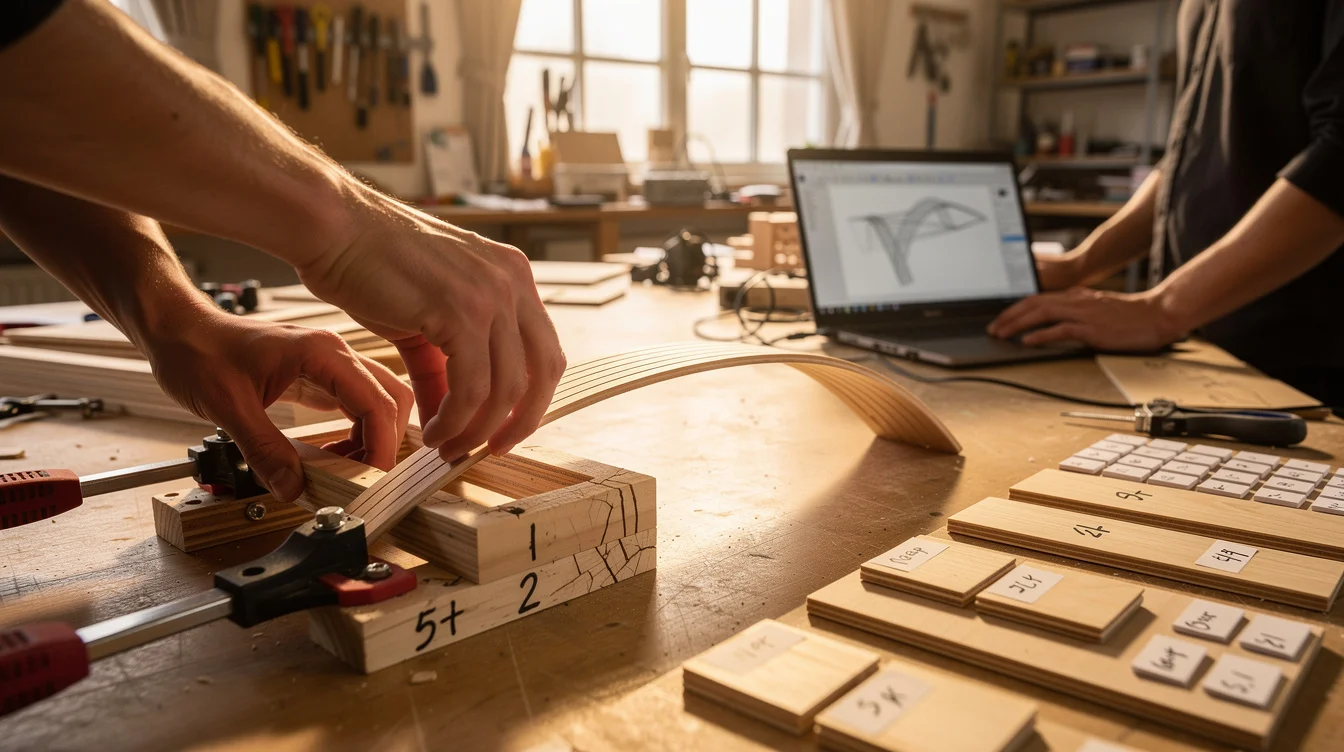
The University of Stuttgart’s ICD/ITKE Research Pavilion 2010 offers another useful reference. Its thin plywood structure explored the relationship between material behaviour, computational modelling and fabrication. Here, geometry was investigated through the bending capacity of a particular material, not simply applied as an image.
Neither example proves that complexity always pays. Both make the relevant questions more specific. What relationship was modelled? What physical behaviour informed it? What happened when the proposal encountered fabrication, weather or occupation? These are better questions than whether a building belongs to the correct formal tribe.
The ordinary building is the harder provocation
Imagine a mid-rise housing block that looks almost stubbornly conventional. Its structural grid coordinates apartment layouts with standard components. Window dimensions vary where orientation and overheating risk justify variation. Service routes remain accessible. The plan allows two smaller homes to become one larger home without relocating every wet area. The facade uses a limited family of repairable parts.
This is a hypothetical project, not a claim about a particular completed building. But its design could involve extensive computational testing: comparing daylight and heat gains, assessing structural quantities, checking layouts and evaluating alternative assemblies. The result might look less computational precisely because the process eliminated gratuitous complexity.
The transformation of 530 dwellings at Grand Parc Bordeaux, by Lacaton & Vassal, Frédéric Druot and Christophe Hutin, supplies a valuable comparison. Completed in 2017, it expanded existing housing with winter gardens and balconies rather than replacing the blocks. It is not being offered here as a documented parametric design case. Its relevance is the hierarchy of priorities: retain useful fabric, enlarge everyday possibilities and direct architectural effort towards inhabitants.
Computational methods could serve that hierarchy brilliantly. They could also optimise a replacement building while never questioning whether demolition was necessary. A model can calculate efficiently inside a bad premise. The choice of what to preserve, measure or challenge remains a design responsibility, not a software function.
Demand an account of the decisions, not a visual alibi
Architecture needs a more demanding vocabulary for computational work. A project should explain which variables could change, which constraints were imposed and which objectives conflicted. A reduction in structural material might increase fabrication difficulty. More glazing might improve some daylight conditions while worsening overheating. Standardisation might simplify replacement while limiting local variation. There is no neutral master slider labelled “better”.
This is also why optimisation should never be confused with inevitability. Designers choose objectives, boundaries and acceptable compromises. Clients choose budgets and programmes. Regulations establish thresholds. Calling a result “generated” does not remove authorship; it can simply make authorship harder to locate.
Frei Otto’s form-finding work, including his contribution to the Mannheim Multihalle, completed in 1975, reminds us that relational thinking predates today’s software culture. Physical models explored equilibrium and structural behaviour. Their importance was not that they anticipated a fashionable digital silhouette, but that they made relationships materially consequential.
Computational architecture should be judged with comparable seriousness: against plausible alternatives, construction realities and evidence from occupation. Spectacular curves can survive that scrutiny. Some will become more compelling because of it. But an ordinary building should be allowed to win.
Parametricism loses its strongest argument when recognition becomes the goal. The promise was architecture capable of responding to differences. Delivering the same visual assurance everywhere is not the fulfilment of that promise. It is its conversion into branding.
FAQ
What is the difference between parametricism and parametric design?
Parametric design establishes relationships between variables so that changes can propagate through a model. Parametricism is the architectural programme associated with Patrik Schumacher’s 2008 manifesto, which connects relational design to a proposed style. Using parametric tools does not require adopting that style.
Does computational design always produce curved buildings?
No. It can organise rectangular structural grids, compare apartment layouts, coordinate components or test shading options. Curvature is one possible outcome, not proof that computation occurred or that a design performs well.
Can a spectacular building also be genuinely responsive?
Absolutely. Expressive geometry can support structural, environmental and spatial ambitions. The test is whether those relationships can be explained and evaluated, including their costs and maintenance implications, rather than inferred from the building’s appearance.
How should computational architecture be evaluated?
Ask what the process improved compared with credible alternatives. Examine comfort, material use, adaptability, construction and maintenance as appropriate to the project. Distinguish simulated performance from measured results, and ask whose priorities shaped the objectives.
If an ordinary-looking building responds more intelligently to its constraints than a spectacular curve, which one deserves to represent architecture’s computational future?
Get the Mainifesto weekly — curated design debates, speculative ideas and the week's best articles every Saturday.
Editorial Perspectives
Questions and counterpoints developed by the Mainifesto editorial desk to extend the discussion.
Perspective 1
A building that handles heat, power cuts and local repair deserves more credit than a curve that depends on imported fabrication and permanent specialist support. If those constraints never entered the model, the computation was solving the client's image problem, not the city's.
Perspective 2
I'd back the ordinary building, but only if we can inspect what it actually optimised and measure how it performs after occupation. The deeper question is who sets the objective function: minimum cooling demand and affordable space can produce very different answers from maximum rental yield.
Perspective 3
Modernism also promised a method and ended up supplying a look; parametricism is hardly the first movement to mistake its visual vocabulary for its intellectual achievement. The ordinary building may be the more convincing computational work, though discretion is no more a guarantee of intelligence than curvature.