
After the Spectacle, Who Pays for Design Experimentation?
After the Spectacle, Who Pays for Design Experimentation?
A dress materializes on a body. A handbag turns an aerospace-associated material into an accessory. Fashion briefly looks less like an industry producing collections than a public demonstration of what matter might become. Then comes the question the runway rarely accommodates: who pays for the next experiment, the unsuccessful trials, and the work required to make the discovery useful?
Designboom’s report of Coperni’s closure brings that question into sharp focus. Its retrospective frames the label’s liquid textiles and microorganism-related garments as experiments at the boundary of fashion and scientific research. The reported shutdown is the starting point here, not proof of a financial diagnosis. There is no basis in the supplied reporting to conclude that experimentation caused the closure. Treating the news as punishment for creative ambition would be both analytically lazy and culturally convenient.
The more uncomfortable issue is structural. We celebrate brands for behaving like research laboratories, then judge their survival through the commercial expectations of fashion: collections, orders, delivery, margin, repeat. Coperni makes this contradiction visible. The challenge is not to decide whether its spectacles were worth it. It is to ask why discoveries with potential value beyond a label should depend so heavily on that label’s ability to sell the next season.
A Viral Demonstration Is Not Yet a Research Programme
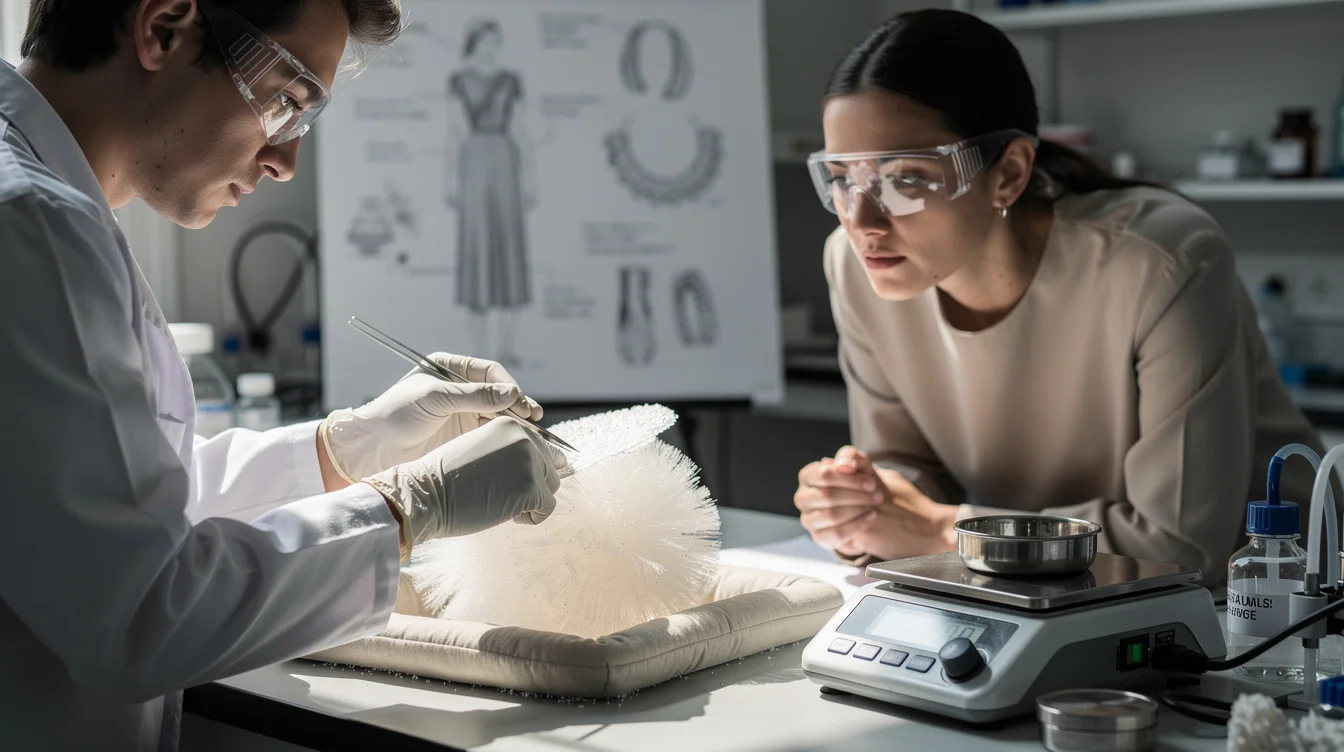
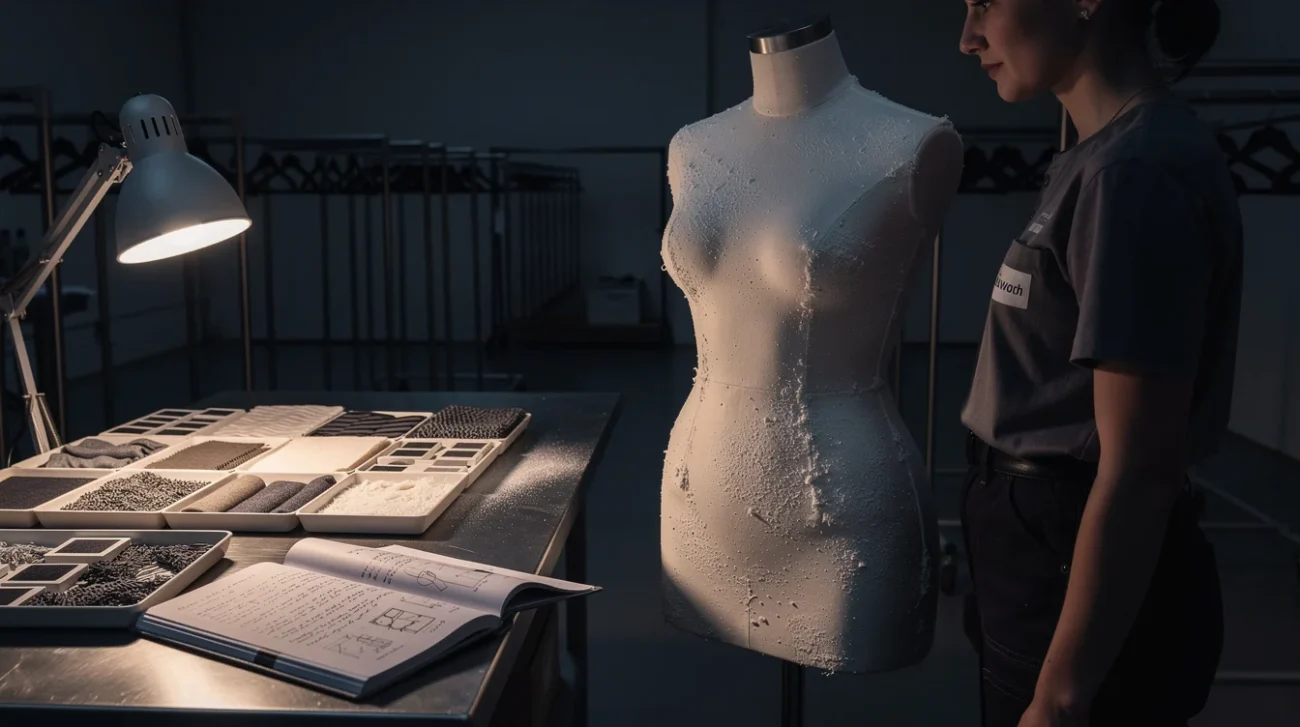
Coperni’s most recognizable experiment was its spring/summer 2023 presentation in Paris in September 2022, when technicians sprayed a dress onto Bella Hadid using Fabrican’s spray-on fabric technology. Developed by Manel Torres, Fabrican existed before that runway moment. Coperni’s contribution was not inventing the underlying process; it was giving the technology a startlingly legible encounter with a body, an audience, and fashion’s image machinery.
That distinction matters. A runway demonstration can reveal possibilities that a technical paper cannot: how a material moves, how someone might inhabit it, why anyone outside a laboratory should care. But a successful reveal does not establish manufacturing throughput, everyday comfort, repairability, or a viable recovery process. Nor does it tell us whether the finished product improves on existing alternatives.
The Air Swipe bag, presented in 2024 and developed with artist and researcher Ioannis Michaloudis, performed a related translation. Described as comprising 99 percent air and 1 percent glass, its silica aerogel construction made extreme lightness into a desirable object. It was a compelling material proposition, not evidence that ordinary handbag production was ready to change. The spectacle is a research interface. It is not a substitute for research. Confusing the two flatters fashion while obscuring the scientists and technical partners whose work makes the image possible.
The Seasonal Calendar Is a Bad Research Contract
A fashion collection needs decisions on schedule. Materials research needs permission to delay them. A buyer wants a dependable delivery date; a researcher may need another cycle of testing before deciding whether a promising sample is safe, durable, or worth developing. These are not personality differences between creative and commercial teams. They are incompatible definitions of progress.
Consider what would have to follow a spray-on dress demonstration before the process became a credible alternative for a particular product. Developers would need to investigate production conditions, exposure controls, consistent thickness, finishing, maintenance, and end-of-life treatment. The relevant questions would depend on the formulation and intended use. None can be answered by counting views of the runway video.
The mismatch becomes sharper with living materials. Designboom’s summary includes garments incorporating microorganisms. Without technical documentation, that description should not be inflated into claims about performance or environmental benefit. A microorganism may be part of production, remain active in use, or simply contribute to an experimental concept; those scenarios demand different evaluations.
Suzanne Lee’s BioCouture work offers a useful reference: bacterial cellulose shifted attention from cutting cloth to growing material. Yet growing a compelling sample and operating a reliable product system are different achievements. Seasonal novelty rewards the first visible result. Research infrastructure must support everything that follows it.
Fashion Can Be a Laboratory—But Not on Prestige Alone
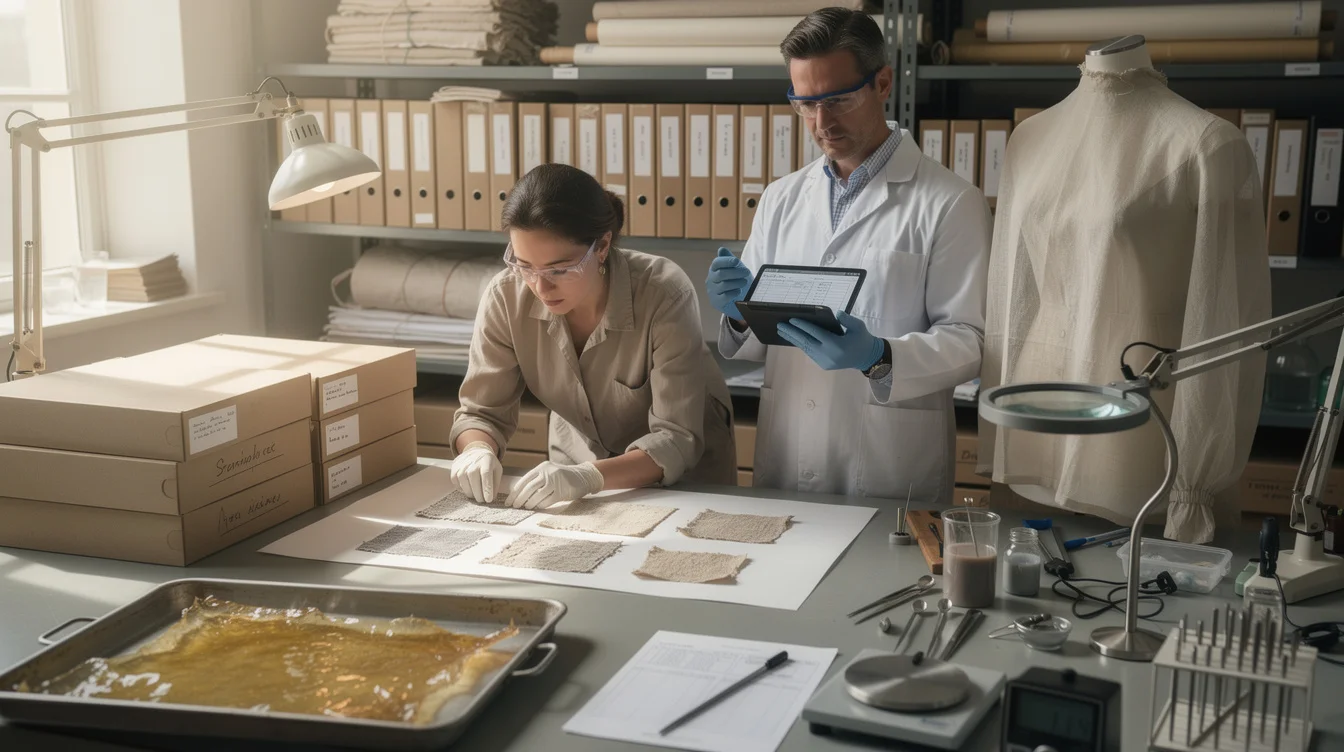
The easy response is to dismiss experimental fashion as marketing. That is too simple. Marketing can finance a genuine technical collaboration, while a beautifully staged prototype can expose a problem worth studying. The harder task is distinguishing meaningful experimentation from innovation language attached to an otherwise conventional product.
Iris van Herpen’s collaborations around computational design and additive manufacturing show how a fashion practice can sustain an identifiable experimental agenda across collections. Hussein Chalayan’s mechanically transforming garments demonstrated another capacity: using the dressed body to make technological change emotionally and politically tangible. Neither example means every runway invention should become a mass-market product. Cultural knowledge is also a result.
Nevertheless, a brand does not become a laboratory merely by borrowing the laboratory’s visual language. A research programme needs defined questions, documented methods, credited collaborators, and evidence of what changed between iterations. It also needs a record of failure. If every prototype is announced as a breakthrough, the public cannot distinguish discovery from art direction.
Brands should therefore separate three claims: this experiment creates a powerful image; this experiment generates new knowledge; this experiment improves a product system. All three can be valuable. They require different evidence, different budgets, and different time horizons. Asking a single seasonal sales figure to validate them all is not commercial discipline. It is poor accounting for what design actually produces.
Build an Afterlife for the Knowledge, Not Just the Dress
A museum can preserve a runway object and still lose most of the knowledge embedded in it. The finished dress does not explain an unsuccessful formulation. The aerogel bag does not contain the full handling protocol, fabrication sequence, or record of rejected approaches. An archive of glamorous outcomes is not the same thing as an archive of research.
Institutions such as the Victoria and Albert Museum and the Metropolitan Museum of Art’s Costume Institute demonstrate the cultural importance of conserving fashion. Experimental materials demand an additional layer: technical records that can be interpreted alongside objects, with access conditions appropriate to intellectual property, safety, and conservation. Some materials may also change in storage, making documentation of their original state essential.
A better model would establish an exit protocol when a collaboration begins. Partners would agree who owns samples, who maintains digital files, which findings can be published, and what happens if a participant ceases trading. Where living organisms are involved, suitable specialist facilities—not simply a fashion archive—would need to assess any preservation requirements.
This is not a demand that Coperni’s proprietary information be released without consent. It is a proposal for future agreements. The continuity of knowledge should be designed into a project before the continuity of the company is threatened. Otherwise, a business failure can become an unnecessary research loss.
Who Should Pay After the Applause?
The funding answer cannot be “the visionary founder” indefinitely. If suppliers gain technical knowledge, universities gain research opportunities, brands gain attention, and the public gains cultural value, the costs should not automatically settle on one seasonal balance sheet. The burden should follow the benefit.
Precompetitive consortia offer one route. Several brands and material producers could fund shared testing of properties such as abrasion resistance or recovery processes, while competing on product design. University partnerships could support longer investigations, provided publication rights and researcher credit are agreed upfront. Targeted public grants could back demonstrable research or shared infrastructure, rather than subsidizing a spectacular launch because it looks futuristic.
Licensing offers another possible bridge: an invention developed with fashion might find a more suitable application elsewhere. But royalties are not a guaranteed rescue plan. Transfer requires validation, clear ownership, and someone willing to finance the difficult interval between prototype and use.
The decisive shift would be a protected research budget with stage-specific goals: establish feasibility, test a defined application, document failure, or transfer knowledge. Sales would remain essential to the fashion business without becoming the only measure of its experimental work. Coperni’s reported closure does not prove that fashion should stop experimenting. It exposes how little we have built to ensure that experimentation can survive the commercial vehicle that made it visible.
FAQ
Did design experimentation cause Coperni’s reported closure?
The supplied source context does not establish that causal link. Experimental projects and a reported closure can be discussed together without assuming that research spending, runway spectacles, or particular products caused the business outcome.
What did Coperni contribute to materials research?
Projects such as the Fabrican spray-on dress and the silica aerogel Air Swipe bag brought specialist technologies into fashion, testing their expressive possibilities and attracting public attention. Those contributions should be distinguished from inventing the underlying technologies or proving their commercial scalability.
How can a fashion brand function more credibly as a laboratory?
It can define research questions, establish longer-term technical partnerships, document successive trials, and evaluate results beyond seasonal sales. Protected budgets and explicit agreements on intellectual property, publication, and credit help separate research commitments from promotional deadlines.
What infrastructure could help experiments outlive a label?
Technical archives, specialist conservation partners, shared testing facilities, and contractual arrangements for transferring samples and records could preserve useful knowledge. Funding should cover documentation and stewardship as well as the initial demonstration.
If fashion’s experiments create value beyond fashion, who should be obliged to keep that knowledge alive when the label can no longer pay?
Watch the Mainifesto Short
Get the Mainifesto weekly — curated design debates, speculative ideas and the week's best articles every Saturday.
Editorial Perspectives
Questions and counterpoints developed by the Mainifesto editorial desk to extend the discussion.
Perspective 1
A brand is designed to be remembered; a process often isn't. If sponsors want credit for innovation, part of their funding should pay for documentation that survives the logo—including the technicians’ names and the failed attempts.
Perspective 2
A material experiment isn't transferable if all we inherit is a runway video. Could research partners require a deposit of formulations, fabrication parameters and test results, with access opening when commercial protection expires?
Perspective 3
The couture house is not the Bauhaus simply because it stages a technological surprise. Museums should preserve experiments with demonstrable significance, but suppliers and research partners must help preserve the technical record; another exhibition of spectacular dresses will hardly do.
Perspective 4
Follow the contracts: who owns the patent, who supplied the equipment, who gets to commercialise the result? Those beneficiaries should fund preservation, with obligations written in before the show—not leave an underfunded archive to rescue it afterward. And access cannot stop at the European institutions that can afford the licence.
Perspective 5
Before asking the public to pay, I'd want evidence of value beyond the image: durability, toxicity, repairability and a credible route to production. Publicly funded experiments should carry a documentation requirement, including negative results; keeping the knowledge alive doesn't mean keeping the label afloat.