Can a Healthy Building Be Alive Without Losing Control?
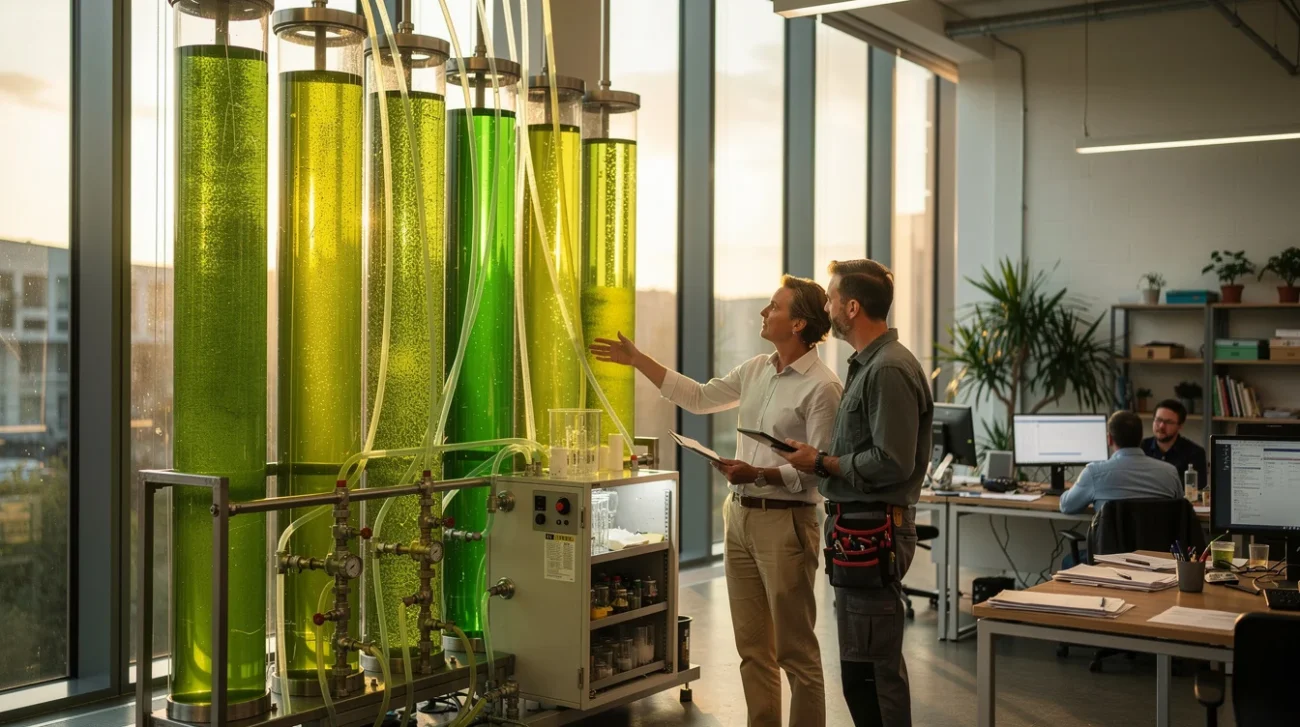
Can a Healthy Building Be Alive Without Being Out of Control?
Architecture has spent decades selling cleanliness as an aesthetic: seamless surfaces, sealed envelopes, equipment hidden behind immaculate ceilings. Microbial life usually enters that picture as a defect. The proposition highlighted by designboom’s coverage of ecoLogicStudio reverses the relationship: algae, fungi and bacteria might participate in making better environments rather than simply threaten them. But reversing a prejudice is not the same as proving a health benefit.
The real argument is not whether buildings should contain life. They already do. It is whether designers can turn selected biological processes into dependable infrastructure without disguising exposure, maintenance and uncertainty as ecological virtue. Asking who a building is designed for matters as much as deciding what it can grow. A living building earns trust through its boundaries, not through its greenness.
PRO: Stop Confusing Living With Unhealthy
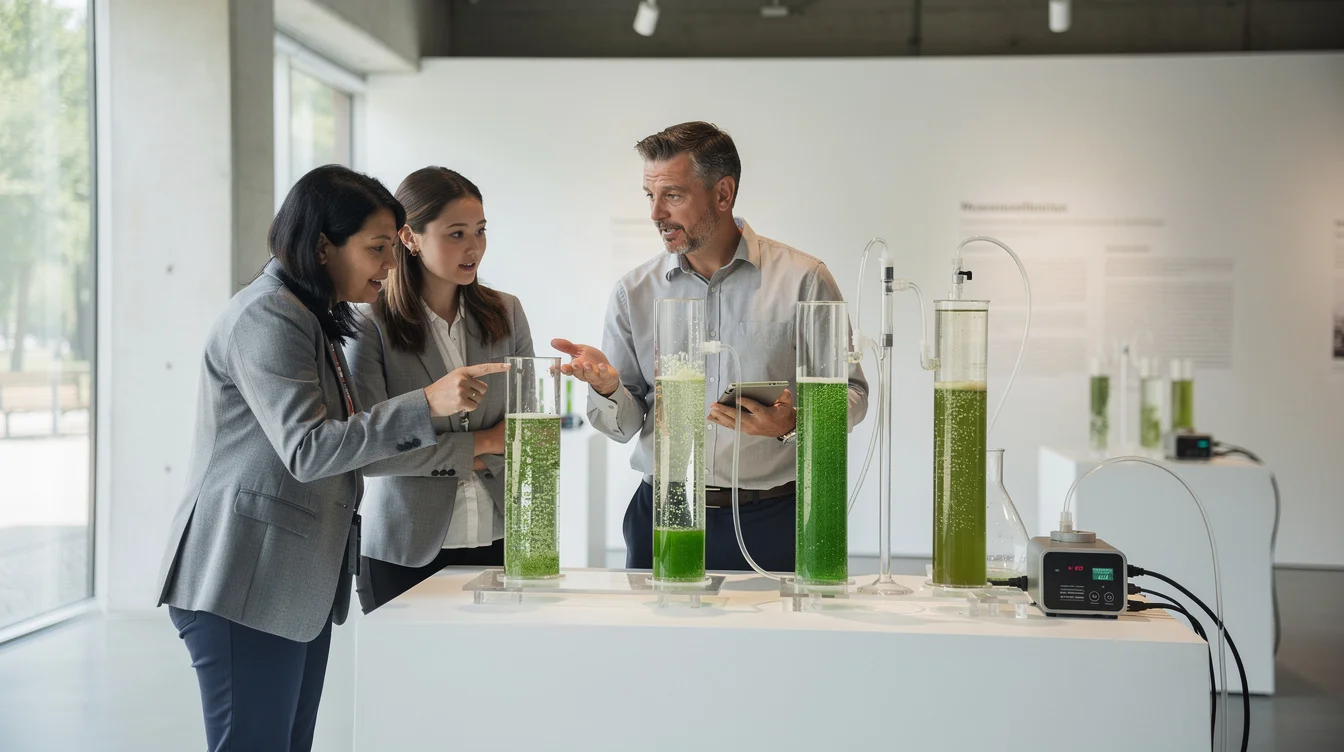
Founded by Claudia Pasquero and Marco Poletto, ecoLogicStudio makes biological activity an architectural subject rather than a backstage technical problem. Its Photo.Synthetica work integrates microalgae cultivation into transparent architectural elements. Its AirBubble playground in Warsaw places algae-containing glass reactors around a space for children. These projects make a provocative proposition visible: the building envelope can host metabolism instead of functioning only as a passive barrier.
That proposition deserves serious attention. Photosynthetic organisms use light and carbon dioxide to produce biomass, releasing oxygen in the process. In an engineered reactor, those activities can be managed through lighting, circulation, nutrient supply and harvesting. This is a different proposition from allowing damp plaster to become colonised. One provides a defined habitat for selected organisms; the other records a failure to control moisture.
Architecture already relies on biological processes elsewhere. Wastewater treatment uses microbial communities to transform contaminants, although its performance cannot simply be transferred to an interior installation. The lesson is methodological: biology becomes useful infrastructure when its operating conditions and outputs are specified.
The strongest defence of living architecture is therefore not that nature heals. It is that excluding biology from the designer’s toolkit is intellectually lazy. A maintained culture inside a purpose-designed vessel should not be judged as though it were mould behind a wardrobe. The organisms, pathways and conditions matter more than the label “microbial.”
PRO: Make Metabolism Legible, Not Magical
Living systems also challenge architecture’s habit of making environmental services invisible. In ecoLogicStudio’s H.O.R.T.U.S. XL Astaxanthin, a digitally fabricated structure supports photosynthetic cultures. Biological growth becomes something people can encounter and observe. That encounter can teach a more useful environmental lesson than another leaf-shaped building: performance depends on relationships among organisms, light, water, energy and human care.
The material distinctions matter. Fungi can act as manufacturers rather than permanent occupants. David Benjamin’s practice The Living used mycelium-based bricks for Hy-Fi at MoMA PS1, demonstrating an architectural application of biologically grown material. Many mycelium products are dried or otherwise processed after growth; they should not automatically be described as active interior ecosystems. Likewise, bacterial mineralisation can contribute to material production or repair without requiring occupants to share room air with an exposed culture.
This expands the design choices beyond a false binary of sterile box or indoor swamp. An organism may remain active inside a sealed reactor, operate within an accessible service zone, or help produce a finished material before occupation. Each arrangement creates different benefits and obligations.
The public-facing quality of projects such as AirBubble could also support accountability. A living installation can display its operating status, service history and measured performance alongside its biological spectacle. Making maintenance visible would be a genuine architectural innovation. It would replace the fantasy of the self-sufficient green object with a legible relationship between occupants, equipment and caretakers.
CONTRA: A Productive Culture Is Not Yet Health Infrastructure
The counterargument begins where the marketing usually accelerates. Demonstrating that algae grow, absorb carbon dioxide or interact with pollutants does not establish that an occupied room becomes healthier. Reactor-scale activity, whole-room air quality and human health outcomes are different levels of evidence. Designers must stop sliding between them.
Consider a photosynthetic installation in a busy classroom. Its influence on room conditions would depend on culture density, light, airflow, operating time and the number of people present. A laboratory removal rate cannot establish the benefit under those conditions. Carbon dioxide uptake also does not demonstrate control of fine particles, airborne pathogens or volatile organic compounds. Claims about each require separate tests, with any accompanying filters or ventilation changes accounted for.
Before accepting a living system as health infrastructure, occupants deserve independently checked, occupied-space measurements against a meaningful baseline. Comparisons should include conventional ventilation or filtration where those are realistic alternatives. Performance should be reported across representative operating periods, not just during a carefully supervised demonstration. Assessing that evidence is an exercise in architectural judgment, not an extension of the marketing brief.
Resource use belongs in that assessment too. Pumps, supplementary lighting, cleaning, water treatment and biomass disposal can change the environmental balance. A green culture is not an environmental balance sheet. Without transparent accounting, the living component risks becoming an attractive proxy for benefits delivered by ordinary mechanical equipment. Experimental architecture can remain valuable without claiming clinical authority it has not earned.
CONTRA: Containment Must Survive Neglect
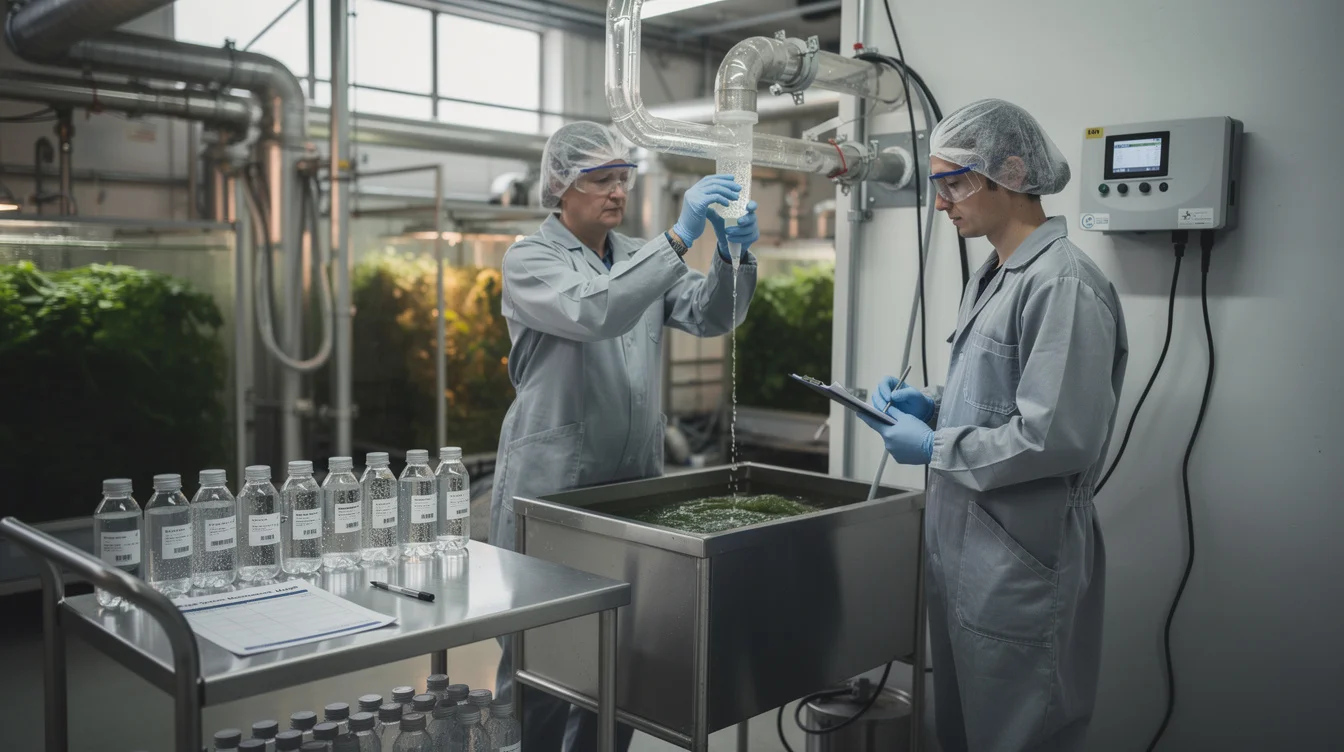
Containment is not merely the presence of a transparent wall. It includes seals, plumbing connections, gas exchange, sampling, harvesting and cleaning. A liquid culture may be physically separated from occupants while still having potential release pathways during servicing or through poorly controlled air handling. Whether those pathways create a meaningful hazard depends on the organisms, system design and exposure—not on how reassuring the installation looks.
The practical distinction between beneficial activity and unwanted growth starts with a specification: which organisms belong, where they may exist, which operating conditions are acceptable, and what triggers intervention. Unplanned growth outside the reactor is not evidence that the building has become more ecological. It is a maintenance event requiring investigation. Visible culture colour alone cannot verify microbial identity or safety.
Designers should examine ordinary failures: a leaking connector, a blocked line, interrupted power, extended shutdown or a missed cleaning visit. Can staff isolate and drain the system safely? Does the room retain adequate ventilation when the biological equipment stops? Who handles the harvested material? A school or healthcare setting demands particular care because occupants may have greater susceptibility or limited ability to avoid exposure.
A credible handover therefore needs organism-specific risk assessment, commissioning records, exposure testing appropriate to the design, clear alarms, funded maintenance and a shutdown protocol. If failure cannot be made safe and understandable, the installation is not ready to serve as health infrastructure. That is not hostility to living architecture. It is the minimum seriousness its ambitions demand.
FAQ: What Occupants Should Ask Before Moving In
Are algae installations proven to make indoor air healthier?
Not simply because they contain growing algae. Photosynthetic activity can be demonstrated without proving a meaningful room-scale health benefit. Occupants should ask for independent testing of the particular installation, including relevant pollutants, representative occupancy, operating conditions and a comparison with the space without the system.
How is a living reactor different from unwanted mould?
A designed reactor provides selected organisms with a defined habitat and managed inputs. Unwanted mould grows outside that specification, often where moisture has accumulated. The important distinctions are organism identity, location, containment and exposure. Being deliberately introduced does not, by itself, make an organism harmless.
Do mycelium building materials stay alive?
Not necessarily. Many mycelium-based products are dried or processed after cultivation, so their architectural role is materially different from that of an active fungal culture. Ask the manufacturer about the finished product, moisture resistance, emissions, fire performance and installation requirements rather than assuming all bio-based materials behave alike.
What documentation should residents or building managers receive?
They should receive a plain-language description of the organisms and claimed benefits, test results, servicing responsibilities, operating limits and procedures for leaks or shutdowns. Information should distinguish measured outcomes from projections. Maintenance funding and access to performance records are as important as the opening-day demonstration.
If a living installation cannot outperform simpler alternatives on health, what other benefits would justify sharing a building with it—and who should get to decide?
Get the Mainifesto weekly — curated design debates, speculative ideas and the week's best articles every Saturday.
Editorial Perspectives
Questions and counterpoints developed by the Mainifesto editorial desk to extend the discussion.
Perspective 1
I’m for living installations even without a health advantage if they deliver measurable shading, resource recovery or useful ecological knowledge. But a system that depends on imported nutrients and a specialist flying in from Europe is not resilience; occupants and local maintenance crews should have a veto, not just the client.
Perspective 2
If it cannot beat a simpler system on health, I don’t want it sold to me as healthy-building infrastructure. Beauty and education can justify an installation, but not an open-ended maintenance bill passed to tenants; give me conventional ventilation and fund the living feature separately.
Perspective 3
From the conservatory onward, architecture has brought living things indoors while carefully managing their unruliness. The interesting promise here is cultural, not clinical: making dependence on other organisms visible. But if the microbes remain sealed behind glass and the maintenance labour stays hidden, we have another picturesque object, not much of a challenge to the sterile interior.
Perspective 4
I’d like to see the installation treated as a monitored experiment, with a baseline, containment checks and a shutdown protocol occupants can understand. Even without a health advantage, the learning could justify it—but who gets to change the operating rules when the biology behaves differently from the simulation?