A Faster Border Is Not Necessarily a More Humane One
A Faster Border Is Not Necessarily a More Humane One
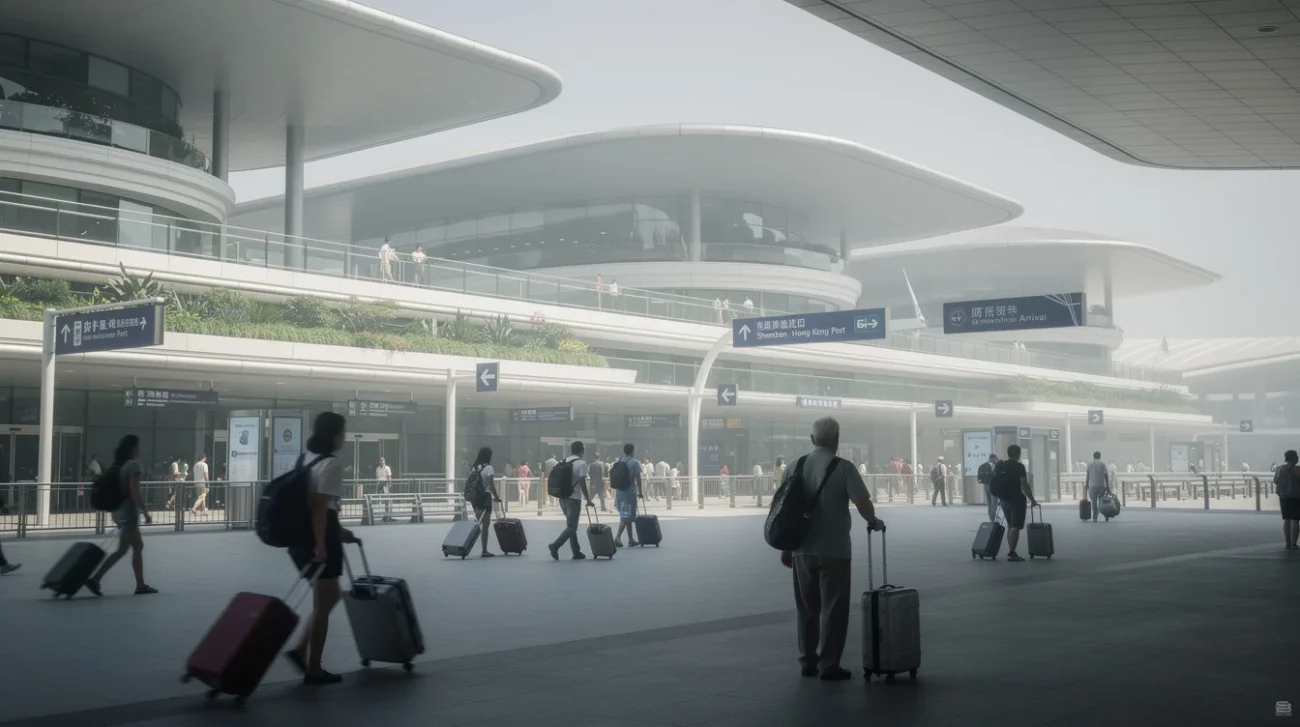
A border can move thousands of people efficiently and still fail the person standing at its counter. That contradiction belongs at the centre of architectural criticism, not in the footnotes of an operational report. Aedas’s newly opened gateway between Shenzhen and Hong Kong brings it into focus. As reported by Dezeen on 1 November 2026, the completed immigration hub is a tiered, round-edged building: an architectural object with a recognisable silhouette, housing a system that sorts people by their eligibility to pass.
The source report’s description does not establish how the building accommodates disability, language barriers or prolonged checks. What follows is therefore not an accessibility audit of the project, but an argument about the standards by which such infrastructure should be judged. Two positions deserve serious consideration: speed can protect dignity; speed can also become the excuse for abandoning it.
PRO: Efficiency Is a Form of Care
There is nothing humane about an avoidable queue. Standing for an extra hour can mean pain for someone with arthritis, a missed care appointment, or a child becoming overwhelmed in a crowded hall. At a crossing between Shenzhen and Hong Kong, a delay may interrupt an ordinary working day rather than a once-in-a-lifetime journey. Treating speed as inherently dehumanising mistakes friction for meaningful experience. Nobody needs a border to become more contemplative through administrative failure.
Good architecture reduces the work demanded of the traveller. A legible sequence from arrival to document preparation, inspection and onward transport prevents repeated backtracking. Clear sightlines help people understand where to go before they enter a queue. A help point positioned before a decision point can prevent someone from spending forty minutes in the wrong line. These are spatial achievements, not merely management decisions.
Rogers Stirk Harbour + Partners and Estudio Lamela’s Terminal 4 at Madrid-Barajas Airport offers a useful reference. Its repeated structural bays, daylight and colour-coded elements demonstrate how a very large transport building can establish orientation through architectural rhythm. An immigration hub has different security requirements, but the principle travels: comprehensible space reduces cognitive labour.
The strongest defence of throughput is that wasted time is not distributed equally. The traveller with flexible hours absorbs a delay differently from the hourly worker. Making the ordinary crossing faster can therefore be a redistributive act, provided the time saved reaches users rather than simply enabling tighter staffing.
PRO: Make the Fast Route Work Without Making It Mandatory
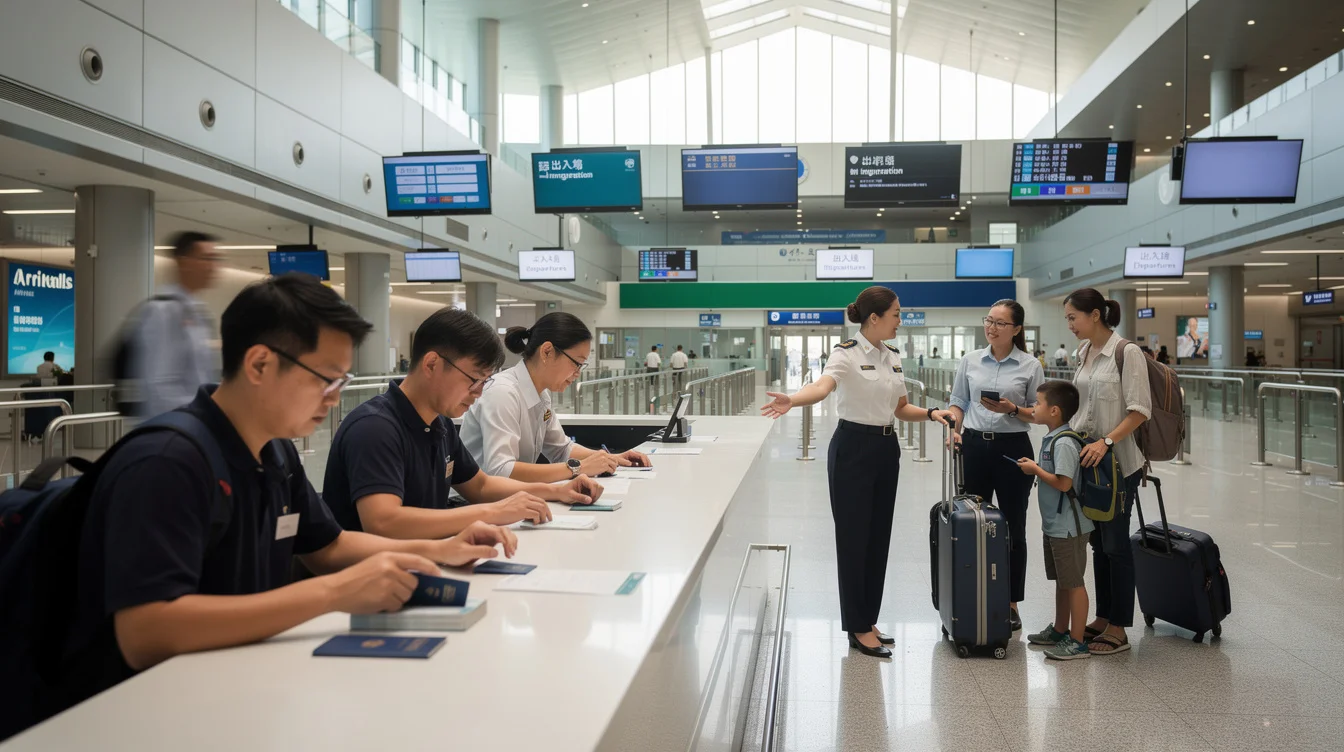
Automation can also spare people unnecessary encounters with discretionary authority. Where automated clearance is legally available and usable, it can reduce repeated document handling and routine questioning. The architectural task is to make that option understandable without turning it into a compulsory test of technical competence. A person whose document fails to scan should encounter an obvious route to assistance, not a public performance of having obstructed the machine.
Consider a traveller carrying luggage while accompanying an older relative. A generous preparation area before the gates allows documents to be retrieved without blocking circulation. Parallel assisted processing can let the pair remain together. A visible reunion point beyond inspection prevents the faster traveller from hovering anxiously beside a controlled threshold. These modest provisions make the whole system flow better precisely because they recognise that people do not travel as identical, independent units.
Ron Mace’s universal design principles offer a stronger foundation here than the familiar distinction between a normal route and an accessible exception. Equitable use and tolerance for error suggest routes that anticipate different abilities rather than punish deviations from a presumed average.
Aedas’s gateway should be assessed against this operational understanding of architectural ambition, not just the visual coherence of its tiers. The pro-efficiency argument is persuasive when it demands fewer unnecessary steps, less standing and fewer opportunities for confusion. A humane fast border does not insist that everyone move quickly; it removes whatever makes people move slowly against their will. Speed becomes a benefit available to people, not an obligation imposed on them.
CONTRA: The Average Traveller Is a Dangerous Fiction
The opposing case begins where performance dashboards often stop. An improved average processing time can coexist with a punishing experience for people referred for additional checks. A building can clear routine passengers rapidly while leaving a smaller group stranded without seating, explanation or any reliable sense of what happens next. Aggregate success can conceal concentrated harm.
This is especially consequential at a border, where leaving the queue or approaching the wrong door may not be a straightforward choice. The architecture must distinguish between a route that is physically visible and one a traveller is actually permitted to use. A toilet beyond a controlled threshold is not meaningfully accessible to someone awaiting clearance unless procedures allow them to reach it. A bench elsewhere in the hall is useless if sitting down means losing one’s place.
The anthropologist Marc Augé’s account of transit environments as “non-places” remains a useful provocation, but border space is more than anonymous. It assigns people different degrees of mobility. The frequent traveller glides through; the person facing a document discrepancy becomes intensely visible to officials while potentially disappearing from the building’s service narrative.
Architects should therefore ask for performance measures beyond average throughput: prolonged-wait durations, access to assistance, comprehensibility of instructions and whether companions can remain together. These are proposed evaluation criteria, not reported features or failures of Aedas’s project. A rounded exterior cannot tell us whether an institution has softened its treatment of the people inside. That requires evidence at the scale of the difficult encounter.
CONTRA: Waiting Needs Architecture, Not Leftover Space
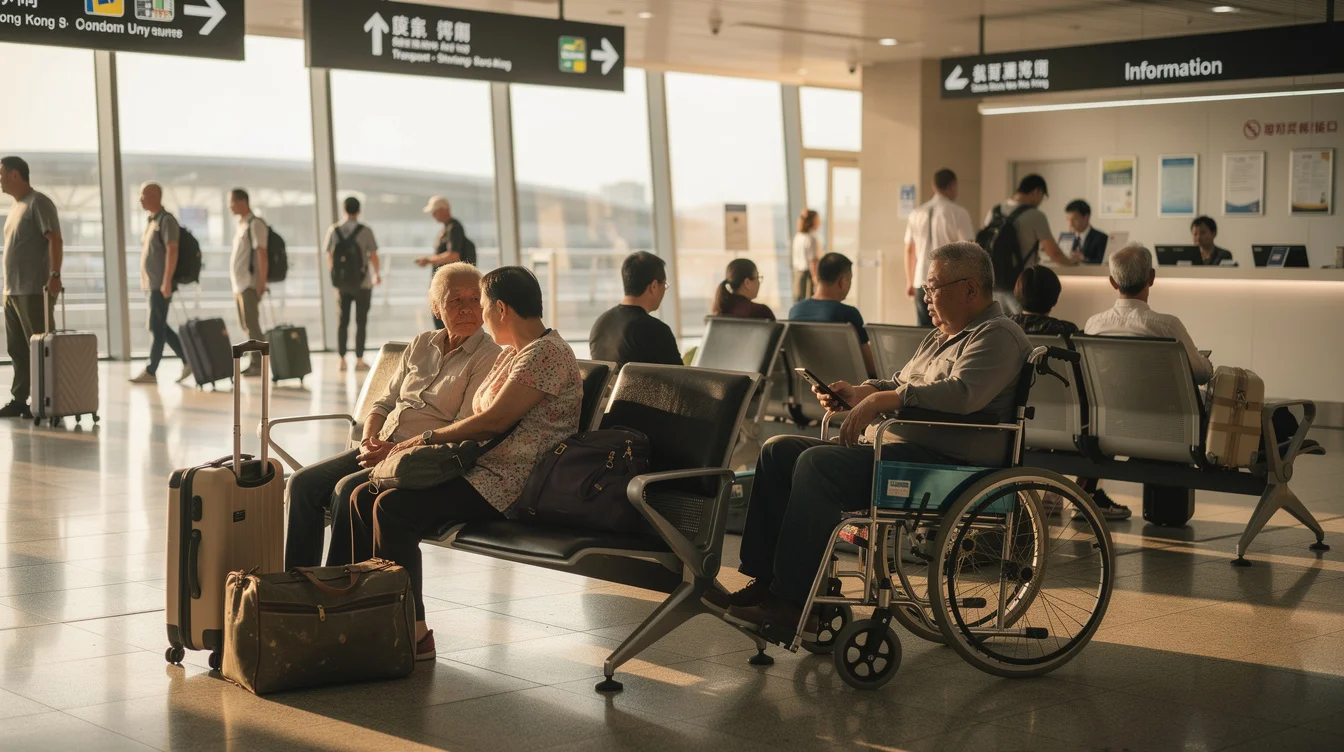
The alternative is not to romanticise delay. It is to recognise waiting as an activity with physical and emotional requirements. Someone awaiting a decision needs a seat, but also information: whether they have been forgotten, whether they may use their phone, and how they can request assistance. Architecture cannot supply every answer, but it can give those answers a dependable location.
A properly designed waiting area would offer varied seating, places for wheelchair users alongside companions, access to drinking water and toilets, and quieter positions away from the main stream. Private conversation rooms could allow sensitive questions to be asked without broadcasting personal circumstances. Where security prevents unrestricted movement, the design brief should establish how basic needs will still be met. Security is a constraint to resolve, not a phrase that ends the discussion.
Maggie’s cancer-care centres provide a relevant, deliberately limited comparison. Projects by architects including Sarah Wigglesworth and Richard Rogers treat uncertainty as a condition requiring choices between company, privacy and retreat. An immigration facility is not a care centre, and domestic atmosphere cannot neutralise state power. Nevertheless, the underlying lesson holds: people under stress need more than an orderly place to sit.
The strongest critique of throughput culture is therefore architectural as well as political. If every pause is classified as a blockage, spaces for explanation and recovery will always look expendable. Humane border architecture must protect them in the brief, budget and operating model. Otherwise, the system offers dignity only to those who require the least of it.
FAQ: Designing Beyond Throughput
What does the Aedas gateway reveal about border architecture?
Its completion makes the Shenzhen–Hong Kong crossing a timely setting for examining competing priorities. The reported tiered, round-edged form establishes its architectural identity, but does not by itself demonstrate how well the facility supports people facing delays or needing assistance.
Can faster border processing improve accessibility?
Yes. Shorter queues can reduce pain, fatigue and sensory stress. But accessible processing also requires comprehensible instructions, usable routes, places to rest and staffed alternatives. Speed helps only when people are not excluded from the means of achieving it.
What should architects prioritise in waiting areas?
Seating choice, companion space, acoustic comfort, privacy and dependable access to basic facilities should be designed alongside clear information. Travellers should know where to seek help and whether moving to meet a basic need will affect their place or clearance process.
Can architecture make a restrictive border humane?
Architecture can reduce avoidable distress, but it cannot override immigration law or guarantee fair decisions. As with building permanent cities for refugees, better spaces cannot by themselves change a person’s legal status. Its responsibility is to avoid amplifying coercion through confusing layouts, exposure or deprivation, while making support practical to deliver. Humane treatment ultimately requires accountable operations as well as spatial provision.
If a border moves most people faster but leaves those needing help more exposed, should we call its architecture successful?
Watch the Mainifesto Short
Get the Mainifesto weekly — curated design debates, speculative ideas and the week's best articles every Saturday.
Editorial Perspectives
Questions and counterpoints developed by the Mainifesto editorial desk to extend the discussion.
Perspective 1
Yes, I’d call it a success, though not a finished job: moving most people through faster is a real functional gain. The next investment should go into staffed assistance and sheltered waiting areas, not another architectural flourish.
Perspective 2
No—if people needing help become more exposed, the design has optimised the wrong objective. We can model pedestrian throughput in extraordinary detail; why aren’t privacy, assistance routes and the longest waits part of the same performance brief?
Perspective 3
I’d want the waiting times broken down by mobility needs, language and whether people require staff assistance before calling this successful. Then I’d observe where those people actually wait: a shorter queue tells us very little about dignity.
Perspective 4
In hospitality, the real test is what happens when someone can’t follow the standard journey. If finding help means leaving the queue and explaining your problem in public, that’s a service failure—and one that creates extra work for staff.
Perspective 5
Border buildings have long made authority visible; a fluid roof and a faster route don’t necessarily change that relationship. I’d judge this gateway by whether it makes room for people who need to pause, rather than treating them as obstructions to circulation.