AI and Architectural Fees: What Is Judgment Worth?
When AI Makes Drawings Cheaper, What Should Architects Be Paid For?
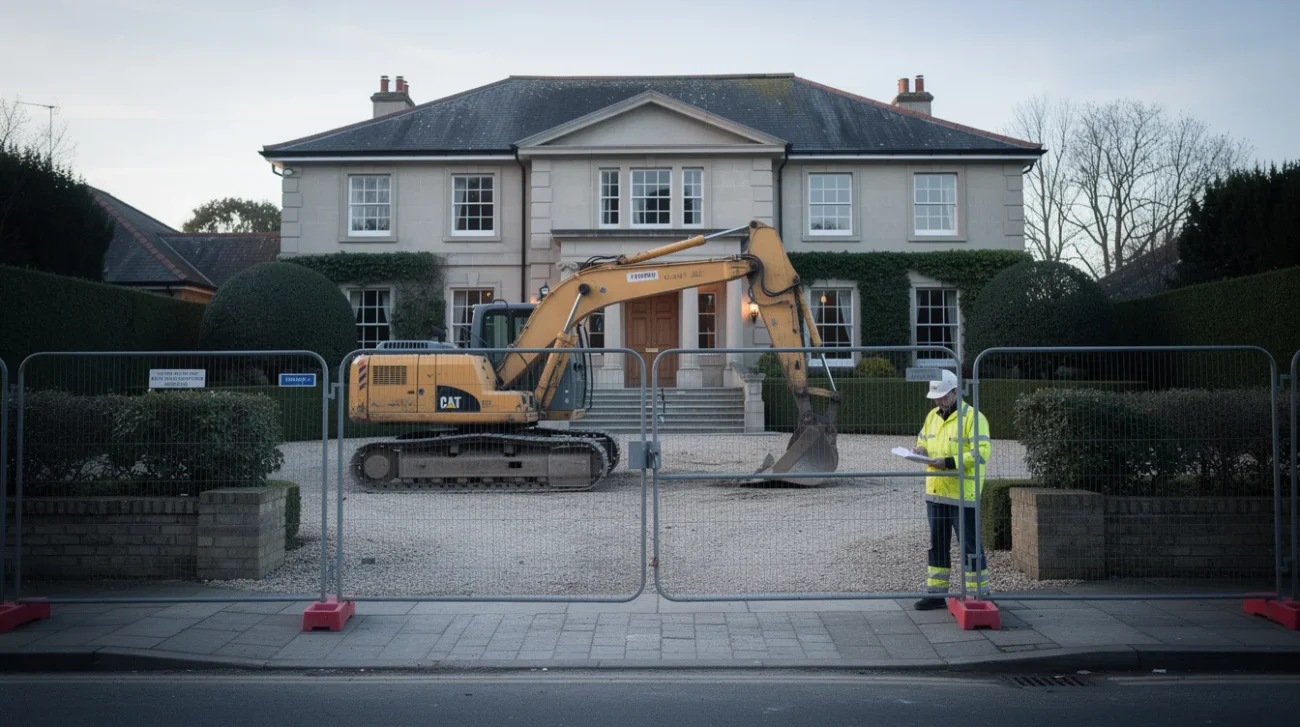
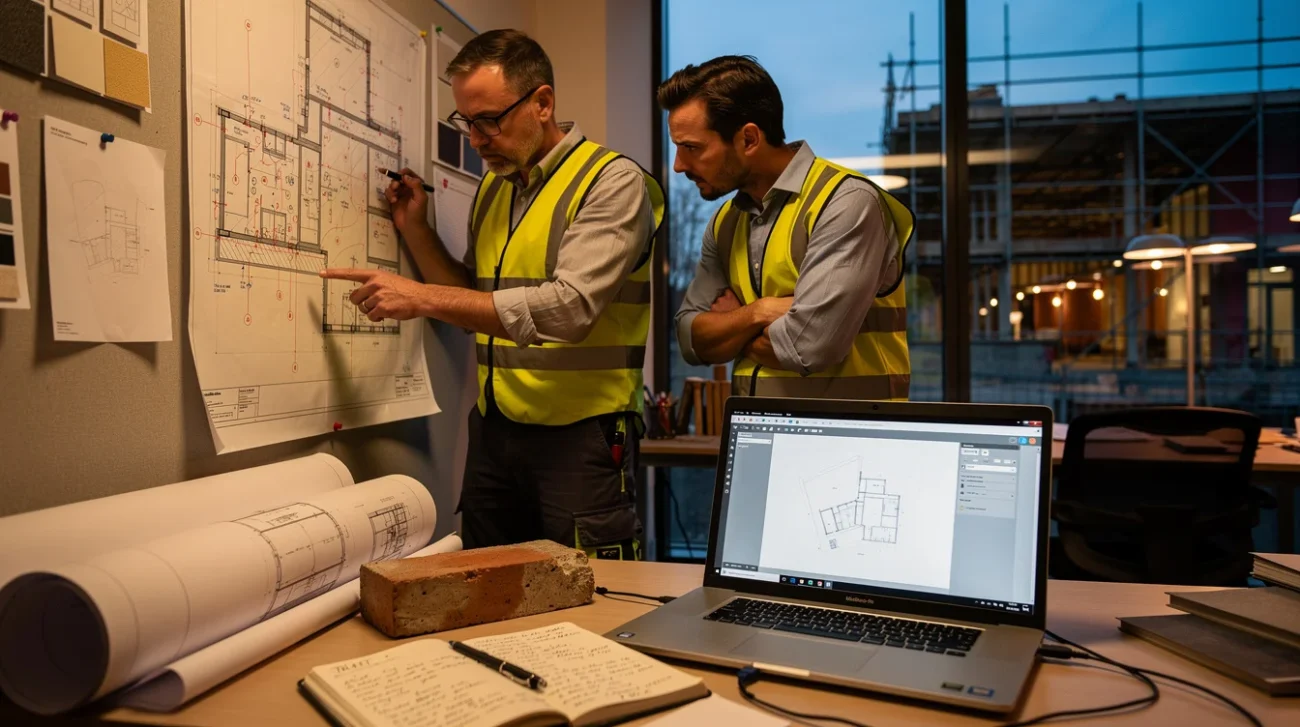
The architectural drawing has always had two jobs: to describe a building and to prove that someone has been working. AI threatens the second job before it reliably performs the first. When software accelerates visualisation, drafting or document preparation, a thick drawing package becomes a weaker argument for a large invoice. That is not necessarily a crisis for architecture. It is a crisis for a business model that confuses visible production with professional value.
Piers Taylor’s October 29, 2026 opinion in Dezeen frames the provocation in its headline: “If AI can do most of what we think an architect does, maybe we have defined the profession too narrowly”. The important word is “if”. Automated output is not equivalent to a coordinated, buildable design. But Taylor’s challenge opens a harder question: if production becomes cheaper, who receives the savings, and what should architects be paid to do instead?
The drawing was never the whole service
Architects already do work that cannot be measured sensibly in sheets. They persuade clients to retain a structure rather than demolish it. They discover that a supposedly redundant corridor supports an informal social life. They negotiate a workable junction between an engineer’s calculation, a contractor’s sequence and a client’s budget. A drawing records the resolution; it rarely reveals the labour of reaching it.
The transformation of 530 dwellings at Grand Parc Bordeaux by Lacaton & Vassal, Frédéric Druot and Christophe Hutin makes the distinction tangible. Its architectural significance lies in extending and improving existing homes rather than treating demolition as the default. The drawings mattered enormously. But the consequential act was deciding what should survive and how residents could gain space without wholesale replacement.
A fee model should make that kind of judgment economically viable before it becomes a celebrated project. This is not a claim about how Grand Parc’s architects were paid. It is a test for the profession: can a practice afford to investigate the less destructive option when that option may reduce the construction budget on which its fee depends? The debate over who pays to preserve Lovell Beach House raises a related question about how the value of retaining architecture translates into financial support.
Neither hours nor construction cost measures value cleanly
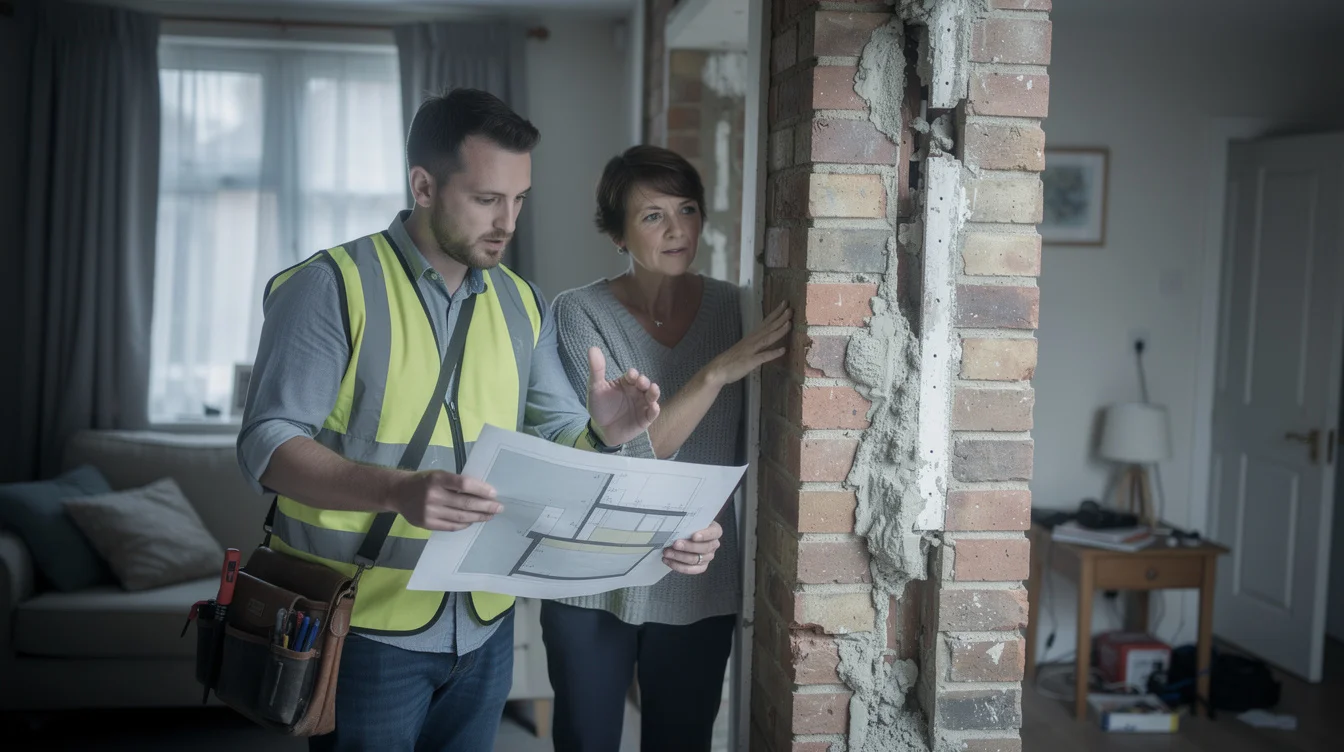
Hourly billing makes effort legible, but rewards elapsed time rather than a good decision. If an architect resolves a coordination problem in two hours instead of twelve, the client benefits while the practice loses revenue. Automation intensifies this contradiction. Billing ten hours that were never worked is not value pricing; it is misrepresentation.
Percentage fees have a different weakness. Used without adjustment, they can make a larger construction budget more remunerative than a smaller one, even when intelligent subtraction requires more expertise. A complicated retrofit with a modest works budget may demand more investigation than a straightforward new building. Construction cost remains a useful reference for scale, but it is not a reliable proxy for difficulty or public benefit.
Fixed fees can reward efficiency, yet they become a trap when the brief changes continuously. Nor should they be confused with disguised hourly accounts. A practice delivering an agreed service for an agreed price is not automatically overcharging because its tools improve. The ethical boundary is whether the client understands the bargain—not whether every productivity gain is handed back immediately.
Make the invisible work a contracted service
The alternative to selling drawings is not selling a mysterious substance called “creativity”. It is defining architectural services more precisely. A hybrid appointment could separate an initial investigation fee, milestone fees for design and coordination, allowances for agreed negotiation work, and a clearly scoped construction-stage service. Production remains necessary, but stops impersonating the entire commission.
Consider a small housing retrofit. An early paid phase could cover measured surveys, investigation of existing construction, resident interviews and comparison of retention options. The next phase could include an agreed number of design iterations and planning discussions. Construction-stage services would specify site attendance, reporting and responses to contractor queries, rather than promising unlimited availability through a vague commitment to “oversee” the works.
Assemble’s work at Granby Four Streets in Liverpool offers a useful reference for why the service must extend beyond representation. Its relationship to community-led regeneration and local making cannot be reduced to a set of attractive elevations. The lesson is not to monetise every conversation. It is to stop expecting engagement, material experimentation and local understanding to emerge from unpaid goodwill. If these activities matter, clients must commission them explicitly. Questions about accessibility on a car-free Oxford Street offer another context in which understanding users’ needs matters as much as the visual appeal of a proposal.
Automation savings need a rule, not a secret
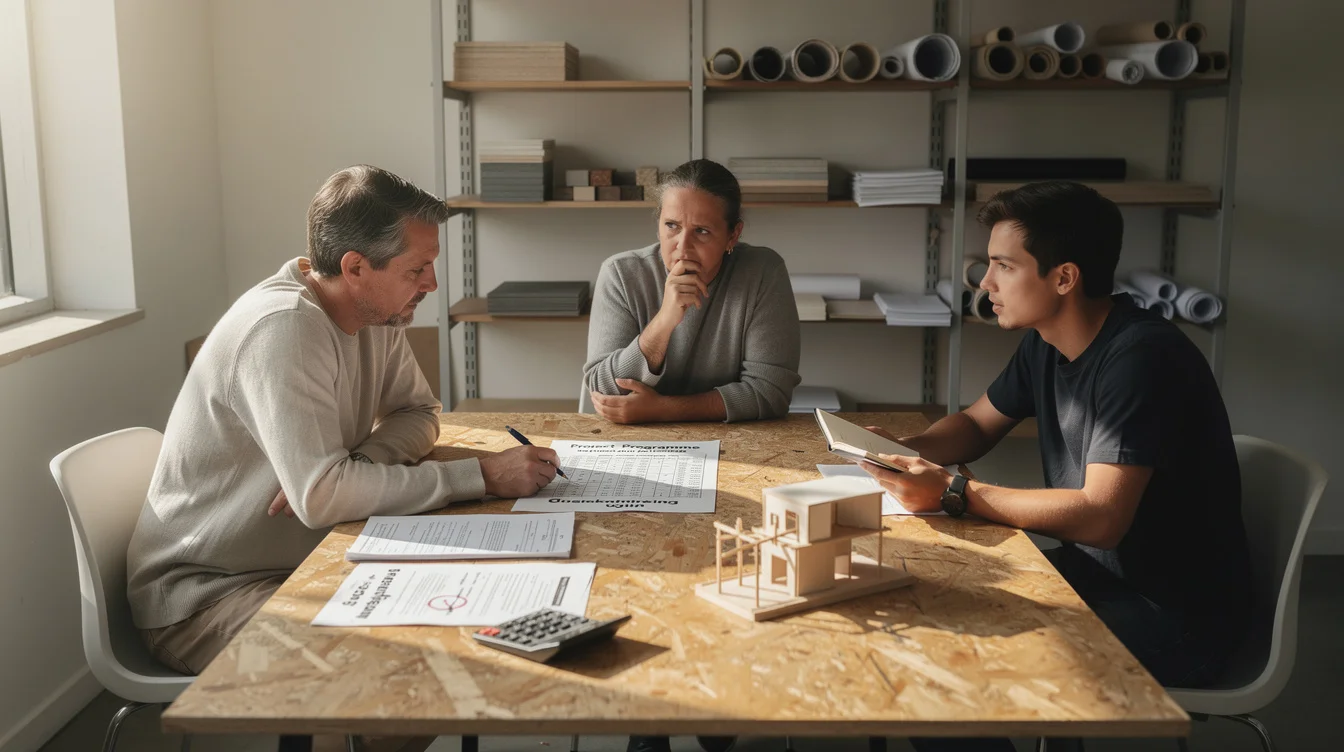
Here is a hypothetical negotiation. A practice and client agree a production allowance of £40,000 within a larger appointment. An AI-assisted workflow subsequently reduces the verified cost of that defined work. Before production starts, they could agree that savings against an established baseline will be shared, after allowing for checking, software and implementation costs. Neither party should invent the baseline after discovering the result.
That arrangement would not suit every commission. Open-book accounting brings its own administrative burden, and small practices should not need forensic timesheets to justify competence. A fixed fee with explicit deliverables and disclosed assumptions may be cleaner. The crucial distinction is between an agreed return for efficient delivery and claiming that a largely automated task required labour it did not.
The client has no automatic claim to every saving; the architect has no entitlement to conceal the basis of a charge. Practices invest in training, systems and failed experiments. Clients fund projects and bear development risks. Contracts should decide how productivity gains are allocated, while explaining material changes to information handling, verification and service quality. Transparency does not require narrating every software command.
Responsibility is expensive, even when output is cheap
An AI-generated detail may take seconds to produce and hours to validate. Does the waterproofing sequence work? Is the proposed product appropriate? Has an attractive section concealed an impossible fixing? Faster generation can increase the volume of material requiring scrutiny. Cheap output is not the same thing as cheap assurance.
Site knowledge introduces another limit. A model cannot verify a concealed condition that nobody has investigated. During refurbishment, opening up a wall may expose a mismatch between archived drawings and construction. The architect’s value lies in recognising the implications, obtaining specialist input where necessary and coordinating a response. The answer may be a revised drawing, but the drawing is the receipt, not the whole service.
Fees should therefore include adequate resources for coordination, checking and the agreed construction-stage role. Responsibility cannot simply be transferred to a software supplier through a disclaimer. Equally, architects should not market themselves as universal guarantors: duties, liability and certification powers depend on the appointment and jurisdiction. Paying for professional responsibility means funding defined obligations, competent performance and appropriate insurance—not buying a promise that nothing will go wrong.
Do not replace the drawing fetish with the genius premium
There is a danger in the profession’s pivot towards “judgment”: it can become an elegant justification for unaccountable pricing. A senior architect announces that their intuition is priceless while junior staff absorb the checking, residents provide unpaid knowledge and consultants carry unresolved technical risk. That is the old hierarchy wearing a new technological costume.
Judgment needs evidence. Practices can document options considered, reasons for rejecting demolition, coordination issues resolved and decisions made under uncertainty. Post-occupancy evaluation can test whether promised benefits materialise. Outcome-related payments may sometimes help, but energy use, programme and construction cost also depend on clients, contractors and occupants. Bonuses should attach only to carefully defined measures over which the architect has meaningful influence.
The sharper ambition is a profession paid to make better decisions, including decisions that produce fewer drawings and less building. Efficiency gains could finance deeper investigation, stronger checking and paid training for emerging architects rather than simply removing junior roles. AI does not force that settlement. Clients, practices and procurement systems must negotiate it. Otherwise, cheaper production will merely intensify the same race to under-resource the work that matters.
FAQ: Architectural fees after automation
Should architects lower their fees when they use AI?
Not automatically. Under hourly billing, invoices should reflect actual time worked. Under a fixed fee, efficiency can legitimately benefit the practice, provided the agreed service is delivered. Clients and architects can also negotiate shared savings or reinvest them in investigation and checking.
How can architectural judgment be priced fairly?
Start with a defined scope: options appraisal, stakeholder negotiation, coordination and construction-stage advice. Price the expertise, time and responsibility required, then document decisions and deliverables. Avoid an unexplained “judgment premium” that leaves clients unable to understand what they are purchasing.
Does AI reduce an architect’s professional responsibility?
Using AI does not by itself remove obligations under an appointment or applicable law. Outputs still require appropriate verification. Practices should review contractual duties, insurance conditions, confidentiality and data handling before adopting tools for project work.
Which fee model best supports retrofit and community engagement?
A hybrid model can help: paid investigation first, fixed fees for defined stages, and agreed allowances for uncertain consultation or site work. It should reward evaluating retention and listening to users without making either activity dependent on a larger construction budget.
If AI makes architectural production cheaper, who should decide whether the dividend becomes a lower fee, a higher margin or more time spent getting the building right?
Watch the Mainifesto Short
Get the Mainifesto weekly — curated design debates, speculative ideas and the week's best articles every Saturday.
Editorial Perspectives
Questions and counterpoints developed by the Mainifesto editorial desk to extend the discussion.
Perspective 1
Before dividing the savings, show me what was saved after checking the AI output against planning rules and actual site conditions. Architect and client should agree upfront how verified savings are shared, with explicit time for coordination and site visits—not a vague promise of better design.
Perspective 2
Since the drawing board gave way to CAD, faster production has been mistaken for better architecture often enough. Lefebvre’s distinction between abstract space and lived space still bites: a cheaper drawing tells us little about the life it permits. Negotiate the dividend, certainly, but spare us the claim that a higher margin is itself a cultural achievement.
Perspective 3
I’d want some of the saved production time reserved for testing daylight, heat and access—not just generating more options nobody has time to evaluate. The client and architect can negotiate the fee, but where do future occupants get a say in what gets tested? If automation also removes the drawing work through which junior architects learn, the apparent saving may be borrowing against future judgment.