Built for a Thousand Years—but Should It Stay That Long?
Built for a Thousand Years—but Should It Stay That Long?
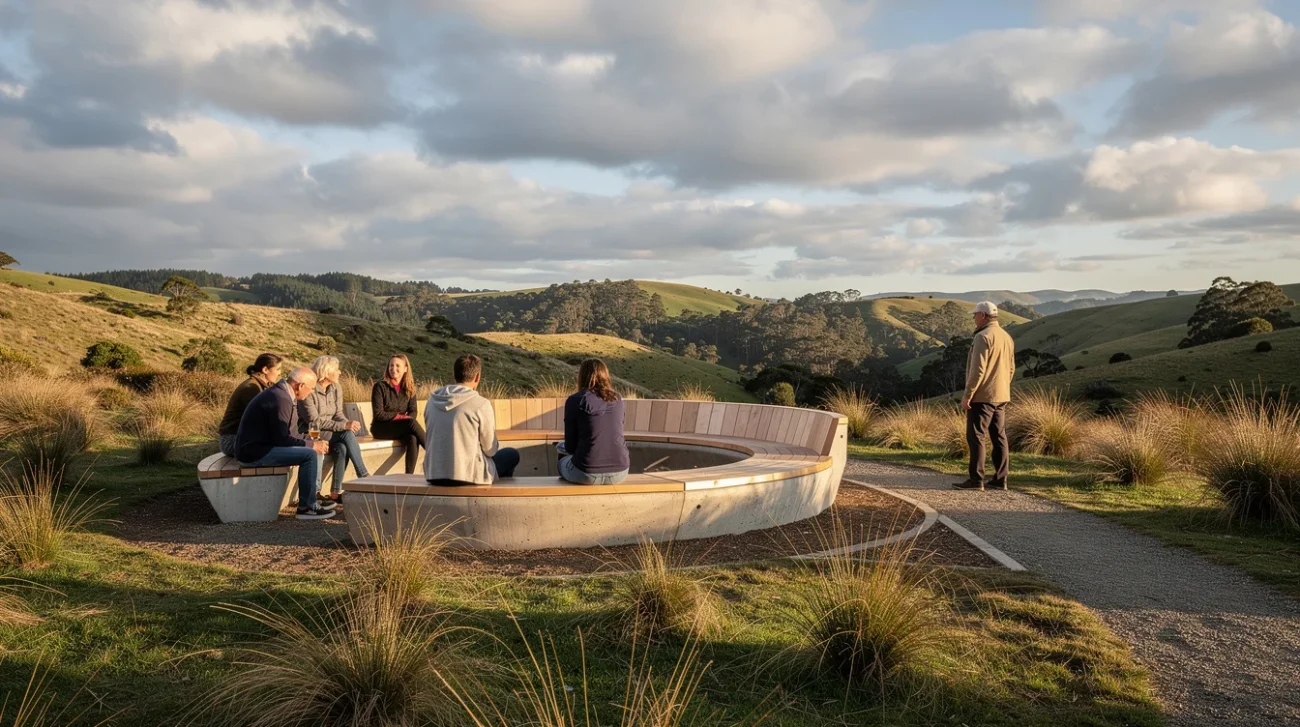
A thousand years is an outrageous product brief. It places an object beyond its designer’s lifetime, beyond its commissioning institution and potentially beyond the society that first understood its purpose. According to Wallpaper, London design studio Nebbia’s Interlude, a sculptural gathering place forming part of New Zealand’s Paererewā, is designed to last a millennium and foster the art of connection. The ambition is thrilling. It is also politically loaded.
A gathering place is never merely an object. It organises proximity, invites certain behaviours and occupies ground that somebody else might eventually need differently. Designing it to survive is one decision. Expecting it to remain where it stands, doing what it originally did, is another.
Interlude therefore raises a question larger than its own brief: should long-life design secure an object’s future, or secure future people’s choices? Neither disposable novelty nor compulsory permanence deserves an automatic victory.
PRO: Durability Is a Rebellion Against Replacement
The strongest case for millennium-scale design begins with the absurdity of its opposite. Furniture, fixtures and public amenities are routinely replaced not because their materials have failed, but because their appearance no longer matches a commercial strategy. Durability challenges an economy that treats functioning objects as expired images.
Interlude’s stated ambition changes the scale of accountability. Instead of asking whether a gathering place will photograph well at launch, it asks whether the act of gathering merits a lasting physical investment. That is a serious corrective to design culture’s appetite for perpetual debuts. A place for conversation need not become obsolete when a colour forecast changes.
Dieter Rams’s 606 Universal Shelving System for Vitsœ offers a useful product-scale precedent. Introduced in 1960, it supports continuity through a system that can be rearranged and extended rather than discarded wholesale. USM’s modular furniture similarly demonstrates how a stable design language can accommodate changing rooms and uses. Neither claims a millennium. Both make longevity tangible through relationships between components, users and ongoing support.
The environmental argument is equally forceful, but conditional. Keeping something useful can avoid the repeated extraction, manufacture and transport required to replace it. A robust object is not automatically a low-impact object; its initial footprint and maintenance still matter. Nevertheless, replacement is not an ecological virtue simply because the replacement carries a greener label.
PRO: Staying Put Can Create Public Value
There is also something durability’s critics too easily dismiss: attachment needs time. A gathering place becomes meaningful through repeated occupation, not solely through its initial formal ingenuity. The same meeting point can hold a first conversation, a weekly ritual and a later generation’s recollection. Move it too casually and some of that value disappears.
Rome’s Pantheon is an extreme architectural example. Its survival across changes of use and belief demonstrates that a durable physical framework can outlive the worldview that commissioned it. Its value today is not confined to its original programme. Permanence can enable reinterpretation rather than prevent it.
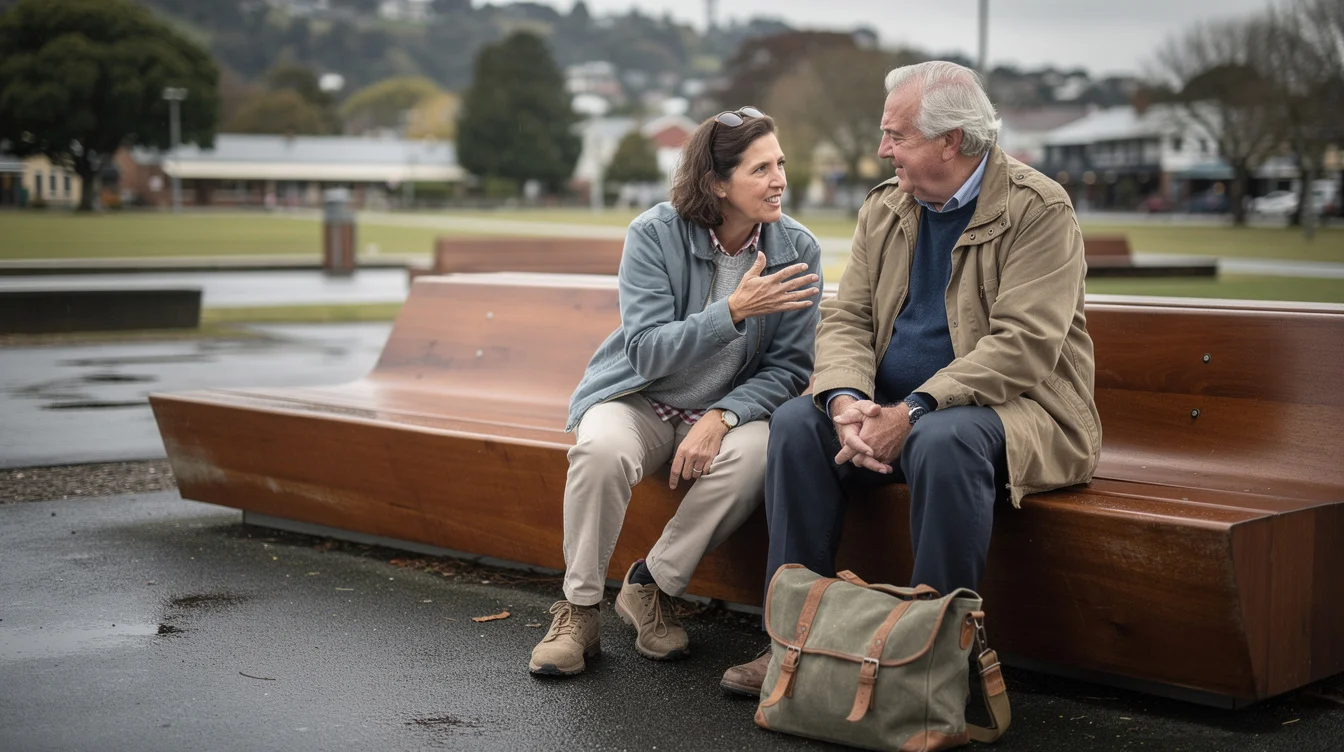
At a smaller scale, public benches and civic tables acquire significance through their dependable presence. William H. Whyte’s observations of urban public life showed how seating, access and the arrangement of shared space influence whether people actually linger. A gathering object earns its place through use. If it succeeds, keeping it can protect a social resource that a redevelopment spreadsheet barely registers.
This is the most persuasive defence of Interlude’s thousand-year horizon: it treats connection as something worth providing for beyond immediate returns. It refuses the assumption that every generation must start again with newly manufactured surroundings. Continuity is not necessarily the enemy of freedom; sometimes it is the infrastructure that makes everyday freedom possible. The burden should not always fall on an existing, useful object to justify its survival.
CONTRA: The Future Did Not Approve Our Brief
Yet endurance becomes arrogance when material survival is mistaken for a permanent right to occupy space. A designer cannot know a community’s needs in the year 3026. Population, mobility, climate, cultural practices and land relationships may change profoundly. A gathering place can remain physically intact while becoming inconvenient, inaccessible or unwanted.
In New Zealand, that question cannot be reduced to a supposedly universal public. Māori relationships to whenua, and the authority and responsibilities of mana whenua, matter to decisions about place. The source summary does not establish Interlude’s governance arrangements, and those should not be invented. But the wider design principle is unavoidable: a long material lifespan does not grant a designer authority over future custodians.
Tokyo’s Nakagin Capsule Tower provides a warning against confusing an adaptable concept with an adaptable reality. Kisho Kurokawa’s building proposed replaceable capsules, yet the intended renewal cycle never became routine. Ownership, cost and practical constraints frustrated the promise; the tower was dismantled in 2022. Technical imagination alone did not supply the institutions needed to sustain change.
That lesson matters for any millennium-scale object. Who can authorise alterations? Who pays for repairs? Who decides that its social purpose has ended? A thousand-year claim without a credible account of stewardship is not a complete durability strategy. It is a compelling horizon with its most difficult obligations left unresolved.
CONTRA: Longevity Without Release Is a Design Failure
The alternative is not disposability. It is durable construction that retains an exit route. Jean Prouvé’s demountable houses show that structural seriousness and the possibility of relocation are not mutually exclusive. Their relevance here is not stylistic: assembly can be understood as a reversible act rather than a declaration that something must stay forever.
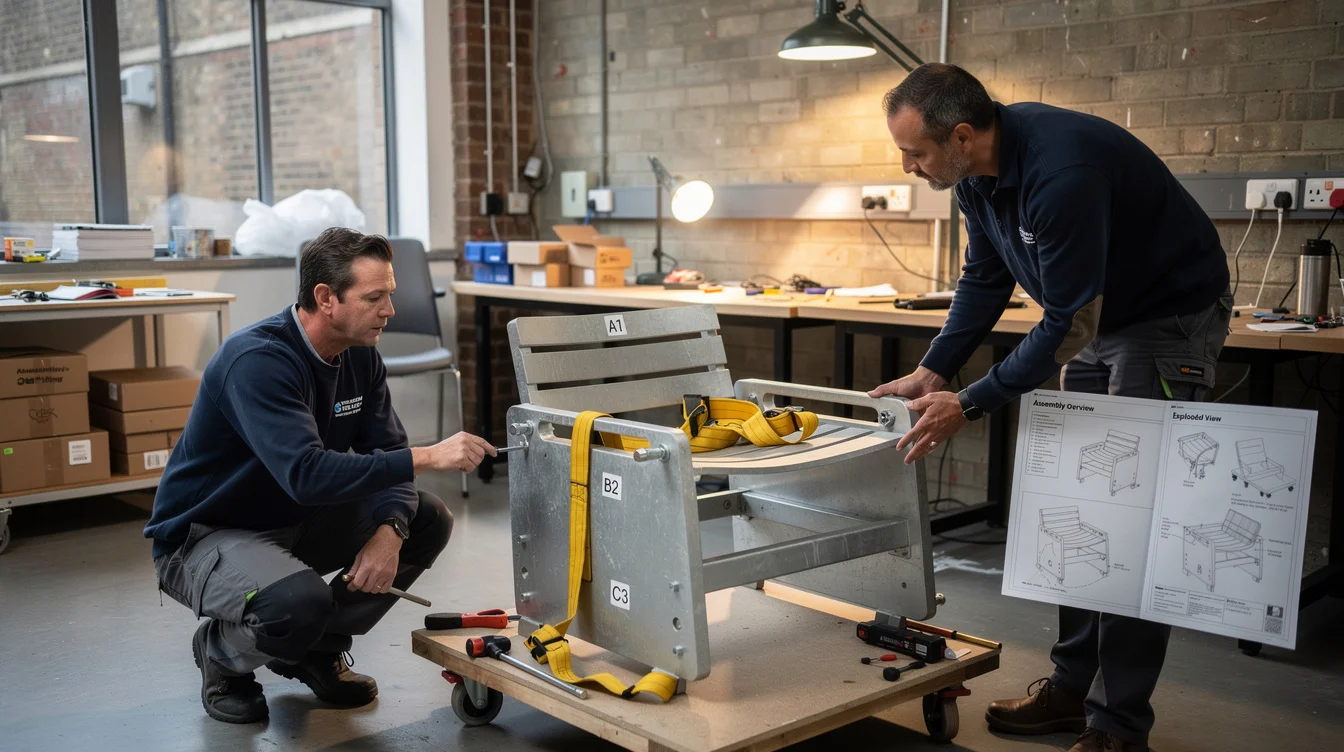
Werner Sobek’s R128 house in Stuttgart similarly offers a reference for thinking about disassembly and material recovery as architectural requirements. At product scale, the practical questions become wonderfully unglamorous. Can a connection be reached with ordinary tools? Can a damaged part be replaced independently? Can the object be transported without destroying the qualities that made it worth keeping?
For a sculptural gathering place, possible strategies include separable elements, accessible mechanical connections, documented lifting arrangements and replaceable surfaces where wear is concentrated. These are criteria to investigate, not verified descriptions of Interlude. Wallpaper’s reported millennium ambition does not, by itself, establish how the work can be moved, repaired or dismantled.
Nor is maximum reversibility free. Connections can introduce maintenance demands; moving heavy components can consume significant resources. The point is not to pretend that relocation has no cost. It is to prevent relocation from becoming technically impossible by default. The strongest durable object survives because successive generations choose it—not because dismantling it is prohibitively destructive. Freedom requires more than a theoretical permission to change.
The Verdict: Preserve the Object, Not Its Authority
The millennium is a productive provocation, but a poor instruction to leave everything untouched. Interlude’s ambition deserves recognition for pushing design beyond the replacement cycle. Its larger significance should be judged through a second ambition: whether endurance can coexist with meaningful future agency.
Japan’s Ise Jingū complicates the idea that continuity must reside in the uninterrupted survival of original material. Its principal sanctuaries are ritually rebuilt on a roughly twenty-year cycle, sustaining traditions of craft and renewal. This is not a template to transplant into New Zealand. It is evidence that cultural longevity and material permanence are different achievements.
A convincing long-life brief should therefore contain two promises: an account of how the object can remain useful, and an account of how its custodians can change course. Maintenance knowledge, repair access, alteration rights and dismantling procedures belong beside the heroic lifespan claim. Build for a thousand years. Do not presume to govern all of them.
FAQ
What is Nebbia’s Interlude?
Interlude is a sculptural gathering place by London design studio Nebbia, forming part of New Zealand’s Paererewā. Wallpaper describes it as designed to last 1,000 years and intended to foster connection. That is a design ambition, not an independently demonstrated lifespan.
Is a longer-lasting object always more sustainable?
No. Sustainability depends on initial material impacts, maintenance, actual use and what happens at the end of service. Longevity is valuable when it avoids replacement and preserves usefulness, rather than simply keeping an unnecessary object intact.
Can durable design also be movable and adaptable?
Yes. Modular construction, accessible connections and replaceable components can support repair, reconfiguration and relocation. These features require planning and may introduce trade-offs, but durability does not inherently demand permanent attachment to one site.
Who should decide when a long-life object is removed?
Decision-making should involve legitimate owners or custodians, affected communities and relevant authorities, including mana whenua where applicable. A stewardship plan should define those responsibilities and allow them to evolve rather than granting the original designer a perpetual veto.
If a gathering place can survive for a thousand years, should its greatest achievement be staying put—or leaving future generations genuinely free to move it?
Get the Mainifesto weekly — curated design debates, speculative ideas and the week's best articles every Saturday.
Editorial Perspectives
Questions and counterpoints developed by the Mainifesto editorial desk to extend the discussion.
Perspective 1
I’d judge Interlude’s thousand-year ambition by how much freedom it leaves the next generation, not whether it stays on the same site. That freedom needs practical backing: reversible foundations, manageable components and a relocation bill a municipality could actually afford.
Perspective 2
I’d favour keeping it in place: the option to move a gathering place is not automatically an ecological gain. Before treating relocation as progress, I’d want a whole-life comparison covering dismantling, transport and new foundations against maintaining and adapting what’s already there.