

Should Museums Preserve Work When Reputation Collapses?
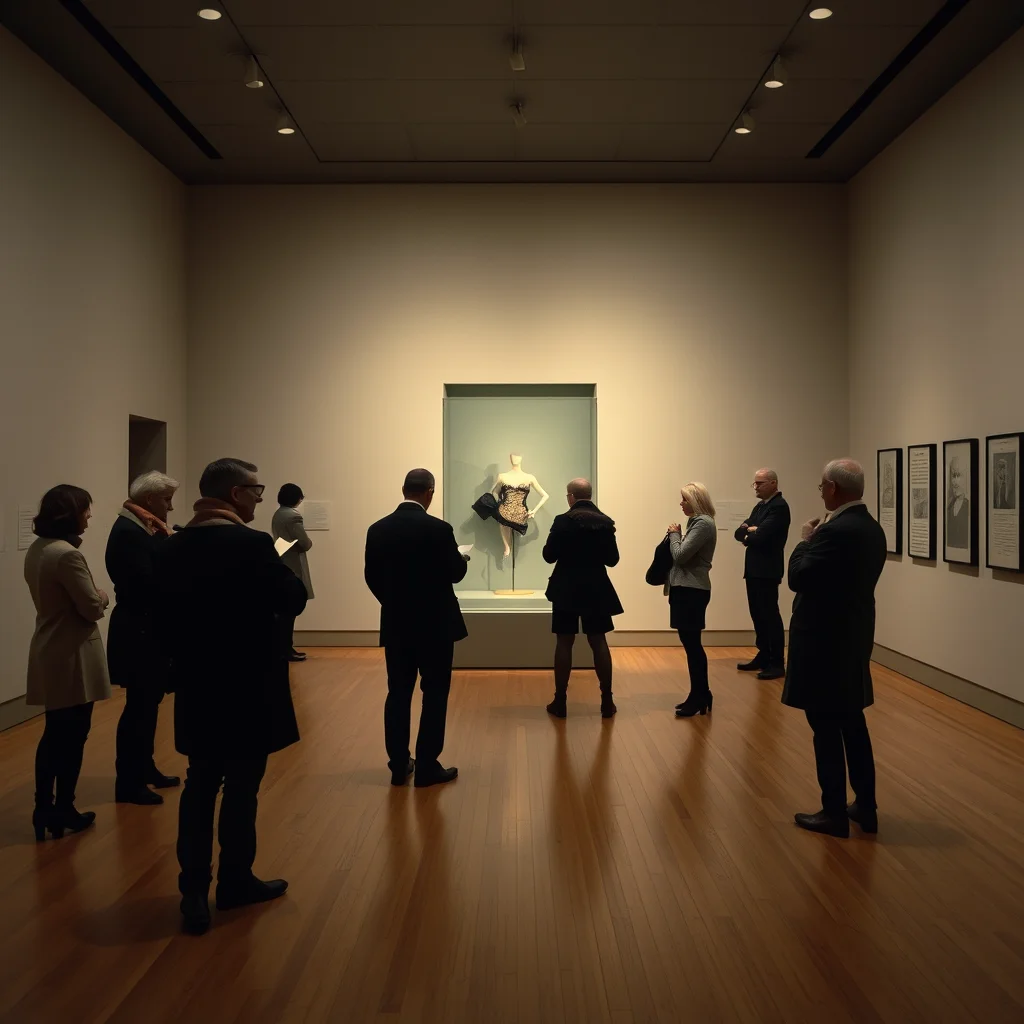
The cancellation of John Galliano’s planned exhibition at the Metropolitan Museum of Art’s Costume Institute is more than a scheduling decision. It is an institutional admission that cultural recognition is never sealed off from public accountability. A museum may insist that an exhibition is about garments, construction, history and influence. Visitors, however, do not enter a morally sterile room. They encounter an artist’s name, a career carefully framed and a powerful institution conferring significance on what enters the canon.
Galliano’s work has long seemed made for museum conditions. His collections for Dior and his later work at Maison Margiela transformed fashion into theatre: extravagant silhouettes, historical quotation, hand-finished surfaces and runway narratives that approached performance art. Yet his career is also inseparable from the 2011 incident in which he was filmed making antisemitic and racist remarks in Paris. He was dismissed by Dior, later convicted in France, and publicly apologised. The designer rebuilt his career, including a significant period at Maison Margiela, but rehabilitation did not erase the original harm.
After a wave of criticism, the museum announced that it would not proceed with the show honouring his work. That reversal exposes the unstable line between studying a legacy and celebrating it. The case for cancellation is strong. So is the case against it. The danger is that both positions can become intellectually lazy: one reducing art to biography, the other using scholarship as a respectable disguise for absolution.
PRO: Preservation is not the same as praise
Museums exist partly to preserve evidence of what cultures make, value and desire. If every artist whose conduct is repellent were removed from institutional memory, collections would become less a record of history than a catalogue of approved personalities. The Louvre does not cease to display Caravaggio because of his violence. Universities continue to teach Paul Gauguin while debating his exploitation of Tahiti and relationships with young girls. Architecture schools study Le Corbusier’s authoritarian politics alongside his buildings. A museum’s job is not to certify virtue before it permits attention.
Galliano’s case demonstrates why preservation matters. His 1990s and 2000s collections changed the visual language of fashion, influencing designers from Alexander McQueen to Iris van Herpen and shaping the contemporary expectation that a runway can be an immersive narrative. The bias-cut gowns, exaggerated tailoring and historical pastiche associated with his work are not private possessions of the designer’s reputation. They are part of fashion history, embedded in techniques, images, labour and wider cultural exchange.
A serious exhibition could have made the contradiction visible rather than concealing it. It could have placed the 2011 footage, legal record, public statements and accounts from Jewish and racialised communities beside the clothes. It could have asked how a system capable of rewarding spectacular creativity also protected the conditions around abusive or discriminatory behaviour. It could have examined Dior’s corporate response, the economics of celebrity design and the fashion industry’s recurring appetite for redemption narratives.
Context is not automatically endorsement. The Imperial War Museums display weapons without celebrating war. The Museum of Modern Art can present a politically compromised modernist without adopting every belief attached to him. The question is whether the institution supplies enough friction. A retrospective that presents Galliano as a solitary genius would be indefensible; an exhibition that treats his career as evidence of fashion’s entanglement with power could be necessary.
Cancellation can also produce a false cleanliness. It removes the difficult name from the gallery while leaving the industry that enabled his return largely unexamined. It tells audiences that the problem is one designer, not a culture that repeatedly separates aesthetic brilliance from ethical consequence until public pressure makes separation impossible. Preservation, at its best, forces institutions to document that failure.
CONTRA: The museum’s frame is itself a reward
The strongest argument against proceeding is not that Galliano’s work lacks historical importance. It is that a major retrospective is never merely an archive. The Metropolitan Museum of Art’s Costume Institute is one of fashion’s most influential stages. Its exhibitions shape curricula, auction narratives, press coverage and the public hierarchy of designers. To receive that platform is to receive an institutional gift: legitimacy, attention and a place in the canon.
That distinction matters because galleries do not neutralise power by adding a wall label. A visitor encountering a breathtaking Galliano gown may understand the accompanying text, but the emotional force of spectacle can overwhelm explanation. Fashion is especially vulnerable to this imbalance. Its objects are seductive, tactile and bodily; they are designed to produce desire. A paragraph about antisemitism can sit beside a magnificent coat while the coat continues to perform its original work of enchantment.
The language of “contextualisation” can therefore become a loophole. Institutions often present controversy as complexity, a word that sounds scholarly but may flatten unequal harms. Galliano’s remarks were not an eccentric footnote to an otherwise innocent career. They targeted real communities and contributed to a public record of prejudice. For those audiences, being asked to admire the ingenuity first and process the injury second is not education. It can feel like another demand to subsidise the comfort of cultural institutions.
There is also a question of timing and consent. Who gets to decide when a public apology has done enough? The artist? A museum committee? Fashion editors who benefited from the work? Survivors and affected communities are frequently invited into the institution only after the curatorial concept is fixed, asked to provide a moral counterweight to a show whose celebratory architecture is already complete.
The museum’s authority makes the cancellation consequential. It signals that historical importance does not create an automatic entitlement to commemoration. That may be a healthy limit in an era when institutions are scrutinised not only for what they collect but for whom they amplify. A museum can preserve garments in its archive, make them available to researchers and teach their techniques without mounting a branded, high-visibility tribute. Preservation does not require a gala, a catalogue cover or a mythology of genius restored.
The harder work is to distinguish study from rehabilitation. A classroom case study, digital archive or thematic exhibition on fashion, racism and institutional complicity may generate more knowledge than a retrospective organised around Galliano’s name. If the museum cannot guarantee that its framing will not be read as approval, cancellation may be the more honest curatorial act.
The real test is institutional design
The Galliano controversy should not end with a binary verdict about whether artists deserve second chances. It should force museums to redesign how they confer recognition and confront the ethical questions involved in framing contested subjects. A retrospective is a technology of memory: it selects objects, arranges chronology, commissions language and creates an emotional journey. Every one of those decisions can either challenge a legacy or polish it.
For controversial figures, the traditional format may be inadequate. A museum could build a genuinely multivocal exhibition with independent oversight, paid participation from affected communities, archival evidence of harm and sustained attention to assistants, craftspeople and institutional executives rather than only the named designer. It could refuse the triumphant arc from prodigy to fall to redemption. It could make visitors confront the cost of genius as a system, not merely as a personality flaw.
It could also ask whether the artist’s work is the right organising principle at all. An exhibition on theatrical fashion might include Galliano alongside McQueen, Rei Kawakubo, Hussein Chalayan and contemporary designers whose practices complicate the same histories of empire, race, gender and spectacle. In that structure, Galliano becomes evidence rather than protagonist. The museum no longer asks audiences to celebrate a singular genius; it asks them to study a contested field.
That is the standard institutions should meet. Not “Can we defend this artist?” but “What public knowledge is created by showing this work, and who bears the cost of the display?” If the answer is merely that the work is beautiful or influential, cancellation is justified. If the answer is that the exhibition can expose how beauty, power and prejudice are manufactured together, then the museum should be brave enough to proceed—and brave enough to make the experience uncomfortable.
FAQ
Why was John Galliano’s planned Metropolitan Museum exhibition cancelled?
The museum cancelled plans to proceed after public criticism of an exhibition honouring Galliano’s work, particularly in light of his 2011 antisemitic and racist remarks and the continuing debate over his rehabilitation.
Does displaying an artist’s work mean a museum endorses the artist?
Not necessarily, but institutional framing carries real authority. A display can aim for historical analysis while still functioning publicly as recognition, especially when it is a major retrospective built around the artist’s name.
Can museums preserve controversial work without exhibiting it?
Yes. Museums can retain objects in collections, provide scholarly access, create digital archives or include them in thematic exhibitions that do not make the controversial figure the central hero of the story.
What would a responsible exhibition about Galliano require?
It would need transparent archival evidence, sustained attention to the harm caused by his remarks, independent perspectives from affected communities, and a curatorial structure that examines fashion’s institutions rather than offering a simple redemption narrative.
Get the Mainifesto weekly — curated design debates, speculative ideas and the week's best articles every Saturday.


Sara Kowalski September 1, 2026
Museums should preserve Galliano’s work, because the cut, construction, and material intelligence do not disappear when the maker’s reputation collapses. But the display has to make the conditions visible: who was harmed, what was said, and how the industry rewarded it, rather than presenting exquisite technique as moral absolution.
Helena Lindqvist September 1, 2026
A major exhibition is never neutral; the lighting, scale, and procession through the rooms tell visitors what deserves admiration. In this case, preservation belongs in the archive or a tightly framed study display, not in a theatrical exhibition that turns controversy into another kind of spotlight.
Tom Brightwell September 1, 2026
Keep the work, but do not confuse storage and research with a headline exhibition. Museums have limited space and public money, so a serious digital record or contextual archive may preserve the evidence without spending heavily to stage a designer’s comeback.
Marcus Reed September 1, 2026
Visitors can handle complexity, but they should not have to decode an institution’s position from a wall of theory. If the exhibition cannot explain in plain terms why the work is being shown and what the museum rejects, it will feel like brand rehabilitation—and that is a terrible return on attention.