

When Smart Glasses Become Luxury, Who Owns the Face?

PRO: The face is the last billboard, and Meta knows it
Meta’s new in-house AI glasses arrive with a familiar Silicon Valley promise: smaller, lighter, more affordable, more human. The company’s three styles — Meta Adventurer, Meta Fury and the Kylie Jenner collaboration, Meta Glasses — are being sold not just as tools, but as accessories that want to sit comfortably inside everyday style culture. That matters. The moment a device stops looking like office equipment and starts resembling eyewear you might actually choose, the market changes. So does the social contract.
This is not the first time technology has tried to enter fashion through the front door. Google Glass failed in part because it looked like a prototype from a lab, not an object of desire. By contrast, the Apple Watch became a status object by borrowing from jewelry, watchmaking and luxury branding, while Ray-Ban Stories and their successors attempted to make camera glasses feel like normal sunglasses. Meta’s latest move goes one step further: it is not merely hiding the tech, it is aestheticizing it. Kylie Jenner is not a garnish here; she is the strategy. If the face is where identity is performed, then the frame is the new interface for capture, curation and display.
The appeal is obvious. A stylish pair of AI glasses can feel more natural than a phone raised to eye level. Voice commands, tiny cameras, speakers and unobtrusive buttons promise frictionless documentation of daily life. In the best-case narrative, this is a device for presence: hands-free navigation, instant translation, subtle assistance, less screen staring. Meta wants smart glasses to look less like surveillance hardware and more like a normal fashion choice. That is precisely why they are dangerous. The more socially acceptable the device becomes, the more surveillance can be normalized without resistance.
Design has always been a persuasive machine. From Dieter Rams to Jony Ive, modern product culture has taught us that restraint reads as trustworthiness. In wearable tech, that aesthetic language becomes politically charged. A tiny camera, softened edges and celebrity co-signs do not eliminate the power dynamic; they camouflage it. The device becomes easier to wear, easier to buy, easier to ignore. And once the public stops flinching at cameras on faces, the privacy debate shifts from outrage to habit.
PRO: Luxury is the most efficient disguise for data extraction
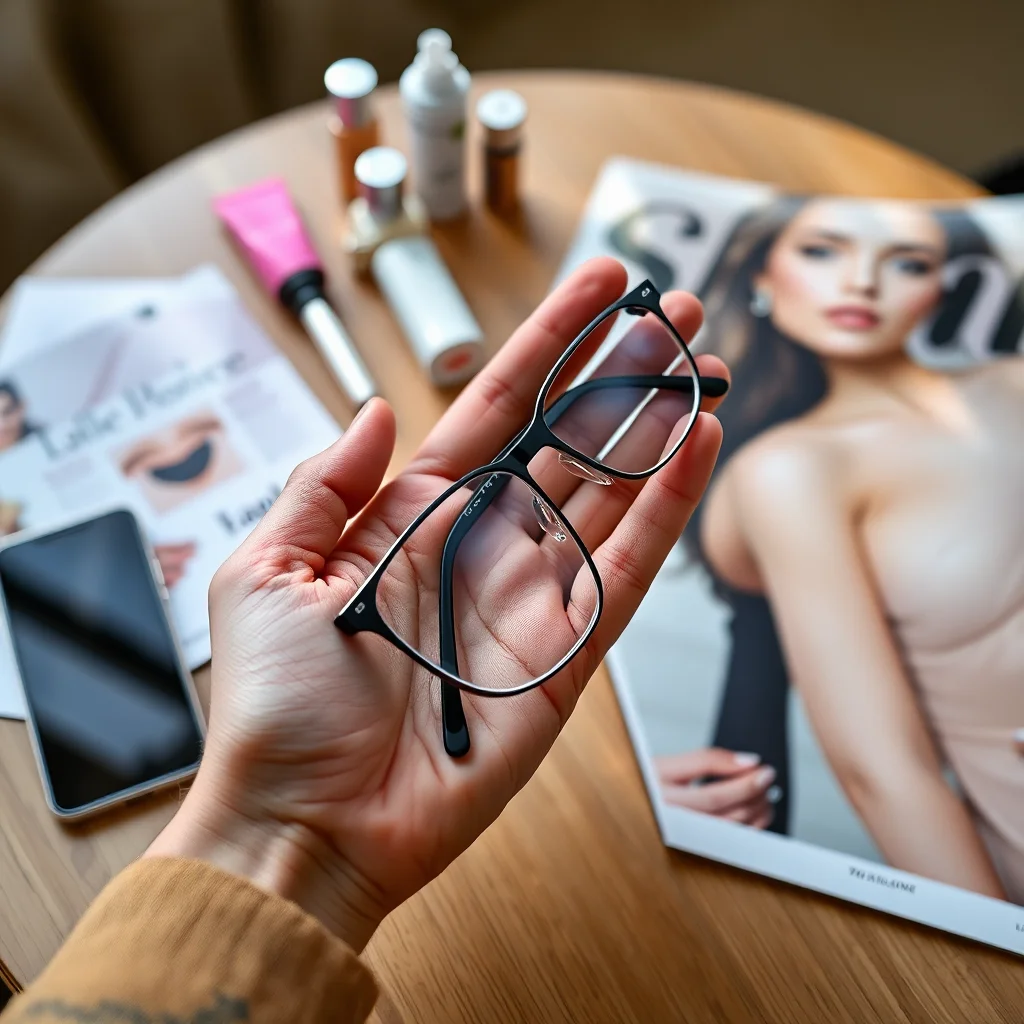
There is a reason Meta is leaning into the vocabulary of fashion rather than the rhetoric of engineering. Luxury has always been a technology of consent: it trains people to pay for distinction, then mistake distinction for freedom. A collaboration with Kylie Jenner taps directly into that logic. It positions smart glasses not as a compromise, but as a style upgrade — a collectible object that signals taste, access and relevance. In the same way Louis Vuitton turned luggage into cultural theater and Prada has made industrial nylon feel elevated, Meta is trying to turn surveillance-adjacent hardware into a desirable silhouette.
The danger is that fashion’s social logic can launder a product’s political logic. If an object looks cool enough, the questions recede. What does the camera do? Where is the data stored? Who can access recordings? How often are bystanders captured? In luxury culture, the primary question is not “Should I be watched?” but “Do I want to be seen wearing this?” That is a profound shift. The product no longer has to persuade you that it is benign; it only has to persuade you that it belongs.
We have seen this pattern before in adjacent categories. Fitness trackers normalized continuous bodily monitoring under the language of health. Ring cameras brought domestic surveillance to the front porch and sold it as neighborhood safety. AirPods made constant ambient connectivity feel elegant, even inevitable. Smart glasses are more radical because they move the camera to the face itself, collapsing recorder and wearer into a single social actor. This is not an accessory in the neutral sense. It is an instrument that changes how others must behave around you.
The aesthetic success of Meta’s line could therefore become its cultural victory. If enough people adopt glasses that quietly record, listen and assist, the expectation of consent becomes asymmetric. Bystanders will not know when they are being filmed; their only choice will be to trust the wearer. That is not a design feature. It is a social demand.
CONTRA: Human-friendly design is still better than tech that looks hostile
And yet the dismissive response — that all smart glasses are simply spyware in prettier packaging — is too blunt to be useful. A more ergonomic, more affordable device matters because hostile design is not ethically neutral either. Google Glass was socially rejected not only for privacy concerns, but because it embodied a cold, managerial futurism that made wearers seem detached from everyone around them. If wearables are going to exist, they should at least be designed to reduce friction, support accessibility and avoid the aesthetic violence of obvious gadgetry.
There is a real case for devices that assist without dominating. Smart glasses can help people navigate cities, translate signage, provide audio cues for visually impaired users or allow workers to access information hands-free. In this frame, the point is not spectacle but utility. Projects across the industry have tried to make wearables more humane by softening their appearance and reducing their intimidation factor. The ambition is similar to what happened in consumer computing more broadly: the best products disappear into life until needed.
The problem is that disappearance can be a virtue or a trap. Humane design in wearables can reduce stigma, especially for users who rely on assistive technology and do not want to be identified as “tech people” every time they leave the house. It can also widen adoption beyond early adopters and corporate niches. If a pair of glasses looks like something people would actually wear on a summer street in Los Angeles, they become less of a niche device and more of a category. That democratization is not inherently sinister.
What makes the debate hard is that acceptable design and acceptable surveillance are not the same thing. A device can be kinder to the wearer while becoming harsher on everyone else. The face-centered camera is the issue, not the curve of the frame. If Meta truly wants to make wearables mainstream, it must answer the public-policy question that design alone cannot solve: what is the social contract for ubiquitous recording in public space? Without that, “human-friendly” is just a better sales pitch.
Accessibility should not be held hostage by corporate secrecy. It is possible to argue for thoughtful wearables while demanding hard rules: visible recording indicators, clear consent standards, on-device processing, data minimization and strong limits on third-party access. In other words, better products do not excuse weaker governance. A beautiful frame cannot redeem a system built to make surveillance feel fashionable.
PRO: The new battle is not style versus privacy, but face versus platform

What Meta is really selling is not a pair of glasses. It is a platform that sits on the most socially loaded part of the body. The face is where identity, emotion, class and recognition converge. Put computing there and you do more than change the device category; you alter the politics of encounter. The wearer becomes both user and sensor, both consumer and node. That is why the Kylie Jenner tie-up is strategically brilliant and culturally corrosive at once. It converts facial computing into a beauty proposition.
Fashion has always understood that the body is a medium. Eyewear in particular has long functioned as both prosthesis and persona. Think of Linda Farrow’s oversized glamour, Oakley’s athletic futurism, or the way black-rimmed frames became shorthand for intellectual seriousness. Meta is trying to occupy that symbolic territory while adding machine vision to the mix. The result is not just a new product; it is a new norm in which looking good and looking back are fused.
Once the glasses become a fashion object, the public starts to absorb the logic of their existence. Their cameras become less exceptional, their speakers less suspicious, their microphone prompts less alarming. This is how norms change: not through policy speeches, but through repeated exposure to attractive objects. The device doesn’t need to be loved by everyone; it only needs to become familiar enough that resistance looks quaint.
That is why the real question is not whether Meta’s glasses are stylish. The real question is who gets to define the acceptable conditions for being observed. When the camera is embedded in a desirable accessory, the burden of vigilance shifts to everyone else. The wearer gets convenience; the public gets uncertainty. In the end, the face becomes less a site of self-expression than a contested border.
CONTRA: Resistance will come from culture, not just regulation
Still, it would be a mistake to imagine that the public will passively accept facial surveillance simply because it is packaged as chic. Culture has a way of rejecting technologies that feel socially aggressive, no matter how polished their form. The backlash to Glass was not only about privacy; it was about manners, class and who has the right to be plugged in without apology. If Meta’s glasses overreach, the same mechanism of social shame could return, especially if users begin filming without consent in restaurants, gyms, galleries and schools.
Designers, editors and urban institutions will have a role in setting that norm. Galleries can restrict recording. Hospitality spaces can require visible device cues. Fashion media can stop pretending collaboration equals legitimacy. The smartest response may not be to ban smart glasses outright, but to insist that public life is not a beta test for frictionless capture. That means treating the face as shared space, not platform real estate.
There is also a deeper cultural limit to the techno-luxury fantasy. Fashion depends on cycles of novelty, but surveillance depends on permanence. Once an object becomes normalized, its use expands beyond the aspirational audience. The Kylie collaboration may attract early adopters; the larger ecosystem will inherit the precedent. The challenge, then, is to prevent style from becoming the public-relations arm of extraction.
Technology becomes acceptable not when it is beautiful, but when it is governed. If Meta wants to prove that its glasses are more than a glamour campaign for ambient data capture, it must accept constraints that fashion alone cannot solve. Until then, the collaboration reads like a provocation: a reminder that the most seductive interfaces are often the ones most eager to see you back.
That broader tension is familiar in other areas of product design, too. In conversations about whether AI can preserve taste rather than flatten it, the same question keeps resurfacing: does a smoother interface create better culture, or just make the machinery harder to notice? Meta’s glasses sit squarely in that debate.
The stakes become even clearer when you think beyond consumer novelty and into the social environments these devices will enter. A world of ambient cameras, always-on prompts and invisible capture starts to resemble the managed atmosphere of AI monitoring in the home and aging in place, where convenience and oversight can become difficult to separate. Public life deserves at least as much scrutiny as private life does.
And once the face becomes the interface, the implication spreads to younger users too. The long-term cultural question is not only how adults tolerate being recorded, but what norms children inherit about visibility, presence and attention — the same anxieties raised in the anti-smartphone childhood design brief. If smart glasses become normal, the rules around consent may need to be relearned from the ground up.
FAQ
Are Meta’s new AI glasses really different from earlier smart glasses? Yes. Meta is positioning this line as its first in-house-designed range, with a stronger emphasis on ergonomics, affordability and fashion-led differentiation, including a Kylie Jenner collaboration.
Why does the fashion angle matter so much? Because desirability changes behavior. Once a surveillance-capable device looks like a luxury accessory, people are more likely to wear it and less likely to question what it normalizes in public space.
What is the biggest privacy concern with smart glasses? The core issue is that bystanders may be recorded or captured without clear consent, especially when cameras are small, integrated and socially invisible.
Can smart glasses ever be ethically acceptable? Potentially, yes — but only with strong safeguards such as visible recording indicators, on-device processing, strict data limits and transparent rules for public use.
Bottom line: Meta’s glasses are not just about eyewear; they are about who controls the terms of visibility. When a camera becomes a fashion accessory, the social rules around the face are rewritten in real time.
Open question: If smart glasses become as normal as sunglasses, will we still have a meaningful right not to be recorded in public?
Get the Mainifesto weekly — curated design debates, speculative ideas and the week's best articles every Saturday.




James Okoro June 26, 2026
I’m pro this shift, even if it makes people uncomfortable. Luxury tech has always rewritten public behavior, and smart glasses are just the next material layer on the face. The real challenge is designing clear social signals and consent cues, not pretending the old boundary can stay untouched forever.
Mei Chen June 26, 2026
I don’t buy the glamour here because the manufacturing logic is what matters: cameras, sensors, batteries, yields, repairs, all of it. Once these glasses are normalized, the promise of a meaningful right not to be recorded in public gets much weaker unless regulation is built into the product, not added as an afterthought.
David Lim June 26, 2026
The face becomes infrastructure here, which is a fascinating and slightly grim design problem. If smart glasses become as ordinary as sunglasses, then the question isn’t just privacy, it’s whether public space can still support anonymous participation at all. I think we need a new civic code for wearable capture before the technology hardens into default behavior.
Karim Haddad June 26, 2026
This is not a fashion story; it’s a power story wearing luxury packaging. In most cities, people already have uneven control over being seen, tracked, and profiled, so smart glasses will amplify that imbalance unless the rules are strict and enforceable. Without policy, the right not to be recorded becomes a luxury too.
Daniel Okonkwo June 27, 2026
What interests me is how quickly the face turns into a branded interface once the device is stylish enough. The open question is real: if everyone wears them, public life doesn’t disappear, but consent gets blurred into etiquette and status. That’s the danger—techno-chic can make surveillance feel like participation.