
Can Suburban Infill Redefine Affordable Housing?
PRO: The suburban block is not a dead end — it is the last untapped urban reserve
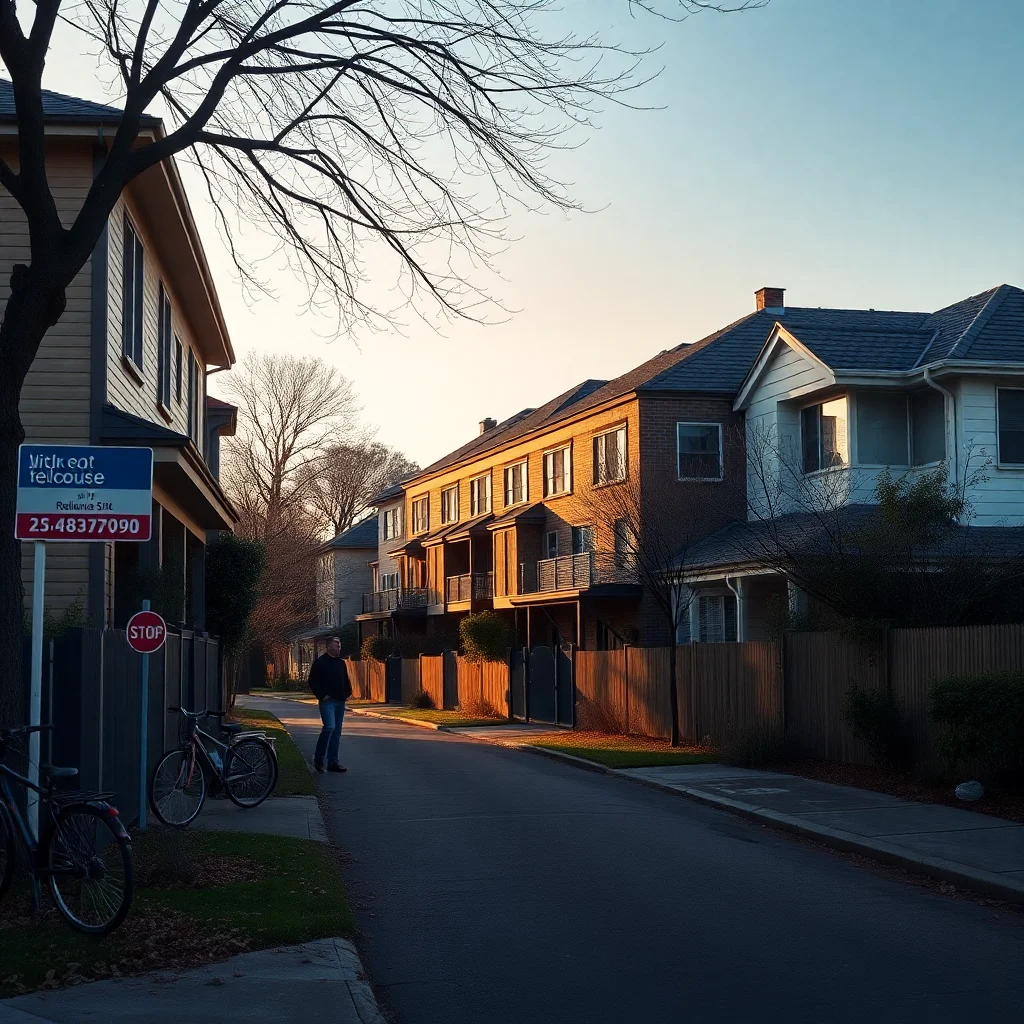
Melbourne’s middle suburbs have long been treated as a polite compromise: too valuable to demolish wholesale, too low-rise to matter, too ordinary to inspire ambition. Yet this is exactly why projects like Shand Road matter. Ys Housing’s four-townhouse pilot takes the most exhausted housing format in Australia — the 15-metre frontage suburban lot — and argues that it can become a repeatable prototype for density, affordability, and design quality at once. That is not a modest claim. It is a direct challenge to the prevailing split between volume-built housing on one side and bespoke architectural houses on the other.
The project’s real provocation is that it refuses the usual false choice. Australian infill housing is often condemned to one of two outcomes: either it is stripped of architecture to satisfy a spreadsheet, or it is over-designed and priced out of the market it claims to serve. Shand Road suggests a third condition, where the architect is also the developer and design decisions are made in the same room as cost, delivery, and environmental performance. That integrated model is not merely efficient. It is ideological. It says quality should not be reserved for the wealthy, and affordability should not be synonymous with aesthetic resignation.
There is precedent here, though not in a simplistic way. The best medium-density housing has always depended on tight coordination between form and delivery. In Vienna, the social housing tradition has shown that repeatability does not have to mean boredom when public standards are high and typologies are rigorously tested. In Melbourne, projects such as Clare Cousins Architects’ housing work and various Build-to-Rent experiments have shown that compactness, daylight, and communal clarity can coexist. Shand Road enters this lineage with a specific suburban brief: make the family townhouse less generic, less wasteful, and less hostile to climate realities.
Its promise is architectural but also civic. If a 15-metre frontage can support four considered homes rather than one bloated detached dwelling, then the suburb begins to behave like a city rather than a museum of private entitlement. That shift matters because the housing crisis is no longer only about supply. It is about the political imagination that keeps equating low-rise suburbia with permanence. A repeatable infill prototype is not a cure-all, but it is a serious rebuttal to the idea that density must arrive as towers or not at all.
PRO: Standardisation can be a tool of design, not its enemy
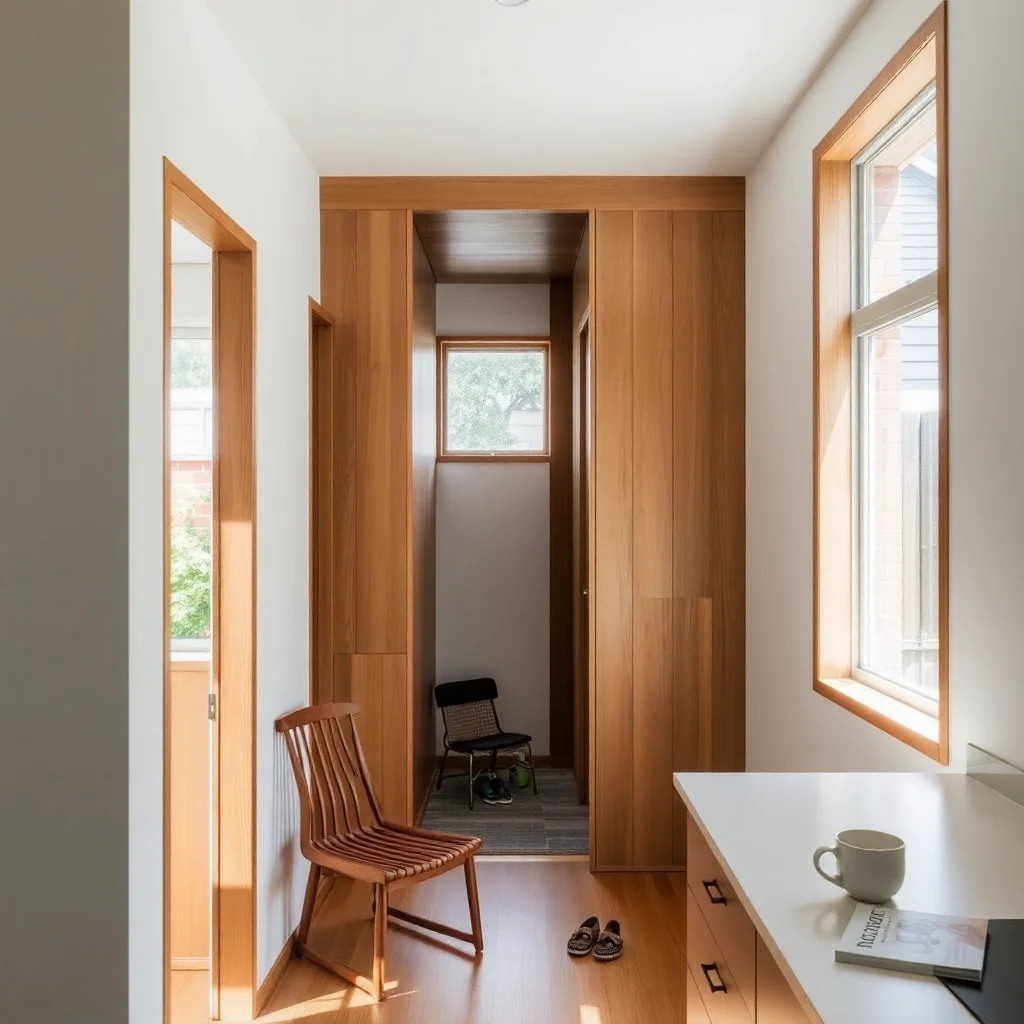
The word “standardised” still triggers panic in architectural circles, as if repeatability automatically leads to failure. Yet the history of housing proves the opposite when standards are used intelligently. Think of the postwar prefabrication experiments across Europe, or the modular discipline of Japanese house builders who have turned constrained sites into highly resolved domestic environments. The question is not whether a housing model is repeatable. The question is whether it is repeatable with intelligence, variation, and restraint.
Shand Road’s significance lies in its attempt to codify a medium-density format that can be adapted across similar suburban plots. That is valuable because the suburban fringe is not the only place where housing pressure is felt; the middle ring is full of incremental sites, awkward parcels, and underused backyards that could absorb more homes without erasing existing neighbourhood structure. If a project can solve the engineering, planning, and spatial economics of one lot type, it can potentially unlock dozens of others. This is how housing becomes systemic instead of boutique.
The architectural challenge is to make repeatability feel like a framework, not a template. Robin Boyd warned against Australian suburbia’s tendency toward the “victorian” and the merely imitative, but the deeper lesson from his criticism is that repetition should be disciplined by purpose. Similarly, Lacaton & Vassal’s work on transformation and generous space in limited conditions demonstrates that cost restraint need not produce meanness. Their housing projects have made a compelling case that the cheapest move is not demolition, and the smartest square metre is often the one left flexible. Shand Road belongs to this argument, because it seeks efficiency without surrendering livability.
The project also benefits from the fact that Ys Housing operates as both architect and developer. That matters because most housing in Australia is broken by fragmentation: developer, architect, builder, planner, and financier all pull in different directions, and design quality is usually the first casualty. An integrated model can hold the line on detail, material honesty, and environmental performance because it does not treat architecture as decoration added after the economics are settled. In that sense, the project is not just a building. It is an operational critique of how housing gets made.
That same tension between reuse and reinvention also appears in debates about whether heritage buildings should be preserved or reprogrammed, where value is often created by adapting an inherited structure rather than replacing it outright.
CONTRA: Repeatability is where architecture goes to die if the market is left in charge
And yet the danger is obvious. The moment a prototype proves itself commercially, it risks being cloned into an empty product category. Repeatability, under market pressure, often becomes a euphemism for simplification. What begins as a carefully tuned response to a 15-metre frontage can quickly mutate into a generic unit kit, stripped of site nuance, spatial generosity, and material specificity. The very efficiencies that make a project viable can become the logic that flattens it.
This is the central contradiction facing design-led affordable housing: the more successful it becomes as a model, the more likely it is to be reproduced by actors who care less about architecture than about throughput. Australian housing history is full of such betrayals. The suburban house itself was once a robust typology; over time, it became a standardized commercial product, optimized for resale value and minimal risk. There is no guarantee that a medium-density prototype will escape the same fate. In fact, the market is structured to ensure it won’t, unless design protections are explicit and durable.
Consider the cautionary example of many masterplanned “urban villages” that market compact living as lifestyle branding while delivering thin façades, cramped circulation, and disposable finishes. The problem is not density as such; it is density used as a sales strategy rather than a civic proposition. Even the most admirable contemporary precedents can be diluted when copied without the original project’s rigor. A housing type can be environmentally efficient and economically legible yet still feel emotionally barren if variation, outlook, acoustics, and thresholds are not fiercely protected.
There is also a social risk in making infill too legible as a product. If every suburban lot becomes a repeatable opportunity, who decides where the model applies, and who benefits from the uplift? The language of “unlocking land” often masks the politics of extraction. In higher-value suburbs, infill may produce a respectable density dividend for owners and developers, but not necessarily for renters, first-home buyers, or displaced communities. Affordability is not just a question of lowering build cost; it is a question of tenure, access, and who gets to remain in place when neighbourhoods are improved.
Architecture, in other words, can be made affordable, but it cannot alone make housing just. That distinction matters. The seduction of projects like Shand Road is that they appear to solve multiple problems simultaneously — design quality, environmental performance, and price discipline. But those goals are rarely aligned for long. If affordability is achieved by compressing the brief until character disappears, then the project becomes a cautionary tale dressed as a success story. If repeatability becomes the only measure of value, the architecture will not scale; it will dissolve.
CONTRA: The suburb is not a neutral site — it is a cultural territory with expectations
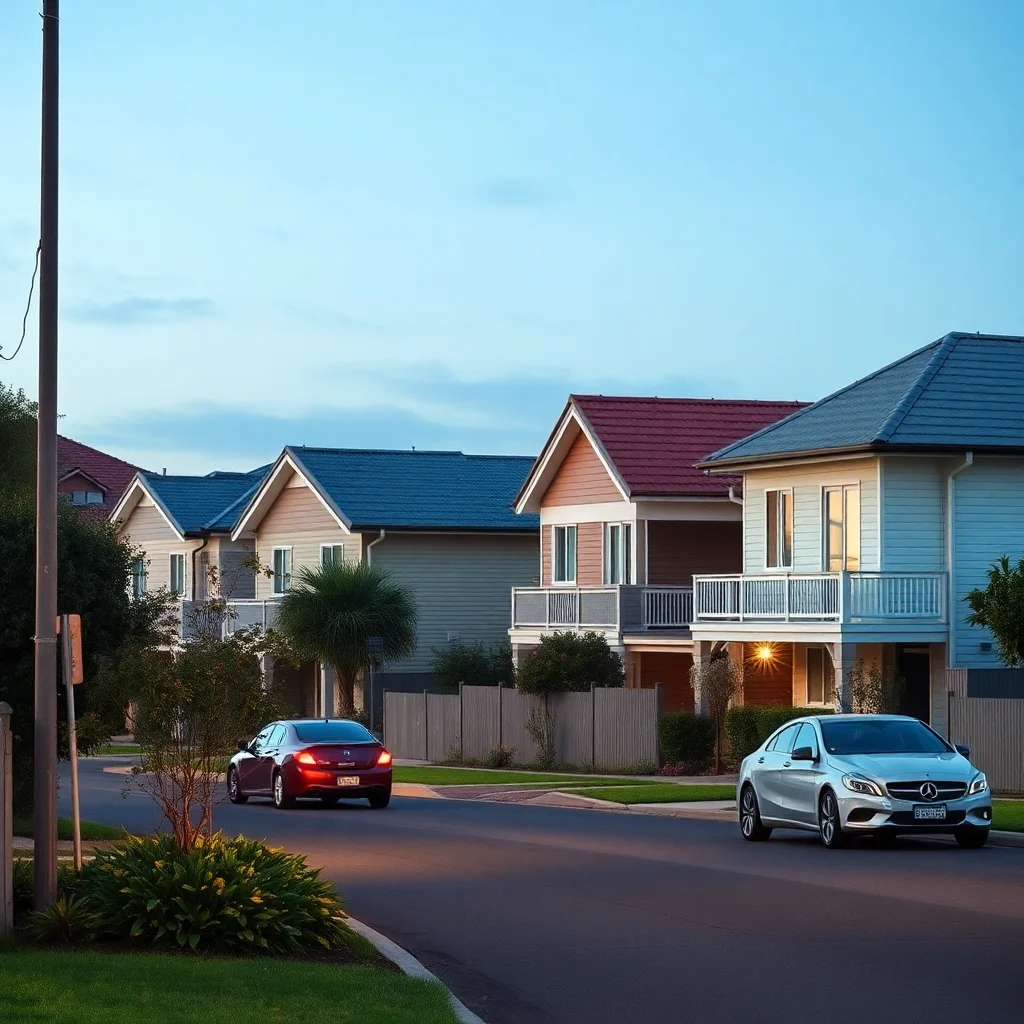
Medium-density infill is often framed as a technical challenge, but suburban transformation is also a cultural fight. Middle-suburban Melbourne is not blank land. It is already scripted by expectations about privacy, setbacks, private open space, family life, car storage, and the visual comfort of sameness. A project that introduces density into this terrain is not just solving a planning puzzle; it is negotiating a deeply conservative idea of home.
That is why so many good housing projects end up compromised. They are asked to be simultaneously invisible and transformative: dense but not too dense, affordable but not cheap-looking, contextual but distinctive, sustainable but low-maintenance, family-friendly but compact. This impossible bundle of demands encourages timidity. Architects respond by sanding down everything sharp, and developers respond by removing anything that does not immediately pay back. The result is a middle class architecture of apology.
Shand Road’s ambition is to resist that apology, but resistance has to survive beyond the pilot phase. A single well-tuned project can always be defended as exceptional. The harder task is maintaining quality when the prototype becomes routine. That is where many housing systems fail. The moment a form is codified, the temptation to simplify it for approvals, speed, and margin becomes overwhelming. A stair becomes narrower, a courtyard becomes smaller, a façade becomes cheaper, and the spatial intelligence collapses one compromise at a time.
This is why comparison with international housing models is useful but limited. Vienna’s system works because it is underwritten by policy, land mechanisms, and public appetite for housing as a civic good. The Netherlands has strong traditions of typological innovation precisely because regulations and institutions shape the field. Australia, by contrast, tends to fetishize the project while neglecting the framework. Without policy support, even the best suburban infill model risks becoming a rare object rather than a new norm.
So the real question is not whether Shand Road is good architecture — it is. The question is whether good architecture can survive once it is turned into a business model. That is a harder, uglier, and more important test. If it can, suburban infill might become the most credible route to affordable design-led housing in the country. If it cannot, then it will simply join the long archive of exemplary projects that proved the point and changed nothing.
For many cities, the broader issue is similar to the one explored in adaptive architecture for flooded futures: once a prototype becomes part of the system, resilience depends on whether the original logic survives scale and repetition.
FAQ
What makes suburban infill attractive for affordable housing? It can add homes to existing neighbourhoods without the infrastructure burden and social disruption of large-scale redevelopment. On smaller suburban sites, the economics can be tighter, but the urban payoff is significant when design, approvals, and construction are coordinated well.
Why is the 15-metre frontage important? It is a common lot type in Australian suburbs, which makes it a practical test case for repeatable medium-density housing. If a smart model works on this frontage, it can potentially be adapted to many similar sites across middle-ring cities.
Does standardisation always reduce architectural quality? No. Standardisation can improve quality when it is used to lock in good spatial logic, environmental performance, and cost discipline. The risk comes when standardisation becomes a shortcut for developer convenience rather than a framework for better living.
What is the biggest barrier to making this model mainstream? Policy and market incentives. Without planning support, financing structures, and safeguards against cost-cutting, a design-led prototype can be copied poorly or remain an isolated one-off instead of becoming a dependable housing model.
Get the Mainifesto weekly — curated design debates, speculative ideas and the week's best articles every Saturday.
Editorial Perspectives
Questions and counterpoints developed by the Mainifesto editorial desk to extend the discussion.
Perspective 1
If Shand Road can prove that a repeatable suburban model still clears the numbers, that’s the kind of housing the market can actually absorb at scale. The design quality gets protected by setting the rules up front — good proportions, durable materials, sensible plans — and then sticking to them instead of letting every unit become a value-engineered compromise.
Perspective 2
The danger is that once repeatability becomes profitable, the language of efficiency starts flattening the very things that make a place worth living in. Infill should add complexity to the suburb, not just tidy it up for consumption; if design is only protected by profit margins, then it was never protected at all.
Perspective 3
What interests me is whether repeatable infill can be parametrically governed without becoming generic. If the design rules are encoded properly — setbacks, daylight, cross-ventilation, spatial variety — then the real question is who audits the system when the developer starts optimizing for yield instead of livability.