
CIBC Square and the New Corporate Park
The office tower is no longer enough
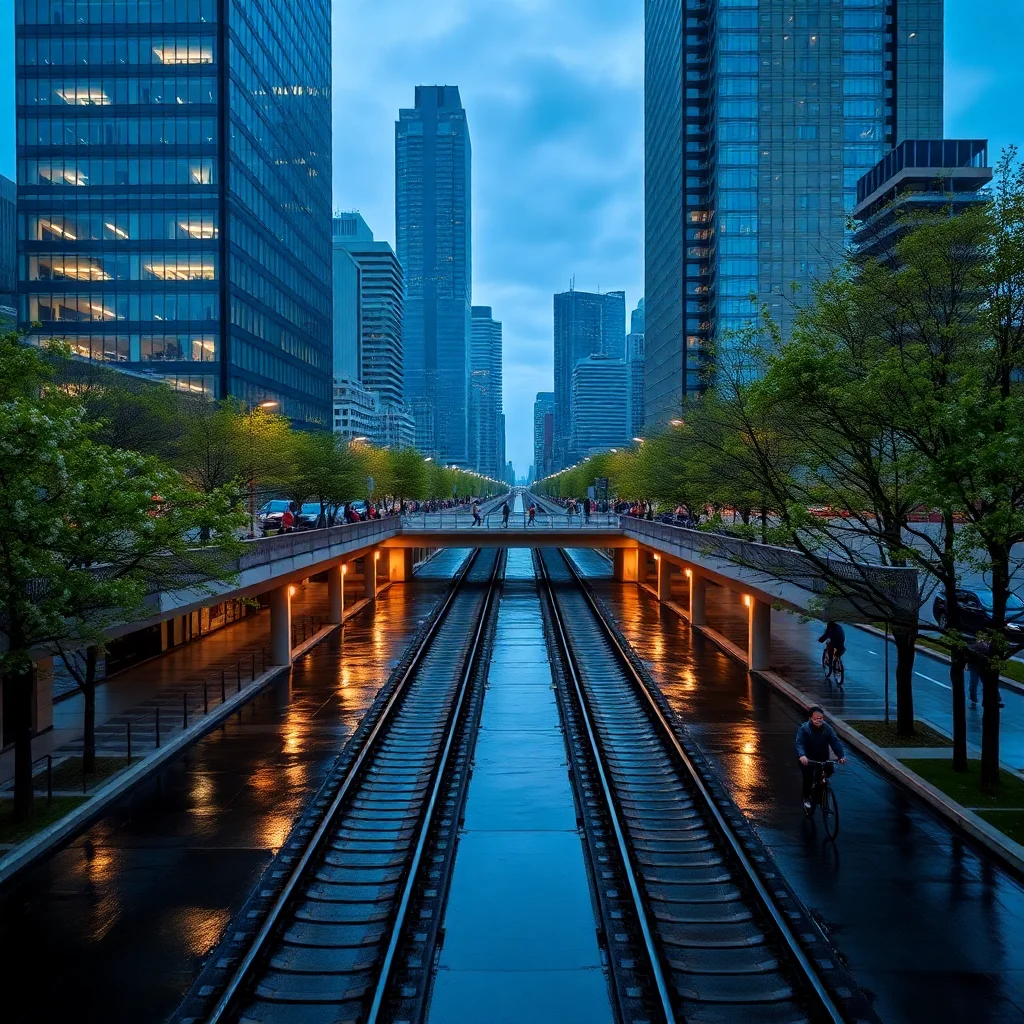
For most of the twentieth century, the office icon was legible at a glance: a sealed tower, a glass monolith, a skyline signature. The corporate headquarters declared power by standing apart from the city. Toronto’s CIBC Square, completed in its second phase by WilkinsonEyre, is trying to break that grammar. It does not simply add another skyscraper to the financial district; it stitches two towers together with an elevated park spanning the rail corridor below, turning a workplace development into a piece of civic scenery. That shift matters because it reflects a broader recalibration in architecture: prestige is no longer communicated only through height, but through the appearance of public generosity.
That generosity is real, at least on the surface. A park above tracks is not a trivial gesture in a dense downtown, where every square meter is monetized and every setback is usually negotiated into oblivion. The project gives Toronto a connective public realm in the sky, a landscape that promises respite, views, and pedestrian continuity. It also offers a new urban image: the office as infrastructure, the headquarters as a bridge, the developer as landscape patron. But this is where the admiration becomes uneasy. When the corporate tower learns to speak the language of parks, plazas, and permeability, is it making the city more humane—or simply making vertical real estate easier to sell?
PRO: when corporate architecture starts behaving like civic infrastructure
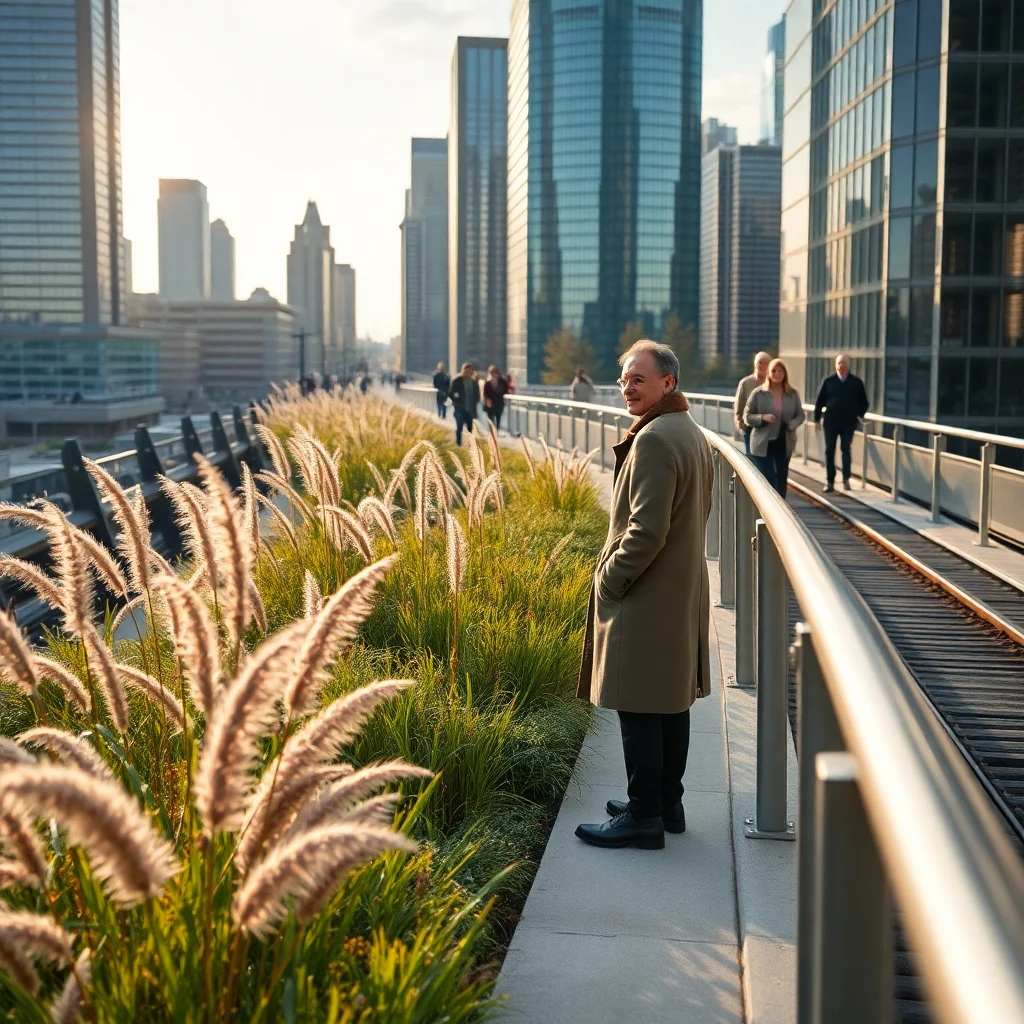
The strongest argument for CIBC Square is that it acknowledges a hard urban fact: cities are stitched together by barriers as much as by boulevards. In Toronto, the rail corridor has long been a wound in the urban fabric, a no-man’s-land separating districts and foreclosing continuity at ground level. Elevating a park over that infrastructure is not just a visual flourish; it is a tactical urban act. It recalls earlier attempts to reclaim the in-between, from the High Line in New York to the Bentway under Toronto’s Gardiner Expressway, but with a crucial difference: this is not leftover space adapted after the fact. It is embedded into the business logic of the project itself.
That matters because the best public spaces are often produced not by purity of intent, but by friction between private capital and public utility. WilkinsonEyre’s architecture, like much of the firm’s work, operates with high technical confidence and a strong sense of connective urbanism. The elevated park does what so much corporate public realm only pretends to do: it creates an actual destination, not a decorative forecourt. In an era when climate pressure and density policy demand that cities grow upward while remaining socially habitable, this kind of hybrid can be more useful than the old fantasy of the isolated tower. It suggests that the office building can pay its social rent in forms other than lobbies and token benches.
There is also a symbolic shift here. The headquarters of a major bank is no longer content to present itself as a sealed financial machine. It must now perform openness, ecology, and urban hospitality. That is not entirely cynical. The best contemporary architecture recognizes that legitimacy is environmental as much as visual. Think of how Foster + Partners’ Bloomberg European headquarters in London made sustainability part of its spatial identity, or how BIG and Diller Scofidio + Renfro have turned roofscapes, terraces, and public access into a new vocabulary of prestige. CIBC Square participates in that same move: the skyline object is no longer enough; it has to promise shared benefit.
And in a city like Toronto, where public space can feel underprovided and overmanaged at the same time, that promise has value. A park in the air offers views across the tracks, a place to walk and pause, and a more porous relationship between financial district and neighboring streets. It helps reframe the office district as part of a larger civic ecology rather than an exclusive zone of working hours. If the twentieth-century tower was an emblem of detachment, the twenty-first-century version is at least trying to masquerade as an urban commons.
CONTRA: the corporate alibi is getting greener and better designed
But here is the problem: a better mask is still a mask. The more sophisticated corporate developments become at producing public-facing landscapes, the easier it is to confuse generosity with absolution. CIBC Square sits squarely inside that contradiction. It is a headquarters, yes, but it is also a major piece of mixed-use real estate whose value depends on the familiar economics of central business districts: prestige address, premium office floors, transit adjacency, and skyline impact. The elevated park does not replace those logics; it helps sanitize them. It makes the development feel civic even as it remains deeply financialized.
This is the central suspicion that now haunts “public” amenities in private developments. When the language of landscape becomes part of corporate branding, the risk is not just greenwashing in the environmental sense, but urban greenwashing: the conversion of public virtue into a competitive leasing strategy. The park may be open, but it is still curated, controlled, and dependent on the priorities of its owner. Like many privately managed public spaces, it can produce genuine pleasure while quietly disciplining behavior. The experience of openness is real; the politics of access are not necessarily democratic.
We should be wary of the way these projects borrow authority from the city while insulating themselves from its messier obligations. A corporate park atop rail lines can be celebrated as a civic gift, but it can also distract from deeper structural questions: who gets to build at this scale, who captures the uplift in land value, who bears the long-term maintenance burden, and what kind of urbanism is being displaced by the spectacle of generosity? The danger is not that the park is fake. It is that it is too effective. It offers the feeling of publicness without forcing the developer to relinquish much power.
This critique is especially relevant in North American downtowns, where office architecture is in crisis and reinvention often comes dressed as benevolence. As remote work weakens the old centrality of the corporate tower, developers need a new reason for people to care about office buildings. The answer, increasingly, is not just amenities but atmosphere, not just floor area but experience, not just lobbies but landscapes. The office becomes a lifestyle product wrapped in civic rhetoric. That is a brilliant design maneuver and a troubling political one. The public realm is being drafted into the service of asset value.
The new skyline bargain: shared space in exchange for scale
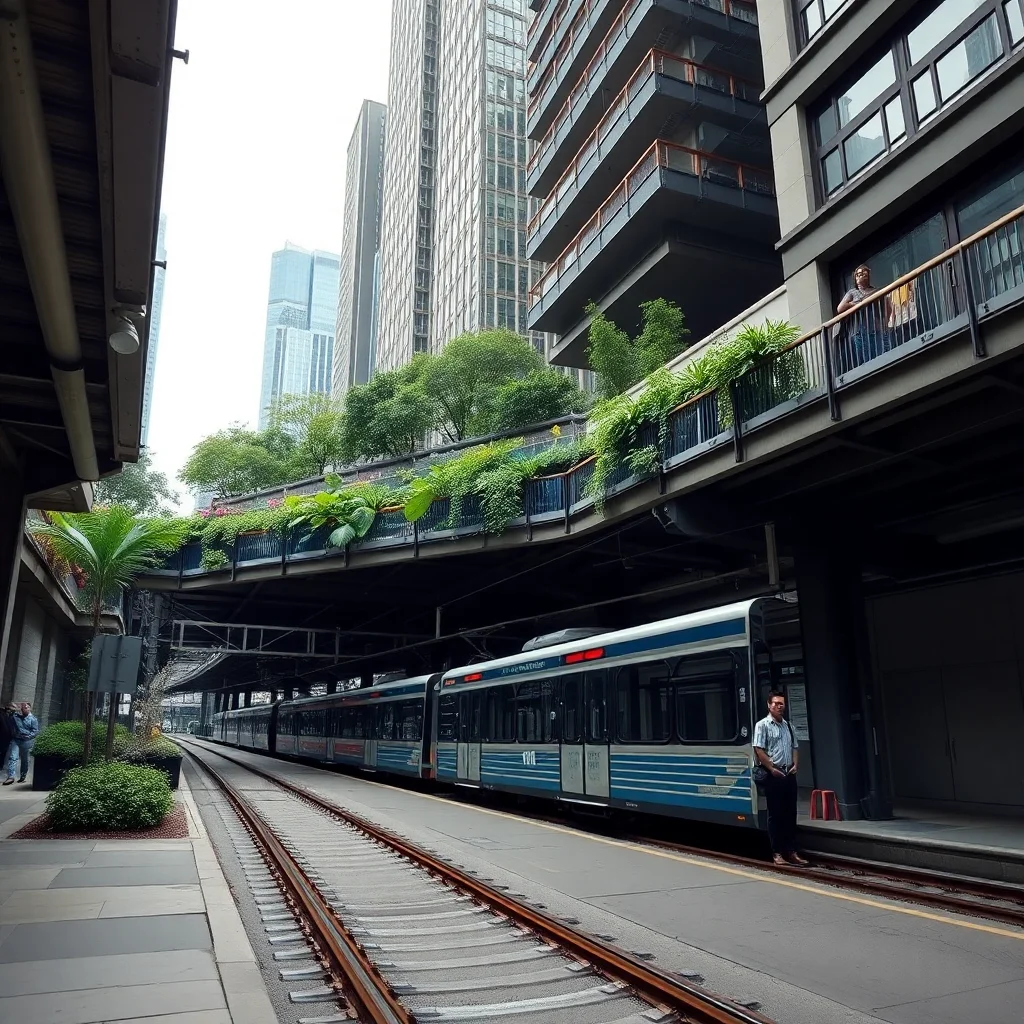
CIBC Square makes visible a bargain that defines much of contemporary urban architecture: if you want to build big, you must now appear to give something back. The problem is that “giving back” can become an aesthetic category rather than a material one. In the best cases, the exchange produces truly useful urbanism. In the worst, it becomes a polished trade in symbolic capital. Toronto’s elevated park sits uncomfortably between these poles, which is exactly why it deserves attention. It is not just another office development; it is a case study in how architecture now negotiates legitimacy.
That negotiation is not unique to Toronto. In Milan, Gensler’s and others’ corporate districts have increasingly merged workplace, landscape, and public realm. In London, the war for office tenants has pushed developers to add roof gardens, access routes, and event terraces. In Singapore, skyscraper podiums routinely masquerade as public terrain. Across these cities, the office tower is learning to behave like a fragment of urbanism. The civic image is no longer peripheral to commercial architecture; it is the commercial architecture.
For critics, the question is not whether this is cynical. Of course it is, at least partly. The question is whether cynicism can be operationalized into something that improves urban life. Architecture has always been full of such compromises. The issue now is scale and transparency. When a bank-funded development produces a meaningful elevated park, the city gains space it would otherwise struggle to acquire. But it also normalizes a world in which public landscape arrives bundled with corporate address, as if the right to enjoy a park in downtown Toronto now depends on underwriting a headquarters.
That should not be dismissed as failure, because the park may still be better than the blank podium or dead-edge tower it replaces. Yet neither should it be romanticized. The future office icon may indeed be a public landscape, but the phrase itself contains a trap: public is being used to make private scale feel morally acceptable. Architecture should be judged not only by what it gives, but by what kind of power it helps conceal.
FAQ
What is unusual about CIBC Square in Toronto? CIBC Square links two office skyscrapers with an elevated park above the rail corridor, making the development read less like a standalone tower and more like a piece of urban infrastructure.
Why are architects and critics interested in office buildings with parks? Because they signal a shift away from sealed corporate towers toward hybrid developments that combine work, landscape, and public access, often in response to density, transit, and sustainability pressures.
Is an elevated park the same as a truly public park? Not exactly. Even when accessible, these spaces are typically privately owned and managed, which means rules, hours, and behaviors can be controlled in ways public parks usually are not.
Why do some people see these projects as corporate alibis? Because a generous-looking public amenity can help justify large-scale real-estate development, making the project appear civic-minded while its primary purpose remains the production of high-value office space.
What other projects have influenced this kind of design? The High Line in New York, Toronto’s Bentway, and various sky-garden office developments in London, Singapore, and elsewhere have shaped the idea that landscape can be embedded into dense urban infrastructure.
The real test is political, not aesthetic
The success of CIBC Square should not be measured by skyline photography alone. Its real significance lies in how it reveals the changing contract between architecture and the city. The office tower is surviving by becoming softer, greener, and more spatially generous. That evolution is not trivial; it may be the only way large commercial buildings can still claim relevance in a skeptical urban culture. But the very tools that make them relevant also make them harder to critique.
Toronto’s new elevated landscape is both a gift and a strategy. It improves the city and advertises the developer. It creates public value and helps sustain private value. That duality is not a flaw to be solved; it is the condition of contemporary urban architecture. The issue is whether cities can demand more from such projects than atmosphere and access, whether they can convert these gestures into stronger accountability, broader public benefit, and more durable civic rights.
For now, the new office icon is indeed no longer a tower alone. It is a landscape suspended between buildings, a bridge that wants to be a park, a headquarters that wants to feel like a gift. But gifts can be transactional. The question is whether architecture will keep disguising that fact—or whether cities will finally insist that generosity come with less branding and more power-sharing.
Get the Mainifesto weekly — curated design debates, speculative ideas and the week's best articles every Saturday.
Editorial Perspectives
Questions and counterpoints developed by the Mainifesto editorial desk to extend the discussion.
Perspective 1
If a tower gives you real public space that people actually use, I’m not interested in purity tests. Cities should take the win and set clear rules on access, maintenance, and programming so the space performs for the public, not just for the brochure.
Perspective 2
I’m skeptical of calling this a civic breakthrough when the land, control, and long-term value still sit with private interests. Public space should be guaranteed by policy and ownership, not negotiated as a side effect of a profitable development.
Perspective 3
This is what happens when cities are starved of capital and then forced to accept whatever public realm private money is willing to subsidize. Sometimes the trade is worth it, but only if the city keeps real leverage over access, governance, and who gets excluded when the market shifts.
Perspective 4
From a delivery standpoint, the question is whether the public gets a space that works, not whether the developer gets to look virtuous. If the arrangement makes the scheme financeable and the result is genuinely open, well maintained, and useful, then I’d rather have that than a purist rule that produces dead streets and empty gestures.