
Hybrid Towers: Preserving Heritage, Building Up
PRO: The Hybrid Tower Is the Only Honest Response Left
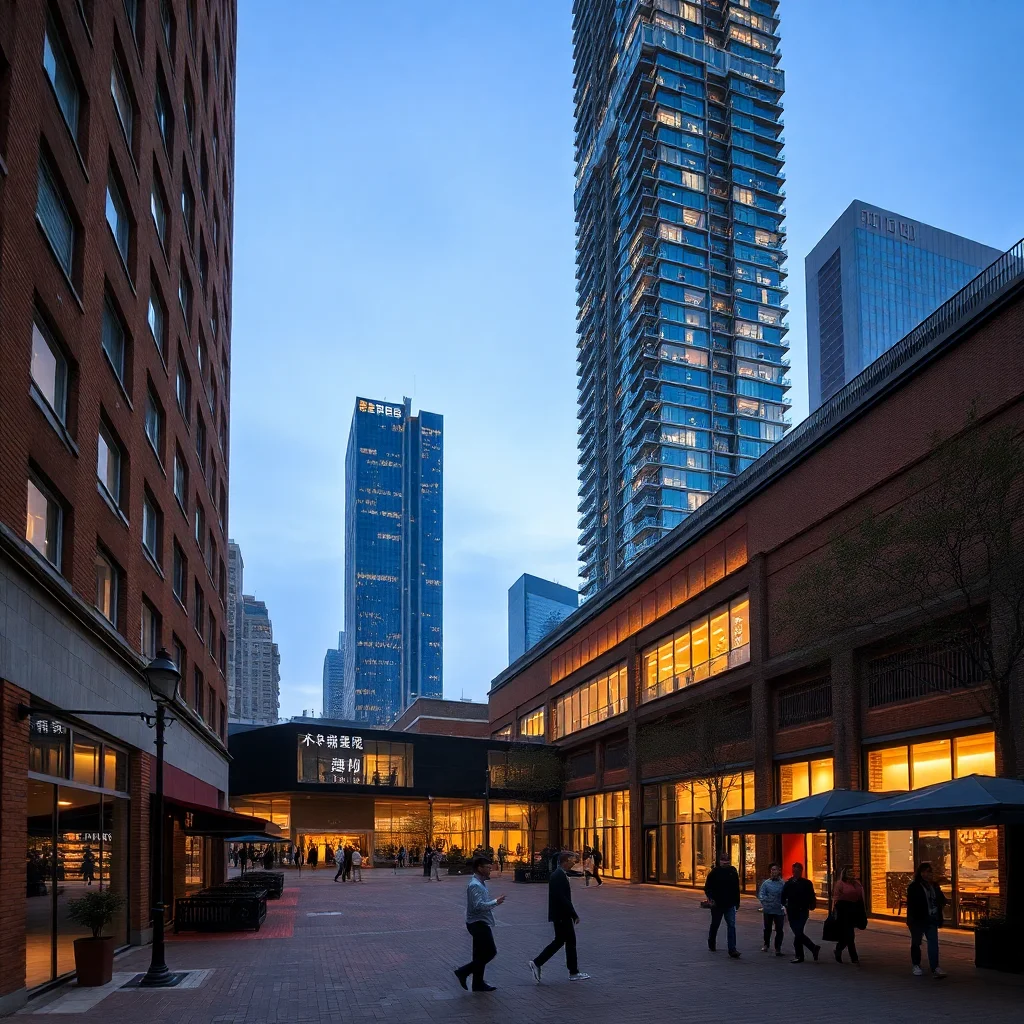
Urban preservation used to be staged as a binary drama: save the old fabric, or clear it for the new city. Jing’An Investment Center in Shanghai refuses that fiction. It folds preserved historic buildings, retail, offices, residences, and a 180-meter tower into a single footprint, acknowledging the basic fact of dense Asian cities: land is too expensive, demand too intense, and memory too politically valuable to let either preservation or development operate alone. The project’s most persuasive move is not its height, but its refusal to keep heritage at a decorative distance. The old and the new are made to coexist at ground level, then climb upward together through a three-dimensional circulation system.
This is not a sentimental museum strategy. It is an urban-operational one. In Jing’An, where traditional streetscapes sit beside giant commercial hubs, the hybrid model works because the city already runs on contradiction. Nikken Sekkei’s proposal treats the preserved low-rise buildings not as obstacles to be tolerated, but as anchors around which density can be organized. The result is a kind of vertical neighborhood, where public life is extended into sky gardens, lounges, and upper-level social spaces. Shanghai’s historical memory of Lilong alley communities is not merely referenced; it is reinterpreted as stacked social infrastructure.
The case for the hybrid tower is simple: if preservation cannot stop development, then preservation must shape development. That is a stronger position than freezing fragments in place while letting the market bulldoze the rest.
The New Urban Regeneration Playbook Is Vertical, Not Horizontal
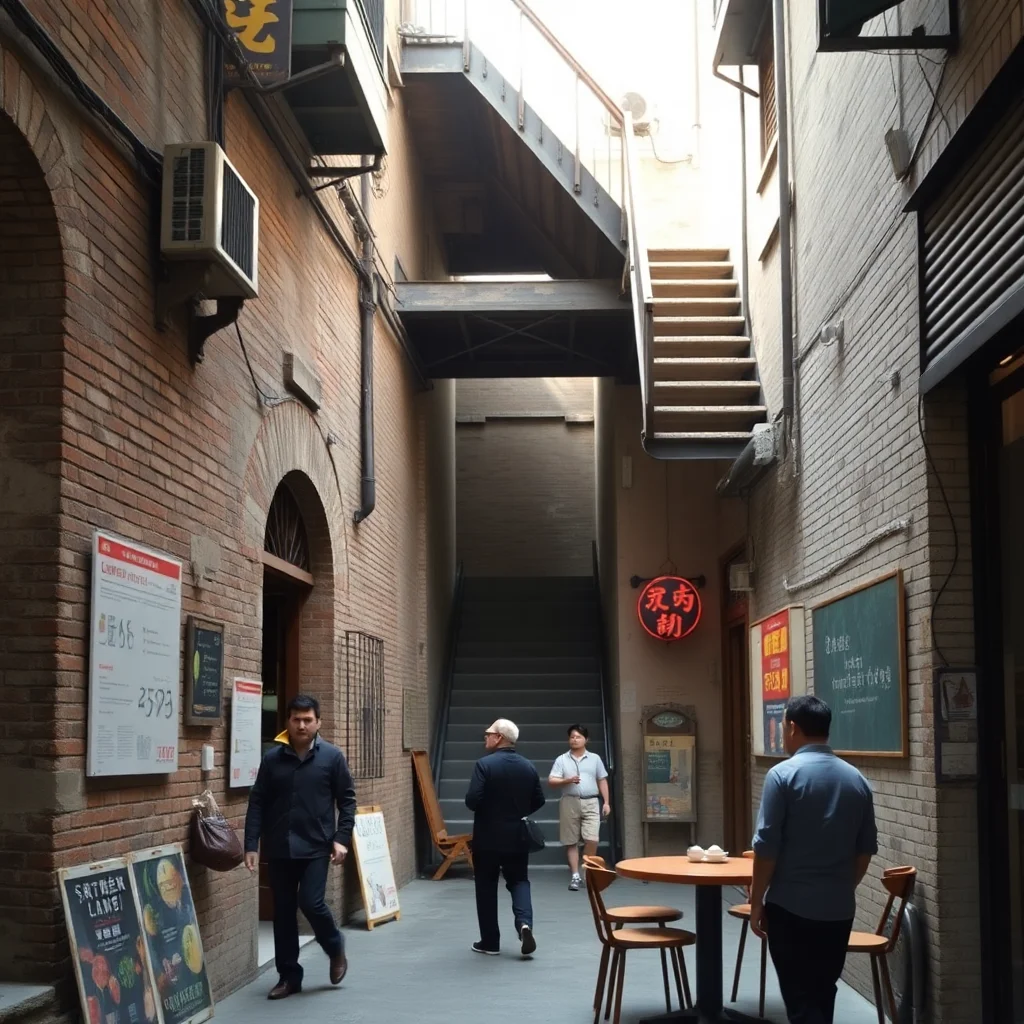
Hybrid projects like Jing’An Investment Center are emerging because the old model of urban renewal has become too weak for contemporary cities. In London, Battersea Power Station was preserved but effectively monetized through luxury redevelopment. In Paris, the conversion of the Bourse de Commerce by Tadao Ando kept the shell while importing a new cultural economy. In Tokyo, many regeneration projects now rely on layered public access, mixed-use programs, and transport-linked density to make preservation financially viable. Shanghai takes this logic further: instead of placing preservation and high-rise development in sequence, it collapses them into one architecture.
The significance is spatial and ideological. A project like this says that history is not only what sits at street level behind a fence. History can be embedded in the route, the section, and the social choreography of a building. That is why the concept of a “three-dimensional Lilong” matters. Lilong were never just buildings; they were patterns of adjacency, encounter, threshold, and informal life. Translating that into vertical circulation is ambitious because it treats density not as a condition to be endured, but as a social form to be designed.
Architects from MVRDV to OMA have spent years arguing that mixed-use density can revive the city if it is designed as an ecosystem rather than a stack of isolated functions. Jing’An Investment Center belongs in that conversation. It suggests that urban regeneration must now perform on two scales at once: the intimate scale of preserved fabric and the metropolitan scale of a tower competing in the skyline.
That is also why renovation as an urban default has become such a powerful idea across the profession. The question is no longer whether to preserve, but how to make reuse structurally central rather than merely sentimental.
CONTRA: Preservation Can Become a Decorative Alibi
But the hybrid building is not automatically a victory. It can also be a sophisticated form of urban laundering. Developers know that heritage sells. A preserved facade, a cobbled passage, a restored brick wall: these elements can grant moral legitimacy to a project that is otherwise entirely driven by floor-area economics. The danger is that preservation becomes a brand texture, while the real value is extracted upward in the tower. The old city is then kept not because it is structurally necessary, but because it is commercially useful.
This is the central suspicion around projects like Jing’An Investment Center. When historic buildings are retained at the base of a supertall development, are they genuinely shaping the urban experience, or simply providing atmospheric ballast? The answer depends on access, programming, and whether the preserved parts retain legibility as more than lobby scenery. Too many hybrid schemes flatten heritage into an aesthetic wrapper, severing it from the messy social life that gave it meaning. If the circulation through the project is carefully curated, the public may feel invited—but not empowered.
That is the brutal truth of heritage-density hybrids: they can preserve form while evacuating civic substance. A renovated low-rise district beside a luxury tower may look like continuity, but it can function like a controlled simulation of cityness.
The risk is even clearer when salvage becomes architectural prestige: the value of keeping something old can be converted into an image of seriousness without changing the underlying real-estate logic at all.
Shanghai’s Memory Is Not a Theme Park
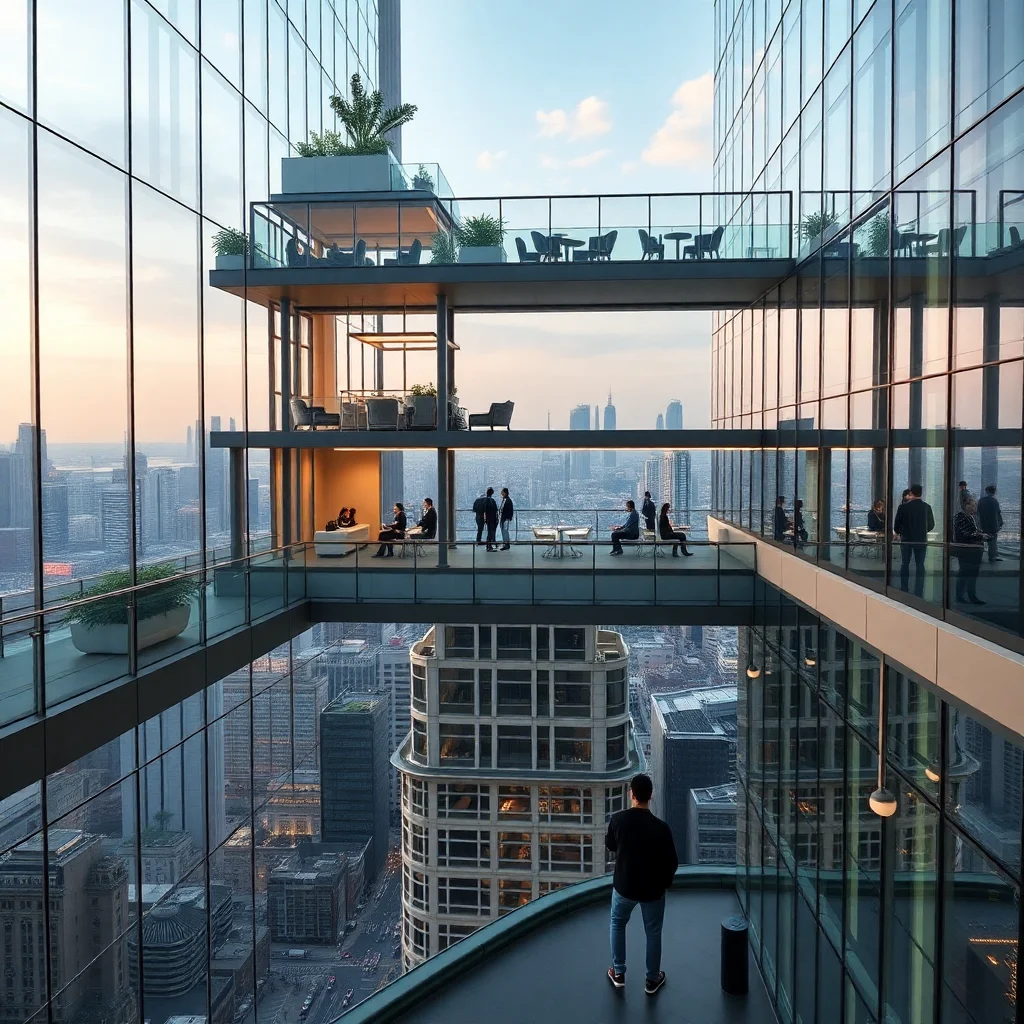
Shanghai is especially vulnerable to this tension because its urban identity has long been made through selective demolition and reconstruction. The city’s historic lilong neighborhoods were not picturesque relics; they were dense, lived-in environments shaped by migration, commerce, and close contact. In recent decades, many such areas have been erased or sanitized, turned into lifestyle districts or cultural consumption zones. The hybrid tower appears to offer a better alternative: keep the fragments, build upward, and let density pay for memory.
Yet memory cannot survive as a logo. If the preserved buildings at Jing’An become a high-design preface to a commercial tower, the project risks repeating the very logic it claims to transcend. The question is not whether the old fabric is visible, but whether it remains capable of hosting unpredictable use. Can a resident, office worker, shopper, and passerby inhabit the space without each encounter being pre-scripted? Can circulation feel democratic rather than branded? The three-dimensional Lilong is persuasive only if it generates actual urban friction, not just polished transitions.
There are precedents worth noting. In Amsterdam, the adaptive reuse of industrial and canal-side structures often retains messy traces instead of overcurating them. In Seoul, regeneration projects that combine heritage with public realm improvements succeed when they keep a degree of spatial looseness. The best examples understand that preservation is not about stillness; it is about keeping a place open to change without turning it into spectacle.
PRO: Density Needs Symbols, and Hybrid Buildings Provide Them
Still, to dismiss hybrid towers as branding exercises is to ignore an important political reality: cities need symbols that justify compaction. High-rise development is often hated because it is associated with privatization, shadow, congestion, and social erasure. If a tower can visibly carry older fabric, public routes, and social mixing, it becomes easier to argue that density can produce collective value rather than just private profit. Jing’An Investment Center is trying to make the tower less predatory by making it more relational.
This matters because the future city will not be low-rise by nostalgia. It will be dense by necessity. Climate constraints, infrastructure efficiency, transit-oriented development, and land scarcity all favor compact urban form. The hybrid building offers a political compromise: it allows the city to grow upward while keeping some trace of its past within the same project. In the best case, this creates continuity without paralysis. In the strongest version, the tower becomes a vertical civic section—grounded in memory, elevated by program.
Seen this way, the project is not a betrayal of preservation but a redefinition of it. Preservation no longer means refusal. It means negotiation under pressure. That is not purity, but it may be the only serious urbanism left.
It also aligns with a broader shift in practice, where housing density is being reconsidered through older spatial types rather than against them, suggesting that compactness and communal life do not have to be opposites.
CONTRA: Compromise Can Also Mean Creative Weakness
And yet compromise has a cost. The more a project tries to satisfy preservationists, developers, planners, and branding departments, the more likely it is to become formally diluted. Hybrid buildings often promise the intensity of both old city and new skyline, but deliver a softened version of each. The heritage component is curated into accessibility; the tower is domesticated by symbolic context. What emerges is not conflict, but consensus—and consensus is often fatal to architecture.
Strong architecture usually picks a fight. It either preserves with conviction or builds with conviction. The hybrid model risks hovering in the middle, pleasing everyone just enough to avoid being transformative. The question is whether Jing’An Investment Center truly invents a new urban type or simply packages existing real-estate logic in a more culturally intelligent form. A project can cite the Lilong, borrow the language of social continuity, and still end up serving the same high-end urban market that has fueled the erasure of so much of Shanghai’s ordinary fabric.
That is why the debate matters. If hybrid towers become the default solution, cities may no longer need to choose between preservation and density—but they may also stop making difficult decisions about either. The result could be an architecture of managed ambiguity: attractive, efficient, marketable, and intellectually evasive.
FAQ
What is a hybrid building in architecture? It is a building that combines preservation and new development, often mixing historic structures with high-density programs such as offices, residences, and retail. The goal is to keep urban memory alive while adding contemporary capacity.
Why is Jing’An Investment Center significant? It represents a model in which preserved low-rise buildings and a super-tall tower are integrated into one urban composition. The project reframes preservation as part of density rather than its opponent.
What is the “three-dimensional Lilong” idea? It is a reinterpretation of Shanghai’s traditional alley-based communal life in vertical form. Instead of a flat neighborhood, the project proposes layered circulation and social spaces that extend upward through the tower.
Are hybrid towers a good solution for historic cities? Sometimes. They can protect fragments of heritage while enabling necessary growth, but they can also reduce preservation to branding if access, use, and urban meaning are not genuinely maintained.
The hybrid tower may be the future of dense cities, but is it a real reconciliation of memory and growth—or just the most elegant way to make one cover the other?
Get the Mainifesto weekly — curated design debates, speculative ideas and the week's best articles every Saturday.
Editorial Perspectives
Questions and counterpoints developed by the Mainifesto editorial desk to extend the discussion.
Perspective 1
This is the kind of compromise that actually works in the real world: you keep the heritage address, add the density, and make the place commercially legible. If people can navigate it, enjoy it, and remember it, I’m not worried about purity tests.
Perspective 2
Let’s be honest: most hybrid towers are not reconciliation, they’re brokerage. The old building becomes a visual alibi while the real value is extracted upward, and the city gets branded as “sensitive” instead of actually being protected.
Perspective 3
The hybrid tower can be useful, but it depends on what is actually preserved: program, access, public space, or just a façade. Too often the heritage piece is treated as a legal obstacle to be folded into the project narrative rather than something that changes the building’s performance in the city.
Perspective 4
I’m wary of calling this reconciliation when the old structure is mostly being used as an image of continuity. Heritage is not just a skin or a lobby gesture; if the project erases use, craft, and memory, then it’s adaptive reuse as spectacle, not preservation.
Perspective 5
The hybrid tower is perfectly contemporary in the worst sense: it stages memory while subordinating it to capital’s vertical appetite. One can admire the choreography, but the question remains whether the historic fragment is a lived layer or merely a decorative citation pinned to a speculative object.