
Can AI Art Earn a Permanent Museum Place?
The museum is no longer just a guardian of taste — it is now a legitimacy machine
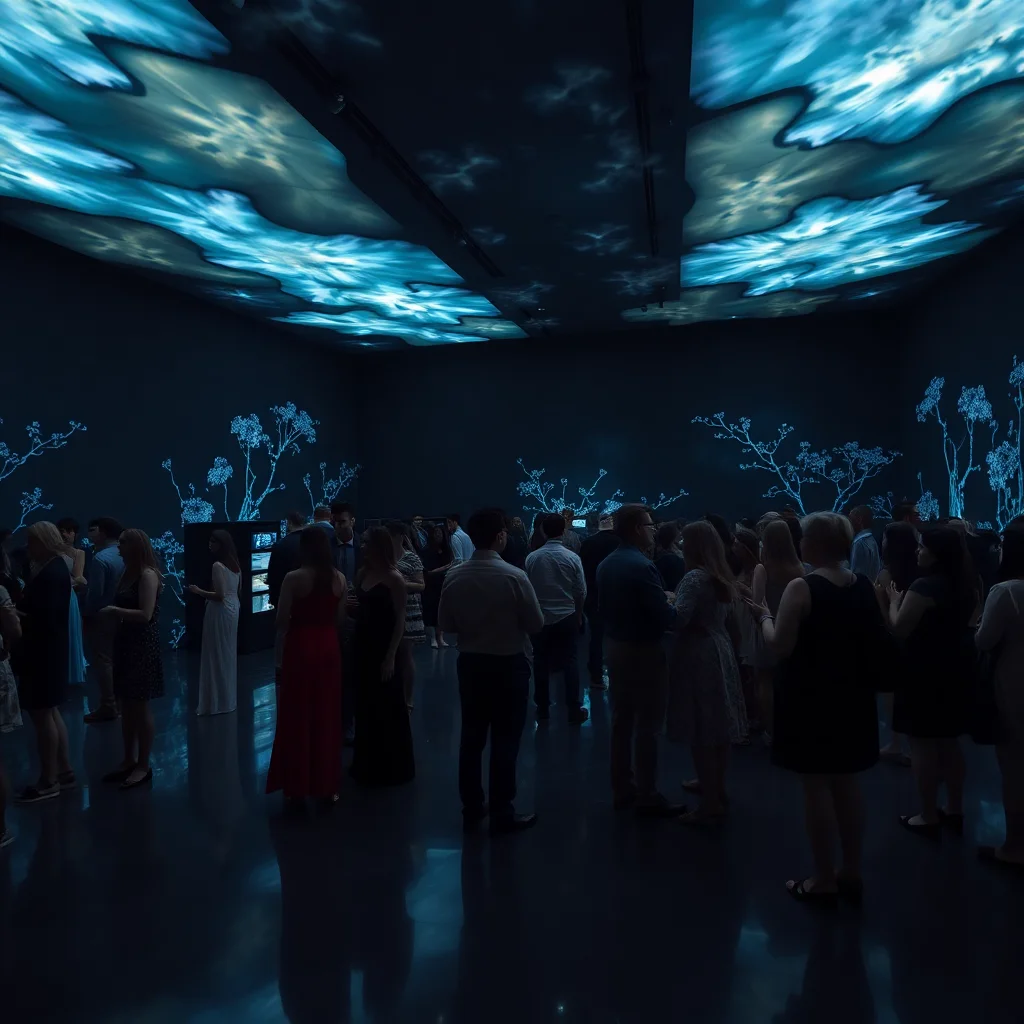
Dataland’s Los Angeles opening is not merely another shiny addition to the city’s cultural map. Co-founded by Refik Anadol and Efsun Erkılıç, the new museum arrives with a deliberately awkward ambition: to move AI-generated work out of the novelty category and into institutional history. That is a much bigger claim than “immersive art.” It is a bid for permanence. And permanence, in the museum world, is the ultimate form of power.
The debate is not whether the work looks impressive on a giant screen. AI image-making already knows how to seduce the eye: it can liquefy color, swell scale, and produce endless morphing atmospheres that feel at once futuristic and emotional. The real question is whether museums should become the place where technology receives cultural blessing. If visitors are moved by the spectacle, does that movement establish artistic value — or simply prove that the institution has become a validation engine for the software age?
That distinction matters because museums do more than display objects; they canonize them. When a museum allocates space, attention, tickets, and curatorial language to AI-generated work, it is not just hosting an exhibition. It is writing a provisional history in which machine-made images may stand beside painting, sculpture, film, and installation as a durable category rather than a passing interface.
Dataland’s gamble: from data spectacle to cultural claim
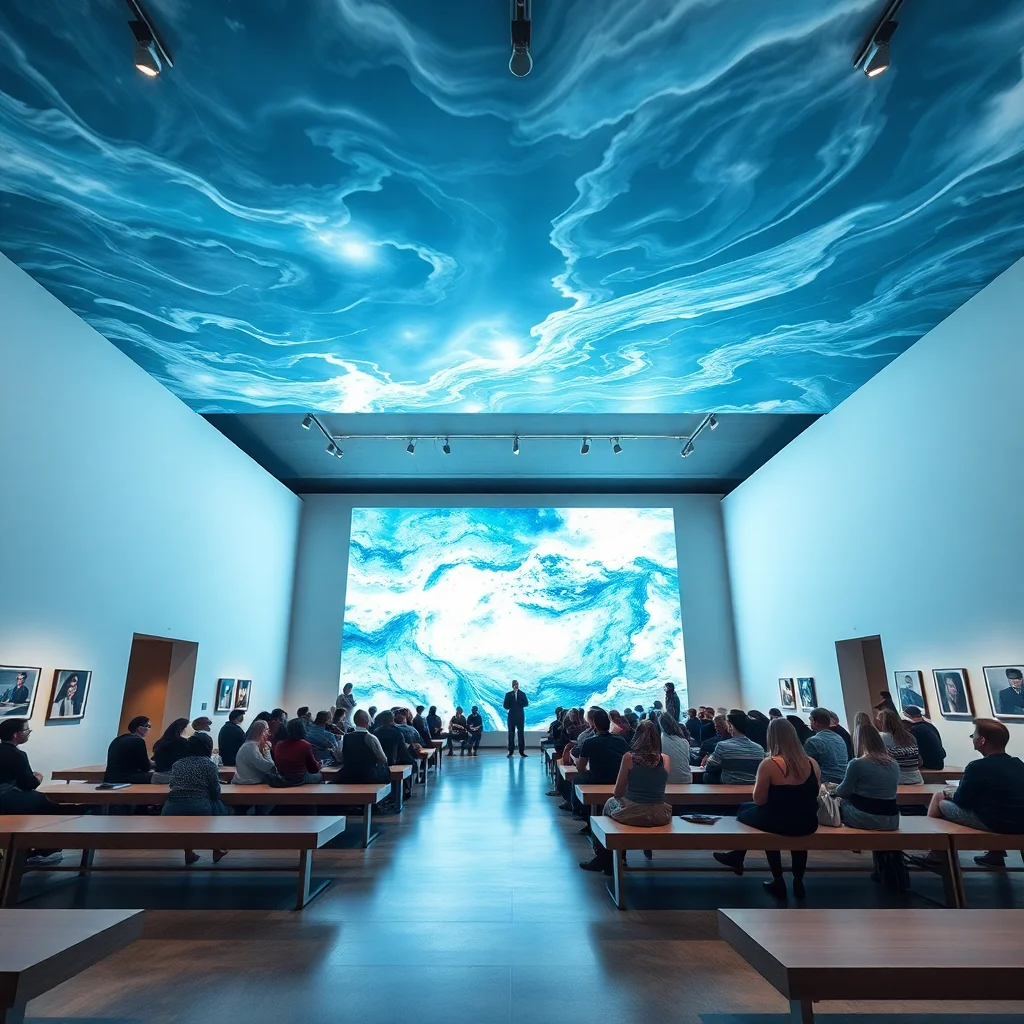
Dataland is strategically timed for a moment when generative systems are everywhere and, paradoxically, still treated as either magic tricks or existential threats. By opening in Los Angeles — a city shaped by entertainment, image industries, and technological mythmaking — the institution places AI art inside the most image-saturated cultural economy on earth. That is smart, and also provocative. The city has long normalized surfaces that are immersive, optimized, and commercially dazzling; Dataland now asks whether those very qualities can be translated into museum value.
Refik Anadol has spent years building a recognizable visual language from machine learning, data sets, and cinematic scale. His works often collapse the boundary between environment and image, making viewers feel as though they are standing inside an animated computation. Projects such as Machine Hallucinations, which transforms datasets into flowing abstract compositions, and Unsupervised, presented at the Museum of Modern Art, have already tested how far an audience will follow AI aesthetics before asking who — or what — is doing the making. Dataland intensifies that experiment by turning the work into a physical institution rather than a temporary art-world event.
That shift is crucial. A one-off installation can be written off as spectacle, but a museum suggests continuity, archive, scholarship, conservation, and a future for the work after the launch press cycle fades. In other words, Dataland is not only asking for attendance; it is asking for inheritance.
What counts as authorship when the image is statistically produced?
Authorship is the fault line. Traditional museum logic depends on the legible hand: the artist’s intent, the object’s facture, the evidence of decisions embedded in material. AI art scrambles that model by distributing authorship across prompts, datasets, models, training procedures, curation, and post-production editing. The final image may look singular, but its making is inherently collective and computational. That does not automatically disqualify it. It does, however, force museums to stop pretending that authorship is a simple romantic story.
Supporters will argue that the art world has long embraced systems that exceed the individual hand. Conceptual art moved authorship into instructions. Process art foregrounded procedure over finish. Generative design, algorithmic architecture, and even contemporary installation practices often rely on teams, software, and protocols. The difference is that AI systems are not just tools; they are probabilistic co-producers trained on vast cultural archives. That means the “artist” may be less a maker than a selector, trainer, editor, and ethicist.
This is where curatorial language becomes decisive. Museums can either explain this complexity honestly or hide behind vague phrases like “human creativity meets machine intelligence,” which flatten the stakes into corporate optimism. If an institution is serious, it must show the labor chain: what data was used, what was excluded, what iterations were rejected, and what the artist claims as authorship. Without that transparency, AI art risks becoming aesthetic laundering — the conversion of computational extraction into cultural prestige.
Craft has not disappeared; it has simply moved into infrastructure
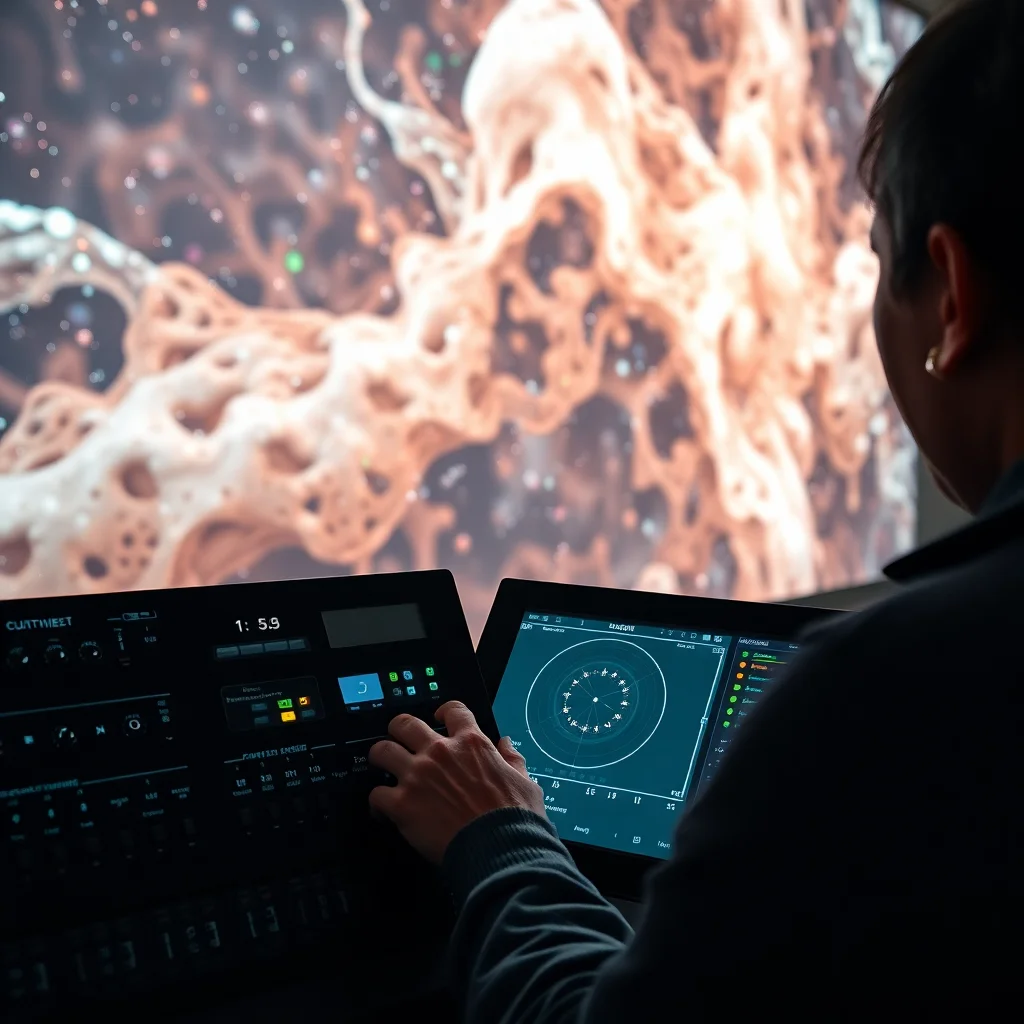
One of the most lazy criticisms of AI art is that it has no craft. That is too easy, and also too generous. The better critique is that craft has migrated. In an AI artwork, the visible brushwork may be absent, but the craft sits in model tuning, dataset composition, prompt design, interface choreography, audio-visual synchronization, and spatial staging. This is a different kind of making, one that owes as much to computational systems design as to fine art traditions.
But museums are not supposed to reward technical novelty alone. They are supposed to discriminate between mastery and mere effect. A dazzling projection of synthetic clouds does not become historically important because it is large, expensive, or immersive. It becomes important if it alters the grammar of viewing, if it deepens our understanding of image production, or if it tells us something we did not already know about memory, ecology, labor, or perception.
That bar is high, and it should be. The best comparison may not be video art’s early resistance, but the institutional climb of digital practices more broadly. Generative systems have already influenced architecture, product design, and media aesthetics; museums now face the question of whether they are documenting an already-structural shift or prematurely canonizing a fashionable interface. If AI art remains merely decorative, the museum becomes a showroom. If it develops critical rigor, then it earns its place by contributing to culture rather than just reflecting technological confidence.
When emotion is machine-assisted, museums must ask harder questions
AI art’s defenders often rely on an obvious but powerful claim: visitors feel something. And indeed, they often do. Immersive works can trigger awe, melancholy, and even a quasi-spiritual reaction. In the context of Dataland, where technology is linked to the natural world, that emotional register may be especially persuasive. The work can resemble a living ecosystem, an atmospheric sensorium, or a mediated dream of climate and organism. It is not hard to see why audiences might read it as more than a technical demonstration.
But emotion is not an alibi. Museums are filled with works that move people while also challenging them; sentiment alone does not guarantee artistic seriousness. The real curatorial challenge is to distinguish between immersion that produces thought and immersion that merely produces submission. If the work’s primary achievement is to envelop the viewer until all critical distance dissolves, then the museum is not educating attention; it is intensifying consumer experience.
That is where institutional responsibility becomes sharper than spectacle. A museum that stages AI art must contextualize its ecological cost, its training biases, and its dependence on massive computational systems. It should ask: what does it mean to celebrate machine-generated abundance in an era of energy insecurity and extractive infrastructure? What histories are being mined alongside the datasets? Who benefits when AI aesthetics are elevated as the next canonical language? These are not peripheral questions. They are the actual content.
For that reason, the difference between a meaningful installation and a hollow one often comes down to immersion without the gimmick: whether the environment creates genuine reflection or just a polished sense of awe. The strongest exhibitions use atmosphere as an invitation to think, not as a substitute for thought.
Two futures are already visible: canon or compliance
There are two competing futures for AI art in museums, and Dataland sits at the center of the struggle. In the first future, museums use AI work to examine the present critically: its labor systems, environmental costs, archival biases, and shifting definitions of authorship. In this version, the institution acts as a thinking machine, not a promotional stage. AI art is admitted, but under pressure.
In the second future, museums become compliance theaters for the technology sector. Here, the presence of AI work signals modernity by default. Curators borrow the rhetoric of innovation, audiences are offered scale and awe, and the institution confuses relevance with endorsement. The museum becomes a showroom for computational inevitability, where cultural legitimacy is granted to whatever can occupy a room dramatically enough.
The difference between those futures will not be determined by the software. It will be determined by curators, critics, donors, and visitors willing to demand more than spectacle. An institution like Dataland could become a genuinely important site if it refuses the easy language of hype and insists on the hard questions of value. But if it simply celebrates AI as the next big thing, it will confirm the suspicion that museums are no longer arbiters of taste — only amplifiers of technological fashion.
This is also why the debate overlaps with broader anxieties about visual culture and authorship. In other creative fields, questions about whether technology clarifies or erodes artistic identity have already become unavoidable, as seen in discussions around whether illustration can survive the age of AI. Museums are now being asked to answer a similar question at the scale of institutions.
FAQ
Is AI-generated art really art if a machine makes most of it? Yes, but only if the work demonstrates intentionality, critical framing, and a meaningful role for the human author in shaping the outcome. Museums should evaluate the full system of making, not just the final image.
Why is Dataland important beyond one museum opening? Because it moves AI art from temporary exhibition culture into institutional identity. That changes the stakes from spectacle to canon formation, which is exactly where debates about value become unavoidable.
What should museums ask before exhibiting AI art? They should ask what data trained the model, who authored the prompts and edits, how much computational energy was used, and what the work contributes conceptually beyond visual spectacle.
Can immersive AI art still be critically rigorous? Absolutely. Immersion is not the problem; unexamined immersion is. The strongest AI works use scale and atmosphere to pose hard questions about perception, labor, ecology, and authorship rather than merely overwhelm the viewer.
So what is the museum actually validating?
The central issue is not whether AI art can be beautiful, moving, or technically sophisticated. It clearly can. The more uncomfortable question is whether a museum that embraces it is validating a new artistic language — or simply certifying the cultural authority of the machines that produce it. Dataland makes that tension impossible to ignore. Its opening is less a conclusion than a test: can institutions distinguish between art that deserves permanence and technology that merely deserves attention?
If the answer is yes, then AI art may indeed earn a permanent place in the museum. If the answer is no, then what we are really witnessing is not the expansion of art history, but the colonization of it by the logic of innovation.
Get the Mainifesto weekly — curated design debates, speculative ideas and the week's best articles every Saturday.


Sara Kowalski June 18, 2026
What worries me is when the machine becomes the headline and the making disappears. Museums should be careful not to confuse novelty with material intelligence, because craft lives in decisions you can feel in a surface, a joint, a repair. If AI art belongs anywhere, it has to earn that place through rigor, not just through a convincing screen presence.
Mei Chen June 19, 2026
I read this less as a question of taste and more as a question of infrastructure. If the work depends on datasets, compute, and proprietary tools, then museums are already validating an industrial system, whether they admit it or not. That doesn’t make it illegitimate, but it does mean we should stop pretending AI art is somehow outside manufacturing logic.
Olivier Dubois June 19, 2026
Museums have always rewritten history a little, but here the danger is particularly obvious: the institution can launder technological hype into cultural destiny. The question is not whether AI art can sit in a museum, but whether the museum still has the critical distance to distinguish an artistic proposition from a very well-packaged ideology. Without that distance, it becomes less a canon than a showroom.
David Lim June 19, 2026
I’m interested in whether AI art expands authorship or just automates style. If a museum makes it feel inevitable, that might be useful, but only if it also exposes the chain of labor, training data, and decision-making behind the work. Otherwise we’re not preserving art history so much as teaching visitors to admire a black box.