
Can AI Learn to Design Like Cities Grow?
What if the real test is not speed, but memory?
AI is being sold as a miracle of acceleration: faster sketches, instant massing studies, frictionless image generation, fewer hours lost to iteration. That pitch flatters the impatient client and seduces the exhausted designer. But architecture has never been merely a race toward the next image. It is a negotiation with gravity, climate, budgets, labor, codes, neighborhoods, and the stubborn fact that cities remember. If AI is to matter in design, it cannot simply mimic style. It must learn the slow logic by which buildings inherit constraints, absorb precedents, and become responsible to the public realm.
That is why the Monocle question around AI and innovation matters here. The point is not whether AI can reinvent the wheel; it is whether it can understand why the wheel was built the way it was, for whom, and at what cost. In architecture, the best work rarely begins from zero. It begins with a history of mistakes: the failure of tabula rasa planning, the arrogance of total design systems, the damage of megastructures that ignored the street. AI, if it is to be more than a novelty machine, must be educated by those failures as much as by the archive of beautiful forms.
This is a speculative but urgent proposition: AI as an apprentice in civic consequence. Not a creative substitute, not an auto-generator of “beautiful” facades, but a tool trained on memory, maintenance, and urban patience. That would mean teaching it how Tokyo’s layered density differs from Brasília’s top-down clarity, why the market streets of Marrakech or the terraces of Valparaíso embody adaptation rather than optimization, and why a good building often looks less like a disruption than a continuation.
Architecture is not a prompt; it is an inheritance

The language of AI encourages decisive fantasy: write a prompt, get a form. Architecture resists that fantasy. A building carries the weight of prior decisions — fire codes, structural spans, weathering strategies, accessibility requirements, local craft traditions, zoning politics, and the stubborn habits of a site’s users. Even the most radical projects in modern architecture understood this. Louis Kahn’s monumental calm depended on disciplined material order. Carlo Scarpa’s detailing turned constraint into poetry. Peter Zumthor’s work shows that atmosphere is not an effect added at the end; it is a product of careful accumulation.
Then there is the city itself, the greatest anti-prompt in existence. Cities do not grow from a single authorial impulse. They accrete, break, repair, and re-fit. Their intelligence is distributed across sidewalks, water systems, bus routes, facades, courtyards, and informal economies. Jane Jacobs understood this long before the software era: urban vitality emerges from overlap, proximity, and unpredictable use. An AI trained only on finished images would miss the point entirely. It would learn surfaces, not systems; icons, not ecologies.
The challenge, then, is not whether AI can imitate a Norman Foster canopy or a Zaha Hadid curve. Of course it can imitate them, and that is the least interesting thing it can do. The more difficult task is to learn the deeper grammar of design: how a courtyard mediates climate, how a stair becomes social infrastructure, how a public library earns trust over decades, how a housing block ages without collapsing into disdain. Those are not aesthetic flourishes. They are civic technologies. For a broader look at the tension between visual output and meaningful design judgment, see Can AI Make Architecture Clearer or Seductive?
From image machine to civic apprentice
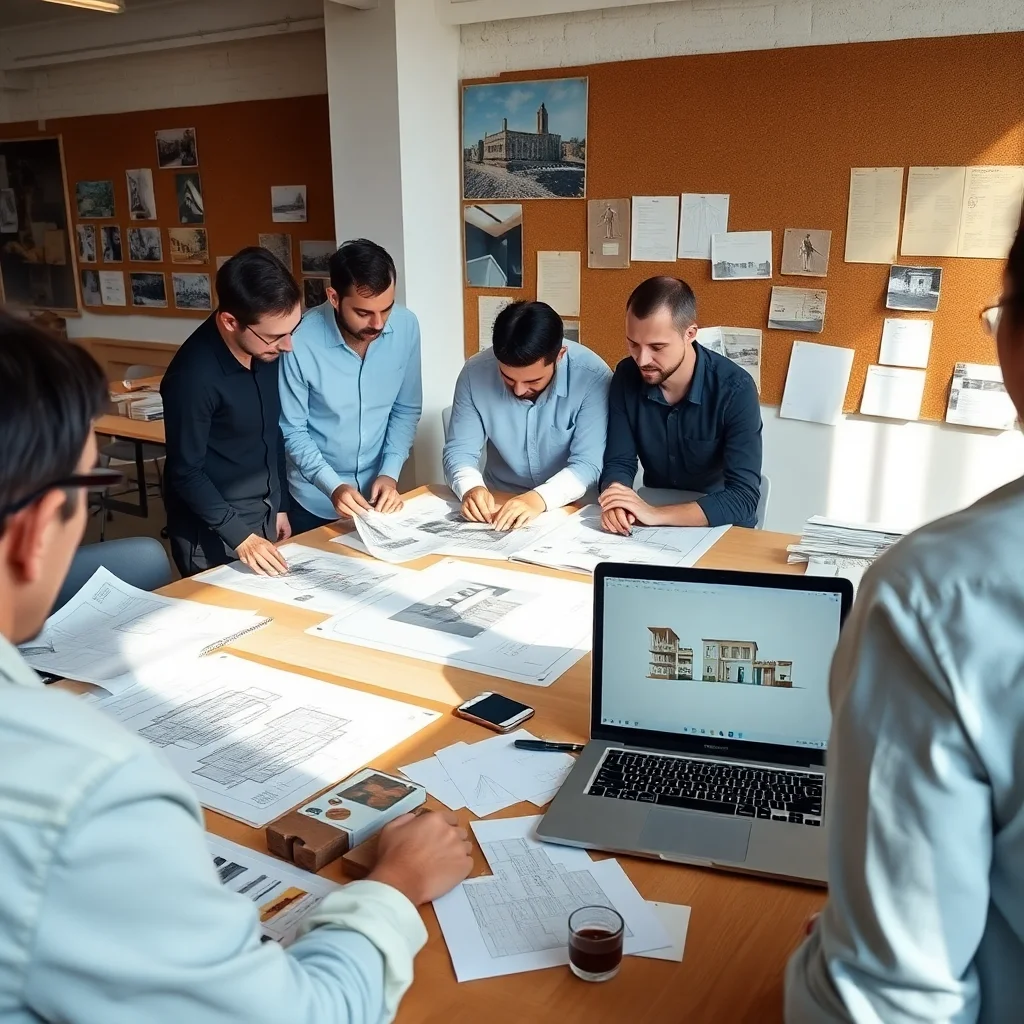
The most useful AI in architecture will not be the one that produces the most seductive rendering. It will be the one that can be corrected by the discipline. Imagine a system trained not only on canonical imagery but on section drawings, construction details, maintenance logs, accessibility audits, retrofit records, and post-occupancy evaluations. Imagine it learning from case studies such as Lacaton & Vassal’s humane renovation work, which argues for retention over demolition; or from the adaptive reuse logic visible in industrial conversions across Europe, where old shells gain new life without pretending history never happened.
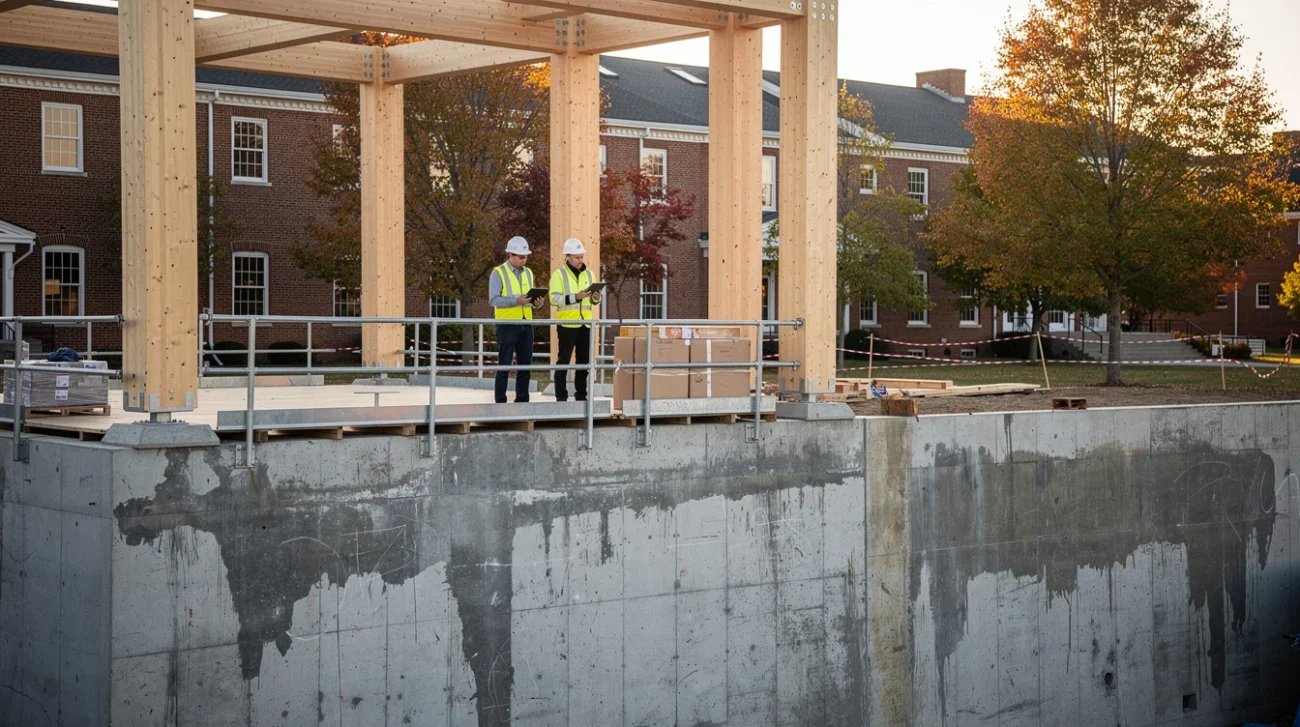
In that scenario, AI becomes less like a painter and more like an urban planner with a long memory. It would know that mass timber is not simply an aesthetic trend but a chain of logistics, carbon accounting, fire strategy, and fabrication capacity. It would know that high-performance envelopes can fail when poorly operated. It would know that the “optimal” plan on paper can be a disastrous building if it ignores service routes, maintenance access, or the social patterns of inhabitants.
Design studios already flirt with this idea. Parametric tools developed by firms such as Herzog & de Meuron, SHoP, or the research cultures around Autodesk and academic labs have shown that computation can help manage complexity. Yet those tools are still often used to intensify form-making rather than to deepen accountability. The future question is harder: can AI help architects choose not only what can be built, but what should be preserved, repaired, or left unmade? That would require a moral dataset, not just a visual one. It is also where the conversation shifts from pure optimization toward a more architectural reset, as explored in When Design Stops Optimizing and Starts Resetting.
Efficiency is a trap unless consequence is built in
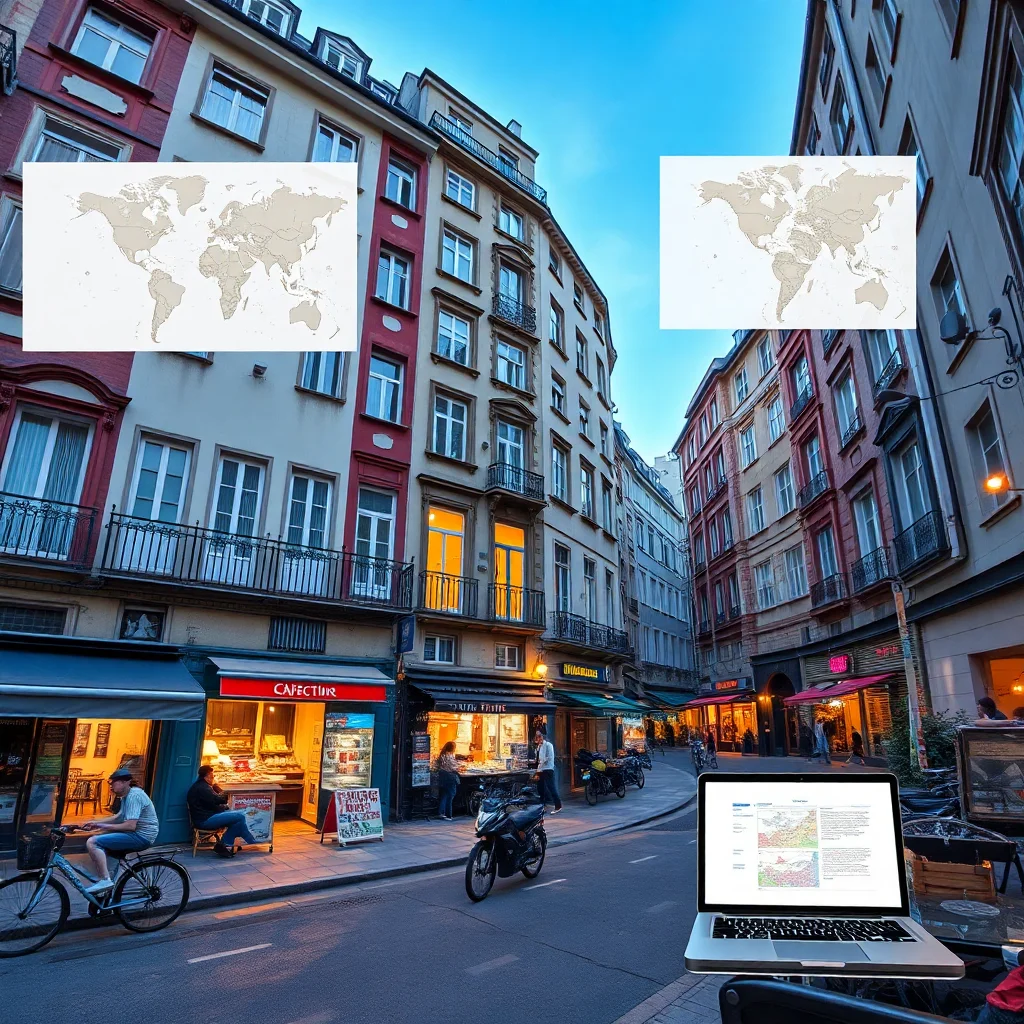
The seductive promise of AI is efficiency. Faster concept options, reduced labor, faster approvals, lower costs. But efficiency without judgment is how bad cities get built quickly. The twentieth century is already full of examples: housing schemes that prioritized unit counts over dignity, highways that optimized traffic by destroying neighborhoods, office towers that maximized rentable area while hollowing out the street. These were not failures of intelligence. They were failures of values embedded in supposedly rational systems.
This is where the editorial question becomes provocative: should AI be deliberately slowed down? Not technologically, but epistemically. It should be forced to account for trade-offs. A model generating a school should not be praised for sleekness unless it can explain daylight, circulation, acoustics, security, and the after-school life of the building. A model proposing urban densification should be able to trace its effects on shadow, transit, public space, and displacement risk. In other words, AI should not merely produce answers; it should have to show its work in civic terms.
That would place it in dialogue with traditions of architectural responsibility that are often less visible than star architecture but far more consequential. Think of Denys Lasdun’s public institutions, or the pragmatic brilliance of infrastructure-led urbanism, where bridges, stations, and civic platforms shape how cities function. Think, too, of the social housing debates that continue to expose the difference between cheap building and good building. AI trained on these tensions would be less glamorous, but more valuable.
Can a model learn precedent without becoming pastiche?
The strongest objection is obvious: if AI learns architecture through precedent, won’t it simply regurgitate historicism? Won’t “memory” become a factory for tasteful repetition? Possibly — unless the training itself is rigorous. Precedent in architecture is not a costume library. It is a record of decisions under pressure. The point of studying Venetian palazzi, Japanese machiya, or the urban sections of Amsterdam is not to copy their appearance. It is to understand how they organize light, privacy, threshold, climate, and social exchange.
This matters because AI is already good at style transfer. It can turn a concrete block into something that looks like brick, or make a contemporary facade speak in the visual grammar of a past era. But design culture does not need another machine for pastiche. It needs a machine that can distinguish between resemblance and intelligence. Scarpa’s lessons are not ornamental, and neither are the modular logics of postwar housing or the climatic intelligence of vernacular courtyards. Those are frameworks for adaptation, not superficial cues.
The best precedent-aware AI would therefore be uncomfortable. It would resist being a pure style oracle and instead ask structural questions: What is the section doing? How is water managed? Who maintains this surface in 20 years? Where is the threshold between public and private? What has to be true socially for this form to work? If the system cannot ask those questions, it is not learning design. It is learning decoration.
The city already teaches AI what designers often forget
There is a reason urbanists return to older districts, mixed-use streets, and incremental development. These places demonstrate that complexity is not a flaw to be eliminated but a condition to be managed. The city is a machine for contradiction: dense yet porous, regulated yet improvised, collective yet unequal. AI systems that ignore this will be trapped in abstraction. Systems that learn from it could become genuinely useful, especially in the increasingly urgent work of retrofit, climate adaptation, and housing repair.
Consider the practical demands now facing design culture: decarbonizing existing stock, designing for heat stress, preserving embodied carbon, widening access, and building across labor shortages. These are not glamorous tasks, but they are the real frontier. An AI that helps teams compare retrofit scenarios, forecast material longevity, or test spatial layouts against social outcomes would be far more consequential than one that merely emits photogenic volumes. It would align with a broader shift in architecture from object obsession to systems thinking.
That shift also reframes authorship. The designer becomes less a solitary genius and more a curator of intelligence: human judgment, civic memory, technical expertise, and machine inference working together. The risk, of course, is that institutions use AI to strip out the human friction that protects quality. But the opportunity is larger than that. AI could help architects revisit the discipline’s forgotten virtues: maintenance, moderation, reuse, and the patience to let a place grow into itself. In the same spirit, the question of whether AI is becoming a collaborator rather than a replacement is examined in Is AI Becoming Architecture’s Junior Partner?
A better future for AI in design is not a prettier image
If there is a serious future for AI in architecture, it will not be defined by whether the render looks convincing. It will be defined by whether the tool can internalize responsibility. Can it learn that a building is never only a composition, but a contract with users and with time? Can it understand that cities are not optimized in one pass, but negotiated across generations? Can it absorb the slow, layered logic that turns precedent into judgment and judgment into form?
That is the editorial wager. AI should be judged not on whether it replaces creativity, but on whether it can be educated into discipline. This means teaching it about craft, about section, about climate, about public life, about what remains after the image fades and the building is inhabited. It means refusing the fantasy that speed equals intelligence. It means insisting that design, like a city, grows best when every new layer is accountable to the ones beneath it.
And that is why the real question is not whether AI can design like a human. It is whether it can learn like a city.
FAQ
How could AI actually be trained to understand architecture better? By feeding it more than images: sections, plans, details, performance data, post-occupancy evaluations, retrofit records, and maintenance histories. That would teach AI how buildings work over time, not just how they look at launch.
Why is precedent important in design if AI can generate new forms? Precedent is not about copying old styles. It is about learning how past designs solved problems of light, climate, circulation, craft, and social life. Without precedent, AI risks producing novelty without judgment.
Wouldn’t AI just make architecture more generic? It will, if trained only on glossy renderings and trend-heavy reference images. But if it is trained on civic performance, material longevity, and local context, it could actually reduce generic design by forcing better decisions.
What is the biggest danger of AI in architecture? The biggest danger is efficiency without accountability. If AI helps teams move faster but not think harder about consequences, it can accelerate the very mistakes architecture has spent decades trying to correct.
Get the Mainifesto weekly — curated design debates, speculative ideas and the week's best articles every Saturday.
Editorial Perspectives
Questions and counterpoints developed by the Mainifesto editorial desk to extend the discussion.
Perspective 1
AI should not be trained to optimize beauty first, because cities are not luxury objects; they are contested systems with memory, codes, and politics baked into every street. If it can't account for who gets displaced, who maintains it, and what local precedent it is erasing, then it's just producing efficient decoration.
Perspective 2
Beauty is cheap to generate and expensive to defend. If AI is going to shape the built environment, I'd rather it be trained on performance, fabrication limits, lifecycle data, and regulatory reality first — then let aesthetics emerge from constraints instead of pretending they are the goal.
Perspective 3
The interesting question is whether AI can learn precedent as a living system, not a style database. If it can't understand why cities accrete layers slowly, then it shouldn't be optimizing beauty at all — it should be optimizing accountability, so we can still explain the design to the city later.