

Repair or Replace? Europe’s Architecture Culture War
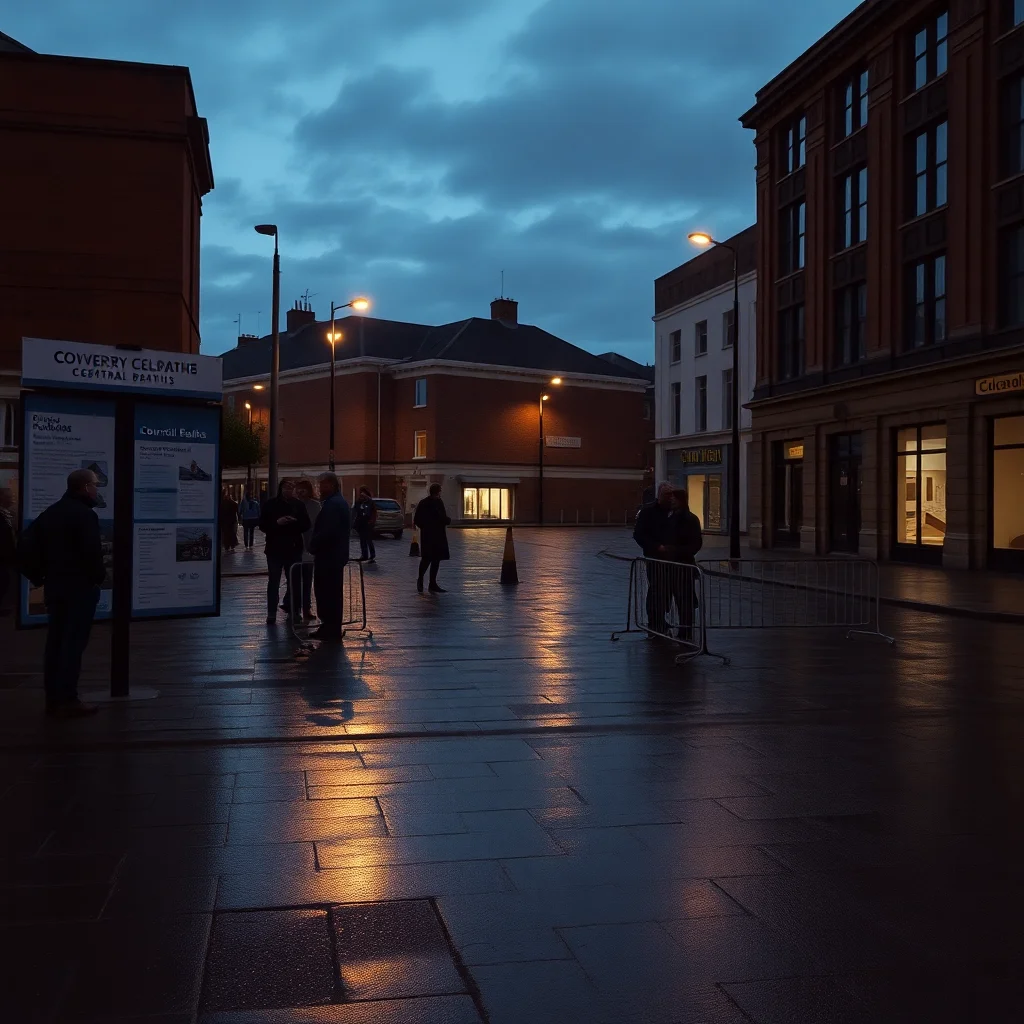
Coventry Central Baths should be read as more than a local planning dispute. Its threatened demolition is a loud, humiliating symbol of Europe’s widening architecture culture war: do we treat postwar buildings as expendable infrastructure, or as a shared civic inheritance worth repairing, reprogramming, and defending? The question is no longer abstract. In Coventry, a Grade II-listed 1960s swimming pool has been approved for demolition after years of drift, neglect, and political impatience. That is not just a failure of maintenance; it is a declaration of values.
The fault line runs through the entire continent. One camp insists that aging modern buildings are too expensive, too rigid, too awkwardly loved to justify preservation. The other argues that demolition is the lazy endgame of a system addicted to quick returns and developer logic. Between them stands the uncomfortable truth: much of Europe’s built future will be decided not by grand theory but by whether institutions can tolerate complexity, repair, and uncertainty.
Coventry is not an isolated case
Coventry Central Baths, opened in 1966, belonged to the bold, civic-minded postwar era that believed public architecture could shape behavior, dignity, and social life. Its demolition approval lands with particular force because the building is listed, meaning that the state has already recognized some architectural and historical value in it. Yet legal protection has not guaranteed survival. This is the new reality: listing can slow demolition, but it does not necessarily produce stewardship.
That contradiction is visible across Europe. In Britain, postwar civic and leisure buildings regularly face the “too costly to save” verdict. In Germany and the Netherlands, the same pattern appears in office estates, housing blocks, and municipal facilities whose concrete shells are dismissed as obsolete before adaptation is even properly explored. The rhetoric of inevitability is always the same: there is no budget, no use case, no market appetite. Translation: we have decided not to imagine a future for this place.
What makes Coventry emblematic is that the building type itself — a public pool — carries social meaning far beyond architecture. These were places of collective health, aspiration, and urban identity. To demolish them as if they were surplus stock is to accept a stripped-down city where memory is treated as an optional extra.
That is why adaptive reuse as civic infrastructure matters so much in debates like this. The strongest arguments for keeping a building rarely begin with nostalgia; they begin with the idea that existing structures can keep serving the public if they are given a credible second life.
The demolition instinct is political, not just financial
Architects are often told that demolition is a technical decision. It is not. It is a political shortcut dressed up as pragmatism. The choice to knock down a building usually reflects a deeper refusal to deal with maintenance backlogs, complex procurement, or the slower returns of rehabilitation. New-build redevelopment is seductive because it promises a clean slate and a clean spreadsheet.
But a clean slate is often a euphemism for amnesia. Across Europe, public authorities are under pressure to release land, reduce risk, and fit new schemes into fragile budgets. That pressure can turn heritage into an obstacle and adaptation into a nuisance. Yet the architectural cost of this mindset is enormous. Demolition erases embodied carbon, craftsmanship, and civic continuity in one stroke, then replaces them with a fictional efficiency that ignores ecological and cultural loss.
Consider the difference between treating a building as a problem and treating it as a resource. Adaptive reuse starts with the second premise. It requires design intelligence, patience, and more sophisticated economics. Demolition starts with surrender. In Coventry, the issue is not whether the baths could have been transformed into a contemporary public asset; it is that the system seems unable to reward the attempt.
That broader shift is part of when architecture becomes climate infrastructure, where decisions about repair and replacement are no longer just aesthetic or financial. They are treated as climate choices with long-term consequences for cities, budgets, and public life.
The preservation camp is no longer sentimental
For years, defenders of postwar architecture were caricatured as nostalgia merchants protecting ugly concrete monuments against progress. That caricature is collapsing. The strongest preservation arguments today are not sentimental at all; they are ecological, social, and urbanistic. Restoring and reusing existing buildings is often the more responsible route when embodied carbon, material scarcity, and whole-life costs are properly counted.
This is why groups such as the Twentieth Century Society matter: they have shifted the debate away from taste and toward public accountability. The argument is no longer “this is beautiful, therefore save it.” It is “this is a valuable piece of the city, therefore prove demolition is the last resort.” That is a much harder case for developers and councils to dismiss.
Across Europe, respected conservation work demonstrates what serious preservation looks like when it is not locked in amber. The transformation of industrial structures into cultural venues, housing, or workplaces has shown that old buildings can become more relevant, not less, when handled intelligently. The best examples do not fetishize original use; they preserve spatial power, material character, and urban presence while changing program. In other words, they respect architecture as a framework for future life.
That approach also challenges a lazy binary. Preservation is not the opposite of change. It is a disciplined form of change. The real opposition is between design-led adaptation and the brute-force logic of replacement.
Adaptive reuse is the new battleground
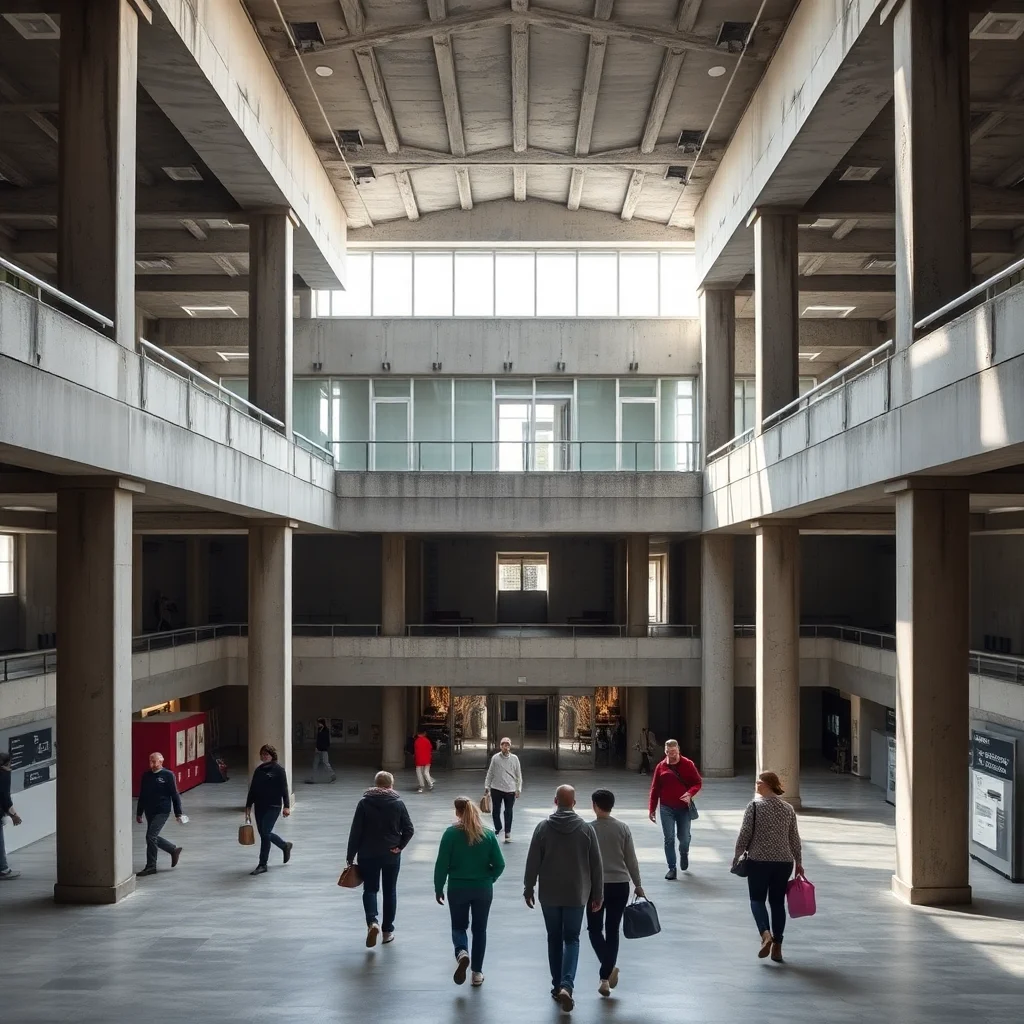
If demolition is the language of impatience, adaptive reuse is the language of ambition. Yet it is also harder to finance, harder to regulate, and harder to sell to clients who still equate novelty with value. This is why some of the most interesting architecture in Europe now sits at the intersection of conservation and retrofit.
Think of the work of Lacaton & Vassal, whose transformation of large-scale housing in France proved that upgrading existing fabric can deliver dignity, space, and climate performance without the violence of displacement-by-demolition. Their approach rewrote the assumptions behind social housing renewal. Rather than flatten and rebuild, they expanded, repaired, and reprogrammed. The lesson extends far beyond housing: the smartest architecture often starts by refusing the demolition reflex.
Or look at OMA, whose reuse projects have repeatedly tested the productive friction between old and new. The point is not stylistic harmony. It is to let existing structures keep their urban intelligence while making room for contemporary life. In the UK, projects such as the conversion of former industrial and heritage buildings into cultural and commercial spaces have shown that repair can be both commercially viable and architecturally sharp — when the client is willing to think beyond immediate capex.
Coventry Central Baths could have been part of this broader shift: a site where the public imagination was invited to see value in what already exists. Instead, the story reveals how fragile reuse remains when public bodies prefer the certainty of demolition to the discipline of transformation.
In that sense, the debate overlaps with the ideas behind the new civic monument, where public buildings are increasingly expected to do more than symbolize authority. They are asked to support everyday life, collective memory, and practical resilience.
The budgets argument is a trap
Supporters of demolition often invoke cost as if it were morally neutral. But budgets are not neutral; they are shaped by accounting rules, political timelines, and the way risk is distributed between institutions and consultants. New build can appear cheaper because it externalizes environmental costs and undervalues the social capital embedded in existing architecture.
Furthermore, “repair is expensive” is often a statement made before proper design work begins. Many buildings are condemned by headline figures that ignore phased refurbishment, selective demolition, structural upgrading, or new uses that generate revenue over time. It is not that adaptive reuse is always economical; it is that the comparison is usually rigged. A demolition-and-rebuild model gets praised for clarity, while retrofit is punished for complexity.
Europe’s architecture culture war is therefore not just about taste or heritage. It is about whether public decision-makers can develop financial models that reward long-term stewardship. If they cannot, then the market will continue to favor erasure. And if the market always wins, the city becomes a disposable asset class rather than a living record.
That is why the Coventry case matters beyond one pool, one city, or one nation. It signals how easily a listed building can be allowed to fail when there is no political appetite for repair. The lesson is uncomfortable: heritage protection without active investment is theatrical protection, not real protection.
For many households and cities alike, the same logic is appearing in more private contexts too, which is part of why adaptive reuse is becoming a new luxury—not as a fashion statement, but as a marker of seriousness, patience, and long-term value.
Europe must choose what kind of modernity it wants
The new argument over postwar architecture is not really about whether every concrete building deserves survival. Some do not. Some are badly made, irreparably compromised, or genuinely unable to accommodate useful futures. But that is not the same as assuming demolition is the default outcome. The real question is what kind of modernity Europe wants to inhabit: one built on substitution and disposal, or one capable of learning from its own recent past.
Coventry Central Baths places that question in sharp relief because it embodies a postwar confidence that has since been downgraded into embarrassment. Yet embarrassment is a poor basis for urban policy. Cities mature by absorbing their histories, not by clearing them out. The best architecture cultures know how to argue with their inheritance, not simply erase it.
The coming decade will be shaped by retrofit mandates, carbon accounting, and tighter resource constraints. In that context, the preservation-versus-demolition debate will only intensify. The winners will not be those with the loudest nostalgia or the fastest clearance budgets. They will be those who understand that repair is not a compromise, but a design intelligence — and that replacement, when used carelessly, is often just a failure of imagination.
So the real provocation is this: if Europe cannot save a listed postwar swimming pool from the wrecking ball, what exactly does it mean when we say architecture has value?
FAQ
Why is Coventry Central Baths such an important case?
Because it is a Grade II-listed postwar public building whose approved demolition exposes the gap between heritage recognition and actual protection. It shows how easily civic value can be overridden by redevelopment logic.
Is adaptive reuse always better than demolition?
Not always, but it should be the default first option. A serious comparison must include embodied carbon, long-term adaptability, and social value — not just the cheapest short-term construction estimate.
Why are postwar buildings especially vulnerable?
Many still suffer from bad press, maintenance neglect, and outdated assumptions about concrete and mass public architecture. They are often seen as awkward rather than valuable, which makes them politically easier to replace.
What would a better policy framework look like?
It would require public bodies to prove why repair is impossible before approving demolition, alongside carbon accounting that penalizes replacement. It would also fund phased retrofit and reuse studies early enough to be meaningful, not symbolic.
Get the Mainifesto weekly — curated design debates, speculative ideas and the week's best articles every Saturday.



Marcus Reed June 10, 2026
Demolition wins because it’s the fastest path to a clean story, a cleaner site, and usually a cleaner balance sheet. But speed is a weak excuse when the replacement is generic and the public already has an attachment to what’s there. If preservation can’t show a better user experience and a realistic business case, it keeps losing.
Karim Haddad June 10, 2026
Europe keeps calling this a culture war, but the real issue is procurement, regulation, and who carries the cost of delay. Demolition is often the default because it externalizes history, carbon, and social memory onto the public while developers capture the upside. If governments want adaptation, they need to make reuse the path of least resistance, not a heroic exception.
Elena March June 10, 2026
Demolition still wins because we treat embodied carbon and social value like optional extras instead of planning inputs. The evidence on retrofit is strong in many cases, but it doesn’t matter if approval systems, funding, and code enforcement are all biased toward new-build timelines. Coventry Central Baths is another reminder that “obsolete” usually means “inconvenient to adapt,” not truly beyond repair.
Olivier Dubois June 10, 2026
Europe loves to perform memory and then erase it with a permit stamp. We pretend postwar architecture is only a technical problem, when in fact it is where the modern project has become embarrassing and therefore disposable. Demolition wins so often because cities prefer amnesia with a render.