

Can an AI Data Center Be a Park?
PRO: The park is the point, not the disguise
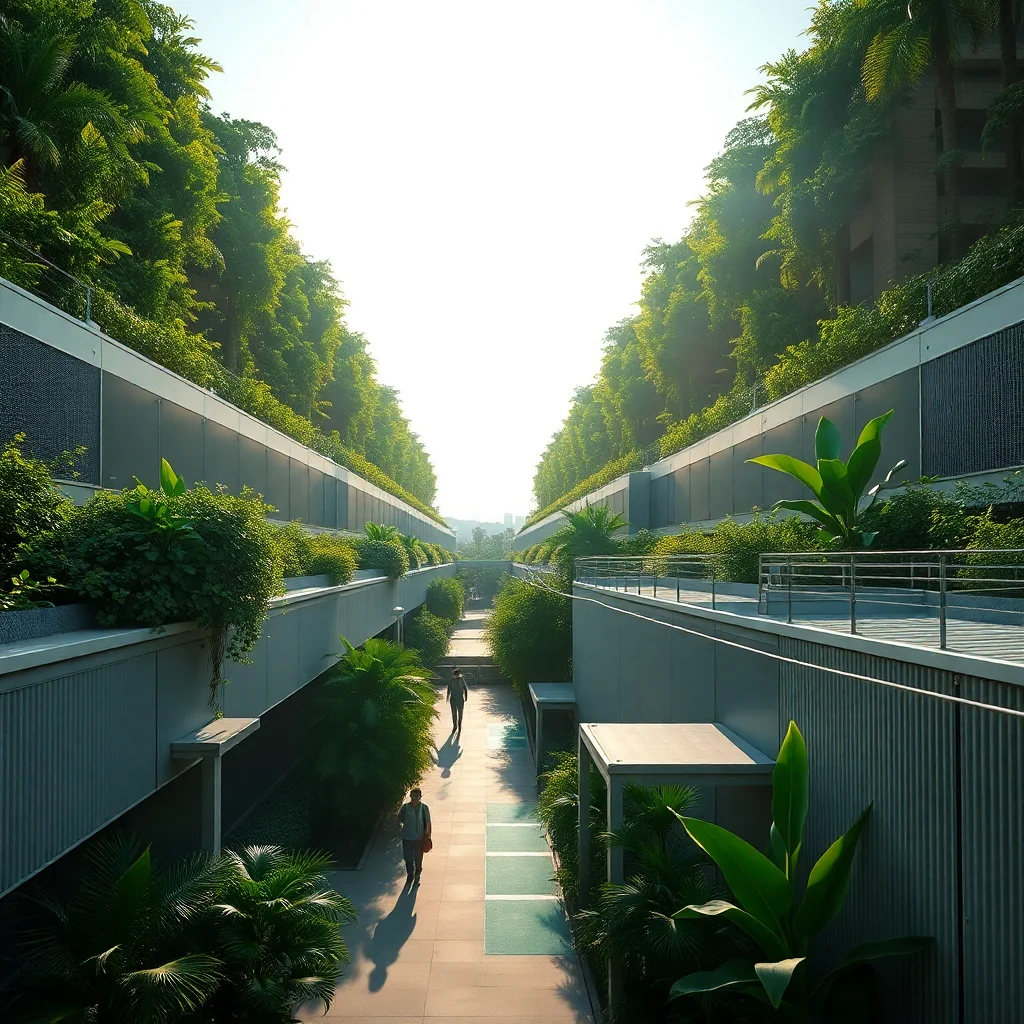
Rio AI City arrives with a seductive proposition: if the data economy is going to colonize land, power and water, then it should at least do so in a form that looks public, shaded, breathable and civic. On paper, the plan by Hyphen for Elea Data Centres—10 plant-covered volumes spread through park-like landscapes in Rio de Janeiro state—refuses the default image of the data center as a sealed logistics bunker. That is not a trivial visual shift. Architecture shapes public legitimacy, and in a city and region where extractive infrastructures have long been hidden behind fences, a campus of green roofs, ecological corridors and accessible open space can be read as an attempt to make computation visible, legible and politically negotiable.
This matters because the conventional data center is not merely unpopular; it is architecturally hostile. It is a dead object in a live landscape, a windowless box that treats site as sacrificed ground. By contrast, the park model borrows from campus planning, landscape urbanism and the civic ambitions of projects such as Google’s Bay View campus by BIG and Heatherwick, or the hydroelectric-meets-public-space ethos that has shaped parts of Singapore’s infrastructural landscape. In the best interpretation, Rio AI City is not pretending that AI has no footprint; it is saying the footprint should be designed as part of an urban ecology rather than banished behind the perimeter. A data center, in this view, becomes a thickened ground condition: stormwater capture, habitat, shade, circulation, cooling strategies and human use folded into one field.
There is precedent for this ideological move. Olafur Eliasson’s climate-oriented work has long argued that environmental perception is political, while landscape architects from James Corner Field Operations to SLA have made the case that infrastructure can be experiential rather than merely functional. The strongest version of Rio AI City belongs to this lineage. If the district actually provides accessible parkland, biodiversity planting, microclimate mitigation and serious public realm, then the project could challenge the stale binary between infrastructure and nature. It would suggest that the contemporary city should stop separating the server farm from the social condenser, because both now belong to the same planetary metabolism.
In that sense, the green language is not automatically greenwashing. The visual rhetoric of plants, shaded paths and dispersed volumes can be a civic bargaining tool, forcing a more honest spatial contract between tech capital and the territory it occupies. In a country where land, energy and climate are profoundly political, this is not cosmetic. It is a statement that the next industrial landscape must be designed, not merely zoned.
PRO: Landscape can civilize the data economy
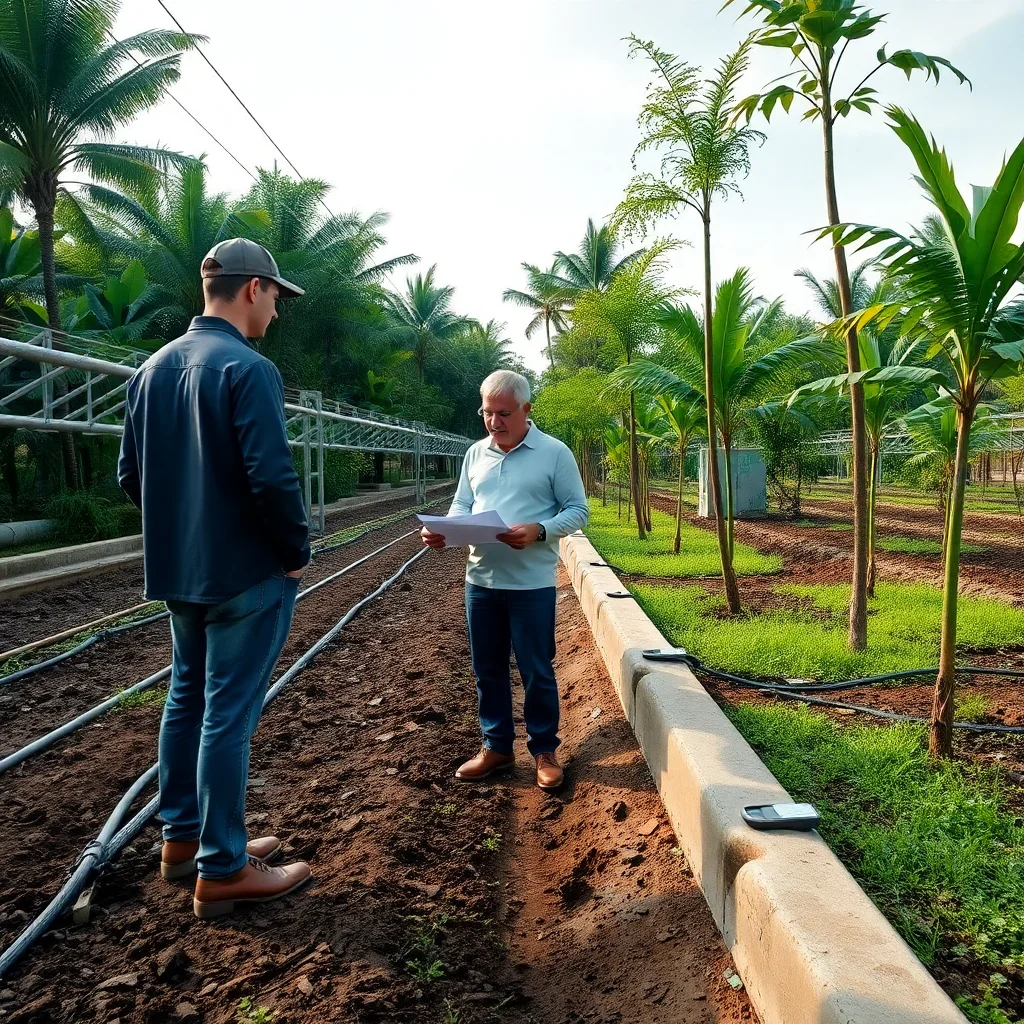
Supporters of Rio AI City will argue that the project is trying to solve a real design failure in the data-center typology. A single monolithic shed externalizes everything: heat, runoff, noise, visual intrusion and social resentment. A distributed campus with plant-covered volumes can improve thermal performance, reduce the hard-edge impact on the landscape, and create a more porous relationship with the surrounding territory. This is where landscape ceases to be decoration and becomes infrastructure. A carefully planted buffer can help with dust, shading and wind; a habitat network can support pollinators and birdlife; a campus plan can reduce heat-island effects and mediate stormwater. The park, in other words, is not a stylistic flourish but a working environmental system.
There is also a broader urban argument. Cities have long used green space to domesticate their own violence. Central Park was a social project as much as a landscape one; contemporary “infrastructure parks” such as Seoul’s Cheonggyecheon restoration or Rotterdam’s water squares show how public space can absorb technical functions while improving civic life. Rio AI City wants to occupy that lineage, albeit under 21st-century conditions of AI throughput and cloud computing. If the site is planned as a district rather than an isolated plant, then circulation, recreation and utility can be integrated from the start, not retrofitted later through PR.
And make no mistake: architectural form does influence governance. A visibly ecological district may be harder to treat as a disposable enclave. It invites scrutiny. It can also create standards. If Elea and Hyphen can demonstrate meaningful energy efficiency, native planting, water stewardship and low-carbon construction strategies, they might set a benchmark in a region where the default corporate response is still the black box and the security fence. The park form could become a regulatory lever, compelling a better set of environmental promises than the industry usually makes. In that optimistic scenario, landscape is not lipstick on a server rack; it is an enforcement mechanism embedded in space.
At its best, then, Rio AI City is a provocation against the idea that technological infrastructure must look anti-human. The project suggests that the environmental crisis is also a design crisis, and that the architecture of computation should be forced to negotiate with climate, habitat and public life. That is a compelling ambition. It is also where the trouble starts.
CONTRA: Green form can hide a far larger energy problem
The problem is that plants do not neutralize power demand. They do not cool server loads. They do not make AI training less resource-intensive. They do not dissolve the carbon implications of a sector built on endless scale, relentless redundancy and speculative compute. This is the core contradiction at the heart of Rio AI City: the project can soften the visual aggression of infrastructure while leaving its metabolic logic untouched. That is not sustainable design; it is aesthetic compensation.
Data centers are notorious for their hunger for electricity, land and water. As AI workloads intensify, so does the pressure on grids, cooling systems and backup infrastructure. A district with 10 plant-covered buildings may look like a new ecological settlement, but if it exists primarily to service high-growth AI demand, then the real question is not how green it appears from the road. The question is whether it reduces total resource consumption or simply distributes it more elegantly. Too often, sustainability in tech architecture means green roofs, low-angle drone shots and a vocabulary of wellness attached to industrial overconsumption. The form becomes the alibi.
This is why the comparison with other “green” megaprojects is so revealing. Corporate campuses have repeatedly used landscape as moral theater: lawns, wetlands and bike paths framing extractive operations that remain structurally unchanged. The building industry has seen this before, from the photovoltaic sheen on speculative developments to the “biophilic” interiors of companies whose primary product is extraction, not repair. The danger is not that Rio AI City is landscaped; it is that landscape may be used to neutralize critique. Once the image of the park enters the frame, public discussion shifts from emissions and procurement to birdsong and pathways. That is a strategic victory for the developer, not the climate.
There is also an uncomfortable colonial subtext. In Latin America, grand infrastructural projects have often arrived wrapped in promises of modernization, resilience and regional prestige. But the benefits are unevenly distributed, while the burdens—energy infrastructure, land capture, water stress—are territorialized. If AI City is marketed as a “sustainable AI district” without transparent data on energy sources, cooling loads, embodied carbon, reuse strategies and grid impact, then it risks repeating the oldest trick in the infrastructure playbook: convert local land into global value while leaving local communities to absorb the externalities. A park can be public in appearance and privatized in reality.
More bluntly, there is a deeper ideological problem with calling an AI infrastructure site a park. Parks traditionally promise leisure, ecology, and collective access. Data centers promise uptime. One is based on temporal openness; the other on continuous machine availability. Trying to fuse them can produce a rhetorical contradiction: a place that looks open while functioning as a highly controlled apparatus of computation. Unless the project genuinely creates public benefit beyond branding, its green language may merely aestheticize the data economy at the exact moment it needs to be politically constrained.
PRO: If the district is transparent, it can set a new standard
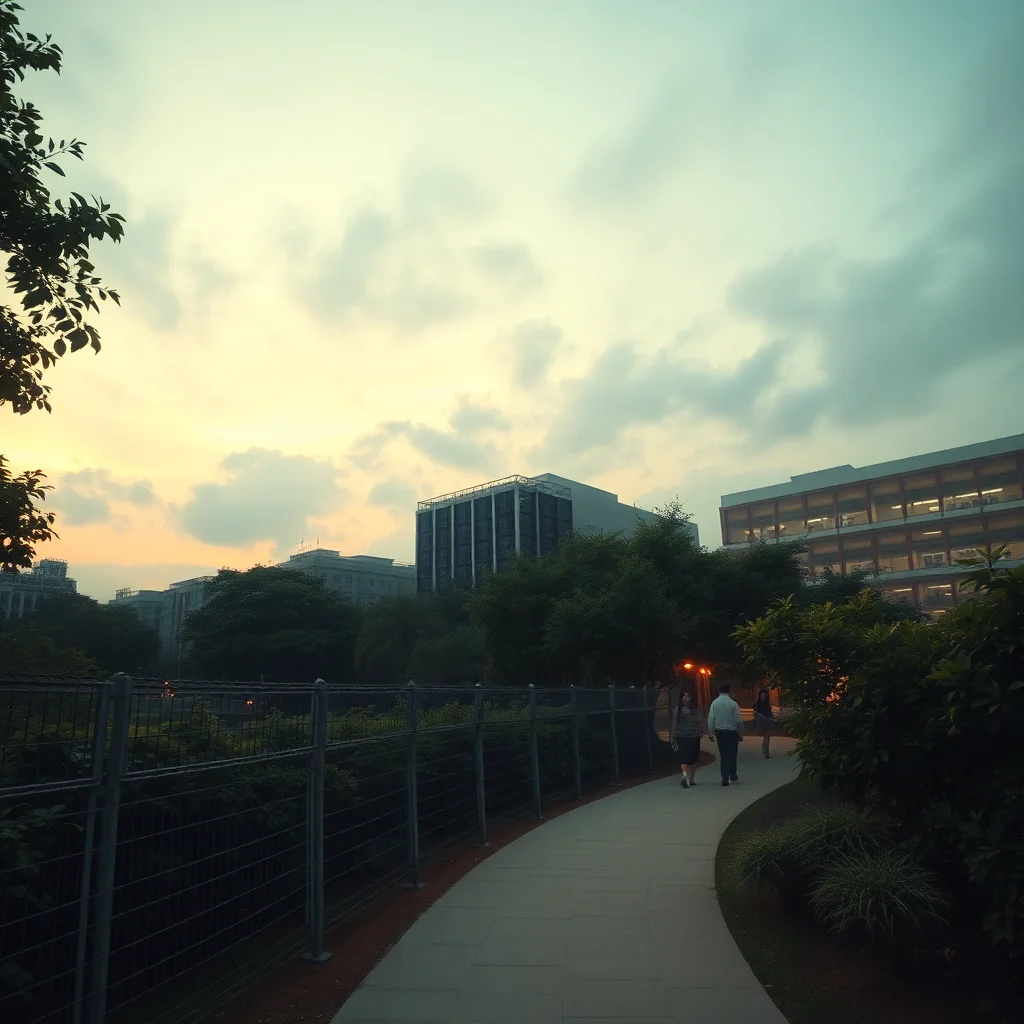
The fairest defense of Rio AI City is that it forces a new kind of architectural honesty. Instead of pretending cloud computing is immaterial, it makes digital infrastructure spatial, landscaped and accountable. In a world where AI is often discussed as if it floats above physical reality, that alone is useful. The district could provide a platform for benchmarking: renewable power procurement, heat-recovery systems, water recirculation, material reuse, biodiversity targets, and public reporting that is far more rigorous than the industry norm. If Hyphen and Elea are serious, the project can function as a test case for a post-black-box infrastructure aesthetic.
Architecture has always had the power to normalize new systems. Early railway stations, power plants and telecommunications buildings were once controversial, then became part of civic identity. What matters is whether the built form exposes its own dependencies. A park-like data center could do that if it foregrounds technical systems instead of hiding them. Imagine visible energy dashboards in the public realm, shaded educational routes explaining cooling and grid logic, and landscape design that performs measurable ecological work. The park then becomes an interpretive device, teaching citizens how computation inhabits land. That is stronger than a façade of sustainability; it is infrastructural literacy.
Some will dismiss this as public-relations fantasy. But architecture frequently begins as fantasy before it becomes policy. The real test is whether the district’s promises are binding. If the park is merely a visual identity layer, it deserves skepticism. If it is embedded in procurement, operations and access, then it can change the terms of debate. The same city that produces a data center can also produce a new environmental standard for the sector.
CONTRA: A park is not a moral exemption for computation
Still, the central provocation remains unresolved: can landscape truly civilize the data economy, or does it only make it easier to tolerate? The answer depends on what one believes architecture is for. If architecture is image management, then yes, a plant-covered campus can transform perception. If architecture is a material discipline tied to carbon, energy and labor, then no amount of foliage can redeem an expanding AI infrastructure regime built on accelerated consumption.
It is telling that these projects are often announced in the language of districts, ecosystems and innovation corridors. Those terms smooth over the fact that data centers are not neutral civic amenities; they are commercial machines that support a global platform economy. Their growth is not inevitable, only profitable. A park does not change that. At worst, it naturalizes the expansion, making industrial scale feel environmentally sensitive and urbanistically generous. That is the danger: not only that the project uses green form to mask infrastructural reality, but that the public comes to accept the mask as the reality.
So the real architectural question is harsher than the title suggests. It is not whether an AI data center can be a park in appearance. It is whether any landscape strategy can meaningfully constrain the scale of computation it serves. Until the industry answers that with hard numbers and enforceable limits, every tree planted around a server hall risks becoming part of the performance. And performances are easy to applaud when the bills are paid elsewhere.
Rio AI City may be one of the more intelligent attempts to redesign a brutal typology. But intelligence is not the same as innocence. The project deserves attention precisely because it exposes the crisis facing contemporary architecture: we no longer decide whether infrastructure belongs in the city, but whether the city is willing to let infrastructure disguise itself as nature.
FAQ
What is Rio AI City? Rio AI City is a proposed data-center district in Rio de Janeiro state by Hyphen for Brazilian developer Elea Data Centres, featuring 10 plant-covered buildings and park-like planning.
Why are people calling it a park? Because its layout uses landscape, greenery and dispersed volumes to resemble a civic campus rather than a conventional sealed data-center compound.
What is the main criticism of the project? That the green visual language may mask the underlying energy, water and land demands of AI infrastructure, rather than reduce them meaningfully.
Can landscaping make a data center sustainable? Only partly. Landscape can improve microclimate, runoff and public realm, but it cannot by itself solve the emissions and consumption tied to AI-scale computation.
That tension is part of a broader debate about whether architecture is becoming a clearer instrument for explaining systems or simply a more seductive one. In that sense, Rio AI City sits close to the questions raised by Can AI Make Architecture Clearer or Seductive?, where the promise of legibility is constantly shadowed by the risk of aesthetic gloss.
What makes the proposal especially interesting is that it treats infrastructure as something that can be publicly read rather than hidden. That approach echoes arguments in Data Centers as Civic Monuments, which considers whether these once-invisible facilities are becoming the new symbolic landmarks of the city.
At the same time, Rio AI City is an example of a larger shift in which design is asked to reset its logic under the pressure of climate and computation. That is the terrain explored in When Design Stops Optimizing and Starts Resetting, where the question is not just how systems are made more efficient, but whether they should be reimagined altogether.
Open question
When a data center looks like a park, are we witnessing a genuinely new civic infrastructure — or just a more beautiful way to accept the same extractive machine?
Get the Mainifesto weekly — curated design debates, speculative ideas and the week's best articles every Saturday.


Mei Chen June 9, 2026
A data center wrapped in landscape can be more than camouflage if the engineering is genuinely doing less damage: lower heat loads, smarter water use, better site strategy. But the park language can’t be allowed to do all the work—if the power draw, backup systems, and supply chain stay opaque, it’s just a softer skin on the same industrial appetite.
James Okoro June 9, 2026
I’d rather see this as a chance to rethink what civic infrastructure can be, not just how it looks from the street. If Rio AI City uses landscape to reclaim cooling, shade, and public space while shrinking its footprint, that’s a useful break from the bunker model. The danger is when “green” becomes a branding layer that lets the machine keep expanding without real restraint.
Daniel Okonkwo June 9, 2026
The park image is seductive because it gives the cloud a body we can live with, but that doesn’t mean the politics change. I’m interested in the hybrid possibility, yet I keep asking who gets access, who pays the energy bill, and what kind of public life is actually being built around this machine.