Kiosks and the New Third Place
The New Politics of the Pause
We have been trained to think of the café as the modern third place: informal, social, semi-public, and somehow democratic. But that mythology is fraying. In cities overloaded by rent, surveillance, and speed, the most interesting hospitality spaces are no longer the ones that invite you to stay indefinitely. They are the ones that decide, with surgical precision, how long you may linger. The kiosk, the espresso bar, the tea counter, the grab-and-go pavilion: these are not minor retail typologies. They are duration machines.
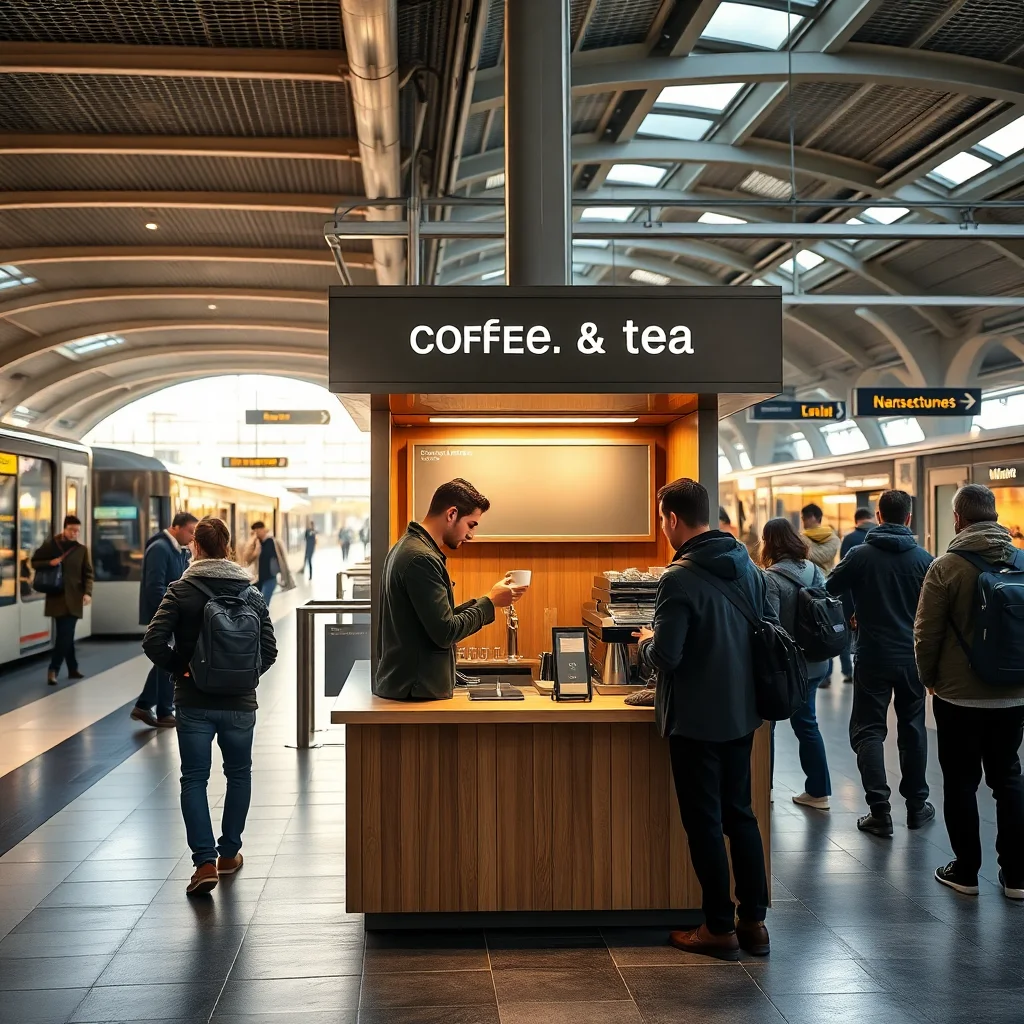
The phrase “coffee or tea?” seems harmless, even banal. Yet it is a spatial script disguised as a beverage choice. Coffee often signals acceleration, alertness, turnover, and the architecture of the brief stop. Tea, by contrast, carries a different temporality: steeping, waiting, replenishment, and the slower rituals of domestic or ceremonial life. Design has absorbed these temporal codes into the built environment. A coffee kiosk with standing ledges and no chairs is telling you to continue moving. A tea house with low seating, soft thresholds, and material warmth is asking you to recalibrate your body. The building is not just serving the drink; it is choreographing your relation to time.
This is why the real frontier of retail architecture is not the grand café, but the micro-venue. Here, hospitality, commerce, and urban pause are being reprogrammed into compact spaces that reward precision over abundance. In airports, rail stations, lobbies, plazas, and street corners, the kiosk has become the most honest architectural format of contemporary capitalism: it offers comfort, but only in calibrated doses.
From Salon to Slot Machine: How Duration Became a Design Problem
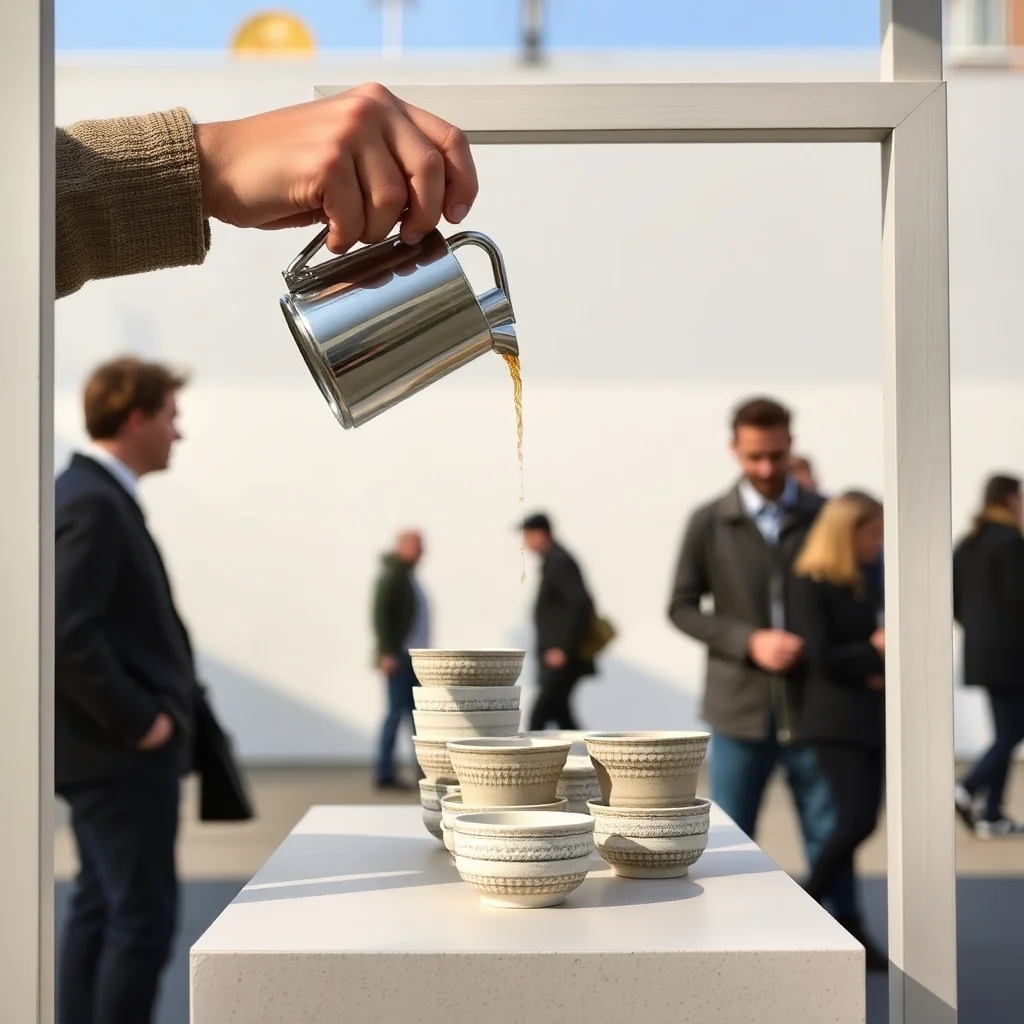
Historically, cafés promised discourse, spectacle, and civic life. Think of the Parisian café as a machine for looking and being seen, or the Viennese café as an institution of lingering whose furniture encoded a right to occupy space. Today, that promise is harder to sustain. Urban real estate punishes long dwell times; operators need turnover; customers are split between the fantasy of belonging and the fact of convenience. The result is a hybrid architecture that borrows the social aura of the café while behaving like logistics.
Architects and designers have responded by shrinking the field of hospitality into highly legible fragments. The tea counter becomes an interface. The coffee bar becomes a line. The kiosk becomes a threshold between public infrastructure and private transaction. In this respect, the most revealing reference point may not be a café at all, but the miniature efficiency of Japanese convenience culture, where narrow footprints, direct circulation, and hyper-optimized services turn the city into a sequence of managed encounters. Similarly, the rise of chains such as Pret A Manger or Blue Bottle has demonstrated how brand identity can be projected through queue geometry, lighting temperature, and counter height as much as through product.
The architecture of duration is therefore not neutral. It is ideological. It tells us whether a place is meant for conversation, consumption, or controlled waiting. Once we see that, the so-called third place stops looking like a social ideal and starts looking like a variable in a business model.
That same logic is visible beyond hospitality. In The New Moral Economy of Productivity, time is treated as a moral and economic resource, and that framework helps explain why so many interiors now feel designed to measure, discipline, and compress behavior. The room is no longer just a backdrop; it becomes a quiet manager of attention.
Tea, Coffee, and the Spatial Script of Time
Coffee and tea are not interchangeable beverages. They encode different temporalities that architecture can amplify or suppress. Coffee’s modern public life was built around the speed of extraction and the social energy of circulation. Tea, by contrast, retains a memory of ceremony and domestic pacing, whether in Japanese tea rooms, British drawing-room etiquette, or the layered hospitality of Middle Eastern and South Asian tea culture. To ask “coffee or tea?” is to ask: do you want acceleration or suspension, volatility or inflection?
Design has long understood this distinction even when it does not name it. The minimalist espresso bar with a marble counter and no chairs is a machine for compression. The loose, upholstered tea lounge with filtered light and low tables lengthens time by encouraging bodily relaxation. Contemporary architects now translate these scripts into micro-venues that operate almost like time-based filters. A kiosk in a transit hub may use open sightlines, hard surfaces, and a standing shelf to support quick purchase. A tea kiosk inside a fashion district may deploy translucency, tactile ceramics, and a slow pour ritual to create a brief but meaningful pause. In both cases, the built environment is writing a schedule onto the body.
That is why beverage culture has become a field of architectural intelligence. The question is no longer whether a space is beautiful. The question is whether it can modulate human tempo with enough subtlety to remain profitable and desirable at once.
Material atmosphere matters too. The most persuasive interiors often borrow from The Return of Soft Architecture, where softness is not decorative but behavioral: it changes how people sit, wait, turn, and leave. In micro-venues, that kind of softness can make a small footprint feel generous without losing its operational clarity.
The Kiosk as the Honest Third Place
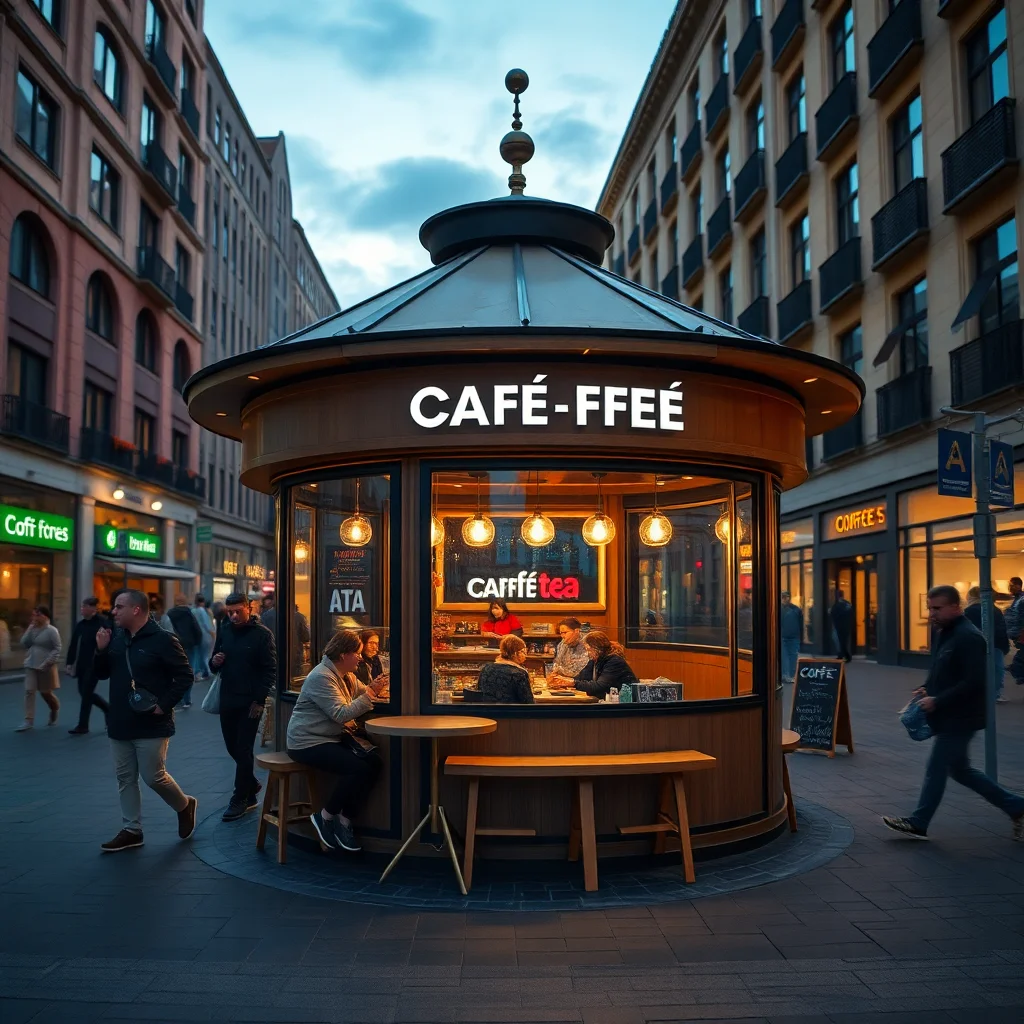
The classic third place was supposed to be voluntary, accessible, and socially low-stakes. Yet many contemporary cafés now function as soft-policed workspaces, where laptop occupation, playlist curation, and menu inflation quietly narrow the range of acceptable behavior. The kiosk, by contrast, is more candid. It does not pretend to be a civic utopia. It tells you what it is: a brief encounter organized around exchange.
That honesty is precisely why the kiosk is becoming the new third place. In dense cities, where people move through fragmented schedules and multiple forms of work, the micro-venue offers a legible pause without demanding a full social commitment. It is enough space to recalibrate, but not enough to disappear. It is hospitality without the burden of all-day occupancy.
Designers such as Giulio Cappellini, Patricia Urquiola, and Ilse Crawford have all explored how material intimacy can be compressed into compact retail settings, using light, texture, and proportion to create moments of psychological generosity. On a larger architectural scale, firms like Selgascano and Casper Schwarz Architects have shown how small pavilions and temporary structures can generate public life through controlled enclosure rather than monumental gesture. These projects matter because they reveal a new ethic: the successful micro-venue is not measured by square meters, but by the quality of its threshold.
In this sense, kiosks are not merely downscaled cafés. They are a different class of urban instrument, one that understands that modern life is lived in interruptions.
Hospitality After Permanence
If the twentieth-century café was about permanence, the twenty-first-century kiosk is about calibrated transience. That shift has consequences for architecture, interior design, and urban culture. It encourages modular construction, plug-in infrastructure, light-touch material palettes, and layouts that can be reconfigured in hours instead of years. It also privileges brands that can turn a service script into spatial identity: the way tea is brewed, the speed of espresso extraction, the angle of a counter, the tactility of a cup, the choreography of handoff.
Consider how airport design has evolved. Lounges once promised escape from the terminal; now they often resemble premium versions of the terminal itself, with food bars, coffee points, and tea stations arranged to manage dwell times efficiently. Or consider contemporary mixed-use developments, where ground floors are increasingly populated by compact cafés and beverage kiosks that animate the street without ceding control to unpredictable social life. The result is a city of micro-pauses: brief, monetized, and carefully staged.
That may sound cynical, but it also opens a real opportunity. Micro-venues can create intense forms of publicness precisely because they are modest. A well-designed kiosk can make a sidewalk feel inhabited, a transit corridor feel less punitive, or a lobby feel less corporate. The challenge is to avoid confusing frictionless service with meaningful urbanity. If every pause is optimized, then pause itself becomes another product.
What the Best Micro-Venues Understand
The strongest kiosks do not erase architecture; they sharpen it. They make threshold, queue, handoff, and exit visible. They understand that duration is not a byproduct but the core medium. They also understand that tea and coffee, though commercially similar, produce different spatial affects. One can be used to slow the city down; the other can be used to keep it moving.
This is where speculative thinking becomes useful. If the café once embodied a bourgeois public sphere, the kiosk now embodies the algorithmic city: fragmented, responsive, and relentlessly calibrated. But it can still be used against itself. A micro-venue can create softness in a hard city if it resists pure efficiency. It can offer a seat where none was expected, a pause where circulation was presumed, or a ritual where the market demanded speed. The architecture of quick stops is not trivial because it is small. It is consequential because it reveals the politics of how we are allowed to spend time.
To design for coffee or tea is to design for tempo. To design a kiosk is to decide how much of the city a person can temporarily keep for themselves.
Those choices also echo broader debates about the human scale of public life, including the questions raised in Do We Still Need a Universal Home?, where architecture is asked to serve multiple rhythms of living rather than a single idealized one. Kiosks, in their small way, do something similar for the city.
FAQ
Why are kiosks replacing traditional cafés as third places?
Because they match contemporary urban life more closely: faster schedules, smaller footprints, higher rent pressure, and a growing demand for short, meaningful pauses rather than all-day occupancy.
How do coffee and tea shape architecture differently?
Coffee usually supports acceleration, standing, and turnover, while tea often encourages slower rituals, softer seating, and longer dwell time. Architecture translates those social codes into layout, material, and threshold.
What makes a kiosk a “third place” at all?
Its ability to create an in-between condition. It is neither home nor workplace, but a brief public setting where people can rest, consume, and re-enter the city on their own terms.
Is the kiosk inherently more democratic than the café?
Not automatically. It can be more accessible and efficient, but it can also be more controlled and transactional. Its politics depend on whether it serves public pause or merely optimized turnover.
Open Question
If the next great public space is a kiosk, are we designing better forms of urban life—or simply learning to make speed feel humane?
Get the Mainifesto weekly — curated design debates, speculative ideas and the week's best articles every Saturday.
Editorial Perspectives
Questions and counterpoints developed by the Mainifesto editorial desk to extend the discussion.
Perspective 1
The danger is not the kiosk itself, but the way it can flatten a city into a series of branded pauses. A real third place has memory, friction, and a social life that isn't optimized for turnover; if this model survives, it should do more than sell coffee while pretending to be civic space.
Perspective 2
From a development point of view, kiosks work because they’re compact, legible, and easier to operate than the grand public spaces everyone likes to talk about. But if the experience is all speed with a nicer finish, then we’re just dressing up consumption and calling it urban life.
Perspective 3
I’m interested in the thresholds here: dwell time, queue behavior, microclimate, and how a tiny program can reorganize movement without fully controlling it. The open question matters, because a kiosk can either produce genuine spatial affordance or just algorithmically soften throughput.
Perspective 4
This is what cities do now: convert publicness into a managed interface, then call it activation. In places where heat, infrastructure gaps, and uneven policing already shape who stays outside, kiosks can be useful—but only if they don’t become another privatized filter on access.
Perspective 5
If the kiosk keeps people around longer and makes the brand feel effortless, it’s doing its job. But let’s not romanticize it as civic design unless it actually gives people a reason to linger beyond the transaction, because most operators will measure success in conversion, not contemplation.