
Why Castle Imagery Still Sells Power
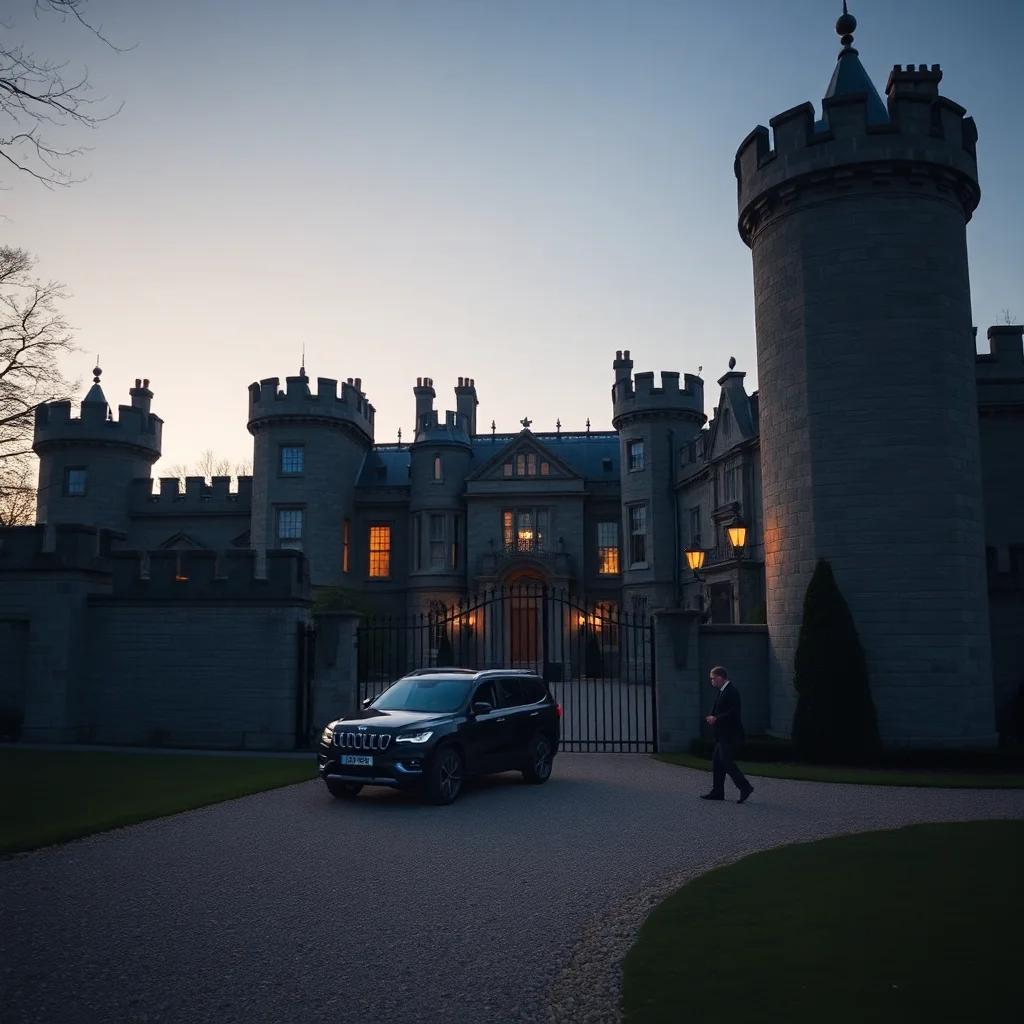
The Castle Is Back, and It Never Really Left
The return of the castle is not a quaint architectural trend; it is a social tell. In the age of surveillance capitalism, billionaire compounds, and yawning wealth gaps, the fortified estate has resurfaced as a fantasy object that converts raw power into a legible, collectible image. PRINT’s discussion of “castle-ness” gets to the point: the compelling image often outruns historical truth. That is exactly why castle imagery keeps winning. It promises lineage without accountability, drama without context, and grandeur without the vulgar admission that it is simply a defensive container for surplus money.
Look around the contemporary landscape of elite real estate and the pattern is unmistakable. Oligarchic mansions in Moscow and beyond adopt crenellations, towers, gates, and moat-like water features; tech and finance moguls commission homes that mimic monasteries, keeps, and estates; luxury developers package “storybook” security as lifestyle. Even when the building is not literally medieval, it performs medievality. The castle is a costume for capital, and it works because it softens extraction into spectacle.
This is not nostalgia. It is branding. The castle survives because it offers an image regime that can absorb criticism. A glass tower says “power” too directly. A castle says “heritage,” “privacy,” and “taste,” even when the owner’s wealth was accumulated in the shortest possible historical blink. The contradiction is the product.
From Fortress to Folklore: How Wealth Learned to Dress Up
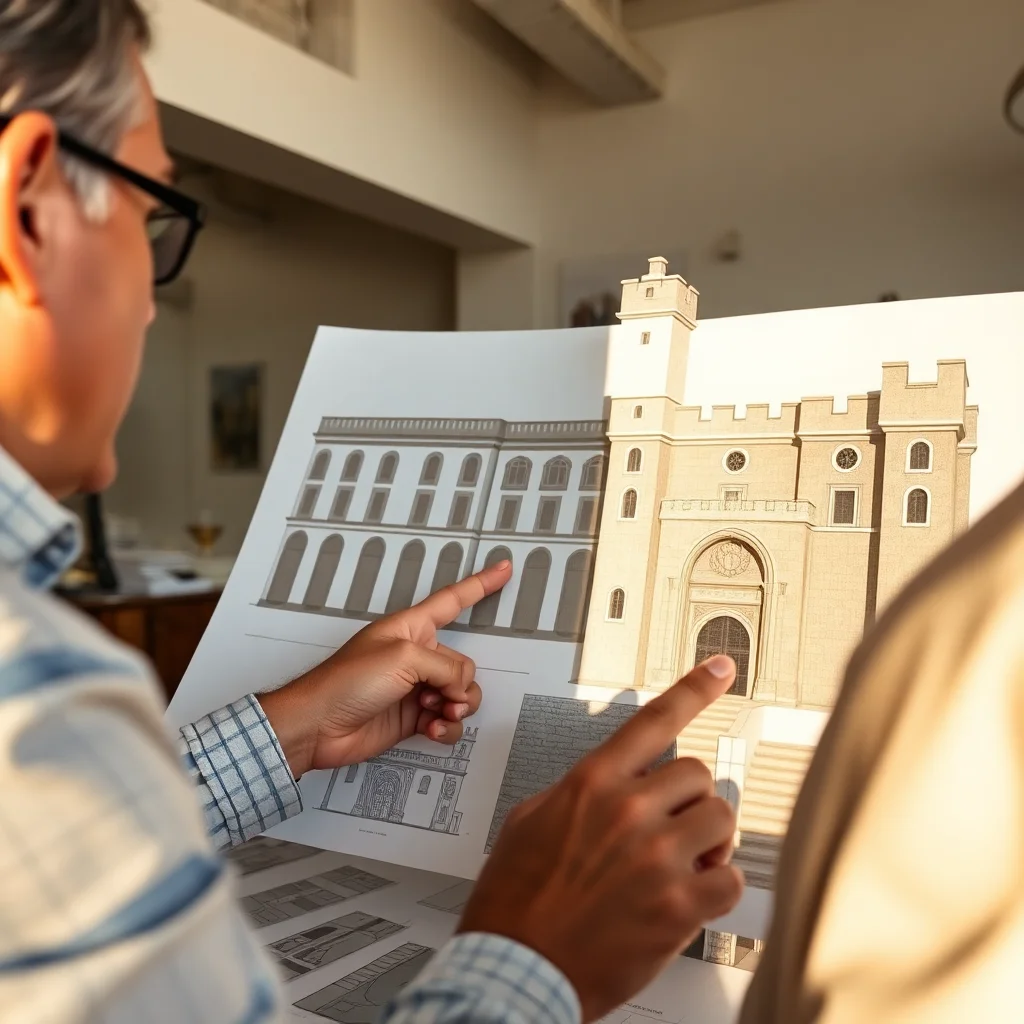
The original castle was a machine for coercion: a defensive structure, a territorial marker, a seat of extraction. Its walls declared who belonged and who did not. Today’s revival keeps the silhouette but swaps feudal violence for aesthetic reassurance. Architects, developers, and clients borrow battlements, turrets, and heavy stone envelopes not because they need military protection, but because the architecture of enclosure now reads as prestige.
The most revealing examples are often the least subtle. In London, super-prime residences increasingly use deep setbacks, landscaped barriers, and heavily articulated masonry to imply old-world permanence. In the Middle East and parts of Eastern Europe, private palaces and compound homes blend imported historic motifs with modern surveillance systems, producing an architecture of sovereign isolation. In the United States, luxury subdivision design often trades on “estate” language, equestrian references, and faux-historic entries to make exclusion sound pastoral. The point is not authenticity. The point is theater.
Historically, the castle was tied to hierarchy; contemporary castle imagery preserves hierarchy while laundering it through romance. The house becomes a legend about itself. That is why it is such a powerful status symbol in a moment when inequality is under scrutiny: it gives the rich a visual language that feels older than politics, older than capitalism, older than blame.
Castle-ness as an Aesthetic Technology
“Castle-ness” is not a style in the conventional sense. It is an aesthetic technology for translating domination into desire. It works by mobilizing a set of instantly readable signs: battlements that imply defense, towers that imply oversight, heavy gates that imply selectivity, stone that implies endurance. These signals are legible across cultures because they are built on archetype, not detail. The castle is therefore a remarkably efficient image machine.
Designers have long understood the seductive force of borrowed antiquity. Postmodernism used historical quotation to destabilize modernist seriousness; luxury architecture uses the same tactic to stabilize capital’s image. Where a modernist villa can look exposed, a castle-like house appears grounded in narrative. Where a minimalist mansion can feel blank and ethically aggressive, a turreted residence feels plush, theatrical, almost innocent. The aesthetic sleight of hand is extraordinary: the more exclusionary the property becomes, the more “timeless” it is allowed to seem.
PRINT’s framing is useful because it exposes a central truth of visual culture: once an image becomes compelling enough, the story it tells can eclipse the facts it hides. A castle does not need to be historically accurate to be socially effective. It only needs to signal the right blend of power, inheritance, and romantic distance. That is why developers keep reaching for it, and why audiences keep understanding it at a glance.
Why Inequality Makes the Castle More Appealing
It would be easy to assume that heightened scrutiny of wealth would make castle imagery embarrassing. In practice, it makes it more desirable. When inequality becomes visible, the rich need a visual shield, and the castle provides one. Its symbolism is paradoxically comforting: yes, wealth is immense, but it is also supposedly burdened by stewardship, legacy, and architectural responsibility. The house is not merely a house; it is a monument, and monuments are meant to be admired rather than audited.
This is where the emotional power of the castle matters. It converts social unease into aesthetic curiosity. A fortified estate on a hill does not only say “I am protected.” It says “I am singular,” “I am historical,” “I belong to a different scale of time.” That temporal displacement is crucial. Contemporary outrage operates in the present tense; castle imagery relocates wealth into the past tense, as if the owner inherited a noble burden rather than engineered a contemporary advantage.
We see the same maneuver in luxury hospitality, where faux-castle resorts and palatial spas sell the experience of aristocracy without the obligations of aristocracy. We see it in wedding venues, private clubs, and branded residences that promise old-world atmosphere with app-controlled entry. The market does not merely sell square footage. It sells immunity from the ordinary moral language attached to wealth. In a similar way, luxury hospitality becomes urban occupation when atmosphere and exclusivity are used to normalize private power in shared space.
Architects, Clients, and the Politics of Complicity
Architects are not innocent in this. To design a castle-like house is to participate in a narrative of insulation. Some designers will argue they are merely responding to client demand, but demand is itself shaped by culture, and culture is shaped by images repeated until they feel natural. When a client asks for “something grand,” “something secure,” or “something with presence,” the castle is already waiting in the background as an easy answer.
There are, of course, more critical architectural traditions available. Think of the work of Lina Bo Bardi, who insisted on openness, civic life, and the rough dignity of common space; or the Brutalist tradition that made structure and collective use legible rather than hidden behind fantasy. Even within contemporary luxury, some architects resist the feudal impulse by designing homes that dissolve hierarchy through transparency, garden integration, or communal framing. Yet the market rarely rewards that stance as loudly as it rewards a silhouette that can be recognized from a drone shot.
The uncomfortable truth is that many clients do not want houses; they want myths. They want an architecture that can be photographed, circulated, and instantly decoded as expensive. The castle is ideal because it can be compressed into an icon. It converts investment into narrative capital. This is also why design debates increasingly turn toward how buildings communicate, as explored in When Buildings Become Interfaces, where architecture is framed as a medium for social meaning rather than just form.
What Comes After the Hallowed House?
If the castle is the perfect image for anxious wealth, then the challenge for architecture is to imagine forms that do not rely on enclosure as prestige. That does not mean refusing beauty or permanence. It means refusing the idea that power must be staged as fortification. In a period shaped by climate volatility, housing insecurity, and public anger at inequality, the most responsible architecture may be the kind that looks less like a retreat from society and more like an admission of interdependence.
There is a reason some of the most persuasive recent projects emphasize porosity, shared thresholds, and material honesty instead of fantasy sovereignty. These works understand that architecture’s ethical force lies not in imitating ancient authority but in building a different social contract. Castle imagery can be seductive, but it is also revealing: it tells us how desperate the elite are to appear timeless while remaining untouchable.
That is the core contradiction. The hallowed house is back because it offers a story in which wealth seems inherited, protected, and almost ceremonial. But the more the castle style spreads, the clearer its function becomes. It is not about history. It is about making inequality look picturesque. For a different approach to inherited forms and their contemporary use, see Can Vernacular House Types Become Climate Tech?
FAQ
Why is castle imagery resurging now? Castle imagery resurges because it helps wealth look older, safer, and more cultural at a moment when inequality is highly visible. It transforms status into a romantic visual language that feels detached from politics.
Is castle-inspired architecture always about excess? Not always, but in luxury residential contexts it usually serves exclusion, privacy, and prestige. The style’s defensive cues make it especially attractive to clients who want power to feel refined rather than blatant.
What makes a building “castle-like” without being a literal castle? Towers, turrets, heavy masonry, gates, elevated massing, and fortress-like perimeter control all produce castle-ness. The effect depends less on historical accuracy than on recognizability.
Can architecture resist this trend? Yes, by prioritizing openness, shared space, and material clarity over symbolic fortification. Architects can design for civic belonging rather than aristocratic fantasy.
The castle is back because it makes domination look like destiny. But should architecture keep laundering power through romance, or should it finally stop pretending that a turret is a moral alibi?
Get the Mainifesto weekly — curated design debates, speculative ideas and the week's best articles every Saturday.
Editorial Perspectives
Questions and counterpoints developed by the Mainifesto editorial desk to extend the discussion.
Perspective 1
Castle imagery works because it packages hierarchy as heritage, and plenty of buyers across the Gulf and beyond know exactly what they’re buying: insulation from the city and a story that makes it feel noble. The problem isn’t the turret, it’s the social contract it hides behind. Architecture should stop pretending that visual theater can wash away extraction.
Perspective 2
The romance of the castle is a marketing layer, not an architectural argument. In cities under housing pressure, that symbolism becomes harder to defend because it normalizes enclosure, spectacle, and land hoarding as if they were design virtues. If anything, the industry should be more honest about what these projects do socially, not just what they look like.
Perspective 3
What interests me is how easily form gets used to encode legitimacy. A castle silhouette can trigger ideas of permanence, lineage, and safety, even when the program underneath is pure private consumption. The real question is whether we can design prestige without relying on feudal imagery that still does political work.
Perspective 4
Castle imagery is never innocent, but it also isn’t all the same thing. Sometimes it’s pure oligarch fantasy; other times it’s a loaded reuse of regional memory, which is where the conversation gets messy. Still, if the result is just gated nostalgia dressed up as culture, then yes, the profession should stop helping power cosplay as history.