

The New Visualizer Is an Algorithm
The rendering is no longer the afterthought
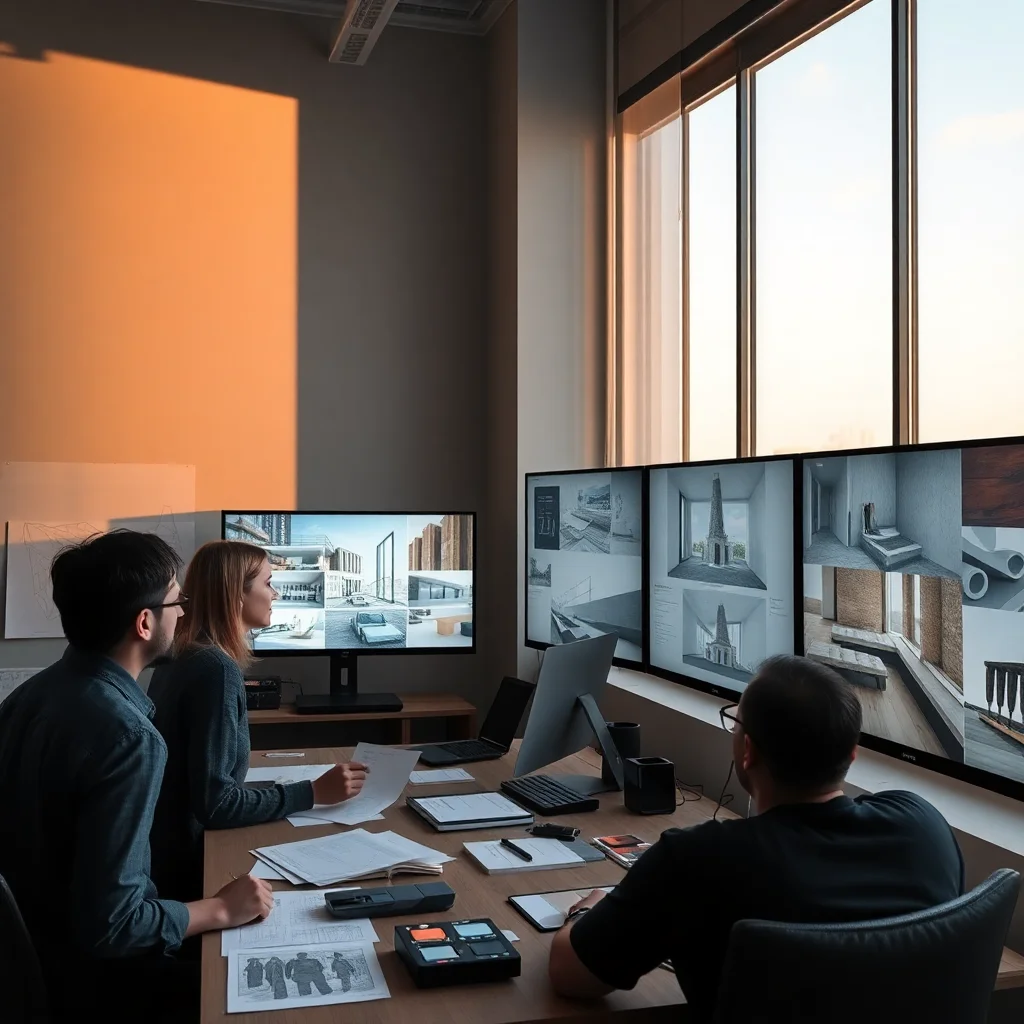
Architectural visualization used to arrive late, after the “real” decisions had already been made. It was the polished image, the persuasive lie, the glossy proof that a concept deserved to be funded, approved, or admired. But AI has broken that sequence. Today, visualization is slipping upstream into the moment of conception, where it is no longer describing a project but actively steering it.
This is the shift that matters. The new visualizer is not a studio sitting at the end of a pipeline producing seductive stills. It is an algorithm embedded in the workflow, proposing forms, comparing options, and accelerating the editorial process of design itself. That changes the role of the image from representation to instruction. It also changes the politics of authorship: if the model generates the first convincing reality, who is actually designing?
Architectural visualization has always shaped desire. The render made speculative projects feel inevitable, and in the era of real-time engines and generative tools, that inevitability has become operational. A team can now test massing, material palettes, daylight conditions, and atmosphere in hours rather than days. What once required a specialist artist and a sequence of revisions can now be produced, modified, and sold inside the same decision loop.
This is not a technical upgrade. It is a transfer of power. The image is becoming an interface for judgment.
AI turns the image into a design filter
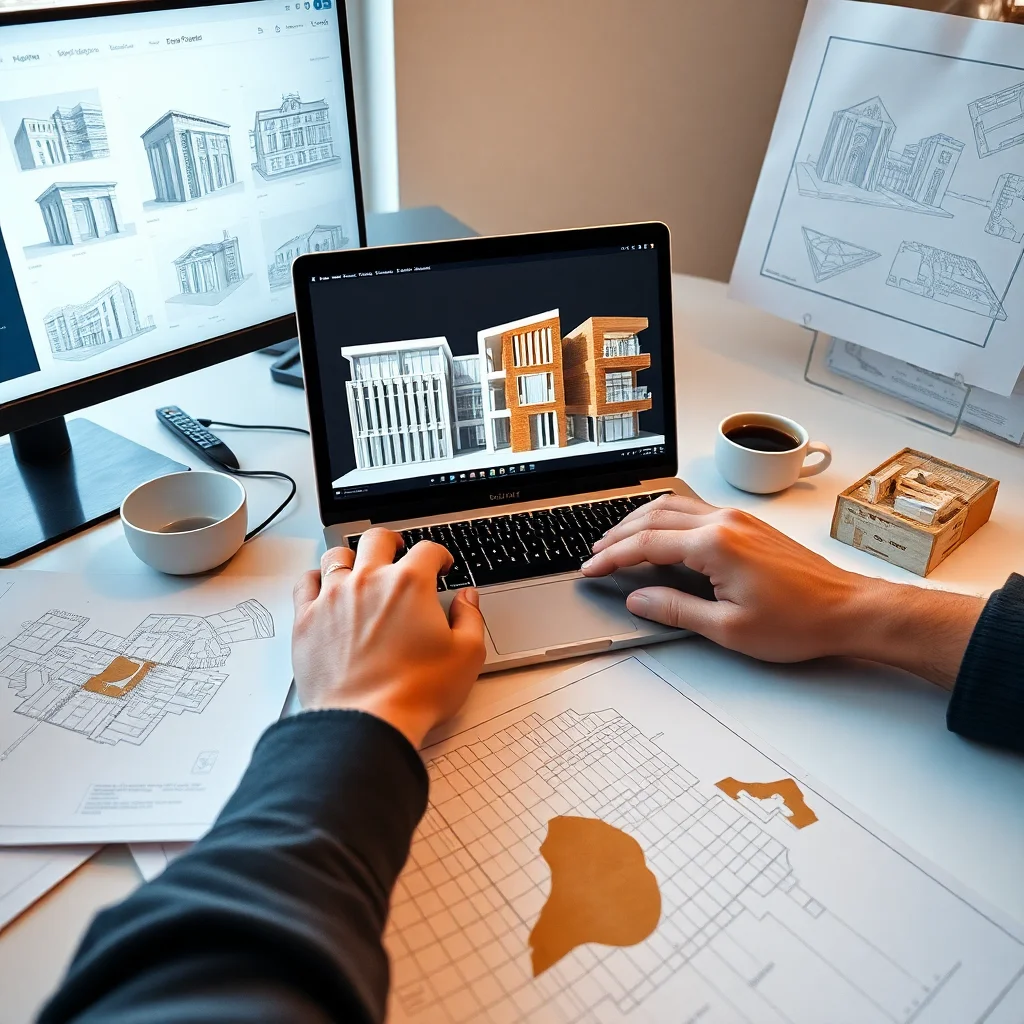
The most significant change is not that AI makes images faster. It is that AI makes images evaluative. Tools trained on vast visual datasets can generate dozens of possibilities, rank them against prompts, and help teams converge on a direction before a project has stabilized. In practice, that means the visualization step now functions as a filter for design intent rather than a final costume for a finished form.
Consider how a housing scheme in London, a mixed-use tower in Dubai, or a cultural project in Copenhagen might evolve today. Instead of a single master image produced after planning, the team can iterate on facade density, balcony depth, skyline impact, and public realm atmosphere in parallel. The render does not merely show whether a choice looks good; it helps decide which choice survives. That is a profound change in architectural labor, because the workflow is no longer linear but recursive.
Designers such as Bjarke Ingels and firms like Foster + Partners have long embraced visualization as part of the design argument, not just the sales deck. AI extends that logic to a new extreme. If parametric modeling once let architects vary geometry with code, AI visualization lets them vary perception with prompts. The result is a project that can be edited as image, model, and narrative at once.
That sounds efficient because it is efficient. But efficiency is also a trap. When the software can instantly produce the “best-looking” option, the risk is that design begins optimizing for visual plausibility rather than spatial necessity. A project may become convincing before it becomes intelligent.
What gets optimized gets built
In the old model, architectural visualization sold a completed decision. In the AI model, it helps make the decision, and that means it can influence what gets funded, permitted, and ultimately built. Developers and clients are especially vulnerable to this shift because they often respond to legibility and confidence more than to latent spatial quality. A polished AI-assisted image can compress uncertainty into certainty, and certainty is a financial instrument.
This has already been visible in adjacent fields. Fashion brands use generative systems to test campaigns before production. Automotive firms use AI to rapidly iterate exterior language and interior mood. Architecture is absorbing the same logic, but with higher stakes because the output is not just a product image; it is a city fragment, a public environment, a building that may stand for decades.
That is why the question of authorship cannot be reduced to who clicked “generate.” The algorithm shapes outcomes through selection pressure. The team still chooses, but it chooses from a menu the model has made seductive. In this sense, the AI visualizer acts less like a drafter and more like a taste engine. It privileges what is statistically recognizable, culturally legible, and commercially attractive. The danger is obvious: cities begin to inherit the averaged aesthetics of machine learning.
And yet the lure is irresistible. When time is short and budgets are tight, the promise of faster consensus can outweigh the cost of homogenization. The algorithm becomes a broker between ambition and approval.
The studio is now a prompting room

The romantic image of the visualization studio—artists refining atmosphere, lighting, materiality, and narrative—was always tied to expertise. But as AI tools enter the workflow, the studio becomes less a production unit and more a prompt-writing environment. The new skill is not only rendering craft; it is the ability to direct, constrain, and edit machine output with architectural intelligence.
That is why the most effective teams will not be the ones that use AI as a shortcut, but the ones that treat it as a critical collaborator. A designer may ask the system to explore how a civic building reads in winter fog, how a timber interior shifts under low northern light, or how a courtyard might feel if it were less monumental and more domestic. The model responds with variations, but the architect still has to decide what is false, what is lazy, and what is worth keeping.
There is a useful parallel here with the rise of real-time visualization engines such as Unreal Engine in architecture. Those platforms changed expectations by making design review more immediate and immersive. AI pushes that immediacy further, but it also weakens the boundary between experimentation and output. One can now slide from concept to convincing image so quickly that the image begins to masquerade as the concept itself.
That collapse is both productive and dangerous. Productive, because it democratizes iteration. Dangerous, because it turns critique into a race against velocity. If the team cannot pause long enough to question the image, the image starts making the rules.
Who owns the reality of the project?
This is the sharp question hidden inside the workflow debate. When rendering becomes part of design decision-making, authorship is no longer distributed in the old hierarchy of architect, visualizer, and client. It is braided. The architect shapes the brief, the model generates the visual field, the client selects what feels convincing, and the software stack quietly determines what is easy to imagine.
That makes “reality” a negotiated construct. In the past, a project’s reality was anchored in plans, sections, technical documentation, and construction logic. Now it is increasingly anchored in the image that survives the fastest round of review. If a generative render can transform an unfinished proposal into a market-ready fantasy, then the project may be authored as much by the prediction engine as by the design team.
Herzog & de Meuron understood early that architecture is also a media project; so did OMA, where representation has often been treated as part of the argument rather than its conclusion. AI intensifies that condition. It does not merely mediate reality; it manufactures it in advance. And because clients, cities, and the public often consume the image before the building exists, the render becomes a contractual atmosphere: this is what the project is supposed to be.
That atmosphere can be manipulated. It can also be used responsibly. AI may help reveal alternative spatial futures, expose bias in conventional aesthetic choices, or widen the range of design possibilities beyond the habits of a single office. But to do that, studios must stop pretending the algorithm is neutral. It is not. It is an editorial agent with preferences embedded in its training, its defaults, and the desires of those who prompt it. For a broader look at the ethical stakes of adopting new tools, see Digital Ethics in Design: When Should Architects Say ‘No’ to Technology?
Six consequences architects cannot ignore
1. Iteration becomes governance. Rapid image generation means the first visible option often has disproportionate power. Once a team sees a “better” image, the project can reorganize around it before any deeper critique occurs.
2. Style becomes searchable. AI reduces visual language into retrievable tendencies. That makes stylistic consistency easier to manufacture, but it also encourages sameness across projects, offices, and even cities.
3. Clients gain new leverage. When a model can produce dozens of alternatives instantly, clients may demand endless revisions without understanding the design labor behind them. The image becomes a negotiation tool with no obvious endpoint.
4. The public sees fewer drafts and more conclusions. Because AI can make early-stage ideas look complete, the messy process of architecture disappears from view. What reaches planning meetings or press releases is already cosmetically resolved.
5. Technical precision risks being overshadowed by visual confidence. A believable facade reflection or warm interior glow can mask unresolved structural, environmental, or social questions. The image persuades faster than the spreadsheet can object.
6. Authorship becomes collective and unstable. The project is no longer solely the architect’s creation, nor purely the machine’s output. It is a negotiated artifact, authored through prompts, selections, corrections, and exclusions.
A workflow that edits reality before it exists
The deeper story is not about AI replacing visualizers. It is about visualization absorbing the authority once reserved for design development. The render now participates in whether a project feels buildable, financeable, and culturally desirable. In other words, it is not after design; it is inside design, pulling the project toward certain futures and away from others.
That creates an uncomfortable but necessary provocation for the profession: perhaps the real competition is no longer between studios, but between editorial systems. The offices that win will not simply be those with the best rendering department. They will be the ones that can manage algorithmic desire without surrendering judgment to it.
Architectural visualization has always promised access to a future. AI changes the terms of that promise. The future is no longer just depicted; it is selected from a machine-generated field of possibilities. If the profession does not learn to question how those possibilities are produced, architecture may end up building not its own ideas, but the average of its machine’s imagination.
For related thinking on how environments can adapt to changing conditions, Smart Facade Systems: Adaptive Exteriors That Respond to Climate and Light explores another way architecture is becoming more responsive and data-driven.
FAQ
What is different about AI visualization compared with traditional rendering?
Traditional rendering typically illustrates a design after key decisions are made. AI visualization can generate and compare options early in the process, influencing those decisions rather than merely presenting them.
Does AI replace architectural visualizers?
Not exactly. It changes their role. The visualizer becomes a director, editor, and prompt strategist, while the machine handles rapid variation and image generation.
Why is authorship a problem in AI-driven visualization?
Because the final image is no longer the product of one discipline alone. It emerges from a chain of human prompts, model biases, client preferences, and software defaults, making the source of the “design reality” harder to identify.
What is the main risk for architecture?
The biggest risk is homogenization: projects may start converging on what the model finds visually plausible and commercially persuasive, rather than what is socially or spatially necessary.
As architecture increasingly blends image-making with intelligence, questions of agency extend beyond rendering into the building itself; Cognitive Architecture: Designing Spaces That Think and React offers a useful companion perspective on spaces that respond to people and conditions.
Get the Mainifesto weekly — curated design debates, speculative ideas and the week's best articles every Saturday.



Daniel Okonkwo May 14, 2026
This is exactly where the glossy promise of AI gets messy: once the image starts deciding the project, the rendering stops being a neutral tool and becomes part of the power structure. I’d credit the human team, but I’d also name the model and the data pipeline, because authorship here is really a chain of choices, not a single genius.
James Okoro May 14, 2026
I’m interested in the speed, but even more in what it does to accountability. If an algorithm is helping choose the “winning” reality before the building is actually designed, then the author can’t just be the person who approves the pretty picture — it has to be shared with whoever set the constraints, trained the system, and made the call.
David Lim May 14, 2026
The technical shift is bigger than visualization; it turns representation into an optimization problem, which changes the design process at its root. For authorship, I’d argue the model should be acknowledged as an instrument, not an author — but the bigger question is whether the design team still understands the criteria the algorithm is optimizing for.